New Zealand Rabbit: Breed Guide
By Dr. Zubair Khalid, DVM, MS, PhD ·
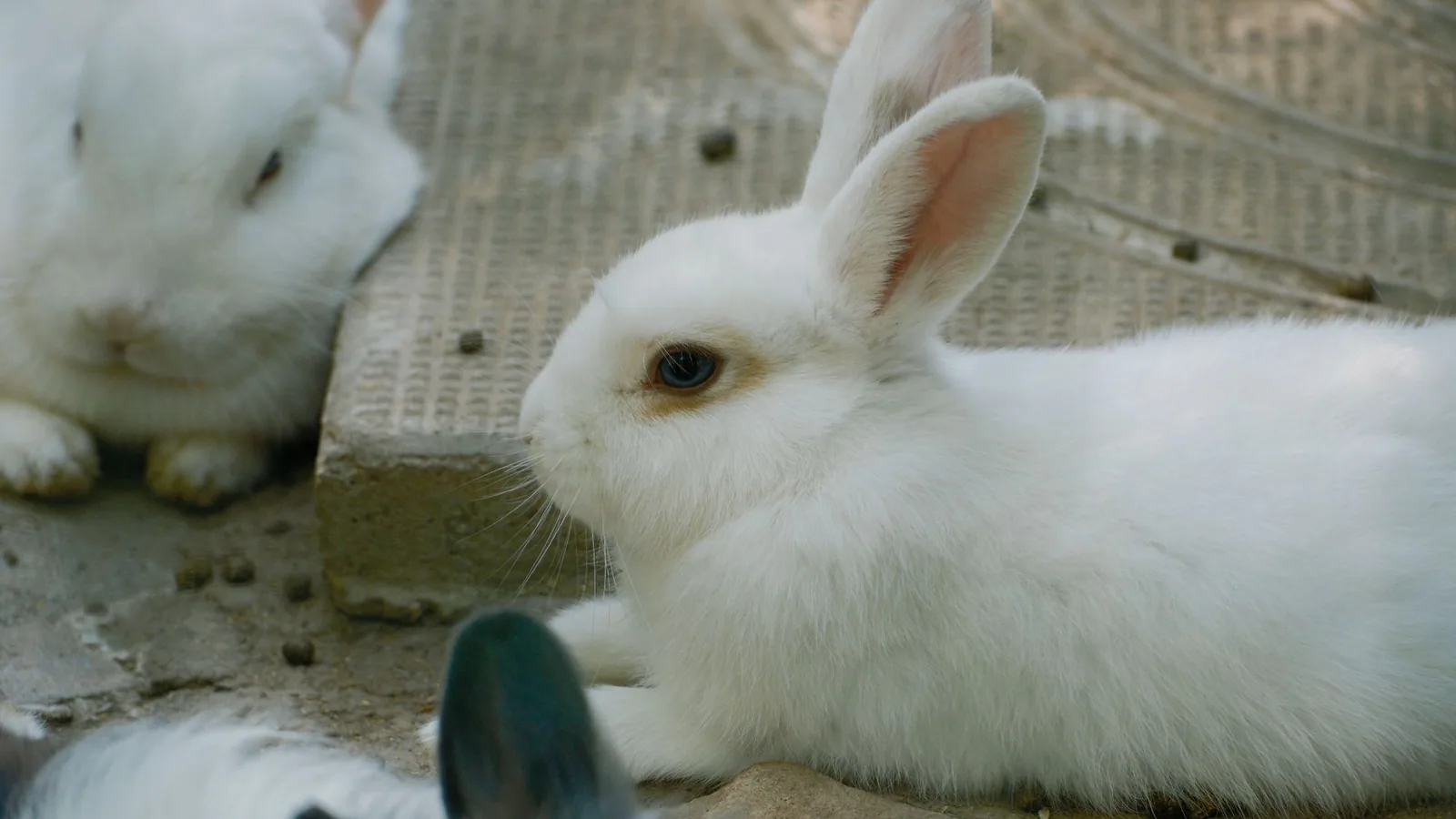
The New Zealand rabbit, commonly called the NZ rabbit, is one of the most widely raised rabbit breeds in the world for meat, research, and companionship [1]. Its white albino variant, the New Zealand White, is the standard laboratory rabbit worldwide [2]. For owners, the breed offers a calm, handleable rabbit with simple coat care and a robust appetite. This guide covers breed characteristics, housing, nutrition, health, breeding, and the research and production roles that define the NZ rabbit. Whether you are considering a New Zealand rabbit as a pet, a breeding project, or a production animal, the information below will help you make informed decisions.
At a Glance
| Trait | New Zealand Rabbit |
|---|---|
| Adult weight | Does 3.25 to 3.50 kg, bucks 3.5 to 4 kg [3] |
| Coat | Albino white, non-pigmented skin [2] |
| Ears | Long and slender, easy peripheral vein access [2] |
| Temperament | Calm, tolerant of routine handling [2] |
| Primary uses | Meat production, biomedical research, companion animal [2][1] |
| Key care needs | Adequate space, enrichment, heat management [4][5][6] |
Breed Overview and History
The New Zealand rabbit is one of the most important commercial and experimental rabbit breeds in the world [1]. It is also one of the most raised rabbit breeds in China, where it anchors a large commercial rabbit industry [1]. In biomedical research, the New Zealand White is the most common breed used, appearing in developmental toxicity studies, toxicology studies, asthma research, and antibody production [2]. The breed's dominance in these fields comes from its predictable growth, reproductive efficiency, and docile behavior [7]. The breed's combination of growth rate, feed efficiency, and reproductive output has made it the default choice for new rabbit enterprises in many countries [7][1].
The New Zealand White is an albino rabbit. Its albino phenotype is caused by the homozygous recessive cc genotype at the C locus. The albino phenotype means the rabbit has no pigment in its skin or fur, which produces the breed's characteristic white coat and pink eyes [2]. This non-pigmented skin, combined with long slender ears, makes the peripheral vasculature easy to see. That feature simplifies blood collection and intravenous procedures, which is why the breed became the research standard.
The breed's genetic resources are actively managed. A 2020 study used microsatellite (SSR) markers to develop a genetic evaluation system for New Zealand White rabbit germplasm resources [1]. The researchers found that reliable genetic evaluation requires more than 60 records and more than 22 markers, and they identified an optimal combination of 22 markers for breed conservation [1]. This work helps maintain the genetic health of commercial and research populations, and it gives breeders a standardized way to track genetic diversity across generations [1].
Physical Characteristics and Coat
Under the ARBA standard, adult New Zealand does weigh about 10 to 12 lb (4.5 to 5.4 kg) and bucks about 9 to 11 lb (4.1 to 5.0 kg). The breed has a compact, well-muscled body suited to meat production [9]. Carcass studies have documented the breed's meat yield and carcass composition, confirming its value as a meat breed [9]. Its most distinctive feature is the albino white coat, which is dense and normal in length. Body weight should be monitored regularly, because rapid weight changes can signal health problems.
The fur of the New Zealand rabbit differs from fur-type breeds. In a comparative study of skin development, Rex rabbits showed significantly shorter fiber length and reduced fur thickness compared with New Zealand White rabbits [10]. Integrated metabolomic and transcriptomic profiling of dorsal skin identified 267 differential metabolites and 895 differentially expressed genes between the breeds [10]. These genes and metabolites were enriched in pathways associated with hair follicle development, including HIF-1, cAMP, and AMPK signaling [10]. Key molecules such as histamine, L-arginine, keratin family genes, BMP5, and DKK2 were identified as important for fur development [10]. For owners, this means the New Zealand rabbit has a normal, dense coat that requires only routine grooming.
The long slender ears of the New Zealand White are a practical feature. They allow easy visualization of peripheral vasculature, which is why the breed is preferred for phlebotomy and intravenous procedures in research settings.
Temperament and Suitability
New Zealand rabbits are calm and tolerate handling well. This temperament is a major reason the breed became the standard in research settings, where animals must be handled frequently for injections, blood draws, and examinations. The same traits make them suitable as companion animals for adults and older children who understand gentle rabbit handling. New Zealand rabbits are generally not aggressive, but like all rabbits, they may bite or scratch if startled or handled incorrectly. Children should be taught to handle rabbits gently and to sit on the floor when interacting with them. As with any rabbit breed, early socialization and regular, gentle handling help maintain a trusting relationship.
The breed is also valued for efficient feed conversion and growth. In a candidate-gene study in New Zealand White rabbits, heterozygous CT rabbits at the c.-78C>T polymorphism had significantly higher body weight at 70 days of age [7]. The genotypic frequencies in that population were CC 28.57%, CT 44.64%, and TT 26.79%, with allele frequencies of 0.515 for C and 0.485 for T [7]. The study was conducted at Cu Chi Farm in Vietnam and genotyped 56 rabbits using the PCR-RFLP method [7]. This kind of genetic testing is becoming more common in commercial rabbitries, and it may eventually help breeders select for faster growth [7].
As pets, New Zealand rabbits need the same commitment as any rabbit: a proper diet, secure housing, daily exercise, and veterinary care. Their large size means they need more space than dwarf breeds, and their powerful hind legs require sturdy enclosures.
Housing and Environmental Needs
Space allowance is a critical factor in New Zealand rabbit welfare. A study on stocking density in broiler rabbits found that crowding affects growth performance in the New Zealand White breed [5]. Rabbits housed at appropriate densities grow better and show fewer stress-related problems. Owners should provide the largest enclosure they can, with enough floor space for the rabbit to stretch out fully and stand up on its hind legs.
Environmental enrichment is another key component of welfare. A 2025 study on enhancing rabbit welfare in New Zealand White rabbits highlighted the role of enrichment in reducing stress and promoting normal behavior [4]. Enrichment can include tunnels, hide boxes, chew toys, and platforms. These items let rabbits express natural behaviors like hiding, digging, and chewing, which reduces boredom and stress-related illness. Rabbits are prey animals, and they feel safer when they have a hide box or tunnel to retreat to. They should never be housed in a location where predators, including dogs and cats, can reach them.
Temperature management is especially important for this breed. Rabbits are sensitive to heat, and a study of cyclic heat stress in New Zealand White and Rex rabbits found that heat stress significantly impairs productivity [6]. In that study, rabbits kept at a comfortable temperature of 24.5 ± 1.3°C performed better than rabbits exposed to cyclic heat stress at 32.8 ± 1.5°C [6]. New Zealand White rabbits performed better than Rex rabbits under heat stress, which suggests the breed has some heat tolerance [6]. Still, owners in hot climates should provide shade, ventilation, frozen water bottles, ceramic tiles, and access to cool water.
The same heat stress study tested nano-chromium chloride (nano-CrCl3) as a dietary supplement. Supplementation at 2 mg/L improved body weight gain, feed intake, and feed conversion ratio in both breeds under heat stress [6]. It also enhanced immunity by increasing phagocytic activity and reducing heterophil-to-lymphocyte ratios, and it reduced inflammatory cytokines such as TNF-α, IL-4, and IFN-γ. This is an emerging area of research, and owners should discuss any supplement with a veterinarian before use.
Housing hygiene is also part of health. The antioxidant study in New Zealand White rabbits used complete feed with free access to food and water, which is the standard for growing rabbits [11]. Clean water, regular cage cleaning, and dry bedding prevent many common health problems.
Nutrition and Feeding
New Zealand rabbits are efficient converters of feed into body mass, which is why they dominate commercial meat production [7]. A complete pelleted feed is the foundation of the diet, with free access to fresh water at all times [11]. Fresh water should be checked and changed daily, and water bottles or bowls should be cleaned regularly to prevent bacterial growth.
Protein source matters for growth. A comparative study of Flemish Giant, California Black, and New Zealand White rabbits fed soybean, cowpea, or pigeon pea as protein sources found that rabbits fed soybean-based rations had significantly higher growth rates than rabbits fed cowpea or pigeon pea [12]. The legume grains were roasted before the rations were compounded, and tannin content was measured in raw grains, roasted grains, and the final rations [12]. The cowpea-based ration had significantly higher tannin content, which likely reduced protein digestibility [12]. For owners, this means a quality commercial pellet with soybean meal as a protein source is a reliable choice.
Feed additives can improve performance. In a study of β-glucan administration in New Zealand White and APRI rabbits, adding 0.25 or 0.5 ml of β-glucan per liter of drinking water significantly accelerated body weight gain, reduced total feed consumption, and improved feed conversion ratio, especially at the 0.5 ml dose [13]. Dressing percentage was also higher in supplemented rabbits: 51% at 0.25 ml and 52% at 0.5 ml, compared with 50% in controls [13]. β-glucan is a prebiotic that supports gut health, and the study found no significant differences in carcass traits from supplementation [13]. The study also noted significant variations in final body weight, total daily gain, feed consumption, and total feed conversion ratio between New Zealand White and APRI rabbits, confirming that breed differences affect how rabbits respond to the same diet [13].
Vitamin and mineral balance affects antioxidant defenses. A study of the vitamin-mineral supplement "Tekro" in New Zealand White rabbits measured antioxidant enzyme activity and ceruloplasmin levels in blood plasma and liver at days 45, 60, 75, and 90 [11]. The study compared a control diet with diets containing 3.0%, 3.5%, and 4.0% of the supplement [11]. Antioxidant protection is important for growing rabbits because it counters the oxidative stress of rapid growth. Owners should use a balanced commercial pellet rather than homemade diets, because homemade rations often lack trace minerals and vitamins.
For pet rabbits, a veterinarian can help tailor the diet to the individual rabbit's age, weight, and health status. Sudden diet changes should be avoided, because they can disrupt the gut microbiome.
Health and Preventive Care
The New Zealand rabbit is a robust breed, but it has specific health considerations. Growth and body weight are moderately heritable. In a genetic study of New Zealand White, Californian, and Gabali rabbits, heritability estimates were low for litter size (0.05 to 0.12) and medium for body weight (0.16 to 0.31) [14]. This means body weight responds well to selective breeding, while litter size is more influenced by environment and management [14]. The study also examined gene expression of appetite and growth regulators, including NPY, AGRP, POMC, leptin, GH, GHR, and IGF-1, in brain, liver, and meat tissues [14]. These pathways help explain breed differences in growth and feed efficiency [14]. Genetic studies in New Zealand and Chinchilla strains have also examined the direct and maternal effects that shape body weight before and after weaning [15].
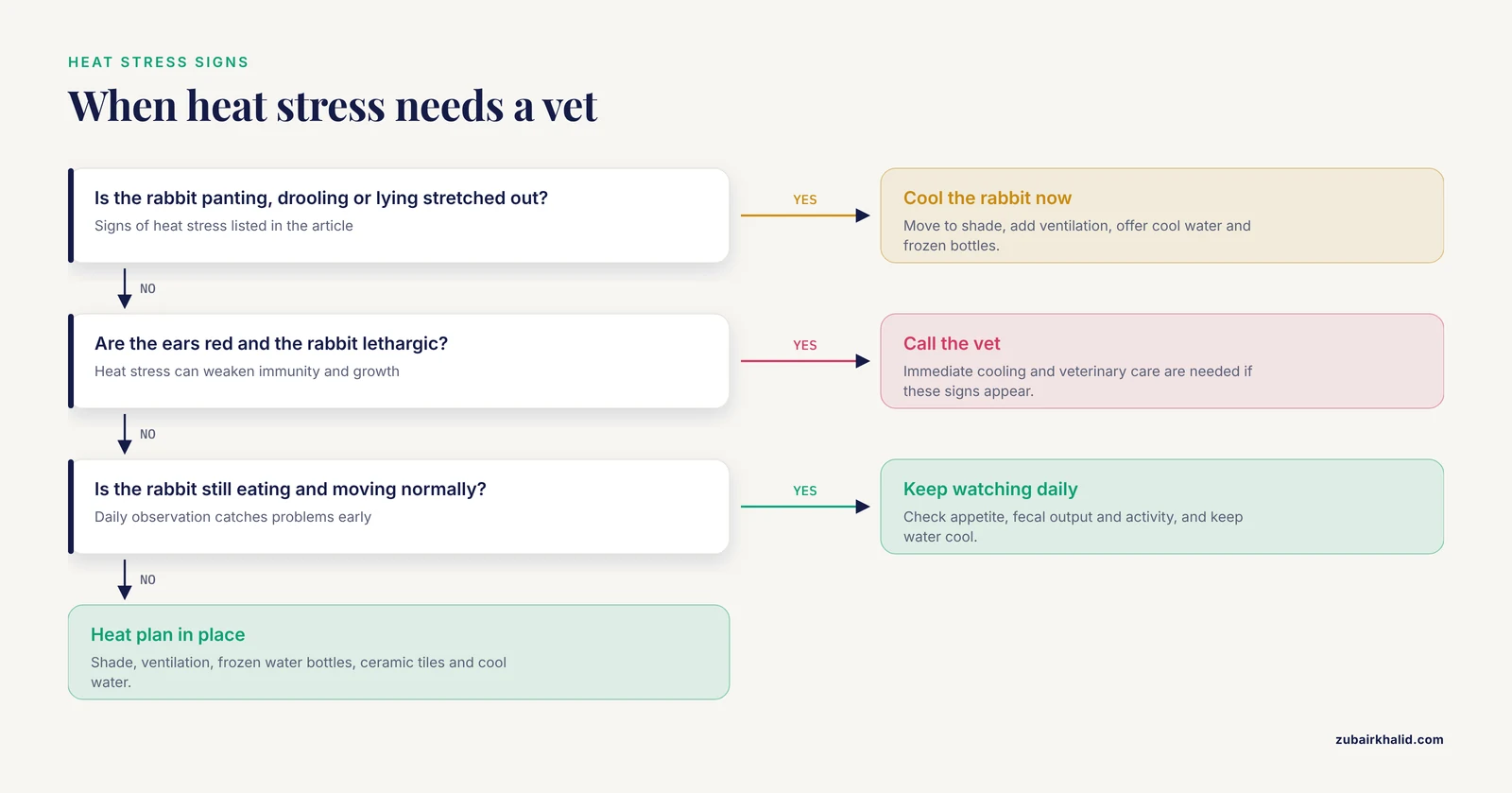
Heat stress is one of the biggest health risks for rabbits. Under cyclic heat stress, New Zealand White rabbits showed changes in heat shock protein and growth factor gene expression. HSP70 was upregulated under comfortable temperatures and downregulated under heat stress, while IGF1 was downregulated under heat stress [6]. These molecular changes reflect the rabbit's attempt to cope with heat, and they help explain why heat-stressed rabbits grow more slowly and have weaker immunity [6]. Owners should watch for signs of heat stress: panting, drooling, lethargy, red ears, and lying stretched out. Immediate cooling and veterinary care are needed if these signs appear.
Antioxidant status is another health marker. The vitamin-mineral supplementation study in New Zealand White rabbits showed that dietary supplements can shift antioxidant enzyme activity and ceruloplasmin levels in blood plasma and liver [11]. This matters because oxidative stress contributes to many rabbit diseases. A balanced diet with appropriate vitamin E, selenium, and other antioxidants supports the rabbit's natural defenses.
Gut health is central to rabbit health. The β-glucan study found that oral administration of β-glucan improved growth performance and gut health in New Zealand White and APRI rabbits [13]. β-glucan is a prebiotic that supports beneficial gut bacteria. Owners should avoid sudden diet changes, which can disrupt the gut microbiome and lead to gastrointestinal stasis, a life-threatening condition in rabbits.
Regular veterinary checkups are the foundation of preventive care. A veterinarian can assess body condition, dental health, and overall well-being, and can recommend a vaccination and parasite control plan appropriate for the rabbit's environment. Rabbits hide signs of illness, so daily observation of appetite, fecal output, and activity level is essential for early detection.
Breeding and Reproduction
New Zealand rabbits are productive breeders. The New Zealand White is often used as a reference breed in reproductive studies, including evaluations of monthly reproductive performance in other breeds [16]. In a genetic study comparing New Zealand White, Californian, and Gabali rabbits, New Zealand White rabbits displayed superior performance in litter size and litter weight [14]. Californian rabbits recorded the highest body weight at 12 weeks and daily weight gain, while New Zealand White rabbits excelled in reproductive output [14].
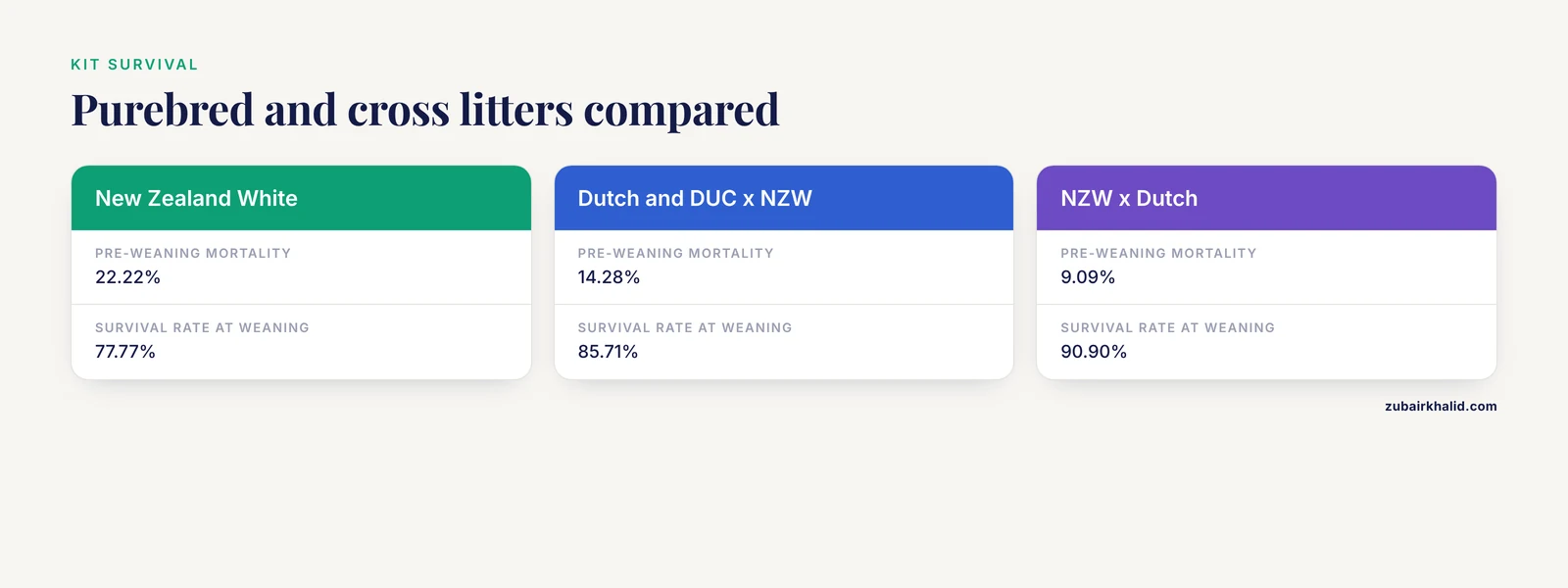
A crossbreeding study of New Zealand White and Dutch rabbits found that New Zealand White does produced high litter sizes and litter birth weights at days 1, 7, 14, and 21 [17]. However, purebred Dutch rabbits had significantly higher growth traits, and the Dutch x New Zealand White cross had high body weight, body length, ear length, chest circumference, and hind limb measurements [17]. Pre-weaning mortality was 22.22% in pure New Zealand White litters, compared with 14.28% in Dutch and Dutch x NZW litters, and 9.09% in NZW x Dutch litters [17]. Survival rate at weaning was 77.77% for New Zealand White, 85.71% for Dutch and DUC x NZW, and 90.90% for NZW x DUC [17]. This shows that crossbreeding can improve kit survival, which gives breeders a practical reason to consider a crossbreeding program.
Male fertility is well studied in this breed. A seasonal study comparing Black Baladi and White New Zealand rabbit bucks found that semen quality was significantly better in winter than in summer [18]. In winter, bucks had shorter libido time (15.8 seconds vs 20.6 seconds), higher semen volume (0.68 mL vs 0.52 mL), higher sperm concentration (702 vs 598 × 10^6/mL), higher total sperm output (487 vs 319 × 10^6/ejaculate), fewer sperm abnormalities (10.7% vs 15.0%), and better advanced sperm motility (65.6% vs 54.7%) [18]. The Black Baladi breed outperformed New Zealand White on most semen parameters, but the seasonal pattern applied to both breeds [18]. The hypo-osmotic swelling test (HOST) was used to evaluate sperm membrane integrity, and the results followed the same seasonal and breed patterns. Breeders should plan breeding programs around cooler months or provide climate control to protect buck fertility.
A more recent study compared local Algerian rabbits with New Zealand White bucks during the winter-to-spring period. Both breeds showed similar sexual behavior and testosterone levels, but the local breed had a more favorable seminal profile [19]. Increasing day length improved semen production and sperm quality in both breeds, while moderate climatic variations had limited impact [19]. This supports the practice of providing consistent light cycles in rabbitries.
Embryo production is another area where the breed performs well. A study of repeated surgical embryo collection in New Zealand White and Baladi does found that New Zealand White does had higher numbers of normal follicles (23.8 vs 16.6), hemorrhagic follicles (6.6 vs 4.2), and total follicles (30.4 vs 20.8) per doe, but a lower ovulation rate (28.3% vs 42.8%) compared with Baladi does [3]. The number of corpora lutea was similar (8.9 vs 8.6 per doe). Ovulation was induced with an intramuscular injection of GnRH, and embryos were collected surgically 72 to 76 hours after mating [3]. Repeated collections increased the number of corpora lutea and ovulation rate over time [3]. This research matters for breeders using advanced reproductive technologies, and it shows that New Zealand White does have strong ovarian reserves.
NZ Rabbits in Research and Production
The New Zealand White rabbit is the most common breed used in biomedical research [2]. Its non-pigmented skin and visible peripheral vasculature make blood collection and intravenous procedures straightforward. The breed is used in developmental toxicity studies, toxicology studies, asthma research, and antibody production.
The breed is also a foundation of commercial meat production. Rabbit husbandry is a growing livestock sector in countries like Vietnam, where the New Zealand White and local crossbreeds are the most commonly raised rabbits, valued for their resilience, efficient feed conversion, and quality meat [7]. Carcass studies have characterized the breed's meat yield. In a comparison of New Zealand White and Dutch breeds [8][20], Dutch rabbits had higher birth weight, weaning weight, live weight, slaughter weight, carcass weight, boneless weight, bone weight, and dressing percentage than New Zealand White rabbits [8]. The carcass comparison study used 80 kits from the first filial generation, weaned at 21 to 25 days, and measured live weight at 80 days before slaughter [8]. This type of data helps producers choose breeds for specific market goals. However, New Zealand White rabbits remain popular because of their reproductive output and adaptability [7][14].
Genetic conservation is an active area for the breed, with SSR marker panels now available to evaluate genetic diversity and support breed conservation [1].
Limitations and When to Contact a Veterinarian
This article is educational and is not a substitute for veterinary diagnosis or treatment. Every rabbit is an individual, and breed-level information cannot replace a physical examination by a qualified veterinarian.
Contact a veterinarian promptly if your New Zealand rabbit shows any of these signs:
- Reduced appetite or no fecal output for more than 12 hours
- Lethargy, hiding, or a hunched posture
- Panting, drooling, or red ears in warm weather, which can indicate heat stress
- Diarrhea or abnormally shaped feces
- Sneezing, nasal discharge, or discharge from the eyes
- Overgrown or misaligned teeth, or drooling
- A lump, wound, or abscess anywhere on the body
- Difficulty urinating, or blood in the urine
- Any change in behavior, such as aggression or sudden withdrawal
- In breeding rabbits: a doe that fails to kindle on time, or kits that are weak or failing to thrive
For breeding advice, semen evaluation, or genetic counseling, ask your veterinarian for a referral to a rabbit specialist or a theriogenologist.
Grooming and Coat Care
Brush a New Zealand rabbit once or twice weekly with a soft slicker brush or rubber curry. During seasonal molts, mainly in spring and autumn, brush every two to three days to remove loose fur and reduce hair ingestion. Rabbits groom constantly, and swallowed fur can form gastric trichobezoars, so regular brushing is preventive.
Trim nails every four to six weeks. Use rabbit nail clippers and cut only the tip, avoiding the quick. In white rabbits the quick is usually visible as a pink line. If unsure, have a veterinarian demonstrate first. Do not rely on rough surfaces to wear nails down.
Ears rarely need cleaning. Inspect them weekly for wax, redness, or discharge. Clean only with a damp cotton ball and never insert anything into the ear canal.
Do not bathe a rabbit. Bathing strips natural oils, causes stress, and can lead to hypothermia or shock. Spot clean with a damp cloth instead.
Contact a veterinarian for persistent scratching, hair loss, ear discharge, head tilt, or bleeding during nail trims.
Spaying and Neutering
Desexing is routine in pet New Zealand rabbits and is usually recommended for both sexes. Spaying (ovariohysterectomy) in does removes the ovaries and uterus, eliminating the risk of pregnancy and sharply reducing the chance of uterine and ovarian tumors, which are common in intact does as they age. Neutering bucks (castration) reduces hormone-driven behaviors such as urine spraying, mounting, and aggression between rabbits, and makes bonded pairs easier to manage.
Timing
Most veterinarians desex rabbits at 4 to 6 months of age, once sex is clearly identifiable and before mature behaviors become established. The breed's larger adult size does not change this timing.
The procedure
Both operations are performed under general anesthesia. Spaying involves an abdominal incision; castration is done through the scrotum. Rabbits are more sensitive to anesthesia and stress than cats or dogs, so choose a rabbit-experienced veterinarian. Prolonged fasting before surgery is not appropriate for rabbits.
Postoperative care and complications
Offer food and water soon after recovery and watch for normal droppings. Contact the veterinarian if your rabbit refuses food, passes no feces for 12 hours, seems lethargic, or has a swollen, red, or open incision.
Socialization and Bonding
Rabbits are social animals, and most New Zealand rabbits do better with a companion of the same species. A single rabbit can live well with daily human contact, but a bonded pair offers mutual grooming and companionship that people cannot fully replace. Same-sex pairs or a neutered male with a female are usually the most stable combinations. Spaying and neutering also reduce hormone-driven mounting and aggression.
Safe Introductions
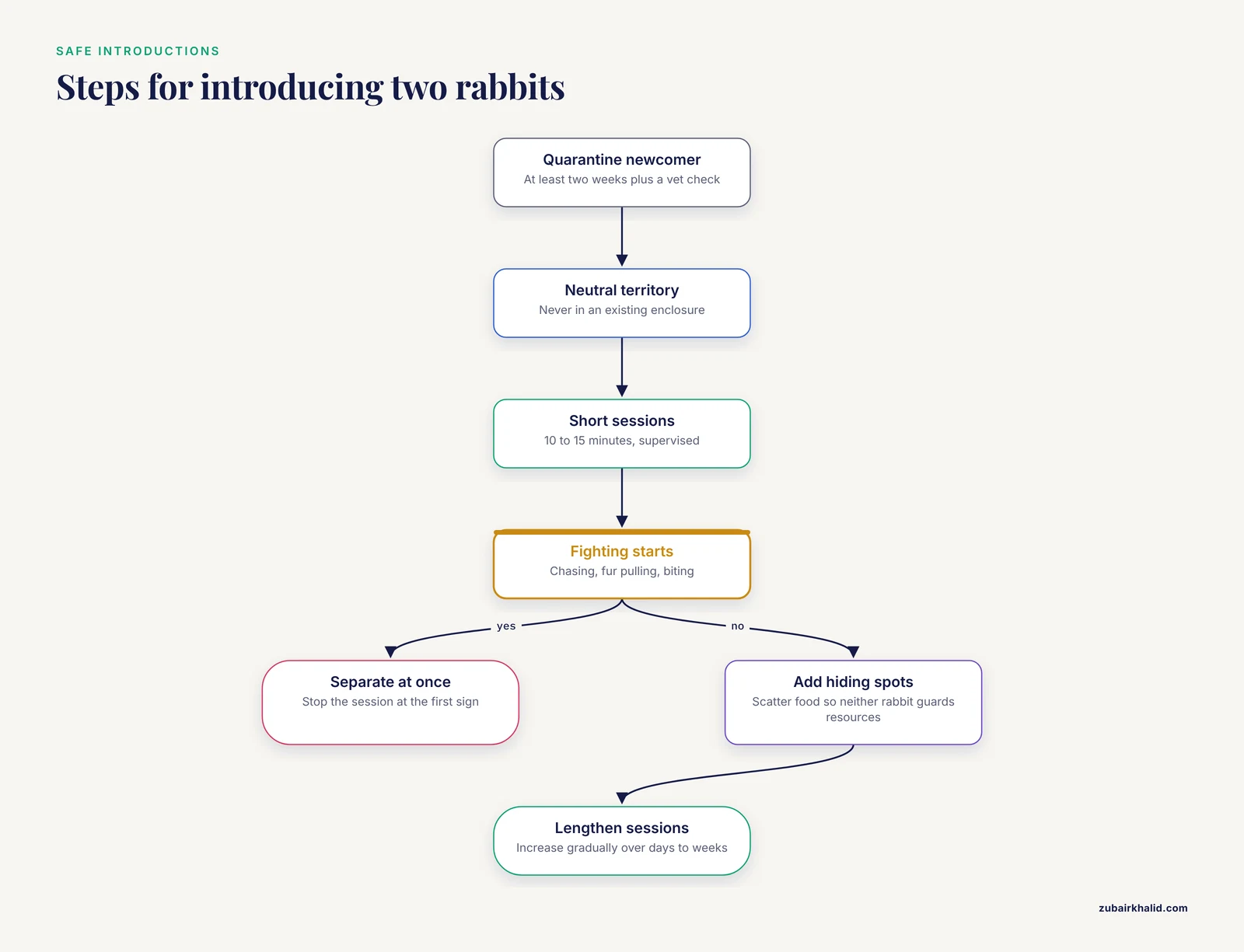
- Quarantine any new rabbit for at least two weeks and have a veterinarian check its health first.
- Introduce rabbits on neutral territory, never in one rabbit's existing enclosure.
- Start with short, supervised sessions of 10 to 15 minutes and separate at the first sign of fighting.
- Provide hiding spots and scatter food so neither rabbit guards resources.
- Increase session length gradually over days to weeks.
Reading Bonding and Stress Signals
Relaxed bonding looks like gentle nose-to-nose contact, mutual grooming, lying side by side, and shared eating. Stress or aggression shows as thumping, stiff posture, chasing, fur pulling, mounting, or biting. Stop the session if either rabbit persists in these behaviors. Enrichment such as hide boxes and tunnels reduces stress and supports normal behavior. Crowding can worsen tension, so give each rabbit adequate space [5]. A rabbit that stops eating or hides after an introduction needs veterinary advice.
Related Guides
- Rabbit Heat-Stress Preparedness and Seasonal Ventilation Checks: Heat stress is a major risk; this page covers preparedness and ventilation
- Rabbit Cage Cleaning Schedule: Daily, Weekly, and Deep Cleaning Routines: Regular cage cleaning prevents disease and supports good rabbit health
- Rabbit Lighting Programs: Photoperiod Effects on Breeding and Growth: Lighting programs influence breeding and growth, useful for NZ rabbitries
- Rabbit Feed Formulation: Balancing Protein, Fiber, and Energy: Feed formulation guidance helps balance protein, fiber, and energy needs
- Managing Aggression and Social Stress in Rabbits: Managing aggression and social stress supports successful pair bonding
- Rabbit Care Guide for New Owners: New owners can use this general care guide alongside the breed profile
- Bringing Home a New Rabbit: First Week Guide: First-week guidance helps new NZ rabbit owners settle their rabbit safely
- Rabbit Breeds: A Veterinary Guide to Size, Temperament, and Health Considerations: Veterinary overview of breed size, temperament, and health considerations
Frequently Asked Questions
Are New Zealand rabbits good pets?
Yes. New Zealand rabbits are calm, handleable, and adapt well to indoor life. Their tolerance of routine handling is the same trait that makes them the standard breed in research settings.
How big do New Zealand rabbits get?
Adult New Zealand White does typically weigh 3.25 to 3.50 kg and bucks weigh 3.5 to 4 kg [3]. That is roughly 7 to 9 pounds.
What do New Zealand rabbits eat?
A complete pelleted feed with free access to fresh water is the foundation of the diet [11]. Soybean-based protein supports faster growth than cowpea or pigeon pea [12], and β-glucan supplementation can improve feed efficiency [13].
How long do New Zealand rabbits live?
Lifespan depends on genetics, diet, housing, and veterinary care. Ask your veterinarian for a realistic estimate for your individual rabbit.
Do New Zealand rabbits need special housing?
They need enough space per rabbit, because crowding reduces growth and welfare [5]. Environmental enrichment such as tunnels, hide boxes, and chew toys is also important [4].
How often do New Zealand rabbits breed?
They are productive breeders with large litters [14], but breeding decisions should be planned with veterinary guidance. Kit survival varies by genetic cross and management [17].
Are New Zealand White rabbits albino?
Yes. The New Zealand White is an albino rabbit with a non-pigmented white coat and pink eyes [2].
Do New Zealand rabbits tolerate heat?
They handle heat better than some breeds, but heat stress still reduces growth and immunity [6]. Provide shade, ventilation, and cool water in warm weather.
Sources
- A Genetic Evaluation System for New Zealand White Rabbit Germplasm Resources Based on SSR Markers
- New Zealand White Rabbit
- RECOVERY RATE AND QUALITY OF EMBRYOS AS AFFECTED BY REPEATED SURGICAL COLLECTION FROM NEW ZEALAND WHITE AND BALADI RABBIT DOES.
- Enhancing Rabbit Welfare: The Role of Environmental Enrichment in New Zealand White breed
- Effect of stocking density on the performance of New Zealand white breed of broiler rabbit in Assam
- Optimising rabbit performance under cyclic heat stress: effects of nano-chromium chloride on growth, immunity, antioxidant defense, and gene expression in New Zealand White and Rex breeds
- Polymorphism of Growth Factor 1 gene in New Zealand rabbit breed in Cu Chi farm, Vietnam
- The Comparative Study on Effect of Breed and Gender on Some Carcass Traits of New Zealand White and Dutch Rabbit Breeds
- Studies on carcass characteristics of new zealand white breed of rabbit
- Integrative Analysis of the Metabolome and Transcriptome Reveals the Mechanism Underlying Differences in Skin Development Between the New Zealand Rabbit and the Rex Rabbit
- Effect of vitamin and mineral supplements on antioxidant protection indices in new zealand white breed rabbit
- Comparative evaluation of voluntary feed intake (VFI) and average daily gain (ADG) of Flemish Giant, New Zealand White and California black growing rabbit breeds fed soya bean (Glycine max), Cowpea (Vigna unguiculata) and Pigeon pea (Cajanus cajan
- β-glucan administration improves growth performance and gut health in New Zealand White and APRI rabbits with different breed responses
- Genetic assessment of litter size, body weight, carcass traits and gene expression profiles in exotic and indigenous rabbit breeds: a study on New Zealand White, Californian, and Gabali rabbits in Egypt
- Breed, heterotic, maternal and direct additive effects on pre and post-weaning body weight and body dimensions in New Zealand and Chinchilla strains of Rabbit
- Characterization of the monthly reproductive performance of Sinai Gabali rabbit does using New Zealand white rabbit as a reference breed
- Growth, survival rate of New Zealand White, Dutch Rabbit and their crosses
- Seasonal effects on semen quality in Black Baladi and White New Zealand rabbit bucks.
- Comparative Evaluation of Sexual Behavior, Semen Characteristics and Environmental Modulation in Local Algerian and New Zealand White Rabbit Bucks
- COMPARATIVE STUDY ON EFFECT OF BREED AND GENDER ON SOME CARCASS TRAITS OF NEW ZEALAND WHITE AND DUTCH RABBIT BREEDS