Do Guinea Pigs Have Good Hearing? Sound Sensitivity
By Dr. Zubair Khalid, DVM, MS, PhD ·
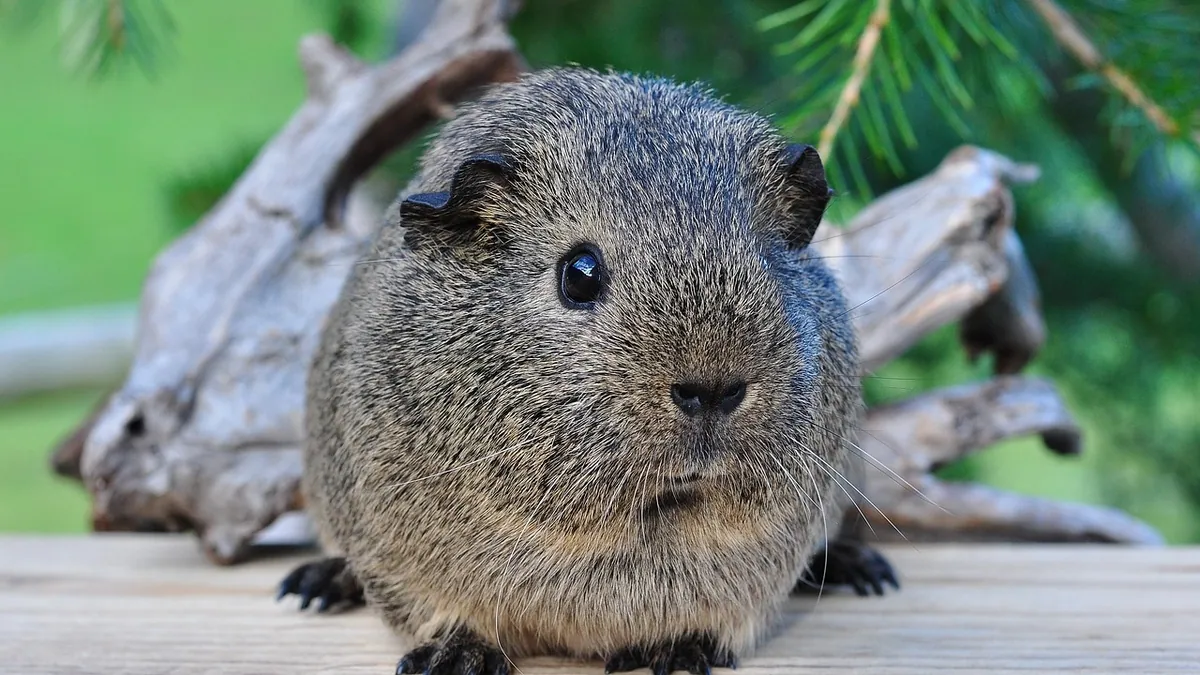
Yes, guinea pigs have good hearing. They hear a wider range of pitches than people do, and they are especially tuned in to sudden or loud sounds. That sharp hearing is a survival tool, but it also means a noisy home can wear them down. This article is educational and is not a substitute for veterinary diagnosis or treatment.
Quick Answer
- Guinea pigs hear very well and pick up sounds across a broad range of frequencies, including some high pitches that human ears miss [1].
- Their ears are large, rounded, and hairless on the pinna (the visible flap), which helps them collect sound [1].
- Loud or sudden noise is a real stressor. In one study, guinea pigs showed measurable breathing-rate changes as sound levels rose [2].
- Very loud noise can physically damage the inner ear. Researchers caused hearing loss in guinea pigs using 6 to 10 kHz broadband noise at 115 to 120 dB for 1.5 to 2 hours [3].
- The fix is simple. Put the cage in a calm room, keep speakers and appliances away, and give them a hiding spot.
Do Guinea Pigs Have Good Hearing? What Their Ears Can Do
Guinea pigs are hystricomorph rodents native to the Andes region of South America, where they were first domesticated as livestock [1]. In that environment, hearing well meant staying alive. Predators made noise. So did other guinea pigs.
Their ears reflect that history. The pinnae are rounded and hairless, with a patch of normal hair loss just behind each ear [1]. Those big, open ear flaps act like funnels. They gather sound and send it inward.
Guinea pigs also have a well-studied inner ear. The cochlea, the spiral structure that turns sound waves into nerve signals, is a common research model in guinea pigs because it works much like a human cochlea [4]. In healthy guinea pigs, protein expression in the left and right cochlear tissues overlaps by about 93%, which supports the idea that both ears function as a matched pair [4].
So the short answer holds up. Their hearing is good, and it is sensitive.
Guinea Pig Hearing Range and Sound Sensitivity
Guinea pigs detect a broad range of frequencies. That range includes low tones and extends into high pitches beyond what you can hear. This is one reason a dog whistle or a high-pitched electronic beep may bother your guinea pig while you barely notice it.
Sensitivity is the other half of the story. A 2025 study measured breathing rate in guinea pigs as they were exposed to a series of startle pulses at seven increasing sound levels [2]. Breathing rate is a known marker of stress from noise and crowding [2]. As the sound levels climbed, the animals' breathing changed in a way that tracked cumulative stress [2].
That matters for you at home. Your guinea pig cannot tell you a noise is too loud. Its body reacts instead.
Why Loud Noise Stresses Guinea Pigs
Guinea pigs are prey animals. A sudden sound triggers a startle response, and that response is wired to keep them alive. The problem is that a vacuum, a blender, a barking dog, or a home theater system does not stop after one second. Repeated or prolonged noise keeps the stress response switched on.
There is also a physical risk, not only an emotional one. In a 2026 experiment, guinea pigs with normal hearing were exposed to 6 to 10 kHz broadband noise at 115 to 120 dB for 1.5 to 2 hours to induce acoustic trauma [3]. That is roughly the loudness of a rock concert or a chainsaw, sustained for a long stretch. The exposure damaged their hearing, which researchers confirmed with otoacoustic emissions and auditory brainstem response testing [3].
You are not going to run a chainsaw next to the cage. But the study shows the principle clearly. Guinea pig ears are not built for sustained loud sound.
How to Set Up a Quiet Cage Environment: Step by Step
This is the part you control, and it makes a real difference.
Step 1: Pick the Right Room
Choose a room with steady, low background noise. A bedroom or a quiet corner of a living room works well. Avoid rooms next to a washing machine, a home gym, or a television that runs all evening.
Keep the cage off the floor if you have dogs or young children. Foot traffic and barking happen at floor level.
Step 2: Position the Cage Away From Speakers and Appliances
Measure the distance in your head. If you can feel bass from a speaker, the cage is too close. The same goes for a subwoofer, a gaming setup, or a surround-sound system.
Move the cage at least to the far side of the room from any speaker. If you cannot, move the cage to another room.
Step 3: Add Sound Buffers
Soft materials absorb sound. A thick rug under the cage, a blanket over one end of the cage (leave the rest open for airflow), and curtains on nearby windows all help.
Do not cover the whole cage. Guinea pigs need ventilation, and a fully draped cage traps heat and ammonia.
Step 4: Give Them Somewhere to Hide
A hiding spot lets a guinea pig retreat when something startles it. Use a pigloo, a cardboard box with two door holes, or a fleece tunnel. Two hides are better than one so a pair can separate if needed.
Step 5: Control the Noise You Make
You cannot silence a household. You can time the loud jobs. Vacuum when your guinea pigs are in another room. Run the blender in short bursts. Warn guests before they shout at the TV.
Step 6: Watch Their Body Language
A relaxed guinea pig moves around, eats, and rests with its body loose. A stressed one freezes, bolts, or stays hidden. If your guinea pig changes behavior after a noise event, that is your signal to adjust the room. For more on reading their signals, see Guinea Pig Behavior: Understanding Sounds and Actions.
Quiet Cage Checklist and Daily Schedule
Use this as a quick reference. Print it or keep it on your phone.
| Item | What to do | How often |
|---|---|---|
| Room choice | Quiet room, away from TVs, speakers, and laundry | Once, then review |
| Cage height | Off the floor, at waist level if possible | Once |
| Speaker distance | As far as the room allows | Once |
| Sound buffers | Rug under cage, curtain nearby, partial blanket | Once |
| Hiding spots | At least two per cage | Check daily |
| Vacuuming | Move guinea pigs to another room first | Each time |
| Loud appliances | Run in short bursts, away from the cage | Each time |
| Noise check | Sit by the cage and listen for 5 minutes | Weekly |
| Behavior check | Watch eating, movement, and hiding | Daily |
| Weight check | Weigh on a small kitchen scale | Weekly |
A weekly weigh-in is one of the most useful habits you can build. Weight loss is often the first sign that something is wrong, and it shows up before other symptoms. For a broader look at what to watch for, see Guinea Pig Health: Common Conditions and Prevention.
Signs That Noise or Something Else Is Wrong
Guinea pigs hide illness well. That is a prey-animal instinct, and it works against you as an owner. You have to look for small changes.
Signs of Noise Stress
- Freezing in place when a sound starts
- Bolting into a hide and staying there
- Refusing food or eating less
- Rapid, shallow breathing at rest
- Repeated startle responses to the same sound
- Increased hiding during normal household activity
Signs of Possible Ear or Hearing Problems
- Head tilt or loss of balance
- Circling to one side
- Scratching at one ear more than the other
- Discharge, crusting, or a bad smell from the ear
- Nystagmus, which is a rapid flicking of the eyes
Balance problems can come from the inner ear, and they deserve prompt attention. In a 2025 study of guinea pigs after cochlear implantation, about 10.7% developed nystagmus and balance dysfunction, and their auditory brainstem response thresholds rose significantly afterward [5]. That study involved surgery, not household noise, but it shows how closely the ear and balance system are linked in this species.
Signs of Pain or General Illness
- Hunched posture
- Grinding or chattering teeth
- Squinting or half-closed eyes
- Drooling
- Diarrhea or no droppings
- Labored breathing
- Weight loss
If your guinea pig is squeaking more than usual, that can mean excitement, hunger, pain, or distress. The pitch and context matter. This article breaks it down: Guinea Pig Squeaking Noise.
Common Mistakes Owners Make
Putting the cage next to the TV. This is the most common one. A television runs for hours at a volume you find comfortable, but your guinea pig hears a wider range than you do [1]. Move the cage across the room or into another room.
Keeping guinea pigs in a busy hallway. Constant foot traffic means constant startle events. A quiet corner beats a central location every time.
Covering the entire cage with a blanket. This muffles sound, but it also blocks airflow. Cover one end only.
Assuming a single guinea pig is fine alone. Guinea pigs are social. A lone guinea pig often shows more stress, not less. If you are deciding between species, this comparison may help: Guinea Pig vs Rabbit: Which Pet Is Right for You?.
Ignoring a head tilt. Owners sometimes wait a week to see if it resolves. Balance signs can worsen quickly. Call your veterinarian.
Using loud music to "get them used to noise." There is no evidence this helps, and sustained loud sound can damage the inner ear [3]. Skip it.
Missing a slow decline. A guinea pig that gradually hides more and eats less may be stressed, sick, or both. Weekly weights catch this early.
Supplies and Setup Details That Matter
You do not need expensive gear. You need the right basics.
Cage. Solid-bottom cages with smooth sides. Wire floors cause foot injuries. Bigger is better, and a pair needs more room than a single guinea pig.
Bedding. Paper bedding, fleece liners, or aspen shavings. Avoid cedar and pine shavings, which have strong aromatic oils.
Hiding spots. At least two. Pigloos, fleece tunnels, and cardboard boxes all work.
Water bottle and heavy food bowl. A bottle keeps water clean. A heavy bowl cannot be tipped.
Hay rack. Unlimited grass hay is the core of the diet. A rack keeps hay off the floor and reduces waste.
Small kitchen scale. For weekly weights. This is your cheapest early-warning tool.
Nail trimmers and a soft brush. Routine grooming helps you check the body for lumps, sores, and skin problems.
A quiet corner. This is a supply in its own way. It costs nothing and does more for stress than any product.
One more note on the ears themselves. The pinnae are hairless and exposed, so they are easy to inspect. Look for cuts, crusts, or redness during your weekly check. Do not put anything inside the ear canal. Cotton swabs push debris deeper and can injure the eardrum.
If your guinea pig develops a skin or ear issue alongside behavior changes, this guide covers common problems: Guinea Pig Health: Recognizing and Responding to Common Illnesses.
Limitations and When to Contact a Veterinarian
No article can examine your guinea pig. Individual cases need a veterinarian who can look at the ears, test balance, and check the teeth, since dental disease can also cause drooling and eating problems.
Contact a veterinarian the same day if you see:
- A new head tilt
- Circling or falling to one side
- Eye flicking (nystagmus)
- Not eating for more than a few hours
- No droppings for 12 hours
- Drooling or dropping food from the mouth
- A wound or swelling on or near the ear
Go to an emergency clinic now if you see:
- Labored breathing, open-mouth breathing, or blue gums
- Collapse or inability to stand
- Seizure activity
- Heavy bleeding
- A large, rapidly growing swelling
Schedule a routine visit if you notice:
- Gradual weight loss over two or more weeks
- Increasing hiding or reduced activity
- Mild scratching at one ear
- Crusting or discharge in the ear canal
- Any change in eating or drinking habits
Find a veterinarian who treats exotic pets. Not every clinic sees guinea pigs, and calling ahead saves time. If you are unsure whether a symptom is urgent, call the clinic and describe what you see. They can tell you whether to come in now or wait.
Frequently Asked Questions
Can guinea pigs hear sounds that humans cannot?
Yes. Their hearing range extends into higher frequencies than the human range, so they pick up high-pitched sounds you may not notice at all. This is one reason a quiet room feels different to them than it does to you.
Are guinea pig ears sensitive to touch?
The pinnae are hairless and thin, so they are more exposed than a furry ear would be. Most guinea pigs tolerate gentle handling of the ear flap, but avoid poking inside the canal. If your guinea pig flinches when you touch an ear, have a veterinarian look at it.
Do guinea pigs get scared of vacuum cleaners?
Many do. A vacuum is loud, sudden, and close to the floor, which is exactly the kind of sound that triggers a startle response. Move your guinea pigs to another room before you vacuum, then bring them back once the noise stops.
Can loud music damage my guinea pig's hearing?
Sustained loud sound can damage the inner ear in guinea pigs. In one experiment, 6 to 10 kHz noise at 115 to 120 dB for 1.5 to 2 hours caused measurable hearing loss [3]. Keep music at a moderate volume and away from the cage.
How can I tell if my guinea pig is stressed by noise?
Watch for freezing, bolting to a hide, reduced eating, and rapid breathing at rest. Breathing rate rises with noise stress in guinea pigs [2]. If these signs appear only during loud events, the environment is the likely cause.
Do guinea pigs need a quiet room at night?
They are active at dawn and dusk, so some nighttime activity is normal. A dark, quiet room still helps them rest. Keep the cage away from televisions, computers, and other devices that run overnight.
Related Articles
- Guinea Pig Behavior: Understanding Sounds and Actions
- Guinea Pig Squeaking Noise
- Guinea Pig Health: Common Conditions and Prevention
- Guinea Pig Health: Recognizing and Responding to Common Illnesses
- Guinea Pig vs Rabbit: Which Pet Is Right for You?
- What Guinea Pigs Can and Cannot Eat
- Do Guinea Pigs Have Good Eyesight? Vision Explained
- Why Is My Guinea Pig Purring? What the Sound Means
- Why Is My Rabbit or Guinea Pig Grunting?
References
- Anatomy, Physiology, and Behavior of Guinea Pigs - Exotic and Laboratory Animals. Merck Veterinary Manual.
- Breathing Rate as a Marker for Noise-Induced Stress in Guinea Pigs. Brain sciences, 2025.
- An Experimental Study on the Protective Effect of Memantine in Noise-Induced Hearing Loss. World journal of otorhinolaryngology - head and neck surgery, 2026.
- Quantitative Proteomics of Cochlear Tissues: Bilateral Comparisons in Guinea Pigs and Rats. Proteomics, 2025.
- Inner Ear Pathologies After Cochlear Implantation in Guinea Pigs: Functional, Histopathological, and Endoplasmic Reticulum Stress-Mediated Apoptosis. Ear and hearing, 2025.