Senior Guinea Pig Care: Aging Signs, Diet, and Comfort
By Dr. Zubair Khalid, DVM, MS, PhD ·
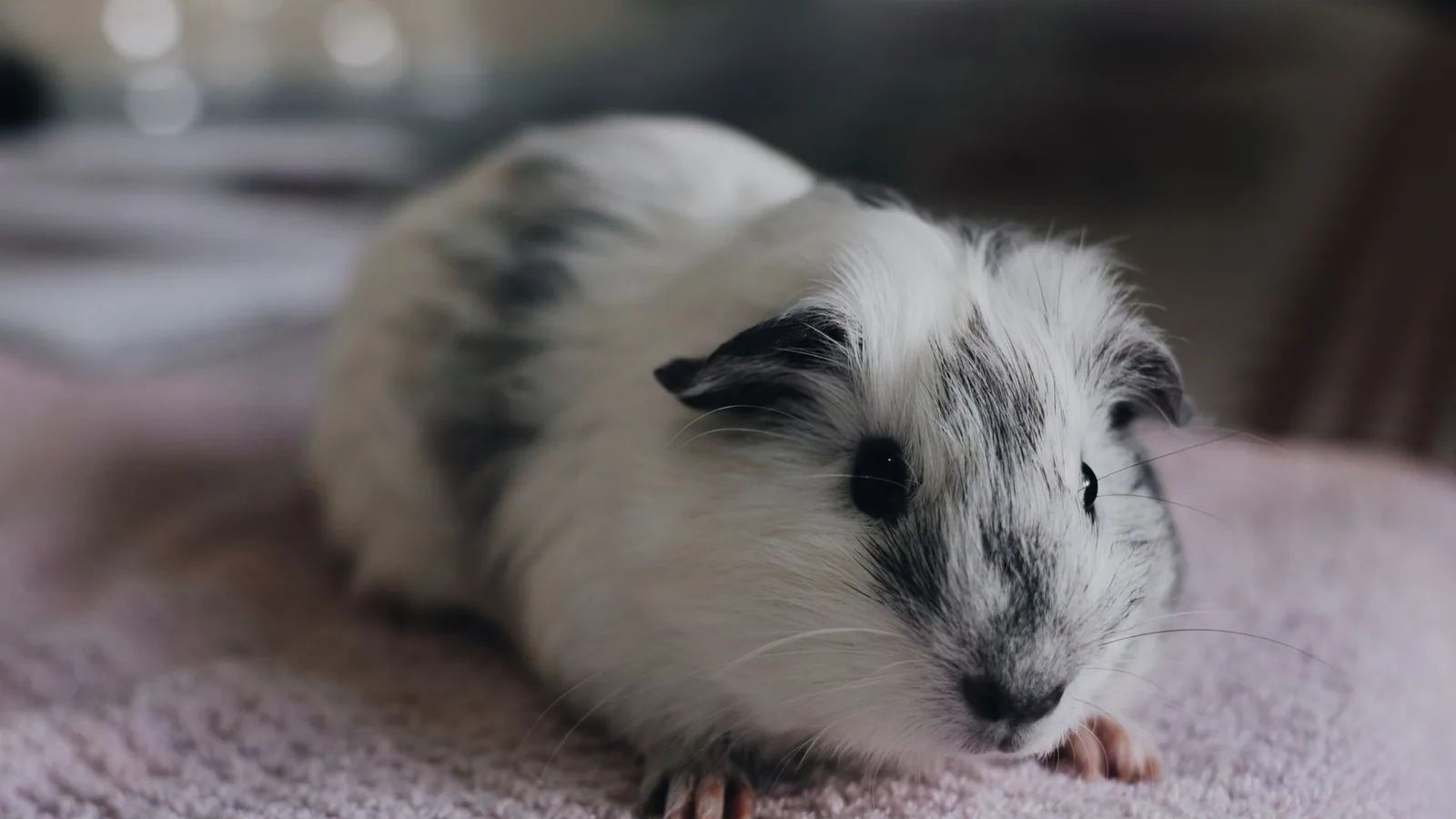
Senior guinea pig care begins earlier than many owners expect. A practical senior marker is about 4 years, the median age at death in a large UK primary-care study [1]. Care at this stage focuses on steady weight, unlimited hay, dental health, comfortable movement, pain control, and a dry, low-stress enclosure.
Guinea pigs hide problems well. A senior that seems merely quiet may have dental pain, arthritis, or urinary disease. The goal is not to treat old age as an illness. The goal is to reduce predictable risks and catch treatable problems early.
This article is educational and is not a substitute for veterinary diagnosis or treatment.
At a Glance
| Area | Senior-friendly action | Why it matters |
|---|---|---|
| Age review | Start senior monitoring around 4 years, or sooner if chronic disease is present | Median age at death was 4.03 years in a large UK study [1] |
| Weight | Weigh weekly and record the number | Weight loss is a common senior warning sign [1] |
| Diet | Offer grass hay at all times and measure pellets | Hay supports chewing and digestion, and portioned pellets prevent overfeeding [2] |
| Mouth | Watch for drooling, slow chewing, and dropped food | Dental disease can lead to digestive disorders [3] |
| Movement | Use solid flooring, low entry, and gentle ramps | Guinea pigs can develop osteoarthritis [4] |
| Social contact | Keep compatible companions when possible | Most pet guinea pigs are group-housed [5] |
| Environment | Keep bedding dry and clean | Many owners clean less often than recommended [6] |
| Veterinary care | Schedule a senior exam and ask about pain | Guinea pig pain assessment is limited and often underestimated [7] |
What Counts as a Senior Guinea Pig?
There is no universal senior cutoff. A practical working definition is 4 years and older, because the median age at death in a large UK primary-care population was 4.03 years [1]. That does not mean every 4-year-old is frail. Half of the guinea pigs in that dataset lived beyond the median, and many older guinea pigs remain active and social.
How old is a senior guinea pig?
Use 4 years as a prompt to review care, not as a diagnosis. Start senior monitoring at 4 years, and start earlier if your guinea pig has chronic dental disease, joint stiffness, urinary problems, or unexplained weight loss. A guinea pig that is 3 years old with dental disease needs senior-level attention now, not on a birthday.
The better question is functional. Can your guinea pig reach hay and water without effort? Is it maintaining weight? Does it move comfortably? Is it eating with normal speed? These answers matter more than a single age threshold.
Guinea pig lifespan and the senior years
Guinea pig lifespan varies. The median age at death was 4.03 years in a large UK primary-care study [1]. Some guinea pigs live beyond that, so a senior plan should support function rather than assume a fixed end point.
The senior years are a time of changing risk. Dental wear, joint disease, urinary tract disease, and reduced competition for food can all interact. A guinea pig that slows down may be developing several small problems at once. Regular weighing and a senior veterinary exam help separate normal aging from treatable disease.
Why age alone is not a care plan
Breed was not recorded for 97.05% of guinea pigs in the UK study, so breed-specific senior plans are not realistic for most pets [1]. Sex can influence some disorder risks, but individual body condition, dental health, and mobility are more useful day to day.
Build the plan around five questions. Is your guinea pig eating? Is it maintaining weight? Is it moving comfortably? Are droppings normal? Is it interacting with companions? Those questions catch more problems than an age chart.
Signs of Aging in Guinea Pigs
Aging signs are usually gradual. Compare your guinea pig with its own baseline, not with a young guinea pig. A senior that sleeps more may be normal. A senior that stops grooming, drops food, or sits hunched is not normal.
Weight and body condition
Weight loss is one of the most useful senior signs. In the UK study, weight loss had the oldest age of affected animals at 4.64 years [1]. Weigh weekly with a kitchen scale and record the number. A single reading can be misleading. A downward trend over several weeks deserves a veterinary exam.
Look at the back and hips as well as the scale. Muscle loss can make the coat look loose. Your veterinarian can body condition score your guinea pig and check for dental pain, digestive disease, and urinary problems before you change the diet.
Mobility and joints
Guinea pigs can develop osteoarthritis. Dunkin-Hartley guinea pigs spontaneously develop knee osteoarthritis, which makes them a model for the disease [4]. A senior may sit more, move stiffly, resist climbing, or fail to groom the rear end. Do not assume slowing down is just old age.
Provide low-entry housing and solid flooring. Discuss pain control with your veterinarian. A guinea pig that is reluctant to move may be painful, not lazy.
Teeth and eating
Dental disease is a major cause of digestive problems in guinea pigs. Inadequate tooth wear and poor feeding can lead to oral changes that then affect digestion [3]. Watch for drooling, slow chewing, dropped food, weight loss, and reduced hay intake.
Dental problems can be subtle. A guinea pig may still eat pellets and treats while avoiding hay. Hay avoidance is a warning sign because hay is the food that wears teeth and supports digestion. Book a dental exam if your senior changes its chewing pattern.
Digestion and droppings
Digestive disorders often follow dental disease or poor feeding [3]. Check droppings daily for amount, shape, and moisture. Fewer droppings, small droppings, diarrhea, or a sudden change in odor need veterinary advice.
Do not wait for diarrhea to resolve on its own. A senior guinea pig can decline quickly when digestion is disrupted. Keep a simple log of droppings if you notice a change. That information helps your veterinarian.
Urinary and water habits
Age affects urinary protein-to-creatinine ratio. In healthy guinea pigs, pups under 6 months had higher ratios than adults, and the adult reference range was 0.12 to 2.21 [8]. Your veterinarian should interpret urine tests with age in mind.
Watch for straining, frequent urination, blood in the urine, and changes in water intake. Water needs vary with feed, temperature, and individual behavior. A review of small mammal water consumption found species-dependent variation and concluded that general water intake recommendations are not possible [9]. Know your guinea pig's normal drinking and urination pattern, and refresh water daily.
Eyes, ears, skin, and nails
In a UK primary-care study, overgrown nails were the most common disorder at 26.55%, dermatophytosis was diagnosed in 6.02%, and corneal ulceration in 4.99% [1]. These are common problems, not rare exotics.
Check eyes for discharge, cloudiness, or squinting. Check ears for discharge or odor. Check skin for crusts, flakes, or hair loss. Check nails for curling and overgrowth. A senior with overgrown nails may catch a nail and become reluctant to move. Trim nails regularly or have your veterinarian do it.
Behavior and social changes
A senior may sleep more or move less. A guinea pig that stops eating next to companions, hides more, or becomes aggressive may be in pain or stressed. Social housing is common. In one survey, 85.7% of owners kept two or more guinea pigs [5]. Watch how your senior interacts with its group.
A change in social rank can also affect access to food. A slower senior may be pushed away from hay or water. Place multiple hay and water stations so every guinea pig can eat without competition.
Pain and subtle signs
Guinea pig pain is underrecognized. A review found no validated guinea pig grimace scale, and analgesic doses are often extrapolated from other species [7]. The only UK-licensed analgesic for guinea pigs, meloxicam, has a label dose lower than doses suggested in the reviewed literature [7]. Ask your veterinarian about pain assessment and treatment rather than assuming a quiet guinea pig is comfortable.
Pain can look like sleepiness, poor appetite, reluctance to move, or changed social behavior. A senior that is quieter than usual deserves a hands-on exam.
Senior Guinea Pig Diet
Diet is the foundation of senior care. The goal is steady weight, good dental wear, normal droppings, and a healthy urinary tract. A senior diet should be simple, consistent, and built on hay.
Hay first
Grass hay should be the center of the diet. A timothy hay-based diet with loose timothy hay available at all times is one studied approach for guinea pig colony management [2]. Hay supports chewing and tooth wear, and dental problems can lead to digestive disease [3].
Offer fresh hay daily and remove soiled hay. Do not ration hay for a senior guinea pig unless your veterinarian gives a specific reason. Hay access also gives a senior something to do, which supports normal behavior.
Pellets and portioning
Pellets are a supplement, not the main food. In a colony study, adult guinea pigs received a portioned 1 oz daily timothy hay-based pellet ration plus loose timothy hay at all times [2]. That is a study protocol, not a universal prescription. Ask your veterinarian to set a portion based on your guinea pig's weight and health.
Avoid alfalfa-based pellets for adults unless your veterinarian advises otherwise. A calcium-rich diet has been suggested as a risk factor for urolithiasis, and commercial adult diets often avoid higher-calcium ingredients [2]. Do not restrict calcium on your own. Your veterinarian can review the whole diet and urine findings.
Fresh foods and diet changes
Fresh foods can add variety, but they should not replace hay. Sudden diet changes can upset digestion, especially in a senior [3]. Introduce any new food slowly and ask your veterinarian before adding supplements.
A senior with dental disease may need softened food or a different texture for a short period. That decision should follow a dental exam, not a guess. If your guinea pig cannot chew hay comfortably, call your veterinarian.
Water
Water intake varies with feed, temperature, and individual behavior. A review of small mammal water consumption found species-dependent variation and concluded that general water intake recommendations are not possible [9]. Know your guinea pig's normal drinking and urination pattern.
Refresh water daily and clean containers often. A senior with arthritis may struggle to reach a high bottle or a heavy bowl. Place water where your guinea pig can drink without stretching or climbing.
Weight loss and appetite
Weight loss in a senior is a medical sign, not a reason to free-feed pellets. A veterinarian should check teeth, pain, digestion, kidneys, and urine before you change the diet. Increasing pellets may worsen urinary or digestive problems without solving the underlying cause.
If your guinea pig is eating less hay but still taking pellets, dental pain is a likely concern. If it is eating less of everything, systemic illness is a concern. Either pattern needs a veterinary visit.
Urinary health and calcium
Urolithiasis is a well-documented cause of lower urinary tract disease in guinea pigs. Calcium carbonate uroliths are the predominant type, and a calcium-rich diet has been suggested as a risk factor [2]. A timothy hay-based pellet with loose timothy hay is one option studied for urinary tract health [2].
Do not switch to a low-calcium diet without guidance. Guinea pigs need balanced nutrition, and home-made restrictions can cause new problems. Ask your veterinarian to review the diet if your guinea pig has a history of urinary signs.
A practical senior feeding routine
Use a simple routine that makes changes easy to spot.
- Morning: check hay, water, droppings, and behavior.
- Offer fresh hay and remove soiled hay.
- Measure the pellet portion instead of topping up the bowl.
- Check that all guinea pigs can reach hay and water without competition.
- Evening: check hay and water again and note appetite.
- Weekly: weigh your guinea pig and review the trend.
Comfort and Housing for the Senior Guinea Pig
Comfort is not about luxury. It is about reducing pain, falls, stress, and competition for food. A senior enclosure should be easy to navigate and easy to clean.
Space and flooring
A senior needs enough space to move without slipping. One survey found a mean area of 1.4 m2 per guinea pig, with wide variation between homes [5]. Space matters, but layout matters more for an older guinea pig. Use a solid floor, low entry, and clear paths to hay, water, and resting areas.
Avoid slippery surfaces and high steps. A guinea pig with arthritis may stop moving if every trip to food requires a jump. Place hay and water on the same level as the resting area.
Bedding and cleaning
Keep bedding dry and clean. A husbandry survey found many owners cleaned cages less often than recommended [6]. Soiled bedding can irritate skin and feet. Choose bedding that absorbs moisture and is easy to change.
Spot clean daily and do a full bedding change on a schedule that keeps the enclosure dry. A senior that sits more may create damp spots. Check those areas daily.
Ramps and layout
Ramps can help a senior stay active, but they must be easy to use. A study found guinea pigs climbed higher and faster when they could see the food reward at the top of a ramp [10]. Place food and water where your guinea pig can see them, and use gentle slopes with clear footing.
If your guinea pig has arthritis, a ramp may be a barrier rather than enrichment. Watch whether your guinea pig uses the ramp. If it avoids the ramp, move food and water to the main level.
Companionship
Guinea pigs are social. In one survey, 85.7% of owners kept two or more guinea pigs [5]. A German-speaking survey found 7.5% of guinea pigs were individually housed and 0.4% lacked constant hay [11]. A lone senior may need a compatible companion, but introductions can be stressful. Ask your veterinarian or a rescue for help.
Companionship is not always simple. A frail senior can be bullied or blocked from food. Provide multiple feeding stations and watch group behavior. If a companion dies, do not assume your senior should stay alone. Plan for gradual, supervised introductions.
Handling
Handle a senior gently and briefly. A zoo study found excessive interactive handling increased negative behaviors such as head turning and freezing and raised salivary cortisol [12]. Use a towel or low basket to support the body, and let your guinea pig retreat when it wants to.
Pick up with both hands under the chest and hindquarters. Do not lift a senior by the scruff. If your guinea pig struggles or seems painful, stop and ask your veterinarian for a safer handling plan.
Enrichment
Food enrichment and positive human interactions were associated with more affiliative behavior and locomotor play in a large survey [11]. Try small food puzzles or scattered hay. Keep the setup easy to navigate.
Enrichment should not create competition. Use several small stations rather than one rich station that a dominant guinea pig can guard. Rotate items so the enclosure stays interesting without becoming cluttered.
Senior supplies and selection criteria
| Supply | Selection criteria | Why it matters |
|---|---|---|
| Grass hay | Loose, fresh grass hay such as timothy, available at all times | A timothy hay-based diet with loose hay was used in a colony study [2] |
| Pellets | Timothy-based, measured portion, not alfalfa-based for adults unless advised | A calcium-rich diet has been suggested as a urolithiasis risk [2] |
| Water container | Easy to reach, easy to clean, stable | Water intake varies and needs individual monitoring [9] |
| Bedding | Absorbent, dry, easy to change | Many owners clean less often than recommended [6] |
| Enclosure | Solid floor, low entry, enough space for the group | Group housing is common, and space per guinea pig varies [5] |
| Ramp | Gentle slope, visible destination, secure footing | Guinea pigs climb better when they can see the reward [10] |
| Scale | Kitchen scale for weekly weights | Weight loss is a senior warning sign [1] |
| Veterinary contact | Exotic-pet or small-mammal experience | Guinea pig pain and disease assessment has limitations [7] |
Senior Guinea Pig Care at Home: Daily and Weekly Checklist
Welfare assessment uses both animal-based and resource-based indicators, and no single indicator is enough [13]. Use a short checklist so changes do not get missed.
Daily checks:
- Appetite and hay intake.
- Droppings, including amount and shape.
- Water intake and urination.
- Breathing rate and effort.
- Movement and posture.
- Social behavior with companions.
- Eyes, nose, mouth, and rear end.
- Enclosure dryness and cleanliness.
Weekly checks:
- Weight and body condition.
- Nail length.
- Coat and skin.
- Hay and pellet supply.
- Ramp use and access to food.
- Bedding condition.
- Any changes in behavior or sleep.
Monthly review:
- Compare weight records.
- Review any past veterinary advice.
- Check that the enclosure still fits your guinea pig's mobility.
- Schedule a senior exam if new patterns appear.
Common Mistakes Owners Make
- Treating slowing down as normal aging. Stiffness and reduced activity can be arthritis or pain [4][7].
- Free-feeding pellets. Pellets are not hay. A portioned timothy pellet ration plus free hay was used in a study [2].
- Ignoring dental signs. Drooling, slow chewing, and dropped food can signal dental disease, which can lead to digestive problems [3].
- Changing the diet suddenly. Sudden changes can upset digestion [3].
- Keeping a lone senior without a plan. Most guinea pigs are group-housed, and social behavior matters [5][11].
- Using a ramp that hides the destination. Guinea pigs use ramps better when the reward is visible [10].
- Delaying pain treatment. Pain assessment is limited, and a quiet guinea pig may be painful [7].
- Over-handling. Excessive handling can increase stress behaviors [12].
Troubleshooting Common Senior Problems
My senior guinea pig is not eating
Stop and call your veterinarian. Not eating can follow dental pain, digestive disease, or systemic illness [3]. Do not wait for the next routine visit.
My senior guinea pig is losing weight
Schedule a veterinary exam. Weight loss in older guinea pigs can reflect dental disease, pain, digestive problems, or urinary disease [1][3][2]. Bring your weight log to the appointment.
My senior guinea pig is drooling or chewing slowly
Book a dental exam. Dental disease and inadequate tooth wear are common causes of digestive disorders in guinea pigs [3]. A dental problem can worsen quickly if your guinea pig stops eating hay.
My senior guinea pig has diarrhea
Call your veterinarian. Diarrhea can be a sign of digestive disorder, and guinea pigs can decline quickly [3]. Do not withhold hay unless your veterinarian directs it.
My senior guinea pig is straining to urinate
Call your veterinarian. Urolithiasis is a well-documented cause of lower urinary tract disease in guinea pigs [2]. Urine testing should be interpreted with age-specific reference ranges [8].
My senior guinea pig is stiff or reluctant to move
Arrange a mobility exam. Guinea pigs can develop osteoarthritis [4]. Ask about pain control and adjust flooring and ramps [7][10].
My senior guinea pig has eye discharge or a cloudy eye
Call your veterinarian. Corneal ulceration was among the most common disorders in UK guinea pigs [1]. Eye problems can worsen quickly.
My senior guinea pig is breathing fast or sitting hunched
Seek urgent care. Breathing difficulty and hunched posture are emergency signs. Do not wait to see whether the behavior improves.
My senior guinea pig has overgrown nails
Trim the nails or have your veterinarian do it. Overgrown nails were the most common disorder in a UK study at 26.55% [1]. Curling nails can catch on bedding and make walking painful.
Welfare and Safety
Welfare is more than food and a cage. The Five Domains and Five Freedoms organize care around nutrition, environment, health, behavior, and mental state [13]. No single welfare indicator is enough for guinea pigs, so use a combination of body condition, behavior, enclosure checks, and veterinary exams [13].
Positive human interactions and food enrichment were associated with more affiliative behavior and play [11]. Excessive handling can raise stress [12]. Keep handling calm and predictable. Protect a senior from competition for food and from slippery floors.
The AAHA wellness guidelines support regular veterinary exams and individualized preventive care. For general husbandry background, the Merck Veterinary Manual's exotic animal section and VCA Animal Hospitals' small mammal guides are reliable owner-facing resources. They do not replace a hands-on exam.
Safety points for a senior guinea pig:
- Keep the floor dry.
- Provide low-entry access to hay and water.
- Avoid high steps and steep ramps.
- Provide multiple feeding stations in a group.
- Do not use human pain relievers without veterinary direction.
- Keep cords and unsafe objects out of reach.
- Supervise introductions and group changes.
Limitations and When to Contact a Veterinarian
Every senior guinea pig is an individual. Age, weight, dental health, joint disease, and urinary function interact, so a home assessment has limits. A veterinarian who examines your pet can check teeth, eyes, ears, skin, joints, heart, lungs, and urine. Individual cases need veterinary diagnosis and treatment.
Contact a veterinarian promptly if your guinea pig stops eating, stops passing droppings, drools, has diarrhea, loses weight, strains to urinate, has blood in the urine, breathes with effort, sits hunched, cannot move, has a new lump, or has an eye injury. Schedule a senior exam if you notice gradual slowing, weight change, or behavior change, even if the guinea pig seems stable. If you are unsure, call your veterinarian. A short phone call can help you decide whether to come in.
Frequently Asked Questions
How old is a senior guinea pig?
A practical senior marker is about 4 years, though individual health matters more than the birthday. Start senior checks at 4 years or sooner if chronic problems appear.
What are the first signs of aging in guinea pigs?
Reduced activity, weight change, slower chewing, and less social interaction are common early signs. Stiffness, drooling, and changes in droppings need a veterinary check.
How often should I weigh my senior guinea pig?
Weigh once weekly and record the number. A downward trend over several weeks deserves a veterinary exam.
What should I feed a senior guinea pig?
Offer grass hay at all times, measure a timothy-based pellet portion, and provide fresh water. Ask your veterinarian to tailor the diet if your guinea pig has dental or urinary disease.
Do senior guinea pigs need less space?
No. They need enough space to move without slipping, with low-entry access and a layout that reduces competition. Adjust the enclosure for mobility rather than shrinking it.
How can I make an older guinea pig more comfortable?
Use dry bedding, solid flooring, gentle ramps, and easy access to hay and water. Keep handling calm and ask your veterinarian about pain control if your guinea pig is stiff or quiet.
Should I keep a senior guinea pig alone?
No, not unless your veterinarian or a behavior specialist advises it for a specific medical reason. Guinea pigs are social, and a compatible companion is usually important.
When should I take a senior guinea pig to the vet?
Call promptly for not eating, no droppings, weight loss, drooling, diarrhea, straining to urinate, breathing changes, or sudden weakness. Schedule a senior exam for gradual slowing or behavior change.
Sources
- Demography, commonly diagnosed disorders and mortality of guinea pigs under primary veterinary care in the UK in 2019-A VetCompass study.
- Effect of Adopting a Timothy Hay-based Diet at Weaning or in Adulthood on Urinary Tract Parameters in Strain 13/N Guinea Pigs (Cavia porcellus).
- [[Digestive disorders in rabbits and guinea pigs].](https://pubmed.ncbi.nlm.nih.gov/1481206/)
- Micro-Computed Tomography Analysis of the Knee in Aged Dunkin-Hartley Guinea Pigs after Intra Articular Injection.
- Cross-sectional survey of housing for pet guinea pigs (Cavia porcellus) in New Zealand.
- Cross-sectional survey of husbandry for pet guinea pigs (Cavia porcellus) in New Zealand.
- Pain management in pet guinea pigs (Cavia porcellus): a review of limitations of current knowledge and practice.
- Urinary protein-to-creatinine ratio in guinea pigs (Cavia porcellus): Reference range and the effect of age and sex.
- Water consumption in small mammals (dwarf rabbits, Guinea pigs and chinchillas): New data about possible influencing factors.
- The role of line-of-sight in operant experiments using food reinforcers in guinea pigs.
- Guinea Pig (Cavia porcellus) Welfare: Associations Between Husbandry Practices, Human-Animal Interactions, and Animal Behaviour.
- Relationship between Ear Temperature, Behaviour and Stress Hormones in Guinea Pigs (Cavia porcellus) during Different Interactive Activities in Zoos.
- Review of Rat (Rattus norvegicus), Mouse (Mus musculus), Guinea pig (Cavia porcellus), and Rabbit (Oryctolagus cuniculus) Indicators for Welfare Assessment.