Why Is My Guinea Pig Chewing on Its Cage? Causes
By Dr. Zubair Khalid, DVM, MS, PhD ·
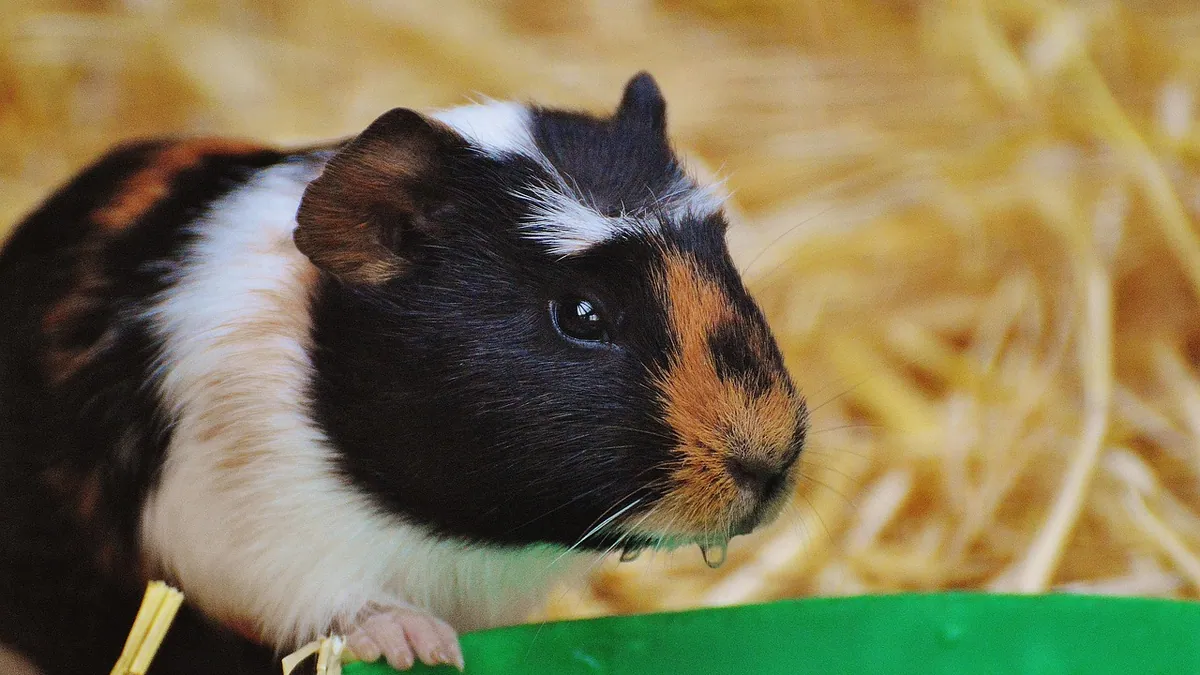
Guinea pigs chew cage bars for several reasons, and most of the time it is not a sign of illness. The behavior often means your guinea pig wants food, attention, or more space to move around. Still, because dental disease is common in this species, persistent bar chewing deserves a closer look [1].
This article is educational and is not a substitute for veterinary diagnosis or treatment.
Quick Answer
- Bar chewing is usually a request: your guinea pig may be hungry, bored, or waiting for you to notice it.
- Constant access to hay matters. Guinea pigs need hay for both nutrition and tooth wear, and dental problems are common when chewing time is too short [1].
- Bar chewing is uncommon in well-housed guinea pigs. In one survey of 1,181 owners, only 0.7% of guinea pigs chewed bars several times per day [2].
- Chewing that comes with drooling, weight loss, or dropped food points to dental pain and needs a veterinary visit [1].
- Punishment does not work. Fix the cause instead: more hay, more enrichment, a bigger enclosure, and a companion if your guinea pig lives alone.
Why Does My Guinea Pig Bite the Cage? Normal Reasons First
Before you worry about disease, rule out the everyday explanations. Most cage chewing falls into one of these categories.
Hunger and anticipation of food
Guinea pigs are grazers. They eat little and often, and they learn your schedule fast. If you feed vegetables at 6 p.m. every day, expect bar chewing at 5:45. This is a learned request, not a medical problem.
A guinea pig that runs out of hay overnight may also chew bars to signal hunger. Constant access to hay is a basic welfare need, and one large survey found that only 0.4% of guinea pigs lacked it [2]. If your guinea pig empties its hay rack by midnight, offer more hay at bedtime.
Boredom and lack of enrichment
A bare cage gives a guinea pig nothing to do. Chewing is a natural behavior, so when there is nothing appropriate to chew, cage bars become the target. Enrichment matters here. In the same survey, guinea pigs with more furnishings and enrichment showed more normal behaviors like eating and resting next to their companions [2].
Wanting attention or out-of-cage time
Some guinea pigs chew bars because it works. You walk over, talk to them, or open the cage. That is a reward. If your guinea pig stops chewing the moment you appear, attention is likely the goal.
Social reasons
Guinea pigs are herd animals. A guinea pig housed alone may chew bars more often, especially if it can hear or smell other guinea pigs nearby. Individual housing was reported for 7.5% of guinea pigs in one survey, and it is considered a practice that can harm welfare [2].
Hormonal changes in females
Female guinea pigs have a 16-day estrous cycle with an active luteal phase [3]. Around estrus, socially housed females show more aggressive behavior and spend less time resting in shelters [3]. Some females also become more active and restless during this phase, which can include more chewing and bar biting. This is normal and usually passes within a day or two.
Medical Causes to Rule Out
If the chewing is new, intense, or comes with other signs, think about health problems.
Dental disease and malocclusion
This is the big one. Guinea pig teeth grow continuously. When the upper and lower teeth do not line up, a condition called malocclusion, the teeth overgrow. This causes sharp edges, pain while chewing, and trouble eating [1]. Causes include genetics, not enough hay to chew, and vitamin C deficiency [1].
A guinea pig in dental pain may chew bars because chewing is uncomfortable but the urge to chew does not stop. Watch for drooling, weight loss, mouth bleeding, tooth root abscesses, and discharge from the nose or eyes [1]. Any of these signs means a veterinary visit, not a home fix.
Pain somewhere else
Mouth pain is the classic cause, but discomfort anywhere can change chewing behavior. A guinea pig with a sore foot, a bladder problem, or joint pain may pace and chew at the cage.
Skin problems and parasites
Mites and other skin issues cause intense itching. A guinea pig that is uncomfortable may chew at itself, the cage, or bedding. Part the fur and look for scabs, dandruff, or bald patches.
Obesity and diet problems
Overweight guinea pigs move less and may chew out of frustration or appetite. One study found 23% of guinea pigs were overweight [4]. Obesity also makes dental problems and foot problems more likely. If your guinea pig feels heavy and round, ask your veterinarian about body condition and diet.
Respiratory disease
Guinea pigs with breathing trouble may sit still, breathe hard, and chew at cage bars out of stress. Learn the signs in our guide to Guinea Pig Respiratory Infections: Causes, Signs, and Treatment.
When Is Cage Chewing a Problem?
Occasional bar chewing is normal. It becomes a concern when it is frequent, intense, or paired with other changes.
Signs that the behavior is a problem include:
- Chewing for long stretches every day, not just around feeding time
- Broken or worn incisors, or blood on the bars
- Drooling, dropping food, or eating less [1]
- Weight loss over weeks
- Chewing that continues even when the cage is open and your guinea pig is out
- Hair loss, scabs, or skin wounds
- A guinea pig that lives alone and chews constantly [2]
Bar chewing can also damage the teeth. Guinea pig incisors are strong, and repeated force against metal can chip or crack them. A broken incisor makes eating painful and often needs veterinary care.
How to Stop Your Guinea Pig From Chewing the Cage: Step by Step
Work through these steps in order. Most guinea pigs improve once the basics are fixed.
Step 1: Check the diet and hay supply
Offer unlimited grass hay every day. Hay wears down teeth and keeps the gut moving. Add a measured amount of plain guinea pig pellets and a daily source of vitamin C. Vitamin C deficiency is one cause of dental disease [1], so do not skip it.
If your guinea pig is overweight, your veterinarian can help you adjust portions. Do not cut hay.
Step 2: Add safe chew items
Give your guinea pig things it is allowed to destroy:
- Untreated wood blocks and safe branches
- Cardboard tubes and plain paper
- Woven grass mats and baskets
- Willow and apple wood sticks
Rotate items so the cage stays interesting. Replace anything that gets small enough to swallow.
Step 3: Increase enrichment and exercise
A larger enclosure with room to run helps. So does daily floor time in a guinea pig proofed area. Hide food in paper bags or scatter it so your guinea pig has to search. Add tunnels, hideouts, and things to climb over.
Our housing guide, Cages for Guinea Pigs: The Complete Housing Guide, covers minimum sizes and setup ideas.
Step 4: Fix the social situation
If your guinea pig lives alone, consider a companion. Guinea pigs are social, and eating and resting next to another guinea pig happens several times a day in most well-housed pairs [2]. Bonding takes care, so ask your veterinarian or a rescue for help with introductions.
Step 5: Change how you respond
If your guinea pig chews for attention, stop rewarding it. Wait until the chewing stops, then walk over. Feed at consistent times so your guinea pig is not guessing. If chewing spikes right before meals, try splitting vegetables into two or three smaller servings.
Step 6: Rule out pain
If the behavior does not improve after two to three weeks of better housing, enrichment, and diet, book a veterinary exam. A veterinarian can check the teeth, weigh your guinea pig, and look for other causes.
What Not to Do
Some common fixes make things worse.
- Do not punish your guinea pig. Yelling, tapping the cage, or spraying water causes fear and does not teach anything.
- Do not use bitter sprays on cage bars. Guinea pigs may still chew, and the product can be unsafe if swallowed.
- Do not remove hay to stop chewing. Hay is the main food and the main tool for tooth wear [1].
- Do not assume it is just boredom. Dental disease is common and easy to miss [1].
- Do not add a companion without a plan. Bonding can fail, and a fight can cause serious injuries.
- Do not ignore weight loss. Weigh your guinea pig weekly at home so you catch changes early.
When to Involve a Veterinarian or Behavior Professional
Call your veterinarian if the chewing is constant, if your guinea pig is losing weight, or if you see drooling, mouth bleeding, or eye and nose discharge [1]. These signs point to dental disease, which gets worse without treatment.
If your guinea pig has a clean bill of health and the behavior continues, ask about a referral to a veterinarian who focuses on behavior. Guinea pig behavior research is still limited, so a professional who knows the species is your best resource [2].
For more on what your guinea pig is telling you, see Guinea Pig Behavior: Understanding Sounds and Actions and Guinea Pig Squeaking Noise.
Limitations and When to Contact a Veterinarian
No article can tell you what is happening inside your guinea pig's mouth. Only an exam can do that, and individual cases need a veterinarian.
Contact a veterinarian the same day if your guinea pig:
- Is drooling or has wet fur around the chin [1]
- Drops food or refuses to eat
- Has visible blood in the mouth or on cage bars
- Has discharge from the nose or eyes [1]
- Has stopped pooping or is straining
Go to an emergency clinic now if your guinea pig:
- Is breathing with its mouth open or struggling to breathe
- Is limp, cold, or unresponsive
- Has not eaten for 12 hours or more
- Has a swollen face or jaw that appeared suddenly
Schedule a routine visit within a week or two if your guinea pig:
- Chews bars constantly despite good housing and enrichment
- Is losing weight slowly
- Has a dull or rough coat
- Lives alone and seems restless
Frequently Asked Questions
Is it normal for guinea pigs to chew on their cage?
Occasional bar chewing is normal, especially around feeding times. Frequent chewing is not typical in well-housed guinea pigs. In one survey, only 0.7% of guinea pigs chewed bars several times per day [2].
Why does my guinea pig bite the cage at night?
Nighttime chewing usually means hunger or boredom. Guinea pigs are active at dawn and dusk, so a long stretch without fresh hay can trigger it. Offer a large portion of hay right before bed.
Can cage chewing hurt my guinea pig's teeth?
Yes. Guinea pig incisors are strong, and repeated force against metal can chip or crack them. A broken tooth makes eating painful. Dental problems are common in guinea pigs and can also cause drooling, weight loss, and tooth root infections [1].
Does bar chewing mean my guinea pig is lonely?
It can. Guinea pigs are social animals, and living alone is a housing practice that can harm welfare [2]. If your guinea pig lives by itself, ask your veterinarian or a rescue about safe bonding with a companion.
Should I put a chew toy on the cage bars?
You can attach safe wood or woven grass items near the bars to redirect chewing. Avoid anything treated with paint, varnish, or chemicals. Replace items once they get small enough to swallow.
Related Articles
- Guinea Pig Squeaking Noise
- Guinea Pig Respiratory Infections: Causes, Signs, and Treatment
- Cages for Guinea Pigs: The Complete Housing Guide
- Guinea Pig Behavior: Understanding Sounds and Actions
- Why Is My Guinea Pig Chattering Its Teeth? Causes
- Why Does My Guinea Pig Bite Me? Causes and Fixes
- Do Guinea Pigs Bite? Why They Bite and What to Do
References
- Common Health Problems of Guinea Pigs - All Other Pets. Merck Veterinary Manual.
- Guinea Pig (Cavia porcellus) Welfare: Associations Between Husbandry Practices, Human-Animal Interactions, and Animal Behaviour. Animals : an open access journal from MDPI, 2025.
- Behavioral and physiological changes during the estrous cycle of socially housed female guinea pigs. Behavioural processes, 2026.
- Prevalence and awareness of obesity and related husbandry practices in Estonian rabbits, guinea pigs, and rats. Animal welfare (South Mimms, England), 2025.