Do Guinea Pigs Have a Tail? Anatomy and What You See
By Dr. Zubair Khalid, DVM, MS, PhD ·
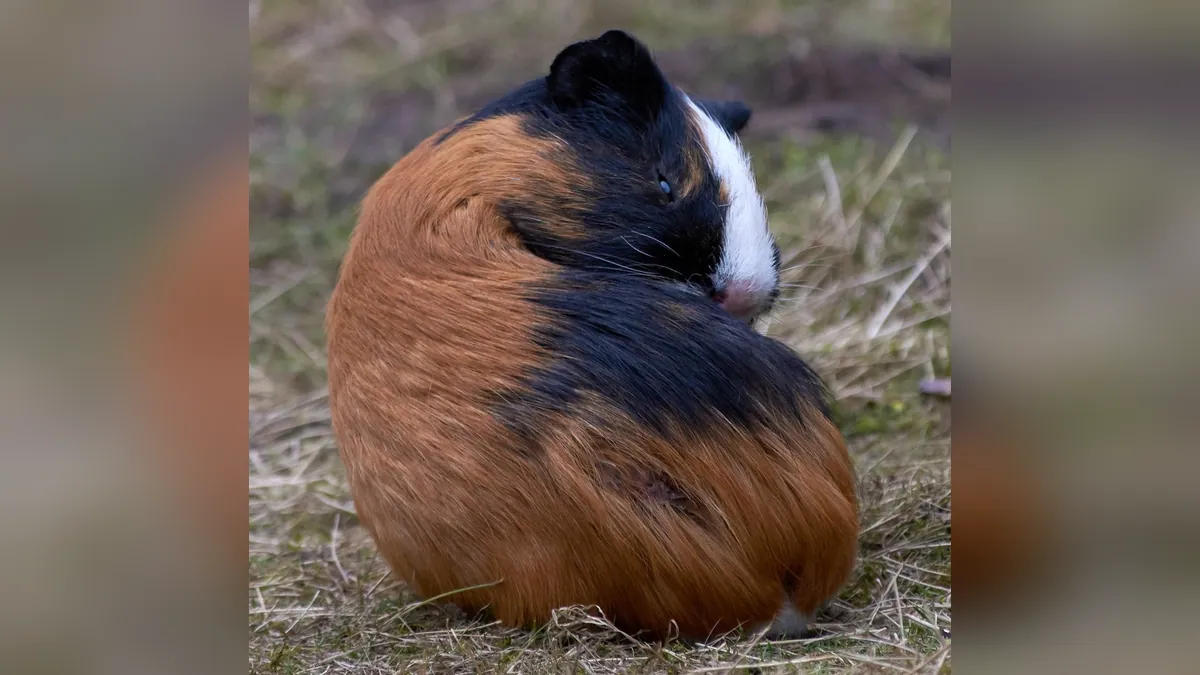
Do guinea pigs have a tail? No. Guinea pigs have stocky bodies with short limbs and no tail [1]. What you may feel or see at the rear end is normal anatomy, not a tail, and it is worth knowing the difference so you can spot a problem early.
This article is educational and is not a substitute for veterinary diagnosis or treatment.
Quick Answer
- Guinea pigs are tailless. Their bodies are compact with short legs, and no tail is part of normal anatomy [1].
- The small nub or ridge you feel at the very back is usually the base of the spine and the area around the caudal gland, a scent gland located just above the anus [1].
- A guinea pig with a visible tail is not a guinea pig. It may be a different rodent species, so confirm the species before assuming anything is wrong.
- A new lump, swelling, scab, or discharge near the rear end is not a tail. It deserves a veterinary exam.
- All guinea pig breeds share the same basic anatomy, so breed does not change whether a tail is present [2].
What You Are Actually Seeing at the Rear End
The spine ends in a small nub
A guinea pig's skeleton ends at the base of the spine, and there is no tailbone extending beyond the body. The rounded rear you see is the rump, made of muscle, fat, and skin over the pelvis. When you run your finger down the back, you may feel a slight bump where the spine meets the pelvis. That bump is normal.
The caudal gland sits at the base of the spine
Guinea pigs have sebaceous glands along the back and around the anus that they use for marking [1]. One of these, the caudal gland, sits dorsal to the anus at the base of the spine [1]. In some guinea pigs this gland is more noticeable than in others. It can look like a small greasy patch, a slightly raised area, or a darker spot of skin. This is a gland, not a tail.
Hair patterns can create a false tail
Long-haired breeds and guinea pigs with a rosette or skirt of hair at the back can look like they have a tail when the coat is grown out. A tuft of hair sticking up over the rump is common. Trimming or brushing the coat usually shows there is nothing underneath but normal skin and the spine.
Males and females both lack a tail
Sex does not change this. Male guinea pigs have a penis that can be extruded, and the scrotal area can look prominent. Females have a genital opening just below the anus. Neither structure is a tail. If you are unsure what you are looking at, ask your veterinarian to show you the normal anatomy at your next visit.
Do Guinea Pigs Have a Tail? Step-by-Step Checks at Home
Step 1: Look before you touch
Place your guinea pig on a flat, well-lit surface. A towel or a non-slip mat helps. Look at the rear end from behind and from the side. Note any swelling, redness, matted hair, or open skin. Compare the left and right sides. Symmetry is a good sign.
Step 2: Feel gently along the spine
Run one finger down the back from the shoulders to the rump. You should feel a smooth line of vertebrae under the skin, ending at the pelvis. A small nub at the end is expected. A soft or firm lump that was not there before is not.
Step 3: Check the skin around the anus
Part the hair gently and look at the skin. The caudal gland area can be slightly greasy or darker, which is normal [1]. Look for crusts, scabs, redness, hair loss, or a bad smell. Any of these can point to a skin problem, an infection, or irritation from urine or bedding.
Step 4: Watch how your guinea pig moves and sits
A guinea pig with pain near the rear end may sit hunched, shift weight, or avoid moving. It may also stop eating. Changes in posture and appetite are often the first signs owners notice.
Step 5: Weigh weekly and write it down
A kitchen scale that reads in grams works well. Weigh at the same time of day, ideally before the first feeding. A steady weight is reassuring. A drop of even a small amount over a week is a reason to call your veterinarian. Weight loss is one of the most reliable early warning signs in small mammals.
Step 6: Book a routine exam if you are unsure
If you cannot tell whether the bump is normal anatomy or something new, have your veterinarian look. A hands-on exam takes only a few minutes and answers the question with certainty.
Rear-End Health Checklist by Timeframe
| What to check | How often | What is normal | What needs a call |
|---|---|---|---|
| Weight | Weekly | Stable or slowly rising in a growing pig | Any steady drop over 1 to 2 weeks |
| Skin at the rump and anus | Weekly | Slightly greasy caudal gland, intact skin [1] | Scabs, crusts, redness, hair loss, odor |
| Droppings | Daily | Firm, well-formed, consistent number | Fewer droppings, soft stool, no stool |
| Appetite and hay intake | Daily | Eats hay, pellets, and vegetables | Refuses food or stops eating |
| Movement and posture | Daily | Walks, stretches, popcorns | Hunched sitting, reluctance to move |
| Nails and feet | Every 2 to 4 weeks | Nails not curling into the pad | Sores, swelling, overgrown nails |
| Teeth and mouth | Monthly visual check | Front incisors aligned and worn | Drooling, dropping food, overgrown incisors [2] |
Guinea pigs have 20 teeth, and their teeth grow throughout life [2]. Hay in the diet wears them down and helps keep the mouth healthy [2]. Dental problems can change how a guinea pig eats and can lead to weight loss, so watch the mouth along with the rear end.
Signs That Something Is Wrong
Lumps and swellings near the tail area
A new lump at the rear end is not a tail. It can be an abscess, a cyst, a tumor, or a reaction to a bite or scrape. Abscesses are common in guinea pigs after minor skin injuries. Any lump that grows, drains, or causes pain needs a veterinary visit.
Skin problems around the caudal gland
The caudal gland can become blocked, inflamed, or infected. Signs include redness, swelling, crusting, a strong odor, or your guinea pig chewing or scratching at the area [1]. Boars (males) can also develop a buildup of debris in the anal sac, which may need cleaning by a veterinarian.
Hair loss and itching
Patchy hair loss at the rear end can come from mites, ringworm, or self-trauma from scratching. It is not related to a tail. Your veterinarian can test the skin and prescribe the right treatment.
Straining, crying, or changes in urination
Guinea pigs can develop bladder stones and urinary tract problems. Straining, squeaking while urinating, bloody urine, or dribbling urine are all reasons to seek care. These signs can look like rear-end pain, so do not assume the problem is skin deep.
Reproductive problems in females
Ovarian cysts are the most common reproductive problem in guinea pigs [3]. A study of 221 female guinea pigs found an overall prevalence of 41.6%, rising from 25.4% in guinea pigs under 1 year old to 68.2% in those over 3 years old [3]. Cyst size increased with age by about 0.33 mm per month, and each increase in parity was linked to a 2.15 mm decrease in cyst size [3]. Hair loss along the flanks, a swollen belly, or changes in behavior can be signs. Your veterinarian can check with an ultrasound.
Trouble giving birth
Guinea pigs can have difficulty giving birth, and one known factor is ossification of the pubic symphysis when a female is not bred before 9 to 12 months of age [4]. If a pregnant guinea pig strains for more than a short time without producing a baby, treat it as an emergency.
Common Mistakes Owners Make
Mistaking a gland or hair tuft for a tail
This is the most common confusion. The caudal gland and a tuft of long hair at the rump are the usual culprits [1]. Neither is a tail, and neither needs removal.
Assuming a new bump is harmless
A bump that appears over days or weeks is not normal anatomy. Waiting can allow an abscess or infection to get worse. Have it checked.
Skipping weekly weigh-ins
Weight is one of the few objective measures you can track at home. Without it, slow weight loss can go unnoticed until your guinea pig is already sick.
Using harsh soaps or human products on the rear end
Guinea pig skin is delicate. Human shampoos, alcohol, and hydrogen peroxide can irritate it. Ask your veterinarian which cleanser is safe before using anything on the caudal gland or anal area.
Ignoring diet while focusing on the rear end
Many rear-end and skin problems trace back to overall health. A diet based on hay supports tooth wear and digestion [2]. A poor diet can lead to obesity, which makes skin folds and gland problems worse.
Delaying a vet visit because the guinea pig "seems fine"
Guinea pigs are prey animals and hide illness well. By the time a guinea pig looks obviously sick, the problem may be advanced. Trust small changes.
Supplies and Setup That Support Rear-End Health
Bedding
Choose bedding that stays dry. Fleece liners with an absorbent layer underneath, or paper-based bedding, are common choices. Avoid cedar shavings, which can irritate the respiratory tract. Change soiled areas daily and do a full change at least weekly. A clean, dry rear end lowers the risk of skin irritation and infection.
A hideout and a soft resting spot
Guinea pigs feel safer with a hideout. A soft bed or a folded towel gives a place to rest that does not rub the rump. If your guinea pig is older or has limited mobility, keep food and water close to the resting area.
Nail trimmers and a small brush
Overgrown nails can change how a guinea pig stands and can lead to sores on the feet. Trim nails every 2 to 4 weeks or have your veterinarian do it. A soft brush helps keep long coats free of mats around the rump.
A kitchen scale
A digital scale that reads in grams is the single most useful home monitoring tool. Keep a simple log. Bring it to veterinary visits so your veterinarian can see the trend.
A carrier for vet visits
A hard-sided carrier with a towel inside keeps your guinea pig secure. Bring a small amount of hay and a few droppings in a bag if your veterinarian asks for a sample.
For more on setting up a healthy space, see Guinea Pig Cage Accessories: Liners, Toys, and Hideouts. If you are still deciding between species, Guinea Pig vs Rabbit: Which Pet Is Right for You? compares their needs. Learning normal behavior helps you notice early illness, and Guinea Pig Behavior: Understanding Sounds and Actions covers the sounds and postures to watch.
Limitations and When to Contact a Veterinarian
This article covers general anatomy and common rear-end concerns. It cannot tell you what is happening with your individual guinea pig. Only a veterinarian who examines your pet can do that.
Contact a veterinarian the same day if you see:
- A new lump, swelling, or open wound at the rear end
- Bleeding, pus, or a foul smell from the anal or genital area
- Straining to urinate or pass stool, or crying while doing so
- Drooling, dropping food, or refusing to eat
- Weight loss over one to two weeks
- Hair loss, crusting, or intense scratching at the rump
Seek emergency care immediately if:
- Your guinea pig is not eating at all or is limp and unresponsive
- A pregnant female strains for more than a short time without delivering
- There is heavy bleeding or a large open wound
- Breathing is labored or noisy
- Your guinea pig collapses or has a seizure
Schedule a routine visit if:
- You feel a bump and are not sure whether it is normal
- Your guinea pig has never had a full physical exam
- You want help trimming nails, checking teeth, or cleaning the anal sac
- You have questions about diet, bedding, or gland care
Frequently Asked Questions
Do guinea pigs have a tail at all, even a tiny one?
No. Guinea pigs have no tail as part of their normal anatomy [1]. Their bodies are stocky with short limbs, and the spine ends at the pelvis. What you feel at the back is the rump and the base of the spine.
My guinea pig has a tail. What could it be?
If you truly see a tail-like structure, the most likely explanations are a tuft of long hair, the caudal gland, or a lump that needs checking [1]. It is also possible the animal is not a guinea pig. Have your veterinarian confirm the species and examine the area.
Is the bump above my guinea pig's bottom a tail?
No. That bump is usually the caudal gland, a scent gland located above the anus at the base of the spine [1]. It can look greasy or slightly raised, which is normal. A firm, painful, or fast-growing lump is not normal and should be examined.
Do male and female guinea pigs both lack tails?
Yes. Both sexes are tailless. Males have a penis and scrotal area, and females have a genital opening below the anus. Neither is a tail. If you are unsure about what you are seeing, ask your veterinarian to point out the normal structures.
Should I worry if I see a lump near the tail area?
Yes, a new lump is worth a veterinary visit. It could be an abscess, a cyst, or a tumor, and early treatment is easier. Do not try to squeeze, lance, or treat it at home. Your veterinarian will examine it and decide whether testing or removal is needed.
Related Articles
- Guinea Pig Behavior: Understanding Sounds and Actions
- Guinea Pig vs Rabbit: Which Pet Is Right for You?
- Guinea Pig Cage Accessories: Liners, Toys, and Hideouts
- Guinea Pig Breeds Guide
- Guinea Pig Squeaking Noise
- Do Guinea Pigs Have Belly Buttons? Small Pet Anatomy
- Do Guinea Pigs Have Cheek Pouches? What to Know
- Do Guinea Pigs Have Hair or Fur? Coat Facts
References
- Anatomy, Physiology, and Behavior of Guinea Pigs - Exotic and Laboratory Animals. Merck Veterinary Manual.
- Description and Physical Characteristics of Guinea Pigs - All Other Pets. Merck Veterinary Manual.
- Prevalence, morphology and associated risk factors for cystic ovaries in companion guinea pigs (Cavia porcellus). The Veterinary record, 2026.
- Assessing Pubic Symphysis Evolution in Guinea Pigs (Cavia procellus): Insights From Computer Tomography on Primiparous and Non-Breeding Females. Veterinary medicine and science, 2024.