Why Is My Ferret Losing Hair on Its Tail?
By Dr. Zubair Khalid, DVM, MS, PhD ·
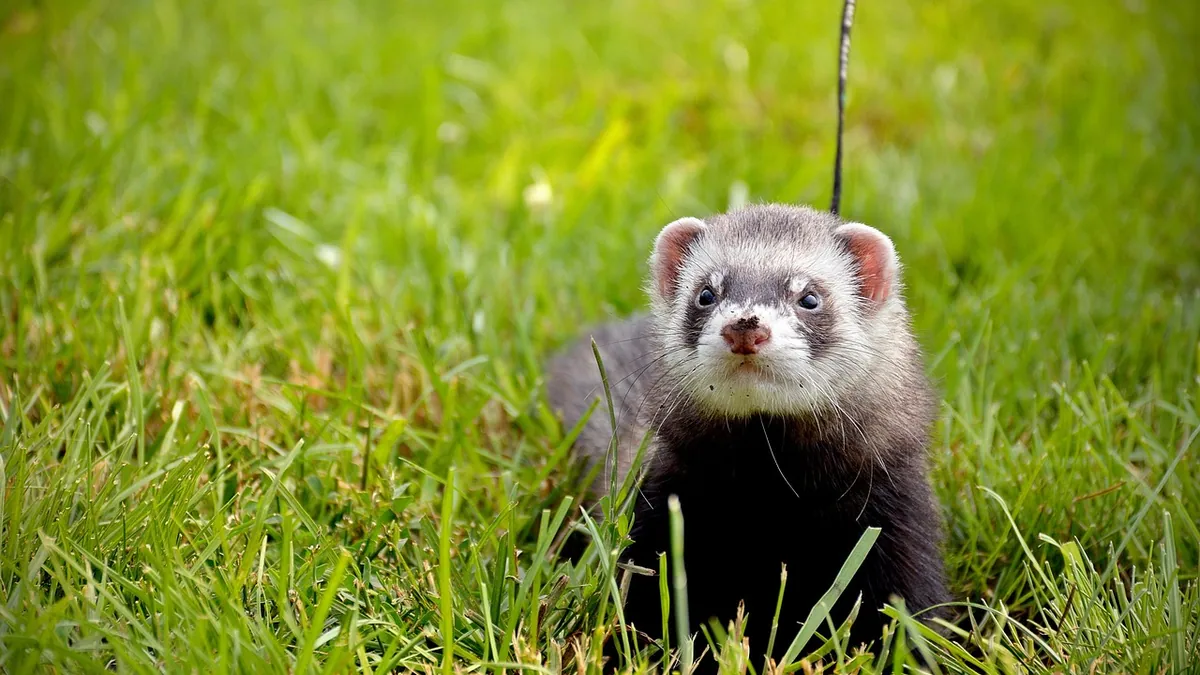
If your ferret is losing hair on his tail, the two most likely explanations are normal seasonal shedding or an endocrine problem, most often adrenal disease. Adrenal disease is one of the most common conditions in pet ferrets, and tail hair loss is frequently the first thing owners notice [1]. The pattern, timing, and any other symptoms will help your veterinarian sort out which one you are dealing with.
This article is educational and is not a substitute for veterinary diagnosis or treatment.
Quick Answer
- Symmetrical hair loss that starts at the tail tip and moves toward the body is a classic sign of ferret adrenal disease, especially in ferrets older than 3 years [1][2].
- Seasonal shedding in ferrets usually affects the whole coat evenly and grows back within a few weeks to a couple of months as the seasons change.
- Adrenal hair loss does not grow back on its own. It tends to spread from the tail to the rump, flanks, and belly over time [1].
- Other clues that point to adrenal disease include a swollen vulva in a spayed female, return of sexual behavior in a neutered male, muscle wasting, and itchy skin [1][2].
- Any ferret with progressive tail hair loss should see a veterinarian for an exam, and often blood work or imaging, so treatment can start early.
What Tail Hair Loss Looks Like in Ferrets
Ferrets have a thick undercoat and a longer, coarser topcoat. A healthy ferret sheds this coat twice a year, usually in spring and fall, in response to changing daylight. During those sheds, you may find a lot of hair in the bedding and on your clothes. The coat can look thin and patchy for a short time, but the loss is spread over the body, not concentrated on the tail.
Adrenal hair loss looks different. It usually begins at the tip of the tail and creeps upward. The skin underneath often looks normal at first, then may become dark, greasy, or scaly. Over weeks to months, the bald area can extend to the rump, lower back, and belly. The remaining coat may look dull and thin [1][2].
Some owners also notice their ferret wagging his tail more than usual. Tail wagging in ferrets is not the happy-dog signal it is in dogs. It often shows excitement, but it can also appear with hormonal changes and sexual behavior. If tail wagging comes along with hair loss, that combination deserves a veterinary visit.
Why Is My Ferret Losing Hair on His Tail? The Main Causes
Several conditions can cause a ferret to lose hair, and the tail is a common place for the problem to show up first. The table below covers the most likely causes and how quickly each one needs attention.
| Cause | Typical clues | How urgent |
|---|---|---|
| Adrenal disease (hyperadrenocorticism) | Symmetrical hair loss starting at the tail, thin coat, itchy skin, muscle loss, swollen vulva in spayed females, return of sexual behavior in neutered males, tail wagging | See a vet soon, within days to a couple of weeks |
| Seasonal shedding | Even coat thinning over the whole body, happens in spring or fall, regrows without treatment | Routine, watch at home |
| Cryptorchid testicle or testicular tumor | Hair loss on back, neck, abdomen, and tail, strong sexual behavior, weight loss in a ferret thought to be neutered [3] | See a vet soon |
| Other endocrine disease | Hair loss plus weight change, weakness, or unusual thirst and urination | See a vet soon |
| Skin infection or parasites | Patchy loss, redness, crusting, scratching, sometimes hair loss in other spots too | Routine to urgent depending on severity |
| Systemic illness | Hair loss along with weight loss, cough, poor appetite, or lethargy [4] | See a vet promptly |
Adrenal disease is by far the most common hormonal cause of this pattern. In ferrets, the disease is driven by excess sex hormones produced by an abnormal adrenal gland, not by cortisol the way it works in dogs [5]. That is why the signs look hormonal, with hair loss, vulvar swelling, and behavior changes instead of the classic drinking and urinating problems seen in dogs with Cushing's disease.
A less common but important possibility is a retained testicle. One report described a ferret sold as a neutered male who developed marked hair loss on the back, neck, abdomen, and tail along with strong sexual behavior and weight loss. The cause turned out to be a testicular tumor in a cryptorchid testicle, and the hair grew back completely after surgery [3]. This is a good reminder that not every bald tail is adrenal disease.
Hair loss can also be a side effect of a serious illness elsewhere in the body. One ferret with a month of weight loss, cough, and hair loss was found to have a widespread mycobacterial infection [4]. That case is unusual, but it shows why a veterinarian will look at the whole ferret, not just the tail.
If you have other pets losing hair, the pattern can be different by species. You can read more about why dogs lose hair and why cats lose hair for comparison, though ferret causes are their own list.
How to Tell Adrenal Hair Loss From Shedding
Ask yourself three questions.
First, where is the hair missing? Shedding thins the whole coat. Adrenal disease starts at the tail and moves forward [1].
Second, is the hair coming back? Seasonal shedding regrows. Adrenal hair loss does not, and it keeps spreading.
Third, are there other signs? A swollen vulva in a spayed female, mounting behavior in a neutered male, thin skin, or muscle wasting all point toward a hormonal problem [1][2].
If you are not sure, take photos every two weeks. A dated photo record is one of the most useful things you can bring to an appointment.
Red Flags That Mean Emergency Care Now
Most tail hair loss is not an emergency. Some signs that show up with it are.
- Seizure, collapse, or extreme weakness. These can point to low blood sugar from an insulinoma, another common ferret endocrine tumor [6].
- Trouble breathing or open-mouth breathing.
- A ferret who will not eat or drink for more than a few hours.
- Severe lethargy or a ferret who cannot stand.
- A large, rapidly growing mass anywhere on the body.
If your ferret is having a seizure, do not put anything in his mouth, including honey or syrup [6]. Call your veterinarian or an emergency clinic right away.
If your ferret is weak or wobbly but still able to swallow, your veterinarian may have you offer a small amount of honey or corn syrup on the gums while you travel to the clinic [6]. Do this only if he is conscious and able to swallow, and only as a bridge to veterinary care.
Safe Things You Can Do at Home While You Wait
You cannot treat adrenal disease at home, but you can make your ferret more comfortable and give your veterinarian better information.
- Take clear photos of the tail, rump, and belly in good light. Note the date.
- Write down when you first noticed the hair loss and whether it has spread.
- Note any behavior changes, such as increased tail wagging, mounting, or aggression.
- Check the vulva of any spayed female. A swollen vulva is a strong clue.
- Keep a simple log of appetite, weight if you have a kitchen scale, and energy level.
- Do not apply human hair products, oils, or steroid creams to the bald area.
- Do not give any medication, supplement, or hormone product without veterinary guidance.
Keep the bedding clean and soft. Bald skin can get dry and irritated, and gentle care helps prevent sores.
What Your Veterinarian Will Check and Test
Your veterinarian will start with a full physical exam. That includes checking the tail and skin, feeling the abdomen for masses, checking the vulva in females, and looking for muscle loss along the spine.
The next steps depend on what the exam shows.
Blood work. A fasting glucose test helps screen for insulinoma. Your veterinarian will ask you to withhold food for about 4 hours before the appointment, and a blood sample is drawn during the visit [6]. Other blood values are often normal with insulinoma, so a normal panel does not rule it out [6].
Hormone testing. A blood test for sex hormones can support a diagnosis of adrenal disease. Your veterinarian will explain which panel is best for your ferret.
Imaging. Ultrasound can look at the adrenal glands and check for other abdominal problems. It does not always show adrenal tumors, so a normal ultrasound does not fully rule out disease [6].
Skin testing. If the skin looks infected or your ferret is very itchy, your veterinarian may take a skin scraping or tape prep to look for parasites or yeast [2].
Other tests as needed. If your ferret has a cough, weight loss, or breathing changes, chest imaging and other tests may be recommended [4].
Treatment for adrenal disease may include surgery, a hormone implant, or medication. Your veterinarian will choose based on your ferret's age, test results, and overall health. Doses are calculated for your individual ferret based on weight and health status, so never use a dose from the internet.
Prevention and Monitoring
You cannot prevent most ferret endocrine disease, but you can catch it early.
- Weigh your ferret every two to four weeks on a small kitchen scale. A slow drop in weight is often the first sign something is wrong.
- Do a monthly tail check. Part the fur at the tail tip and look at the skin.
- Photograph the coat each season so you have a baseline.
- Keep up with annual wellness exams, and twice-yearly exams once your ferret is past 3 years old.
- Mention any behavior change, even small ones, at the next visit.
- Spay and neuter your ferrets, and confirm with your veterinarian that both testicles were removed in males.
Ferrets with adrenal disease can live comfortable lives for a long time with treatment, especially when it starts early. The tail is often the first place the disease shows itself, which makes it a useful early warning system.
Limitations and When to Contact a Veterinarian
This article cannot tell you what is causing your ferret's hair loss. Only a veterinarian who examines your ferret can do that. Individual cases need a veterinarian, and the timing matters.
Contact your veterinarian the same day if your ferret:
- Has a seizure, collapses, or becomes suddenly very weak [6]
- Stops eating or drinking
- Has trouble breathing
- Has a swollen, painful, or rapidly growing mass
Schedule an appointment within a few days if your ferret:
- Has tail hair loss that is spreading
- Has a swollen vulva or has resumed sexual behavior after neutering
- Is losing weight
- Is scratching or biting at the skin
Schedule a routine visit if your ferret:
- Has mild, even coat thinning during a normal shedding season and seems otherwise well
- Has a bald tail tip that is not spreading and no other symptoms
When in doubt, call. A quick phone conversation with your veterinary team can help you decide how soon your ferret needs to be seen.
Frequently Asked Questions
Does tail hair loss in ferrets always mean adrenal disease?
No, but it is one of the most common reasons. Seasonal shedding, skin infections, parasites, and other hormonal problems can also cause hair loss. The pattern and any other symptoms help your veterinarian narrow it down.
Will my ferret's tail hair grow back on its own?
If the cause is seasonal shedding, yes. If the cause is adrenal disease or another hormonal problem, the hair will not grow back until the underlying condition is treated. Some ferrets regrow a full coat after successful treatment.
My ferret is wagging his tail more than usual. Is that related?
It can be. Tail wagging in ferrets often signals excitement, but it can also appear with hormonal changes and sexual behavior. If tail wagging comes with hair loss, a swollen vulva, or mounting behavior, get your ferret checked.
Can a ferret that was neutered years ago still have a hormone problem?
Yes. Adrenal disease is common in neutered ferrets, and it is driven by sex hormones from the adrenal glands, not the testicles [1][5]. In rare cases, a retained testicle can also be the source, so your veterinarian may check for that too [3].
How long does seasonal shedding last in ferrets?
Most ferrets shed their coat over a few weeks as the seasons change, and the new coat comes in within a couple of months. If the thinning lasts longer than that, is limited to the tail, or comes with other symptoms, it is time for a veterinary visit.
Related Articles
- Why Does My Ferret Smell, and How to Reduce It
- Why Is My Ferret Itching, Sneezing, or Shedding So Much?
- How to Tell If Your Ferret Has a Blockage
- Why Is My Ferret Drooling? Causes and When to Worry
References
- Endocrine Disorders of Ferrets - Exotic and Laboratory Animals. Merck Veterinary Manual.
- Ferret Dermatology. The veterinary clinics of North America. Exotic animal practice, 2023.
- Testicular leiomyosarcoma and marked alopecia in a cryptorchid ferret (Mustela putorius furo). Tierarztliche Praxis. Ausgabe K, Kleintiere/Heimtiere, 2014.
- Identification of Mycobacterium genavense natural infection in a domestic ferret. Journal of veterinary diagnostic investigation : official publication of the American Association of Veterinary Laboratory Diagnosticians, Inc, 2019.
- Morphology of the pituitary gland in ferrets (Mustela putorius furo) with hyperadrenocorticism. Journal of comparative pathology, 2004.
- Hormonal Disorders of Ferrets - All Other Pets. Merck Veterinary Manual.