Do Gerbils Have Tails? Shedding, Wagging, and Facts
By Dr. Zubair Khalid, DVM, MS, PhD ·
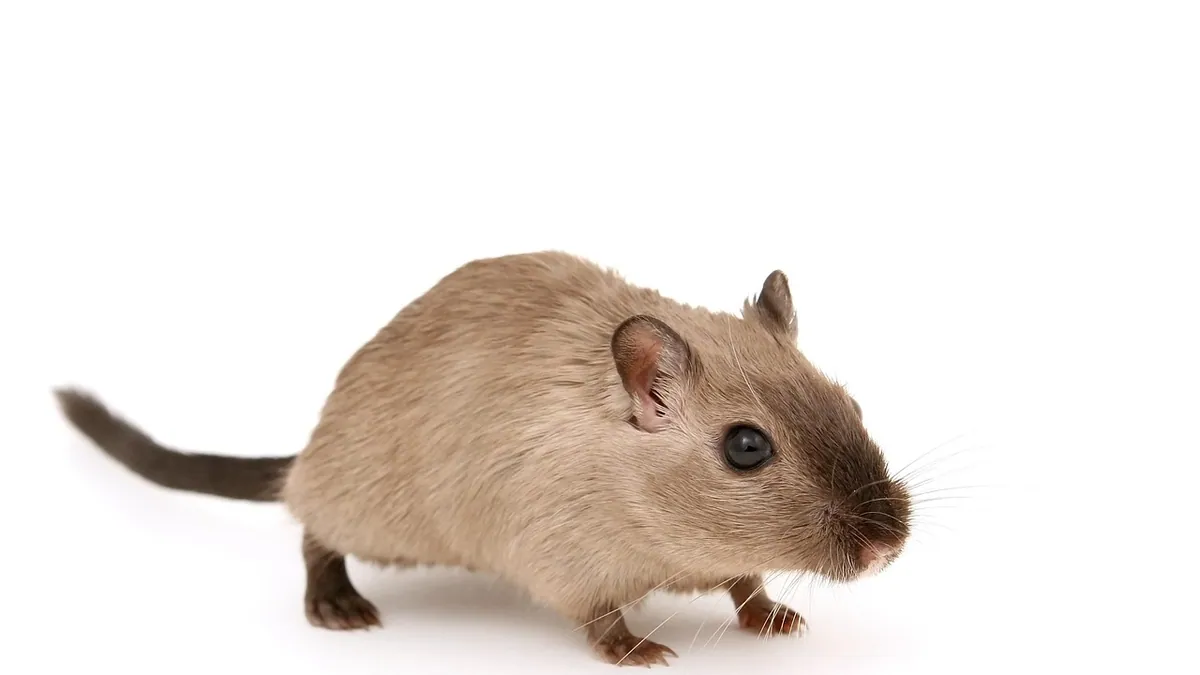
Do gerbils have tails? Yes. Every gerbil has a tail, and it is covered in short fur instead of being bare like a mouse tail [1]. The tail is a normal part of the body, but it is also one of the most fragile parts of a gerbil, which is why handling around the tail matters so much.
This article is educational and is not a substitute for veterinary diagnosis or treatment.
Quick Answer
- A typical pet gerbil (Mongolian gerbil) has a body about 4 inches long, and the tail adds roughly 3 more inches [1].
- The tail is covered in fur, so it looks different from the thin, nearly hairless tail of many mice and rats [1].
- Gerbils do not shed or drop their tails the way some lizards drop a tail as a defense mechanism. A gerbil tail injury is usually the result of trauma, often from being grabbed or caught.
- Gerbils do not wag their tails like dogs. Tail movement in a gerbil is usually about balance, posture, or a startle response, not happy greeting behavior.
- Never pick up or restrain a gerbil by the tail. Support the body instead, and use a cup or both hands when you need to move a nervous gerbil.
Do Gerbils Have Tails? Basic Anatomy Every Owner Should Know
The tail of a gerbil is not an extra. It is part of the spine, made of small tail bones (vertebrae) with muscles, blood vessels, nerves, and skin over them. In the common pet species, the tail is fur covered [1]. That fur can be short and close to the skin, so the tail can still look thin, but it is not the naked, scaly tail you may picture when you think of a mouse.
Size matters here. An adult gerbil weighs about 2 to 3 ounces (50 to 90 grams), with males slightly larger than females [1]. The body is about 4 inches (10 cm) long, and the tail can add about 3 inches (8 cm) [1]. So the tail is a substantial piece of the animal, roughly three quarters of the body length. It helps with balance, especially when a gerbil turns quickly, climbs, or jumps.
Gerbils are built for movement. Research on Mongolian gerbils shows that leg and thigh length relate to jumping force and turning ability, with longer legs producing greater jump force and shorter thighs linked to better maneuverability [2]. A tail that swings and counterbalances fits that picture. It is a tool for staying upright and changing direction, not a handle for a human hand.
There is also a different species called the fat-tailed gerbil (Pachyuromys duprasi). Its tail is thicker and stores fat, and researchers have used the tail as a study site for swelling after experimental inoculation [3]. That is a different animal from the typical pet gerbil, but it shows how much tail shape can vary across gerbil species.
Do Gerbils Wag Their Tails?
Not in the way a dog does. A dog wagging its tail is often a social signal. A gerbil moving its tail is usually responding to balance, a sudden noise, or a threat.
You may see a gerbil flick or twitch its tail when it is startled or when it is about to bolt. You may also see the tail move as the gerbil turns, climbs, or jumps. That movement is part of normal body mechanics. It is not a greeting, and it is not a sign that your gerbil is happy to see you.
Some owners describe a slow tail movement as "wagging." If the rest of the body is relaxed, the gerbil is probably just shifting position. If the body is tense, the ears are flat, or the gerbil is thumping a hind foot, the tail movement is more likely part of a stress or alarm response. In that case, give the gerbil space and let it settle.
Do Gerbils Shed Their Tails or Drop Their Tails?
This is the question that worries owners most, and the answer is simple. Gerbils do not have a natural tail-dropping mechanism. They do not shed the tail the way a lizard can shed its tail to escape a predator.
What can happen is a tail injury from trauma. If a gerbil is grabbed by the tail, caught in a cage door, or stepped on, the tail can be cut, broken, or torn. The tail skin can also be stripped if the animal pulls away while something holds the tail. That is not shedding. It is an injury, and it can be serious.
The tail has nerves and blood vessels. A damaged tail can bleed, swell, become painful, or become infected. A gerbil that has lost part of its tail needs veterinary attention. Do not try to treat a tail wound at home with human medications, and do not wait to see if it heals on its own.
If you are comparing species, you may wonder, do gerbils or hamsters have tails? Both have tails, but the tails look different. Hamsters tend to have very short, stubby tails that are easy to miss. Gerbils have longer, fur-covered tails that are clearly visible [1]. So if you see a long tail on a small rodent, you are more likely looking at a gerbil than a hamster.
How to Handle a Gerbil Without Injuring the Tail
The single most important rule is this. Never lift a gerbil by the tail. Not for a quick move, not to check the sex, not to break up a squabble. The tail is not designed to support body weight.
Use this step-by-step approach instead.
- Let the gerbil come to your hand. Gerbils are curious and often step onto a flat palm on their own.
- Scoop from below. Slide one hand under the chest and belly so the gerbil's feet are supported.
- Keep the tail free. Let the tail rest on your hand or hang naturally. Do not pinch it, pull it, or wrap it.
- Use a second hand as a cover if the gerbil is wiggly. Cup the hands loosely so the gerbil feels enclosed but can still breathe.
- For a nervous or fast gerbil, use a clean cup or a small carrier. Herd the gerbil into it instead of chasing it with your hand.
- Set the gerbil down low. Place it back in the cage or on a safe surface close to the floor so a jump cannot end in a fall.
If two gerbils are fighting, do not reach in with bare hands and grab. Use a thick towel or a small box to separate them. A gerbil that is frightened may bite, and a tail caught in the scramble can be injured.
Gerbil Tail Safety Checklist
| Task | Safe approach | What to avoid |
|---|---|---|
| Picking up | Scoop under the belly with a flat hand | Lifting by the tail |
| Moving a nervous gerbil | Use a cup or small carrier | Chasing with a closed hand |
| Checking sex or health | Hold the body, let the tail rest | Pinching or pulling the tail |
| Breaking up a fight | Use a towel or box | Reaching in with bare hands |
| Cage cleaning | Move gerbils to a safe carrier first | Leaving gerbils loose near open doors |
| Playtime outside the cage | Keep the area low and enclosed | Letting a gerbil jump from a height |
Signs That Something Is Wrong With the Tail
A healthy gerbil tail should be smooth, fur covered, and in line with the body. Watch for these changes.
- Bleeding or a visible wound
- Swelling, redness, or heat along the tail
- A bend or kink that was not there before
- The tail dragging or not moving normally
- The gerbil chewing at the tail or holding it oddly
- Loss of fur on the tail, or crusting and discharge
- The gerbil crying out, flinching, or biting when the tail area is touched
- A tail that is cold, pale, or dark at the tip
Any of these can point to injury, infection, or poor blood flow. A tail injury can also be a sign that something in the cage is catching tails, such as a wire wheel with a gap, a heavy lid, or a narrow hide opening. Check the setup after any tail injury.
Common Mistakes Owners Make
The biggest mistake is grabbing the tail. It is tempting when a gerbil is about to run off a table or into a gap. But a tail grab can cause a fracture, a skin tear, or a partial tail loss. It is better to block the escape route with your hand or a towel and then scoop the gerbil up safely.
Another mistake is assuming a tail problem will heal on its own. Gerbils are small and can hide pain. A tail wound can look minor at first and then become infected. If the tail is broken or bleeding, call your veterinarian.
A third mistake is housing gerbils in a cage with tail hazards. Wire mesh floors, gaps between cage bars, and heavy objects that can fall are all risks. Gerbils are burrowers and chewers, so they need a solid floor, deep bedding, and safe hides.
A fourth mistake is comparing gerbil tails to dog shedding. Dogs shed hair as part of a normal coat cycle, and owners often ask whether that shedding is normal or a problem. If you want to understand shedding in dogs, see Do Dogs Control Their Shedding and Dog Losing Lots of Hair: Is It Normal Shedding or a Problem?. Gerbils do not shed their tails, so a tail problem in a gerbil is not a shedding issue. It is an injury or a medical problem until proven otherwise.
A fifth mistake is skipping a general care review. Tail injuries often happen in cages that are too small, too crowded, or set up in a way that makes handling hard. If you are new to gerbils, start with a solid Gerbil Care Guide and build the habitat around safe handling.
Supplies and Setup That Protect the Tail
The right setup lowers the chance of a tail injury.
Use a solid-bottom cage or a tank with a secure mesh top. Avoid wire floors. Use deep bedding so gerbils can dig and burrow, which is natural behavior. Provide a hide box with smooth edges and an opening wide enough that a tail cannot get pinched. Choose a wheel with a solid running surface and no gap where a tail can be caught. Keep cage doors and lids latched so a gerbil cannot push out and fall.
For handling, keep a small carrier or a clean cup nearby. A carrier is useful for cage cleaning, vet visits, and separating gerbils if needed. Have a thick towel on hand for emergencies. Do not use a hamster ball as a substitute for safe handling, since a gerbil can pick up speed and hit objects.
Gerbils are social in many species, but not all gerbils live the same way. The tamarisk gerbil, for example, shows a more solitary social structure with aggressive interactions [4]. Pet Mongolian gerbils are usually kept in same-sex pairs or groups, but introductions need care. A fight is a common cause of tail injury, so watch new pairs closely.
Limitations and When to Contact a Veterinarian
This article cannot tell you whether your gerbil's tail is broken, infected, or just bruised. That requires an examination. Individual cases need a veterinarian.
Contact an emergency veterinary service right away if the tail is bleeding heavily, if a large piece of tail is missing, if the tail is dangling or bent at a sharp angle, if the gerbil is limp, cold, or unresponsive, or if the gerbil is in obvious pain.
Call your veterinarian the same day if you see swelling, redness, discharge, a bad smell, or a wound on the tail. Also call the same day if the gerbil is not eating, is hunched, or is hiding more than usual. These can be signs of pain or infection.
Schedule a routine visit if the tail looks normal but you have questions about handling, cage setup, or a previous tail injury that healed with a kink. A veterinarian can check the tail, assess the gerbil's overall health, and show you safe handling techniques. If medication is needed, your veterinarian will calculate the dose from your gerbil's weight and health. Never use a leftover medication or a human product on a gerbil without veterinary guidance.
Frequently Asked Questions
Do gerbils have tails or are they tailless?
Gerbils have tails. The common pet gerbil has a fur-covered tail that can be about 3 inches long, while the body is about 4 inches long [1]. A gerbil without a visible tail has likely lost part of it to injury, not because the species is tailless.
Can a gerbil's tail grow back?
No. A gerbil tail cannot regrow. If part of the tail is lost, it stays lost. The remaining tail may heal with a rounded or kinked tip, and the gerbil can still live a normal life, but the missing section will not return.
Why does my gerbil's tail look thin or bald?
A thin or bald tail can be normal for some individuals, since the fur on the tail is short. It can also be a sign of overgrooming, skin irritation, or a tail injury. If the skin looks red, crusty, or swollen, have a veterinarian examine it.
Is it safe to pick up a gerbil by the tail for a quick check?
No. Picking up a gerbil by the tail is not safe. The tail is not built to support the body, and a grab can cause a fracture, a skin tear, or permanent tail loss. Support the body with your hand instead.
Do gerbils use their tails for balance?
Yes. The tail helps with balance during turns, climbs, and jumps. Research on Mongolian gerbils shows that limb and thigh length affect jumping and turning performance [2], and a mobile tail supports that movement. The tail is a balance tool, not a handle.
Related Articles
- Gerbil Care Guide
- Do Gerbil Tails Fall Off? Tail Loss and Injury Explained
- Do Gerbil Tails Grow Back? Regrowth Facts and Care
References
- Description and Physical Characteristics of Gerbils - All Other Pets. Merck Veterinary Manual.
- Distinct morphological drivers of jumping and maneuvering performance in gerbils. The Journal of experimental biology, 2025.
- Evaluation of the fat-tailed gerbil, Pachyuromys duprasi (Rodentia: Gerbillidae), as a new animal model for studies of Leishmania major infection and transmission. Vector borne and zoonotic diseases (Larchmont, N.Y.), 2013.
- Ecology and social behavior of the tamarisk gerbil Meriones tamariscinus: insights from long-term research in the wild and semi-natural environments. Current zoology, 2024.