Do Gerbils Make Good Pets? Honest Pros and Cons
By Dr. Zubair Khalid, DVM, MS, PhD ·
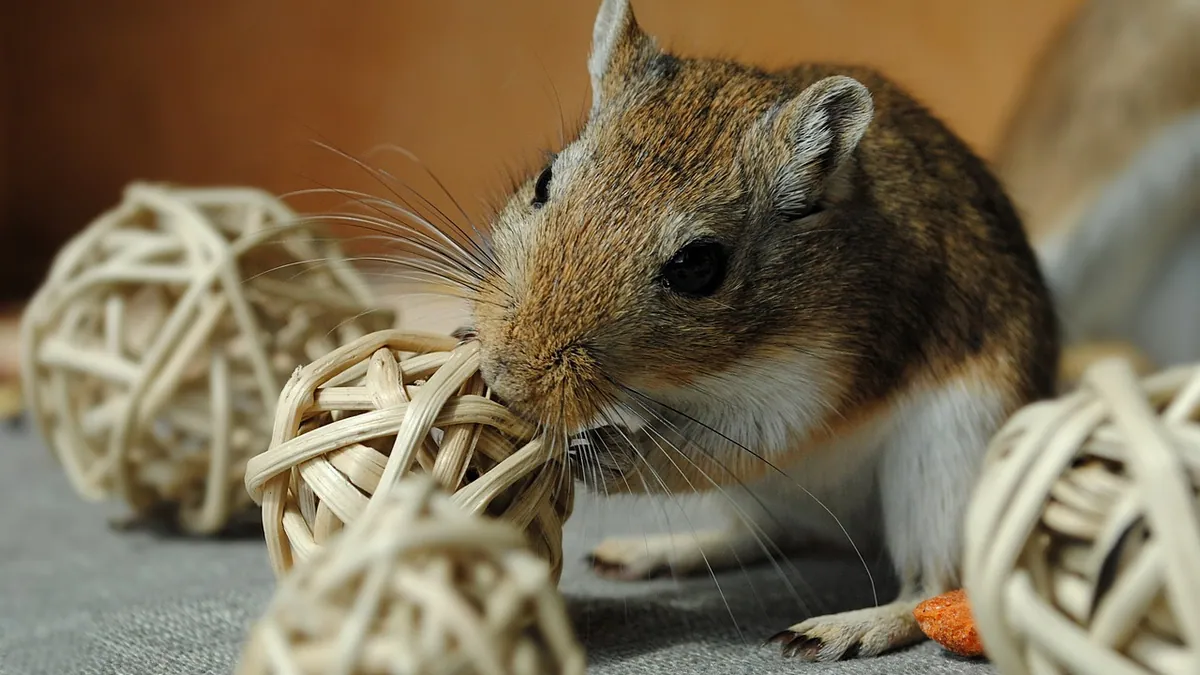
Do gerbils make good pets? For many families, yes. They are small, quiet, mostly odor-free rodents that stay awake during the day and are fun to watch. They are not the right pet for every home, though, and very young children should not handle them.
This article is educational and is not a substitute for veterinary diagnosis or treatment.
Quick Answer
- Gerbils are social and do best in same-sex pairs or small groups, so plan to buy two or more, not one.
- They are active in daylight hours, which makes them better for families who want to watch a pet during the day.
- They need a solid-bottom cage with deep bedding for burrowing, not a wire-floor cage.
- Never pick a gerbil up by the tail. Scoop it under the belly with both hands and hold it low over your lap or the cage [1].
- Gerbils are not recommended for very young children because their small bodies cannot handle rough handling [1].
What Gerbils Are Actually Like as Pets
Mongolian gerbils are the species you will find in almost every US pet store. Wild Mongolian gerbils live in deserts, bush country, and dry steppes in Mongolia, southern Siberia, northern China, and Manchuria, where they dig simple burrows 2 to 3 feet long and spend most of their time underground [2]. That history explains a lot about pet gerbils. They are hardy, they tolerate heat and dryness well, and they love to dig [2].
They are also highly social animals. Young gerbils show complex social behavior from their first day out of the nest, and they prefer interacting with their siblings over their parents [3]. In the wild, tamarisk gerbils (a related species) show aggressive interactions and a mostly solitary social structure, which is one reason gerbil species differ from each other [4]. Mongolian gerbils, the common pet, are the social ones. Keep them in compatible pairs or groups.
Individual gerbils also differ in personality. In one study, bold Mongolian gerbils competed more for food in competitive settings, while shy gerbils chose lower-cost, easier food when a competitor was nearby [5]. Your gerbil may be the bold one who meets your hand at the cage door or the shy one who watches from the burrow.
If you are still comparing small pets, our guide to the best pet rodents for beginners covers lifespan and temperament side by side.
Do Gerbils or Hamsters Make Better Pets?
This is the most common question families ask, and the honest answer is that it depends on your household.
Gerbils are social, so they usually want company. Hamsters are generally solitary and often do better alone. Gerbils are often awake and active during the day. Hamsters are mostly nocturnal, so many children never see them awake. Gerbils are desert rodents with low urine output, so their cages tend to smell less. Hamsters can be a good fit for a child who wants one pet and does not mind evening activity.
Do hamsters make good pets? Yes, for the right owner. They are engaging, they can be tamed, and they need less social housing than gerbils. The trade-off is that a hamster's schedule may not match yours.
If you want a pet that is awake when your family is awake and that you can keep in a pair, gerbils usually win. If you want a single pet and are happy to interact in the evening, a hamster can work well. Either way, the cage setup and handling matter more than the species label.
Step-by-Step: How to Set Up and Care for a Gerbil
Step 1: Choose healthy gerbils
Look for smooth, glossy fur, clear eyes, and no signs of trauma such as limping or hair loss on the body or tail [6]. There should be no discharge from the eyes or nose, and no diarrhea in the cage [6]. Healthy gerbils are lively and curious [6]. If any gerbil in the group looks matted, hunched, or dull, shop elsewhere [6].
Step 2: Buy at least two
Gerbils are social. Same-sex pairs or small groups usually work best. Ask the seller whether the animals were raised together, because introducing strangers can lead to fighting.
Step 3: Set up the cage before the gerbils come home
Use a solid-bottom cage or a glass aquarium with a secure mesh lid. Add deep bedding so they can burrow, which is their natural behavior [2]. Add a hide, a water bottle, a food dish, and safe chew items. Gerbils need to gnaw to keep their teeth worn down.
Step 4: Handle them correctly from day one
Never lift a gerbil by the tail. Tails are delicate and injure easily [1]. Scoop the gerbil under the belly with both hands and do not squeeze [1]. Until the gerbil is used to you, hold it close to the ground, over its cage or over your lap, so a fall is short and it cannot run off [1].
Step 5: Build trust with food
Gerbils respond well to positive reinforcement. In a research setting, Mongolian gerbils learned to voluntarily approach and interact with a person's hand in exchange for a food reward after a short training period [7]. You can do the same at home. Offer a small treat from your palm, let the gerbil come to you, and keep sessions short.
Step 6: Keep the routine steady
Feed a balanced rodent diet, refresh water daily, spot-clean the cage, and do a full bedding change on a regular schedule. Wash your hands before and after handling.
For a deeper walkthrough of housing, diet, and enrichment, see our Gerbil Care Guide.
Gerbil Care Checklist and Schedule
| Task | How often | Notes |
|---|---|---|
| Fresh water | Daily | Check the bottle works |
| Food | Daily | Remove spoiled fresh food |
| Spot-clean cage | 2 to 3 times a week | Remove wet bedding and droppings |
| Full bedding change | Weekly to every 2 weeks | Depends on cage size and group size |
| Handling session | Daily if possible | Short, calm, over the lap or cage [1] |
| Chew items | Replace as worn | Needed for tooth wear |
| Weight and body check | Weekly | Look for hair loss, limping, discharge [6] |
| Veterinary check | Yearly, or sooner if sick | Find an exotics vet before you need one |
Supplies That Actually Matter for Health
Cage. A solid floor is safer than wire mesh, which can injure small feet. More floor space is better than a tall cage, because gerbils run and dig instead of climb.
Bedding. Deep bedding lets gerbils burrow, which is what wild Mongolian gerbils do in soft soil [2]. Avoid bedding with strong perfumes or sharp pieces.
Nesting material. Provide plain paper or safe nesting material. Gerbils will shred and arrange it themselves.
Hide box. A covered hide gives a shy gerbil a place to retreat. Bold and shy gerbils behave differently under stress, and a shy animal needs an escape route [5].
Water bottle. A bottle keeps water cleaner than an open bowl.
Chew toys. Wood blocks and safe cardboard help wear teeth.
Exercise. A solid-surface exercise wheel and a safe play area give gerbils room to move.
Carrier. A small, secure carrier makes vet visits and cage cleaning easier.
Signs Something Is Wrong
Gerbils hide illness well, so watch for changes in behavior and appearance.
- Matted fur, a hunched posture, or dullness [6]
- Discharge from the eyes or nose [6]
- Diarrhea or wet, soiled bedding [6]
- Hair loss on the body or tail, or a limp [6]
- Weight loss, or a gerbil that stops eating or drinking
- Trouble breathing, wheezing, or clicking sounds
- Overgrown front teeth, drooling, or dropping food
- A swollen or injured tail, which can happen with rough handling [1]
- A sudden fight wound or a gerbil separated from the group
Any of these deserves a call to a veterinarian who treats small mammals. Do not wait to see if it passes.
Common Mistakes New Gerbil Owners Make
Buying only one gerbil. Gerbils are social animals, and a lone gerbil can become stressed. Plan for a pair or group.
Lifting by the tail. This is the single most common handling error. Tails are delicate and easily injured [1]. Scoop from underneath instead.
Letting young children handle them alone. Gerbils cannot withstand rough handling and are not recommended as pets for very young children [1]. Supervise all contact.
Using a wire-floor cage. Small feet can catch and tear. Choose a solid bottom.
Skipping deep bedding. Burrowing is a core gerbil behavior, not a luxury [2]. Shallow bedding removes a main source of enrichment.
Ignoring same-sex pairing. Mixed pairs breed quickly. Ask the seller to confirm sex before you buy.
Skipping the vet until there is an emergency. Find an exotics veterinarian before you bring the gerbils home. It is much easier to get an appointment when you already have a relationship.
Assuming all rodents are the same. Gerbils, hamsters, rats, and mice have different social needs and activity schedules. If you are weighing options, our comparison of a rat vs mouse as a pet shows how much these differences matter.
Do Gerbils Make Good Class Pets?
Sometimes, with the right classroom. Gerbils are quiet, they are active during school hours, and they are interesting to watch. They also need daily care, a stable temperature, and a plan for weekends and holidays. A classroom pet must have a designated caregiver, a backup plan for breaks, and a rule that students do not handle the animals without an adult.
Gerbils are not a good fit for a classroom with very young children, because they cannot withstand rough handling [1]. They are also not a good fit if the cage will be noisy, moved often, or left unattended for days. If your class wants a pet, a pair of gerbils in a quiet corner with a strict handling policy can work. A single gerbil in a busy, loud room usually does not.
Limitations and When to Contact a Veterinarian
No article can diagnose your pet. Individual cases need a veterinarian who can examine the animal, ask about its history, and run tests if needed.
Contact an emergency veterinary hospital now if your gerbil:
- Is struggling to breathe or breathing with its mouth open
- Has a severe wound, heavy bleeding, or a torn or degloved tail
- Is collapsed, unresponsive, or having seizures
- Has been attacked by another animal
Contact your veterinarian the same day if your gerbil:
- Stops eating or drinking
- Has diarrhea or wet bedding under the tail [6]
- Has eye or nose discharge [6]
- Shows a hunched posture, matted fur, or unusual dullness [6]
- Has a limp, hair loss, or a swollen tail [1][6]
- Is being bullied or fighting with a cagemate
Schedule a routine visit if:
- You just brought a new gerbil home and want a baseline exam
- Your gerbil has not seen a vet in the past year
- You notice gradual weight loss or a change in activity
Doses of any medication are calculated by your veterinarian based on your pet's weight and health. Never give a gerbil medication meant for another animal or a human.
Frequently Asked Questions
Are gerbils good pets for children?
Gerbils can be good pets for older children who can handle them gently and calmly. They are not recommended for very young children because their small bodies cannot withstand rough handling [1]. An adult should always supervise.
Do gerbils smell bad?
Gerbils are desert rodents with concentrated urine, so their cages usually smell less than many other small mammal setups. Smell depends mostly on cage size, bedding depth, and how often you clean. A dirty cage will smell regardless of species.
Are gerbils nocturnal?
No, gerbils are often active during the day and night in short bursts. Wild Mongolian gerbils spend much of their time in burrows, where the temperature is stable [2]. Pet gerbils tend to be busy when their household is busy, which is one reason families like them.
Can you keep a single gerbil?
You can, but it is not ideal. Gerbils are highly social, and young gerbils seek out social contact from their first days out of the nest [3]. A single gerbil may become stressed or bored. A same-sex pair is usually a better choice.
How long do gerbils live?
Most pet gerbils live roughly two to four years with good care. Lifespan varies with genetics, diet, housing, and veterinary care. A healthy gerbil stays active, eats well, and keeps a smooth coat [6].
Do gerbils bite?
Gerbils can bite if they are startled, squeezed, or handled roughly. Proper handling reduces the risk. Scoop them under the belly with both hands, hold them low, and let them come to you for a treat [1][7].
What is the best cage for a gerbil?
A solid-bottom cage or aquarium with a secure lid and deep bedding works best. Gerbils need to burrow, and they need floor space to run [2]. Avoid wire floors and cages that are tall but narrow.
Related Articles
- Gerbil Care Guide
- Best Pet Rodents for Beginners: Care, Lifespan, and Temperament
- Choosing a Small Pet for Children
- Gerbil vs Guinea Pig: Which Small Pet Is Right for You?
- Do Gerbils Have Tails? Shedding, Wagging, and Facts
- Do Gerbils Recognize Their Owners? Bonding Facts
References
- Special Considerations for Gerbils - All Other Pets. Merck Veterinary Manual.
- Gerbils - Exotic and Laboratory Animals. Merck Veterinary Manual.
- Continuous monitoring and machine vision reveals that developing gerbils exhibit structured social behaviors prior to the emergence of autonomy. PLoS biology, 2025.
- Ecology and social behavior of the tamarisk gerbil Meriones tamariscinus: insights from long-term research in the wild and semi-natural environments. Current zoology, 2024.
- Foraging Under Competition in Mongolian Gerbils: The Influence of Personality and Its Physiological Basis. Integrative zoology, 2026.
- Selecting a Gerbil - All Other Pets. Merck Veterinary Manual.
- Enhancing Gerbil Welfare Through Positive Reinforcement Training in Research Environments. Journal of visualized experiments : JoVE, 2025.