What Do Bearded Dragons Like to Do? Daily Behavior Explained
By Dr. Zubair Khalid, DVM, MS, PhD ·
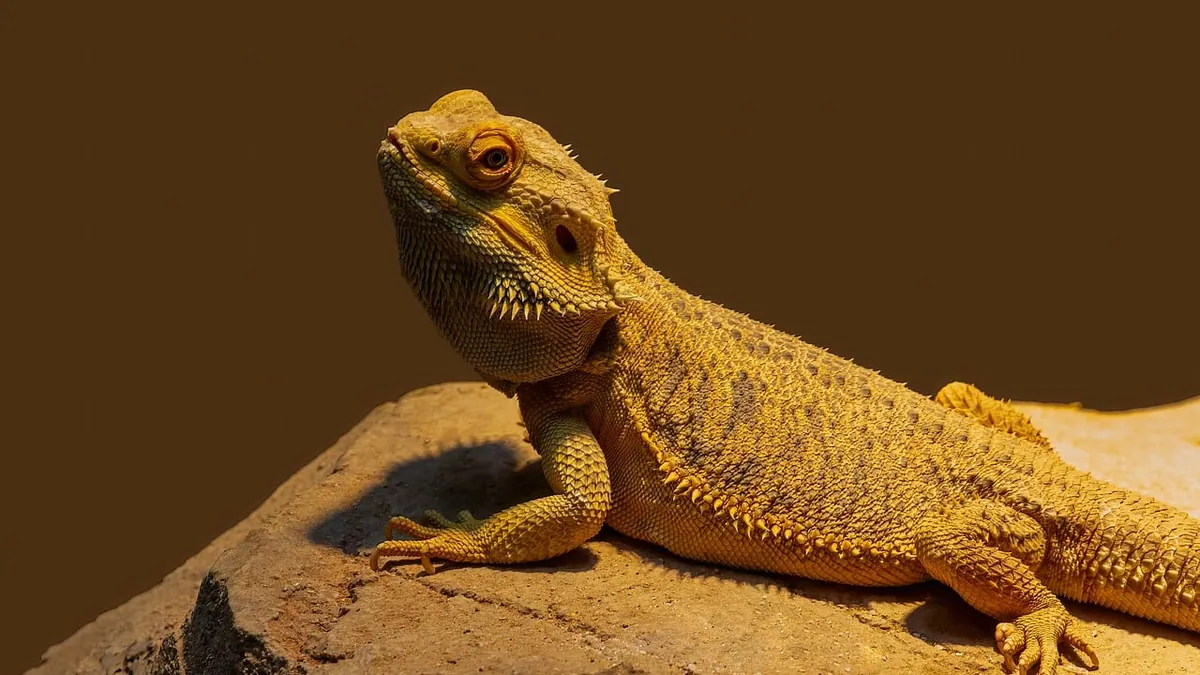
Bearded dragons like to bask, explore, dig, climb, hunt insects, and rest in a daily routine built around heat and light. Most of what you see during the day is normal reptile business, but shifts in that routine can be the first sign of illness. This article explains what do bearded dragons like to do, what their normal daily patterns look like, and when a change in behavior should send you to a veterinarian.
This article is educational and is not a substitute for veterinary diagnosis or treatment.
Quick Answer
- A healthy bearded dragon alternates between basking under heat and UVB, short bursts of exploring or climbing, eating, and long periods of resting or lying flat.
- Digging, glass surfing, head bobbing, and arm waving are normal behaviors with social or seasonal meaning, not signs of a problem on their own.
- Bearded dragons are active during the day and sleep at night. A dragon that hides constantly or sleeps through daylight hours is not following a normal pattern.
- Reduced movement, reduced food intake, and reduced body tension together are reasons to call a veterinarian, not wait and see [1].
- Reptile behavior is measurable and can be tracked over time, which is why keeping simple notes on your dragon's routine helps your vet [2].
What Do Bearded Dragons Like to Do? A Normal Daily Routine
Morning: warming up
Bearded dragons are ectotherms, which means their body temperature depends on their environment. The first thing most dragons do after lights come on is move to the basking spot and flatten out. They may tilt their body, close one eye, or shift position to catch more heat. This is not laziness. It is how they get their body systems running for the day.
A dragon that skips basking for a day or two may simply be having an off day. A dragon that stops basking for several days is a different story.
Midday: exploring, climbing, and hunting
Once warm, many dragons become curious. They walk the perimeter of the enclosure, climb branches or rocks, and stalk insects. Some dig at corners or push substrate around. This activity is normal and healthy. Movement and behavior in reptiles can be recorded and analyzed in detail, and researchers use tools like accelerometers and video to study these patterns in small reptiles [2]. Your dragon is doing a simplified version of the same thing every day.
If you want to understand why your dragon behaves the way it does, it helps to know where the species came from. See Understanding the Wild Bearded Dragon: Natural Habitat and Behavioral Insights.
Afternoon: resting and digesting
After eating, dragons often settle into a warm spot to digest. They may lie flat, close their eyes, or rest their chin on a rock. This is normal. Digestion takes heat and time.
Some dragons also show a daily rhythm in body color, becoming darker or lighter depending on the light cycle. This kind of circadian color change has been documented in other amphibians and reptiles under different photoperiods [3]. A slight color shift through the day is usually not a concern.
Evening: slowing down
As the light fades, most bearded dragons become less active. They may move to a cooler spot, burrow slightly, or find a sleeping corner. They should be asleep when the lights go out.
Seasonal and social behaviors
Head bobbing, black beards, arm waving, and stomping are social signals. Males often bob and darken. Females and younger dragons often wave. These behaviors can increase during breeding season. A black beard alone is not a medical emergency, but it can also appear with pain or illness. For a full breakdown, see Bearded Dragon Black Beard: What It Means and When to Worry.
Medical Causes to Rule Out When Behavior Changes
Behavior change in a bearded dragon is often the first clue that something is wrong. Reptiles hide illness well, so subtle shifts matter.
Pain or a mass in the body cavity
A bearded dragon with a mass in the coelom may show reduced body tension and reduced movement before any other sign appears [1]. In one reported case, a dragon with a pancreatic tumor was admitted for a cloacal prolapse and a two-week history of declining condition and food intake [1]. The lesson for owners is simple. A dragon that moves less and eats less for more than a few days needs a veterinary exam.
Infection and septicemia
Systemic infection can cause lethargy, poor appetite, and abnormal behavior. In one reported case, a bearded dragon with a bloodstream infection did not improve after a 30-day course of ceftazidime at 20 mg/kg given intramuscularly every 72 hours [4]. The dragon's behavior and appetite only returned to normal after surgery and a second 30-day course of the same antibiotic [4]. This is a reminder that persistent behavior change can have a serious cause, and that treatment decisions and drug doses belong to your veterinarian, who calculates them from your pet's weight and health.
Reproductive disease in females
Female dragons can develop follicular stasis and related inflammation of the coelom. In the same reported case, ultrasound findings were consistent with preovulatory follicular stasis, folliculitis, and coelomitis [4]. A female that stops eating, strains, or becomes suddenly inactive during breeding season needs prompt evaluation.
Parasites
Intestinal parasites are common in bearded dragons. One dragon with a pancreatic tumor also had a high-grade pinworm infection on fecal examination [1]. Parasites alone may not explain a behavior change, but they can contribute to poor condition and appetite loss.
Stress from housing
Housing conditions affect reptile welfare, and stress responses can differ by species and setup [5]. Corticosterone, a stress hormone, has been measured in shed skin as a non-invasive marker in captive snakes kept in different housing systems [5]. While that work was done in snakes, the principle applies broadly. Poor temperatures, no UVB, too small an enclosure, or constant handling can all push a reptile into a chronic stress state that shows up as hiding, pacing, or refusing food.
When Normal Behavior Becomes a Problem
Changes in activity level
A dragon that is normally busy but suddenly lies in one spot all day is not normal. Reduced movement and reduced body tension were noted in a dragon later diagnosed with a tumor [1]. Track how many hours your dragon spends basking, moving, and resting. A clear drop in activity over several days is a reason to call your vet.
Changes in appetite
Skipping one meal is not usually alarming. Refusing food for several days, especially with weight loss, is. A two-week history of reduced forage intake was part of the presentation in a dragon with a body cavity mass [1].
Changes in posture or movement
Dragging a limb, twitching, or an inability to right itself are urgent. So is a prolapse of any kind. A temporary cloacal prolapse was the reason one dragon was brought to a clinic, and it was linked to a larger underlying problem [1].
Changes in social behavior
A dragon that suddenly becomes aggressive, or one that was aggressive and becomes withdrawn, deserves attention. So does a dragon that stops responding to food or to you.
Changes in sleep and light response
Bearded dragons should be awake and active during the light phase. A dragon that sleeps through the day, or one that is restless all night, is off its normal rhythm. Light cycles drive daily rhythms in reptiles, and photoperiod is a primary cue for these cycles [3].
What to Do Step by Step
Step 1: Check the basics first
Confirm your temperatures, UVB bulb age, and light schedule. A burned-out UVB bulb or a heat source that failed can change behavior within days. Fix the environment before assuming illness.
Step 2: Keep a simple log
Write down basking time, activity, food eaten, stool quality, and any unusual postures. This gives your veterinarian real data instead of a vague memory. Behavior can be recorded and archived in structured ways, and even a notebook version of that helps [2].
Step 3: Offer appropriate enrichment
Bearded dragons like to explore, climb, and dig. Provide branches, rocks, a dig box, and safe areas to walk outside the enclosure under supervision. Rotate a few items weekly so the space stays interesting.
Step 4: Handle with calm, short sessions
Support the body and keep sessions short, especially for a new dragon. Let the dragon choose whether to walk. Forced handling of a stressed reptile can make behavior worse.
Step 5: Feed on a schedule
Insects and greens on a predictable routine help you spot appetite changes early. Gut-load insects and dust with calcium according to your veterinarian's guidance.
Step 6: Book a vet visit if the change lasts
If a behavior change lasts more than a few days, or if it comes with weight loss, prolapse, or weakness, call your veterinarian. Do not wait for the dragon to look obviously sick.
What Not to Do
Do not punish normal behavior
Head bobbing, digging, and glass surfing are not misbehavior. They are normal bearded dragon activities. Punishment, tapping, or spraying will only increase stress.
Do not assume brumation explains everything
Brumation is a real seasonal slowdown, but it is not a catch-all excuse. A dragon that is losing weight, has discharge, or cannot lift its head is not simply brumating.
Do not self-treat with antibiotics or parasite drugs
Antibiotic choice and dosing are medical decisions. In one reported case, a dragon needed a specific drug at a specific dose for a specific duration, and even then required surgery for the underlying problem [4]. Your veterinarian will calculate any dose from your pet's weight and health.
Do not skip the vet because the dragon "seems fine"
Reptiles often look fine until they are very sick. Reduced movement and reduced body tension were the main early findings in a dragon with a serious tumor [1].
Do not ignore housing stress
Stress from housing is real and measurable in captive reptiles [5]. If your dragon hides constantly, review enclosure size, temperatures, hides, and traffic in the room.
When to Involve a Veterinarian or Behavior Professional
Call a veterinarian with reptile experience if you see any of these:
- No food for several days, or any weight loss
- A prolapse of any kind
- Weakness, trembling, or inability to move normally
- A mass you can feel in the body cavity
- A female that strains or stops eating during breeding season
- A sudden change in temperament that lasts more than a few days
A certified behavior professional can help if your dragon shows persistent pacing, glass surfing, or aggression that does not improve after you fix the environment. Behavior work in reptiles is a growing field, and structured observation methods are now used to study movement and behavior in small reptiles [2].
If you are unsure whether your setup is the problem, start with the Complete Bearded Dragon Care Guide. If you are thinking about adding a dragon to your home, read Is a Bearded Dragon a Good Pet for Beginners? first.
Limitations and When to Contact a Veterinarian
This article covers general patterns. Every bearded dragon is an individual, and only a veterinarian who examines your pet can diagnose a medical problem.
Contact a veterinarian the same day if your dragon has a prolapse, cannot stand, is bleeding, or has trouble breathing. Go to an emergency clinic now if your dragon is unresponsive, has a seizure, or has been injured.
Schedule a routine visit within a few days if your dragon has reduced appetite, reduced activity, or a change in stool for more than 48 hours. Book a routine visit if you notice a slow decline over weeks, even without a single dramatic sign. A two-week history of declining condition and food intake was the timeline that brought one dragon to a clinic [1]. Do not wait longer than that.
Frequently Asked Questions
Do bearded dragons like to be held?
Most bearded dragons tolerate gentle handling and some seem to seek out warmth from a person. Tolerance is not the same as enjoyment, so keep sessions short and let your dragon walk away when it wants. A dragon that flattens, hisses, or tries to bite is telling you it is stressed.
Why does my bearded dragon glass surf?
Glass surfing usually means the dragon wants out, sees its reflection, or is stressed by the enclosure. Check temperatures, enclosure size, and how much out-of-tank time it gets. If it continues after you fix those, talk to your veterinarian.
Is it normal for a bearded dragon to sleep all day?
No. Bearded dragons are day-active lizards and should be awake during the light phase. Sleeping all day can point to illness, poor temperatures, or a light cycle problem. Have a veterinarian examine your dragon if this lasts more than a day or two.
Do bearded dragons need a dig box?
Digging is a natural behavior, and many dragons dig more when given a safe substrate to dig in. A dig box with a reptile-safe material gives them an outlet. It also makes enclosure cleaning easier.
How long do bearded dragons live?
Many bearded dragons live well into their teens with good care. Lifespan depends on genetics, husbandry, and early disease detection. For a detailed breakdown, see Bearded Dragon Lifespan: What to Expect and How to Maximize It.
Related Articles
- Understanding the Wild Bearded Dragon: Natural Habitat and Behavioral Insights
- Bearded Dragon Lifespan: What to Expect and How to Maximize It
- Is a Bearded Dragon a Good Pet for Beginners?
- Bearded Dragon Black Beard: What It Means and When to Worry
- Complete Bearded Dragon Care Guide
- Bearded Dragon Lifespan and Common Health Problems
- Do Bearded Dragons Play? Enrichment and Activity Ideas
- What Do Bearded Dragons Like to Play With? Toys and Tank Mates
- How to Tell If Your Bearded Dragon Is Happy
References
- Successful Treatment of an Acinar Pancreatic Carcinoma in an Inland Bearded Dragon (Pogona vitticeps): A Case Report. Animals : an open access journal from MDPI, 2024.
- A Novel Multidisciplinary Approach for Reptile Movement and Behavior Analysis. Integrative zoology, 2026.
- Circadian Rhythm of Body Color Change in the Juvenile Chinese Giant Salamander (Andrias davidianus) Under Different Photoperiods. Animals : an open access journal from MDPI, 2025.
- Lactococcus garvieae-associated septicemia in a central bearded dragon. Journal of veterinary diagnostic investigation : official publication of the American Association of Veterinary Laboratory Diagnosticians, Inc, 2024.
- Species-specific variations in corticosterone concentrations in captive snake shed skins: implications for housing systems and welfare. BMC veterinary research, 2026.