What Do Bearded Dragons Feel Like? Scales, Spikes, and Touch
By Dr. Zubair Khalid, DVM, MS, PhD ·
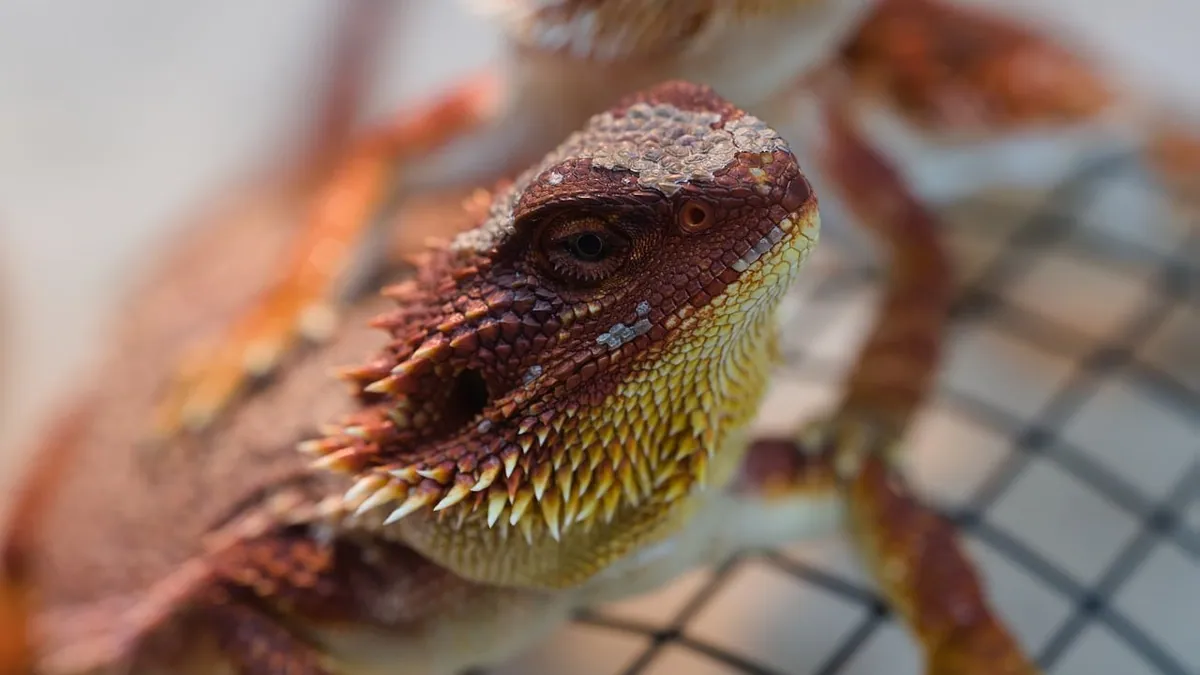
What do bearded dragons feel like? A bearded dragon feels like a warm, dry, slightly rough leather glove with a row of small firm bumps along the sides. The scales are not slimy and not sharp. The spikes look intimidating in photos but feel more like stiff rubber nubs than needles.
This article is educational and is not a substitute for veterinary diagnosis or treatment.
Quick Answer
- A bearded dragon's back feels dry and leathery with a pebbled texture, while the belly feels softer and smoother.
- The "spikes" along the sides and jaw are made of keratin, the same material as your fingernails, and they flex slightly under light pressure [1].
- A healthy dragon feels warm to the touch when it has been basking, and cool but not cold when it has been resting away from heat.
- You should support the chest and hindquarters with two hands and never lift a dragon by the tail or a single leg.
- Wash your hands before and after handling, and keep handling sessions short until you learn your dragon's comfort level.
What Handling a Bearded Dragon Actually Feels Like
The Back and Sides
Run your fingers along a bearded dragon's back and you feel overlapping scales with a dry, papery surface. The texture is closer to a leather boot than to a fish. The scales are built from keratin filaments arranged in an organized outer layer, which gives the skin its toughness and its slight grain [1]. Some species have microscopic spikes on the scale surface that help reduce bacterial adhesion, and the same basic scale architecture shows up across lizards and snakes [2]. You will not feel those individual microspikes with your hand, but they are part of why reptile skin has that faintly grippy quality.
The Belly
The belly scales are larger, flatter, and smoother than the back scales. Many owners describe the belly as feeling like soft, warm vinyl. This is the area most dragons tolerate being touched, and it is the safest place to rest your palm when you first pick one up.
The Spikes
The spikes along the jawline and the sides of the body are the feature new owners worry about most. In practice, they are blunt and flexible. They are keratin structures, not bone, and they give under gentle pressure [1]. A dragon that puffs up or flattens its body will make the spikes stand out more, which is a defensive display, not an attack. You will feel firmness, not a poke.
Temperature
Reptiles do not make their own body heat, so a bearded dragon's temperature depends on where it has been sitting. A dragon straight off a basking rock feels pleasantly warm, similar to a hot water bottle that has cooled for a while. A dragon that has been in the cool end of the enclosure feels room temperature or slightly cooler. Neither extreme is a problem by itself. A dragon that feels cold all the time usually means the enclosure temperatures are wrong, and that is a husbandry issue worth fixing. Temperature management is covered in more detail in this guide to brumation care and temperature management.
Movement and Grip
Bearded dragons do not grip like a gecko. Their claws are small and catch on fabric and skin, which can feel like light scratching. Their bodies are fairly rigid compared with a snake, so when they walk across your arm you feel a steady, deliberate weight instead of a slither.
How to Pick Up and Hold a Bearded Dragon: Step by Step
- Wash your hands with soap and water and dry them. This protects the dragon from anything on your skin and protects you from bacteria that live on reptile skin.
- Approach from the side, not in published veterinary research. A hand coming down from overhead looks like a predator to a lizard.
- Slide one hand under the chest and front legs, and let the dragon rest its weight on your palm.
- Support the hindquarters with your other hand or let the back legs rest on your forearm.
- Lift slowly and keep the dragon close to your body. A dragon that feels unsupported may squirm or jump.
- Let the dragon settle. Most will relax within a minute or two if they are used to handling.
- Return the dragon to its enclosure gently, rear end first, and let it walk off your hand instead of dropping it.
- Wash your hands again after handling.
Young dragons and newly purchased dragons often need weeks of short, calm sessions before they stop puffing up. If your dragon black-beards, hisses, or opens its mouth at you, that is a stress signal. Back off and try again later. Black beards have several possible causes, and this article explains them: Bearded Dragon Black Beard: What It Means and When to Worry.
Handling Schedule and Checklist
| Situation | How often | Session length | Notes |
|---|---|---|---|
| New dragon, first two weeks | 3 to 4 times per week | 5 minutes | Keep sessions short and quiet |
| Settled adult, healthy | Daily or every other day | 10 to 15 minutes | Watch for stress signals |
| Dragon in shed | Reduce handling | 2 to 3 minutes | Skin is sensitive during ecdysis |
| Dragon that is ill or underweight | Only as needed | Minimal | Ask your veterinarian first |
| After eating | Wait 1 to 2 hours | Normal session | Avoid handling on a full stomach |
| Child handling | Supervised only | 5 minutes | Sit on the floor |
Shedding deserves a note. Replacing and sloughing the outer skin is a normal, recurring event for lizards and snakes, and it takes real energy and time to complete [3]. During a shed, a dragon's skin may look dull and feel rougher than usual. Handle less, keep the enclosure humidity appropriate, and never peel shed skin off by force.
What the Spikes and Scales Are Made Of
Reptile scales, claws, and beaks are all built from the same family of structural proteins. Research across birds and reptiles has confirmed that these appendages share a common underlying architecture, with keratin filaments packed into organized layers [1]. That shared design is why a bearded dragon's spike feels firm but bends, and why the skin does not tear easily when the dragon squeezes through a tight gap.
Some reptile scale surfaces carry dense arrays of microscopic spikes. On ball python dorsal scales, these microstructures reduced attachment and biofilm formation by Escherichia coli and Staphylococcus aureus by 88 and 78 percent compared with a smooth reference surface [2]. This does not mean reptile skin is sterile or safe to handle without washing. It means the surface has natural properties that limit bacterial buildup, and normal hygiene still matters.
Color also varies between individual dragons. Skin coloration comes from pigment cells called chromatophores, and melanophores are the most widespread type across vertebrates, setting skin tone by how much melanin they store [4]. This is why two dragons of the same morph can look and even feel slightly different in texture, since scale shape and pigment patterns vary between animals.
Signs Something Is Wrong
A change in how your dragon feels can be an early clue to a health problem. Watch for these:
- The skin feels tacky, dry, or papery instead of smooth, which can point to dehydration or a stuck shed.
- The body feels unusually cold even after basking time, which suggests a heating or lighting problem.
- The belly feels swollen, hard, or tender when you touch it.
- The dragon flinches, pulls away, or vocalizes when handled in an area it normally tolerates.
- You feel lumps, scabs, or wounds under the scales.
- The dragon has lost weight, so the spine and hip bones feel sharper than before.
- The dragon is lethargic and does not resist being picked up when it normally would.
Any of these can have more than one cause. A full list of symptoms and what they may mean is in this guide to bearded dragon illnesses.
Common Mistakes New Owners Make
- Grabbing the dragon in published veterinary research. This triggers a startle response and makes handling harder for months.
- Lifting by the tail. The tail can break or deglaze, and the dragon has no support.
- Handling right after a meal. Give the dragon time to digest.
- Skipping hand washing. Reptiles can carry Salmonella, and hand hygiene protects your household.
- Assuming the spikes hurt. They do not, but squeezing a dragon too tightly does cause stress and injury.
- Handling during a shed. The skin is tender and more prone to damage.
- Keeping a dragon out of its enclosure too long. Without access to heat, its body temperature drops and digestion slows.
- Ignoring a dragon that hides every time you approach. That is a welfare signal, not a personality quirk.
Setup Details That Affect Handling
Your dragon's temperament and skin condition both depend on the enclosure. Get these right and handling gets easier.
- Basking surface temperature and a proper temperature gradient, so the dragon can warm up and cool down on its own.
- A UVB bulb on a regular replacement schedule, since UVB output fades before the bulb burns out.
- A solid substrate that does not stick to the skin or get ingested.
- A hide on both the warm and cool sides, so a stressed dragon has somewhere to retreat.
- A shallow water dish and regular soaks for dragons that are shedding.
- A quiet location away from heavy foot traffic, dogs, and cats.
Wild bearded dragons live in open, arid habitats with strong sun and plenty of ground cover, and their behavior in captivity still reflects those instincts. Understanding that background helps you read your dragon's body language. This article covers it well: Understanding the Wild Bearded Dragon: Natural Habitat and Behavioral Insights.
Limitations and When to Contact a Veterinarian
This article describes what normal handling feels like. It cannot tell you whether your specific dragon is healthy. Individual cases need a veterinarian who can examine the animal.
Contact an emergency veterinary hospital right away if your dragon has a prolapse, is gasping or breathing with its mouth open for more than a few minutes, has a burn or open wound, is bleeding, or has been dropped from a height.
Call for a same-day appointment if your dragon has not eaten for several days, has stopped passing stool, has a swollen or hard belly, has discharge from the eyes or nose, is dragging its back legs, or has skin that will not shed and looks tight or cracked.
Schedule a routine visit if you are unsure whether your dragon is brumating or sick. Brumation is a normal seasonal slowdown, but it can look like illness, and the two need to be told apart. This guide walks through the difference: Bearded Dragon Brumation: Guide to Distinguishing Brumation vs Illness.
Frequently Asked Questions
Do bearded dragon spikes hurt when you hold them?
No, the spikes are blunt keratin structures that flex under light pressure, so they feel firm instead of sharp. You would have to press a dragon hard against your skin to feel anything like a poke, and that pressure would be stressful for the animal anyway.
Are bearded dragons slimy?
No, bearded dragons have dry skin with no mucus layer, so they feel leathery or papery instead of wet. If your dragon's skin feels tacky or sticky, that is a sign of a shedding or hydration problem worth checking.
Should a bearded dragon feel warm or cool?
It depends on where the dragon has been. A dragon that just finished basking feels warm, and one that has been resting in the cool zone feels close to room temperature, and both are normal.
Can I get sick from handling my bearded dragon?
Yes, reptiles can carry Salmonella on their skin, so wash your hands with soap and water after every handling session. Keep dragons away from kitchen counters and food preparation areas, and supervise young children closely.
How long does it take for a new bearded dragon to get used to being held?
Most dragons settle in over a few weeks of short, calm sessions. Start with five minutes at a time, watch for puffing, hissing, or a black beard, and end the session when you see those signs.
Related Articles
- Understanding the Wild Bearded Dragon: Natural Habitat and Behavioral Insights
- Bearded Dragon Black Beard: What It Means and When to Worry
- Bearded Dragon Illnesses: A Comprehensive Guide to Symptoms and Care
- Bearded Dragon Care: Brumation care and temperature management guide
- Bearded Dragon Brumation: Guide to Distinguishing Brumation vs Illness
- Bearded Dragon Care: Overgrown Dental Spurs & Tooth Trimming Guide
- Do Bearded Dragons Like Being Pet? Handling and Bonding
- Does My Bearded Dragon Like Me? Bonding Signs
- Why Does My Bearded Dragon Lick or Bite Me? Behavior Explained
References
- Structural and Functional Elements of the Epidermal Appendages in Birds and Reptiles: Conformations and Modes of Assembly of the Constituent β-Filaments and Keratin Intermediate Filaments (IF). Sub-cellular biochemistry, 2026.
- Microarchitecture of Python regius Scale Surface: A Natural Strategy for Bacterial Adhesion Prevention. ACS omega, 2026.
- The Metabolic Effort and Duration of Ecdysis in Timber Rattlesnakes: Implications for Time-Energy Budgets of Reptiles. Ecological and evolutionary physiology, 2024.
- Candidate genes underlying hypomelanistic morphs in squamate reptiles. Genetics, 2026.