How to Tell If Your Bearded Dragon Is Happy
By Dr. Zubair Khalid, DVM, MS, PhD ·
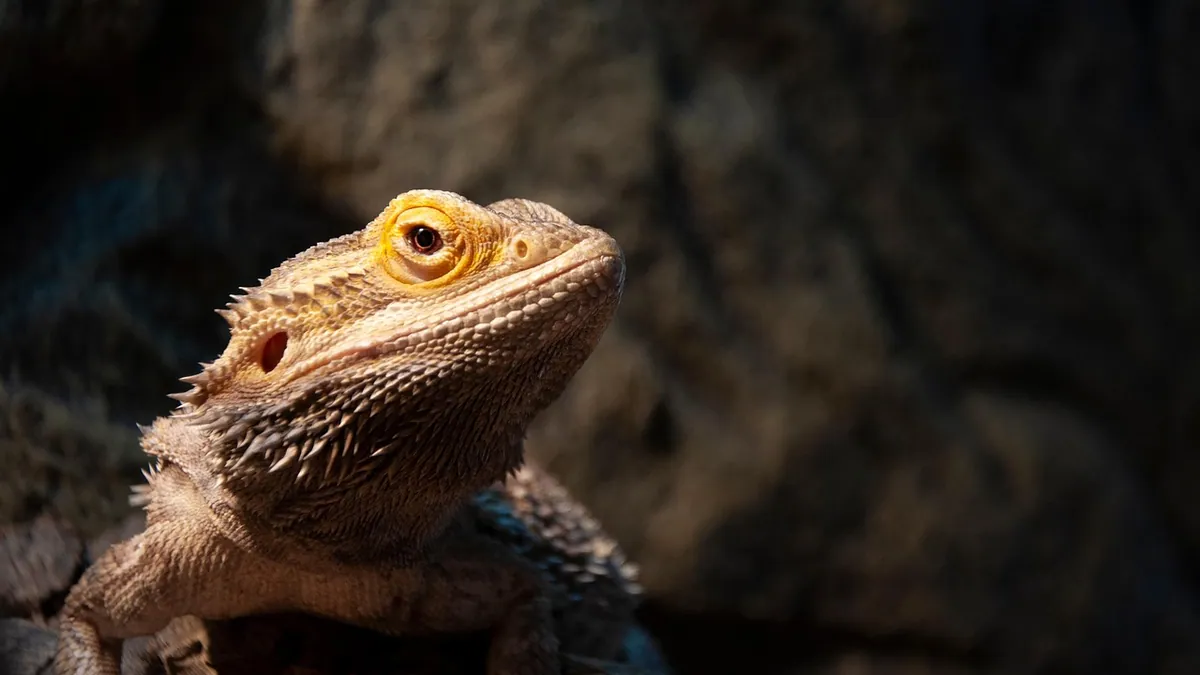
You can tell if your bearded dragon is happy by watching a cluster of everyday signals: bright eyes, steady appetite, relaxed posture, calm basking, and curiosity about its surroundings. A happy bearded dragon looks settled, not tense, and behaves much the same way from day to day. This article is educational and is not a substitute for veterinary diagnosis or treatment.
Quick Answer
- A happy bearded dragon holds its head up, keeps its eyes open and alert, and moves around its enclosure with purpose.
- It eats on its normal schedule, passes stool regularly, and basks in a relaxed, spread-out posture.
- It tolerates gentle handling without flattening its body, hissing, or trying to bolt.
- It shows interest in food, new cage furniture, and safe exploration, which are signs of good welfare.
- Sudden hiding, refusing food, or staying flat and dark for days is not a happiness problem, it is a health signal that needs a veterinary check.
What Does a Happy Bearded Dragon Look Like?
Bearded dragons do not smile, wag, or purr. Their version of contentment shows up in posture, color, appetite, and activity. A relaxed dragon often rests with its body low and limbs loose, or it stretches out under a heat lamp with its head up. Its eyes are open and tracking movement. Its beard stays its normal color, not puffed or black.
Owners often ask whether a bearded dragon closes its eyes when it is happy. Slow blinking or a relaxed squint during gentle handling can be a calm response, but closed eyes for long stretches during the day usually mean the dragon is sleepy, too cold, or unwell. Context matters. A dragon that closes its eyes while basking after a meal is fine. A dragon that keeps its eyes shut and will not wake for food is not.
Another common question is whether bearded dragons open their mouth when happy. An open mouth during basking is normal. It is called gaping, and it helps the dragon release extra heat. A wide-open mouth paired with a puffed black beard, hissing, or a lunge is a threat display, not joy. The difference is the rest of the body. A gaping dragon is loose and still. A defensive dragon is rigid and watching you.
Why the Behavior Happens: Normal Reasons First
Most bearded dragon behavior comes down to temperature, food, safety, and hormones. These are normal drivers, not signs of a problem.
Thermoregulation
Bearded dragons are ectotherms, meaning they rely on their environment to control body temperature. A dragon that moves between a hot basking spot and a cooler zone is doing exactly what it should. A dragon that gapes under the lamp is cooling down. A dragon that flattens out and darkens may be soaking up heat. This is normal and healthy.
Appetite and digestion
A dragon with a good appetite is usually a dragon that feels well. It should show interest in insects and greens and should pass stool within a day or two of eating. Digestive health depends on correct temperatures, so a cold enclosure can slow everything down and make a normally happy dragon look dull.
Safety and routine
Reptiles do best with predictable conditions. Housing design is a major factor in captive reptile welfare, and stress can build when the environment does not meet a species' needs [1]. A dragon that knows its routine, has hiding spots, and is handled gently tends to stay calm. A dragon in a bare or chaotic setup may hide more and eat less.
Breeding season and brumation
Adult males may head-bob, blacken their beard, and pace during breeding season. This is hormonal, not unhappiness. In cooler months, some dragons slow down, eat less, and sleep more. That can be normal brumation, but it can also look like illness. If you are unsure which one you are seeing, this guide on Bearded Dragon Brumation: Guide to Distinguishing Brumation vs Illness walks through the differences.
Medical Causes to Rule Out
Behavior changes in reptiles are often the first sign of disease. In one study of 242 bearded dragons brought in for emergency care, the most common complaints were lethargy in 45% and loss of appetite in 40% [2]. Those same signs were linked to a lower chance of surviving to discharge [2]. That does not mean every quiet dragon is dying. It means you should take a sudden change seriously.
Common medical problems behind a "sad" looking dragon include:
- Metabolic bone disease from poor calcium and UVB, which causes weakness, tremors, and a soft jaw.
- Respiratory infection, often with wheezing, mucus, or open-mouth breathing that is not normal gaping.
- Parasites and gut disease, which cause diarrhea, weight loss, and poor appetite.
- Reproductive disease in females, which can cause a swollen belly and lethargy. In the same emergency study, females more often presented with celomic distension and were diagnosed with reproductive disease [2].
- Impaction from swallowing substrate, which causes straining and no stool.
- Thermal stress or dehydration, which can come from a broken heat lamp or a water bowl that is too shallow.
Stress itself has a measurable physical cost. Corticosterone, the main stress hormone in reptiles, rises with metabolic rate and falls with body mass across vertebrate species [3]. In snakes, levels of this hormone in shed skin varied with housing type, and the effect differed by species [1]. The lesson for bearded dragon owners is simple. Environment and species needs shape stress, and stress shows up in the body, not only in behavior.
When Normal Behavior Becomes a Problem
A single off day is rarely an emergency. A pattern that lasts is. Use these rough guides:
- One skipped meal in an adult is often nothing. Two or more in a row, or any skipped meals in a baby, needs attention.
- A few hours of hiding after a cage change is normal. Hiding for days, especially with closed eyes and no basking, is not.
- A black beard during a head-bob display is normal. A black beard with a puffed body, open mouth, and hissing is stress. For a deeper look at that signal, see Bearded Dragon Black Beard: What It Means and When to Worry.
- Weight loss is always a problem. Weigh your dragon monthly on a kitchen scale and write it down.
- Changes in stool (runny, bloody, or absent) point to the gut and need a vet.
Poor body condition is a serious warning sign. In the emergency study, bearded dragons with poor body condition were far less likely to survive to discharge [2]. If your dragon looks thin, with a sunken tail base or visible hip bones, book a veterinary visit now.
How to Make a Bearded Dragon Happy: Step by Step
Happiness in reptiles is really good welfare. A recent proposal for reptile welfare assessment in zoos and private homes uses the Five Domains model, covering Environment, Nutrition, Physical Health, and Behavior [4]. You can use those same four areas at home.
Step 1: Fix the environment
- Provide a temperature gradient with a proper basking zone and a cooler end so your dragon can choose.
- Replace UVB bulbs on schedule. UVB output fades before the bulb burns out.
- Give a hide on the cool side and a basking platform on the hot side.
- Use a safe substrate that cannot easily be swallowed.
- Keep the enclosure away from loud traffic, dogs, and cats.
Step 2: Get nutrition right
- Offer a mix of live insects and fresh greens suited to your dragon's age.
- Dust food with calcium and a reptile multivitamin as your veterinarian advises.
- Keep a shallow water dish and mist greens for hydration.
- Never guess at supplement doses. Your veterinarian calculates the dose from your pet's weight and health.
Step 3: Support physical health
- Book a wellness exam when you first get the dragon and then yearly.
- Bring a fresh stool sample for parasite testing.
- Track weight, appetite, stool, and shedding in a simple notebook or phone app.
Step 4: Build a behavior plan
- Handle gently and briefly at first, then build up as your dragon stays calm.
- Let the dragon come to your hand instead of grabbing in published veterinary research, which feels like a predator.
- Offer safe enrichment: a new rock, a branch to climb, or supervised time on a warm floor.
- Keep a routine for lights on, lights off, feeding, and cleaning.
Enrichment is not a luxury. Wild bearded dragons live in open, dry habitats with varied terrain, and captive setups that copy some of that complexity tend to support better behavior. If you want to understand the natural baseline, read Understanding the Wild Bearded Dragon: Natural Habitat and Behavioral Insights.
What Not to Do
- Do not punish a hissing or black-bearded dragon. Reptiles do not learn from punishment the way mammals do. You will only increase fear.
- Do not assume closed eyes mean contentment. Long periods of closed eyes during the day are a red flag.
- Do not force handling on a dragon that flattens, puffs, or tries to bite. Back off and try again later.
- Do not skip UVB or calcium because your dragon "seems fine." Bone disease develops quietly.
- Do not use heat rocks that can burn a dragon's belly.
- Do not compare your dragon to a mammal. A wagging tail or a purr does not exist here. Read the whole body.
When to Involve a Veterinarian or Behavior Professional
Call a veterinarian who treats reptiles if your dragon shows any of these:
- No food for two or more days, or any refusal in a juvenile.
- Lethargy that lasts more than a day, since lethargy was linked to lower survival in emergency cases [2].
- Weight loss, sunken eyes, or a thin tail base, since poor body condition was also linked to lower survival [2].
- Open-mouth breathing at rest, wheezing, or bubbles from the nose.
- A swollen belly, especially in a female, given the link to reproductive disease [2].
- Tremors, a soft jaw, or trouble walking.
- A prolapse, bleeding, or a wound.
- No stool for several days with straining.
If your dragon is unresponsive, gasping, or having seizures, treat it as an emergency and go now. For non-urgent behavior concerns, ask your vet for a referral to a veterinarian with behavior training or a certified behavior professional who works with reptiles.
Limitations and When to Contact a Veterinarian
No article can tell you what is happening inside your specific dragon. Reptile welfare assessment is still an evolving field, and the frameworks proposed for private keepers are meant as a starting point, not a diagnosis [4]. Stress hormones vary with species, body size, and metabolic rate, so a single behavior or a single lab value never tells the whole story [3]. Your veterinarian needs the full picture, including your setup, your temperatures, and your records.
Use these timing rules:
- Emergency now: trouble breathing, seizures, unresponsiveness, prolapse, heavy bleeding, or a suspected burn or impaction.
- Same day: sudden collapse, repeated vomiting, or a female with a rapidly swelling belly.
- Within 24 to 48 hours: two missed meals, new lethargy, or a first-time black beard that will not settle.
- Routine visit: yearly wellness exam, new pet check, or any slow change in appetite, weight, or activity.
Individual cases need a veterinarian. If you are unsure whether your dragon is happy or sick, that uncertainty alone is a good reason to call.
Frequently Asked Questions
Do bearded dragons close their eyes when they are happy?
Sometimes, yes. A relaxed squint or slow blink during calm handling can be a good sign. But closed eyes for long stretches during the day usually mean your dragon is too cold, sleepy, or unwell, so look at the rest of the body before you decide.
Do bearded dragons open their mouth when happy?
An open mouth while basking is normal and helps with cooling. It only signals stress when it comes with a puffed body, a black beard, hissing, or a lunge. A loose, still dragon with a gaping mouth is comfortable.
How can you tell if your bearded dragon is happy?
Look for a settled routine. Your dragon should eat, bask, explore, and pass stool on a predictable schedule, with clear eyes and a calm beard. Any sudden change in that pattern is your cue to check the environment and call a vet if it lasts.
How do you make a bearded dragon happy?
Get the basics right first: correct temperatures, quality UVB, proper diet, and a safe enclosure. Then add gentle handling, hiding spots, climbing options, and a steady daily routine. Good welfare comes from meeting species needs, not from treats or attention.
Is a happy bearded dragon a good pet for beginners?
A calm, healthy bearded dragon can be a good first reptile because it is often docile and tolerates handling. The catch is that it needs correct lighting, heating, and diet every day. If you are weighing the commitment, this article on whether a Is a Bearded Dragon a Good Pet for Beginners? covers what to expect, and this one on Bearded Dragon Lifespan: What to Expect and How to Maximize It explains the long-term care that keeps a dragon thriving.
Related Articles
- Bearded Dragon Black Beard: What It Means and When to Worry
- Bearded Dragon Lifespan: What to Expect and How to Maximize It
- Is a Bearded Dragon a Good Pet for Beginners?
- Understanding the Wild Bearded Dragon: Natural Habitat and Behavioral Insights
- Bearded Dragon Brumation: Guide to Distinguishing Brumation vs Illness
- Bearded Dragon Lifespan and Common Health Problems
- Does My Bearded Dragon Like Me? Bonding Signs
- What Do Bearded Dragons Like to Do? Daily Behavior Explained
- Do Bearded Dragons Like Being Pet? Handling and Bonding
References
- Species-specific variations in corticosterone concentrations in captive snake shed skins: implications for housing systems and welfare. BMC veterinary research, 2026.
- Bearded dragons (Pogona vitticeps) presenting for emergency evaluation with lethargy and anorexia are less likely to survive to discharge. American journal of veterinary research, 2026.
- Corticosterone Concentration Varies With Metabolic Rate in Vertebrates. Ecology and evolution, 2026.
- Laying the groundwork for reptile welfare assessment in zoos and private keeping: A literature-based proposal. Animal welfare (South Mimms, England), 2025.