Why Is My Turtle or Tortoise Hissing? Is It Aggression?
By Dr. Zubair Khalid, DVM, MS, PhD ·
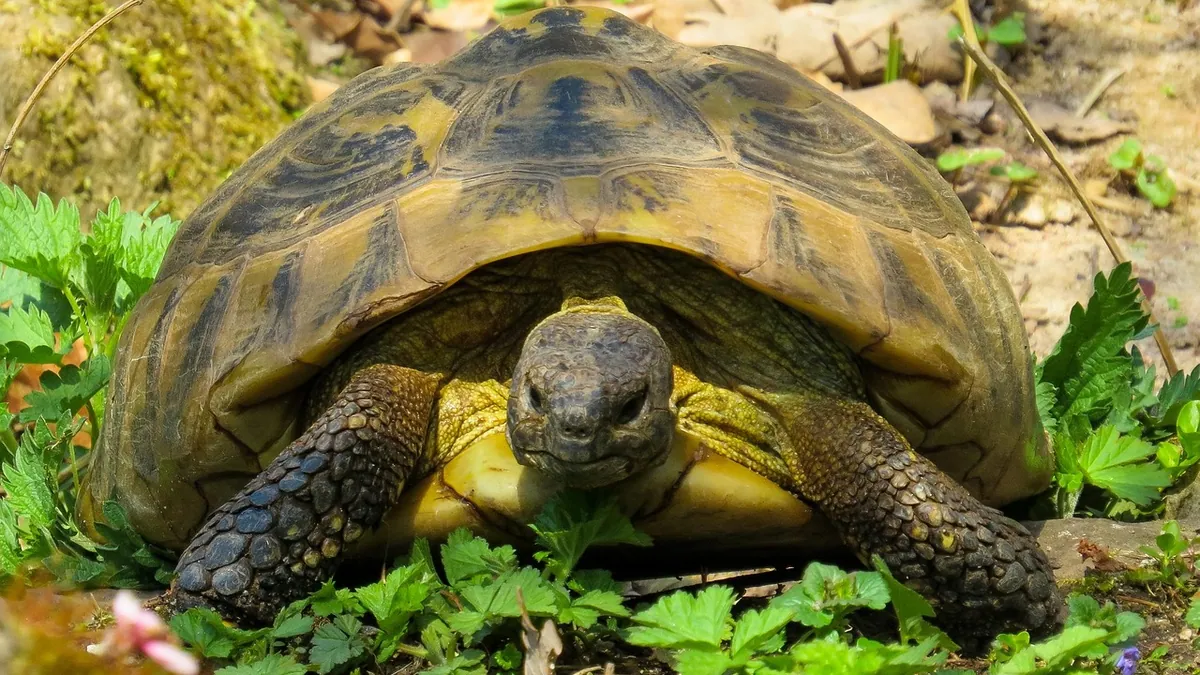
Why is my turtle hissing? In most cases, the sound is not aggression at all. It is a startle reflex, air pushed out of the lungs when your turtle or tortoise yanks its head and limbs into the shell. True aggression in pet turtles is uncommon, and it usually looks different from a quick hiss.
This article is educational and is not a substitute for veterinary diagnosis or treatment.
Quick Answer
- A single sharp hiss when you pick your turtle up or approach the tank is usually a defensive startle reflex, not an attack.
- The sound happens because retracting the head and limbs compresses the lungs and forces air out through the mouth or nostrils.
- Hissing paired with open-mouth lunging, biting, or chasing is a different situation and needs a closer look at housing and stress.
- A turtle that hisses while breathing at rest, with bubbles, discharge, or a gaping mouth, may be sick and needs a veterinary exam.
- Punishing a hissing turtle does not work and makes handling more stressful for both of you.
Why Is My Turtle Hissing? The Normal Reasons First
Hissing in turtles and tortoises is mostly a mechanical event. When your pet pulls its head and legs into the shell, the body cavity gets smaller. Air has to go somewhere, so it exits the airway and makes a hissing sound. This is why the noise often happens exactly when you reach for your turtle or when it feels the ground disappear under its feet.
This reflex is a form of defensive behavior. It is the reptile version of flinching. The animal is saying "I am startled and I want to be left alone," not "I am going to attack you."
Hissing is also a threat or defense signal across many animals, not only reptiles. A hiss is a non-vocal sound made by forced air movement, and it is used most often in threat and defense displays toward predators [1]. That fits what you see at home. Your turtle is not plotting anything. It is broadcasting alarm.
Some turtles also make sounds underwater. Chinese soft-shelled turtles produce a wide range of underwater calls, including harmonic sounds used in communication [2]. So a turtle is not a silent animal by nature. Sound is part of how these animals respond to the world.
Why does my tortoise hiss?
Tortoises hiss for the same basic reason. The shell is rigid, and the space inside is fixed. When a tortoise retracts its neck, the air in the lungs is squeezed out. You hear a hiss. This is common in species that retract quickly, and it often surprises new owners because the sound is louder than expected for the size of the animal.
A tortoise may also hiss when it is flipped over, when it is restrained, or when something touches its shell unexpectedly. These are all startle situations.
Is hissing the same as aggression?
No. Aggression in turtles is a real behavior, but it looks different. Aggressive turtles often open the mouth wide, extend the neck, lunge, snap, or chase. In Chinese soft-shelled turtles, researchers have studied reactive aggression using intruder tests and found that aggressive individuals show changes in brain signaling pathways tied to glutamate and GABA [3]. That tells us aggression has a biological basis and is not simply the same as a hiss.
If your turtle hisses and then hides, that is fear, not aggression. If your turtle hisses and then bites, that is a different problem.
Turtle Defensive Behavior: What It Looks Like
Defensive behavior in turtles and tortoises usually follows a pattern. First, the animal freezes. Then it retracts. Then it may hiss, lunge, or release urine. Some turtles also gape, which means they open the mouth wide as a warning.
You may see defensive behavior when you:
- Pick the turtle up
- Reach into the enclosure in published veterinary research
- Move a hide or water bowl suddenly
- Introduce a new turtle into the same space
- Handle the turtle during shedding or after a shell injury
A turtle hissing when picked up is one of the most common complaints from new owners. It almost always means the turtle was not used to handling, or the handling felt unsafe.
The turtle hissing sound
The turtle hissing sound is usually short, sharp, and breathy. It can sound like a small leak or a puff of air. Some turtles make a longer hiss when they are very frightened. If the sound is wet, rattling, or repeated while the turtle is resting, that is not a normal startle reflex and needs attention.
Medical Causes to Rule Out
Not every hiss is behavioral. Respiratory disease is a common problem in pet turtles and tortoises, and it can change breathing sounds. A turtle with a respiratory infection may breathe with the mouth open, have nasal discharge, or make clicking or wheezing sounds. These are not the same as a quick hiss during handling.
Pain is another reason a turtle may react strongly to touch. Reptiles do feel pain, and researchers have studied pain pathways in tortoises, including sodium channels involved in nociception [4]. A turtle in pain may hiss, pull away, or become defensive when a specific part of the body is touched.
Other medical possibilities include:
- Shell damage or infection
- Abscesses
- Egg binding in females
- Intestinal blockage
- Metabolic bone disease
- Overheating or dehydration
If your turtle hisses only when you touch one area, or if the behavior started suddenly in an adult turtle, a veterinary exam is reasonable. Pain-related behavior changes are well documented in other species too, and the same principle applies here. You can read more about how pain changes behavior in Why Is My Dog suddenly becoming aggressive? Pain-Induced Aggression and Thyroid and How to Tell If Your Dog's Aggression Is Pain-Related.
When Hissing Becomes a Problem
Hissing by itself is not a behavior problem. It becomes a problem when it is paired with:
- Biting or lunging at hands
- Chasing or attacking a tank mate
- Refusing to eat
- Hiding all day
- Open-mouth breathing at rest
- Weight loss
- Swelling, discharge, or shell changes
Aggression between turtles is a real welfare issue. In farmed Chinese soft-shelled turtles, aggression affects health and survival, which is why researchers study it closely [3]. In a home tank, aggression often comes from overcrowding, limited space, or mixing species that should not live together.
If your turtle hisses at you but is calm with a tank mate, the hiss is likely defensive. If your turtle attacks a tank mate, separate them. Do not wait to see if it settles down.
What to Do Step by Step
1. Change how you approach
Reach for your turtle from the side, not in published veterinary research. Predators come in published veterinary research, so a hand dropping down can trigger a strong startle response. Move slowly. Let the turtle see your hand before you touch it.
2. Support the whole body
When you pick up a turtle, support the plastron (bottom shell) and the legs. Never lift by the tail or a single leg. A turtle that feels unsupported will retract hard, and that is when you hear the hiss.
3. Keep handling short
Start with brief sessions. Pick the turtle up, hold it calmly for a few seconds, and put it back. Over time, many turtles tolerate handling better. Some never enjoy it, and that is normal.
4. Fix the enclosure
Check temperature, humidity, UVB lighting, and water quality. A turtle that is too cold or too hot will be stressed. Provide a hide large enough to cover the whole shell. Add a basking area if your species needs one.
5. Give space
If your turtle hisses every time you walk by, it may need more cover. A stressed turtle that cannot hide will stay defensive. Add plants, cork bark, or a cave.
6. Separate aggressive animals
If two turtles fight, house them separately. Do not rely on size differences or "they will work it out." Reptile aggression can cause serious wounds.
7. Watch the pattern
Keep a simple log. Note when the hiss happens, what you did right before, and whether the turtle eats and basks normally. This helps your veterinarian if you need a visit.
What Not to Do
Do not punish your turtle. Tapping the shell, yelling, or spraying water will not teach anything. It will make the animal more defensive.
Do not assume every hiss is aggression. Most hissing is a startle reflex. Treating a frightened turtle like an aggressive one leads to rough handling and more stress.
Do not force handling. If your turtle hisses and struggles, put it down and try again later. Forcing the interaction teaches the turtle that hands are scary.
Do not ignore breathing changes. A hiss during handling is normal. A hiss at rest, with bubbles or a gaping mouth, is not.
Do not mix species without research. Different turtles and tortoises have different temperature, humidity, and diet needs. Mixing them can cause stress and disease.
Do not use online myths as a guide. You may read that hissing means your turtle hates you or that it is "bluffing." Neither idea helps you care for the animal. Focus on what you can observe: body posture, appetite, breathing, and activity.
When to Involve a Veterinarian or Behavior Professional
Call a veterinarian if your turtle hisses along with any of these signs:
- Open-mouth breathing while resting
- Bubbles from the nose or mouth
- Wheezing, clicking, or rattling sounds
- Refusing food for more than a few days
- Swollen eyes, ears, or limbs
- Shell softness, cracks, or discharge
- Sudden behavior change in an adult turtle
- Biting that breaks skin
- Fighting between tank mates
A veterinarian with reptile experience can examine the mouth, listen to the lungs, check the shell, and take samples if needed. If the behavior is aggression between turtles, a reptile-savvy veterinarian or behavior professional can help you review housing and enrichment.
If you are worried about a pet that seems painful or suddenly aggressive, the same principles apply across species. You can read more in Cat Sudden Aggression: What Could It Mean? and Why Is My Dog Pacing and Whining?.
Limitations and When to Contact a Veterinarian
This article cannot tell you what is happening with your specific turtle. Only a veterinarian who examines your pet can do that. Individual cases need a veterinarian, especially when breathing, eating, or behavior changes.
Contact a veterinarian the same day if your turtle:
- Breathes with the mouth open at rest
- Has discharge from the nose or mouth
- Has not eaten in several days
- Is suddenly much more defensive than usual
- Has a swollen or damaged shell
Go to an emergency clinic now if your turtle:
- Is gasping or struggling to breathe
- Is unresponsive or limp
- Has a prolapsed organ
- Has severe bleeding
- Was attacked by another animal
Schedule a routine visit if your turtle:
- Hisses only during handling but otherwise seems healthy
- Has a mild change in appetite
- Needs a housing or diet review
Frequently Asked Questions
Does a hissing turtle bite?
Not usually. A hiss is most often a startle reflex, and most turtles hiss and then retract instead of bite. A bite is more likely when a turtle is cornered, handled roughly, or defending a tank mate or territory.
Is my turtle hissing because it is angry?
Probably not. Anger is not a useful label for reptile behavior. Your turtle is more likely frightened, startled, or uncomfortable. Look at what happened right before the hiss to find the trigger.
Should I put my hissing turtle back immediately?
Yes, if it is struggling. Put it down gently and let it settle. Short, calm handling sessions work better than forcing a long one. Over time, many turtles become less reactive.
Can a tortoise hiss when it is sick?
Yes. A tortoise with a respiratory infection or pain may make breathing sounds that sound like hissing. The difference is timing. A sick tortoise may hiss at rest, breathe with an open mouth, or stop eating.
Do turtles hiss at each other?
They can. Hissing between turtles is often a warning during a close encounter. If you see hissing followed by biting, chasing, or mounting, separate the animals and review their housing.
Related Articles
- Why Is My Turtle or Tortoise Making Noises?
- Why Is My Turtle or Tortoise Digging? Normal vs. Problem
- Do Tortoises and Turtles Bite? What Owners Should Know
- Turtle Herpesviruses
References
- Avian hissing sounds: occurrence, mechanism, ontogeny, function and phylogeny. Royal Society open science, 2025.
- Diversity of Underwater Vocalizations in Chinese Soft-Shelled Turtle (Pelodiscus sinensis). Animals : an open access journal from MDPI, 2023.
- Integrated transcriptomic and metabolomic analysis unravels the molecular basis of conspecific aggression in Pelodiscus sinensis. Comparative biochemistry and physiology. Part D, Genomics & proteomics, 2026.
- Effects of inhibition of Nav1.3, Nav1.7, and Nav1.8 channels on pain-related behavior in Speke's hinge-back tortoise (Kinixys spekii). Journal of neuroscience research, 2024.