Why Does My Tortoise Chase Me? Meaning and What to Do
By Dr. Zubair Khalid, DVM, MS, PhD ·
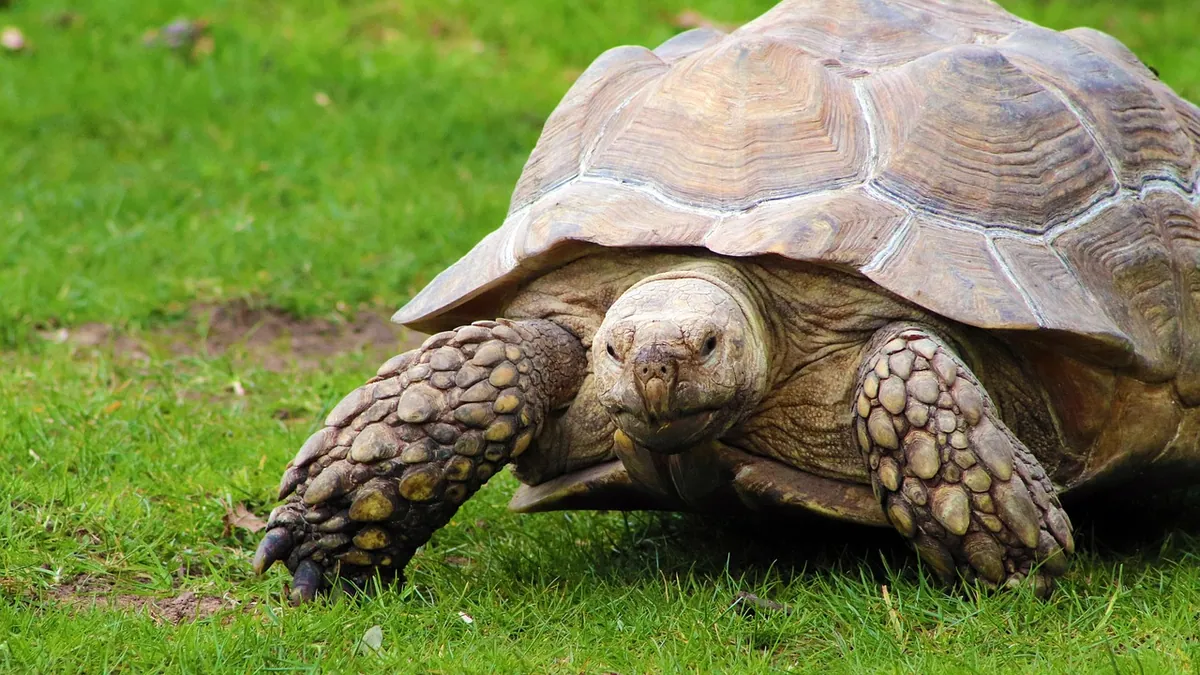
Why does my tortoise chase me? In most cases, your tortoise has learned that you equal food, so it follows the person who fills the dish. Sometimes the behavior is territorial or driven by mating season, and a small number of cases trace back to a medical problem. This article is educational and is not a substitute for veterinary diagnosis or treatment.
Quick Answer
- Chasing and following are usually food-related. Tortoises learn fast that a specific person brings greens, so they trail that person around the enclosure.
- Mating-season chasing is real and seasonal. Males may pursue moving objects, including feet and shoes, during breeding periods.
- Territorial behavior is more common in some species and in males defending a familiar space.
- A sudden change in behavior, especially with appetite loss or lethargy, needs a veterinary exam.
- Never punish a tortoise. Redirect it with a barrier, a food station away from your feet, and consistent handling.
Why Does My Tortoise Chase Me?
Food Association Is the Most Common Reason
Tortoises are quick to link a person with food. If you are the one who puts down the salad, your tortoise learns your shape, your movement, and the time of day you appear. It then follows you because following has paid off before.
Research on Hermann's tortoises shows they can learn and remember spatial cues to reach a food reward, and they tend to explore along walls and perimeters [1]. That fits what owners see: a tortoise that patrols the edge of its enclosure and then heads straight for the human who feeds it.
This is not affection in the way a dog shows it. It is a learned routine. That does not make it meaningless. Owners in one survey described a range of bonds with their chelonians, and about 44 percent of those who answered questions about both reptiles and dogs or cats considered the tortoise a family member [2]. Your tortoise can still be a valued companion even when the chasing is mostly about lunch.
Mating-Season Chasing
Male tortoises often become more active and more persistent during breeding season. They may chase moving objects, ram them, or mount them. Feet, shoes, and small children moving past an outdoor pen are common targets.
This pattern is not unique to tortoises. In many animals, movement and social status shift with the breeding cycle. In dingoes, for example, subordinate males ranged farther outside their pack's home range during the breeding season, while subordinate females did not change their movement [3]. The takeaway is general: breeding season changes how animals move and how far they push into new space. For a male tortoise, that can mean more chasing and more nipping at anything that moves.
Mating-season behavior usually fades when the season ends. If your tortoise is indoors under stable temperatures and lighting, the season may be less obvious or may last longer than you expect.
Territorial Behavior
Some tortoises defend a familiar area. A tortoise that has lived in the same pen for years may treat it as its own and react to intruders, including your hands, a new tortoise, or a broom.
Territoriality is a normal animal pattern. It shapes how far animals travel and where they spend time, and it can tighten when competition rises [3]. In a backyard pen, competition might mean a second tortoise, a reflection, or you reaching into the space.
Species matters here. Some tortoises are more territorial than others, and males are often more assertive than females. Your veterinarian or an experienced keeper can tell you what is typical for your species.
Scent and Recognition
Reptiles rely heavily on chemical signals. A study of Tokay geckos found that both males and females could tell a familiar mate from an unfamiliar one by smell alone, and they kept that ability for two to three weeks after separation but not up to six weeks [4]. Tortoises also use scent and memory to sort out their world.
That means your tortoise may recognize you partly by smell. If you change soap, lotion, or the food you handle before entering the pen, the reaction can change too. It also means a tortoise may treat a new person differently than it treats you.
Curiosity and Routine
Not every approach is a chase. A tortoise walking toward you may simply be exploring. Hermann's tortoises in a learning task used consistent strategies and preferred to explore along walls [1]. A tortoise moving along a fence line toward your position may be following its usual route, not hunting you down.
Watch the body language. A relaxed tortoise walks with the head partly out and moves steadily. A stressed or aggressive tortoise may extend the neck, open the mouth, hiss, or lunge.
Medical Causes to Rule Out
Behavior change in a tortoise is often the first sign of illness. A tortoise that suddenly starts chasing, pacing, or acting agitated may be uncomfortable instead of friendly or aggressive.
Common medical issues behind odd behavior include:
- Pain from an injury, shell damage, or an abscess
- Respiratory infection, which can cause open-mouth breathing and restlessness
- Parasites, which can cause weight loss and changes in appetite
- Metabolic bone disease, which affects movement and strength
- Egg binding or reproductive problems in females
- Dehydration or poor husbandry, including wrong temperatures or humidity
A tortoise that is too cold may pace to find warmth. A tortoise that is too hot may pace to escape heat. Both can look like chasing when you walk by.
If the behavior started suddenly, or if it comes with appetite loss, weight loss, discharge from the nose or eyes, swollen eyes, shell softening, or lethargy, book a veterinary visit. Do not wait to see if it passes.
When Does Chasing Become a Problem?
Chasing is a problem when it leads to injury, stress, or unsafe handling. Signs it has crossed that line:
- Your tortoise bites or nips at feet, hands, or shoes
- It rams the enclosure walls or other tortoises
- It mounts objects or other animals repeatedly
- It stops eating or loses weight
- It becomes difficult to clean the enclosure or place food safely
- Children or visitors are getting nipped
Nipping is the main safety concern. A tortoise bite can break skin, and a large tortoise can bruise a small hand. If nipping has started, change how you interact right away.
What To Do Step by Step
1. Separate Food From Your Body
Feed your tortoise at a fixed spot away from where you stand. Put the food down with a tool or from outside the enclosure if you can. Then step back. This breaks the link between your feet and the food.
If your tortoise still follows you, place a visual barrier between you and the food area during feeding. A piece of cardboard or a low board works.
2. Change Your Entry Routine
Enter at different times and from different angles for a while. Do not always walk straight to the food dish. If the chasing is a learned routine, changing the routine weakens it.
3. Use a Barrier, Not Your Hand
If your tortoise nips, keep your hands out of reach. Use a soft brush, a board, or a long-handled tool to move it gently when needed. Never flick, slap, or push the shell hard.
4. Increase Enrichment
A bored tortoise paces more. Add safe things to explore:
- A larger enclosure with varied terrain
- Safe plants for cover and grazing
- A shallow water dish it can walk into
- Rocks and logs to climb over, sized so it cannot tip and get stuck
- Rotating food placement so it has to search
Hermann's tortoises in a spatial task used landmarks and geometry to find food and preferred perimeter routes [1]. Giving your tortoise a more complex space to explore uses that same natural behavior.
5. Manage Mating Season
If chasing spikes during breeding season, expect it and plan for it. Keep the tortoise away from small children during this period. Do not let it roam the house where it can nip ankles. If you keep more than one tortoise, ask your veterinarian whether housing changes are needed.
6. Handle With a Plan
Pick your tortoise up only when needed, support the whole body, and keep sessions short. A tortoise that is handled calmly and consistently is easier to manage than one that is grabbed unpredictably.
7. Keep Records
Note when the chasing started, what time of day it happens, what you were doing, and whether the tortoise is eating and passing stool normally. This information helps your veterinarian sort out behavior from illness.
What Not To Do
Do not punish your tortoise. Tapping the shell, spraying water, or yelling does not teach a tortoise to stop. It teaches fear and can make handling harder.
Do not assume it is affection. Treating a mating-season male as if it wants cuddles can get you bitten. Respect the behavior for what it is.
Do not let it roam free indoors unsupervised. Tortoises can nip, get stepped on, eat the wrong thing, or get chilled. If you want your tortoise to move around, use a safe, enclosed area.
Do not add a second tortoise to "fix" the behavior. A new tortoise can increase territorial and mating behavior, and it can lead to fighting and stress.
Do not ignore sudden changes. A calm tortoise that becomes a chaser overnight needs a health check, not a training plan.
Do not rely on myths. There is no evidence that a tortoise chases you because it loves you more than other people, or because it is trying to protect you. The behavior is best explained by learning, season, territory, and health.
If you also keep dogs or cats, some of their odd behaviors have their own explanations. A dog that scoots may have anal gland or parasite issues (Why Is My Dog Scooting?), a dog that suddenly fears the leash may have had a bad experience (Why Is My Dog Suddenly Scared of the Leash?), and a dog that hides may be in pain or stressed (Dog Hiding and Acting Weird: What Does It Mean?). Different species, same rule: sudden behavior change deserves a closer look.
When To Call a Veterinarian or Behavior Professional
Call your veterinarian if the chasing is new, if nipping has drawn blood, if your tortoise is not eating, or if you cannot safely care for it.
Ask for a referral to a veterinarian who treats reptiles, or to a certified behavior professional with reptile experience, if:
- The behavior continues after you change feeding and handling routines
- Your tortoise is injuring itself on the enclosure
- You have more than one tortoise and they are fighting
- You are worried about safety for children or visitors
- You cannot tell whether the behavior is medical or behavioral
Reptile medicine is a specialty. A general practice veterinarian may be able to help with basic care, but a reptile-focused veterinarian is the better choice for behavior and husbandry questions.
Limitations and When To Contact a Veterinarian
This article cannot tell you what is happening with your specific tortoise. Behavior in reptiles is shaped by species, sex, age, temperature, lighting, enclosure size, diet, and health. Your veterinarian needs to examine your tortoise and review your setup to give you real answers.
Contact a veterinarian the same day if your tortoise:
- Stops eating or drinking
- Has diarrhea, blood in the stool, or a prolapse
- Breathes with an open mouth or makes clicking sounds
- Has swollen eyes, nasal discharge, or bubbles from the nose
- Becomes suddenly lethargic or cannot right itself
Go to an emergency clinic now if your tortoise:
- Has a shell fracture or deep wound
- Was attacked by a dog, cat, or other animal
- Is straining to pass an egg with no success
- Is unresponsive or limp
- Has been exposed to a toxin, such as insecticide or antifreeze
Schedule a routine visit if the chasing is mild but new, if you have not had a wellness exam since you got the tortoise, or if you want help with enclosure setup and diet.
Frequently Asked Questions
Does my tortoise chasing me mean it likes me?
Not in the way a dog likes you. It usually means your tortoise has learned that you bring food, or that it is in a territorial or mating phase. Some owners feel a real bond with their tortoise, and that bond is worth having, but the chasing itself is best read as a learned or seasonal behavior.
Why does my tortoise only chase me and not other people?
You are probably the person who feeds it. Tortoises learn routines and can use scent and memory to tell individuals apart. If you are the one who appears at feeding time, you become the cue for food.
Will my tortoise stop chasing me if I stop hand-feeding?
Often, yes, or the behavior will at least weaken. Put food down at a fixed spot away from where you stand, then step back. Changing when and how you enter the enclosure also helps break the routine.
Is chasing more common in male tortoises?
Mating-season chasing and nipping are more often reported in males. Territorial behavior also tends to be stronger in males of many species. Females can chase too, especially around egg-laying time or if they feel cornered.
Can a tortoise bite through skin?
Yes. A determined tortoise can break skin, and a large tortoise can cause a painful bruise. Keep your hands and bare feet out of reach during mating season, and supervise children around any tortoise that has nipped before.
Related Articles
- Why Is My Tortoise Walking in Circles? Causes
- Why Is My Tortoise Head Bobbing? Meaning and Causes
- Why Is My Tortoise Pacing Back and Forth? Causes
References
- Navigation and spatial learning in Hermann's tortoises: Insights from geometric reorientation. Journal of experimental psychology. Animal learning and cognition, 2026.
- Human-Chelonian Bond in Italy: An Exploratory Study of Pet Turtle and Tortoise Ownership. Veterinary sciences, 2025.
- Dingo movement depends on sex, social status and litter size. Royal Society open science, 2025.
- Sex-specific discrimination of familiar and unfamiliar mates in the Tokay gecko. Animal cognition, 2024.