Why Is My Tortoise Walking in Circles? Causes
By Dr. Zubair Khalid, DVM, MS, PhD ·
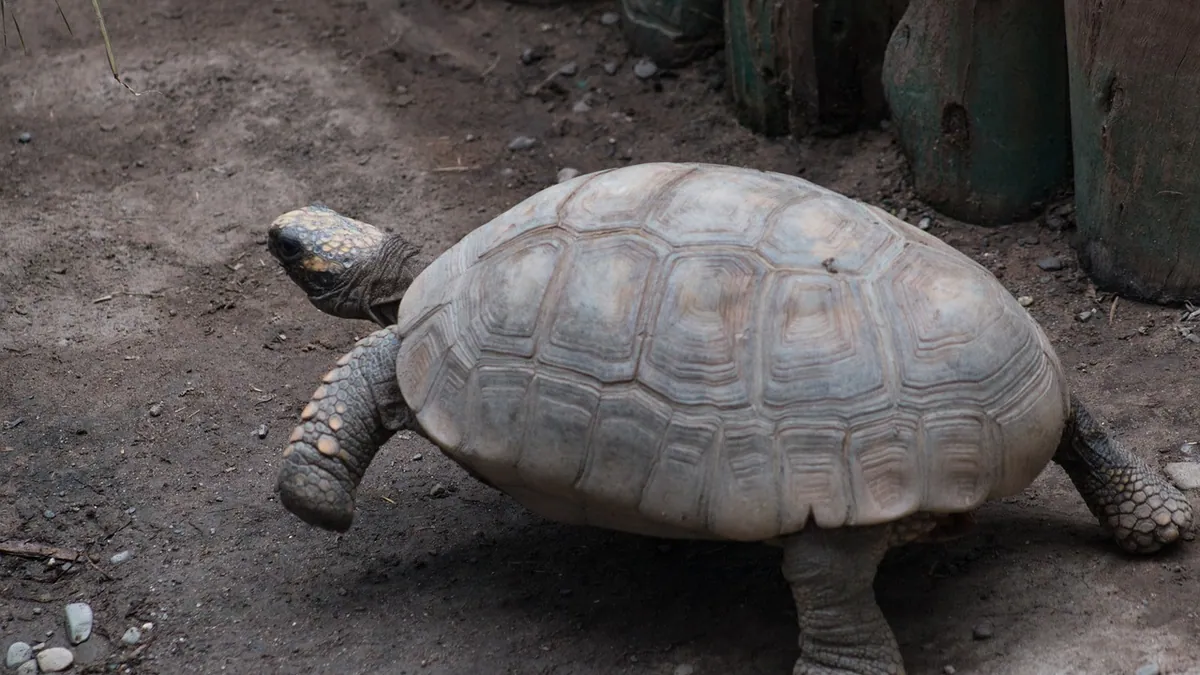
Circling in a tortoise can be simple exploration, a response to a barrier or a mate, or a sign that something is wrong in the brain, the inner ear, or the body's metabolism. If your tortoise keeps circling the same way, tips over, or cannot walk straight, treat it as a medical problem until proven otherwise. This guide explains why is my tortoise going round in circles and how to tell the difference.
This article is educational and is not a substitute for veterinary diagnosis or treatment.
Quick Answer
- Occasional circling while exploring, climbing, or pacing a cage wall is usually normal, especially in a tortoise that eats, basks, and defecates normally.
- Circling that is one-directional, repeated, or paired with a head tilt, falling, or rolling points to a neurologic or inner ear problem and needs a vet visit.
- Circling is a known neurologic sign in animals with certain infections and parasites, including some that affect the brain and balance centers [1][2].
- Stop all handling and repositioning attempts if your tortoise is rolling or flipping. Keep it upright, warm, and in a quiet, shallow enclosure.
- Call an exotics veterinarian the same day for new circling with head tilt, and treat rolling, seizures, or inability to right itself as an emergency.
What Circling Looks Like and What Is Normal
Circling means the tortoise turns in a repeated arc or loop instead of moving in a straight line. Owners describe it in different ways. Some say the tortoise is walking in circles. Others say it is running around in circles, spinning, or pacing the same path over and over.
Normal circling has a context. A tortoise may circle a new enclosure while exploring. It may pace along a glass wall or fence line. A male may circle a female during courtship. A tortoise may also circle back toward a heat source or a favorite hide. In these cases the tortoise moves in both directions, responds to food, and holds its head level.
Abnormal circling looks different. The tortoise tends to turn the same way every time. It may lean, tilt its head, or drift sideways. It may fall over when it stops. It may circle even when sitting still, as if pushed by an invisible hand. This pattern suggests a problem in the balance system, the brain, or the nerves that control posture.
Turtles and tortoises use their sense of heading and body rotation constantly to move through space [3]. When that system is disrupted, the animal's path curves. That is why circling is a symptom, not a diagnosis.
Why Is My Tortoise Walking in Circles? Main Causes
Many conditions can produce circling. The table below groups the most common ones and what makes each more or less urgent.
| Cause | Typical clues | How urgent |
|---|---|---|
| Normal exploration or pacing | Both directions, normal appetite, no tilt, stops when distracted | Routine |
| Inner ear or vestibular disease | Head tilt, one-directional circling, falling, rolling | Same day |
| Brain or nerve disease | Circling, head tilt, tremors, weakness, seizures | Emergency |
| Infection with neurologic signs | Circling plus anorexia, depression, weakness, other organ signs | Same day |
| Metabolic or nutritional problems | Slow onset, poor shell growth, weakness, soft shell, poor appetite | Routine to same day |
| Parasitic disease | Circling with incoordination, trembling, blindness, poor body condition | Same day |
| Trauma or toxin exposure | Sudden onset after a fall, bite, or exposure to a chemical | Emergency |
Inner Ear and Balance Problems
The inner ear, and specifically the utricular organ, senses head tilt and translation relative to gravity [4]. When this organ or its nerve is damaged, the brain receives conflicting signals about which way is up. The result is a head tilt, a curved walk, and sometimes rolling.
In reptiles, ear infections, abscesses, and trauma are common causes. A tortoise with an inner ear problem often circles in one direction and resists being turned the other way. It may also stop eating.
Brain and Neurologic Disease
Anything that affects the brain can cause circling. This includes infection, inflammation, tumors, and bleeding. Neurologic circling often comes with other signs, such as tremors, head pressing, seizures, or a change in personality.
Some infectious diseases in animals cause circling as a primary sign. In one reported case, a bird with a blood parasite showed circling movements and episodes of torticollis, which is a twisted neck [1]. In another report, opossums with a severe parasitic infection showed trembling, incoordination, circling, and blindness [2]. These are different species, but they show how infection in the nervous system can produce circling.
Metabolic and Nutritional Problems
Metabolic bone disease, low blood calcium, kidney disease, and liver disease can all affect the nervous system. A tortoise with these problems may circle, drag its legs, or have a soft shell. These signs often develop slowly over weeks.
Poor diet, lack of UVB light, and low calcium are common underlying causes in captive tortoises. Correcting the enclosure and diet matters as much as treating the current symptoms. For shell and growth problems related to husbandry, see Sulcata Tortoise Pyramiding Prevention.
Parasites and Infection
Internal parasites, blood parasites, and other infections can affect the brain and balance centers. Circling is one of several possible signs, along with weight loss, poor appetite, and weakness [1][2]. A veterinarian can test for these with blood work, fecal exams, and imaging.
Trauma and Toxins
A fall, a bite from a dog or another pet, or a knock against a hard surface can injure the brain or inner ear. Sudden circling after any of these events is an emergency. Toxin exposure, such as from pesticides, antifreeze, or certain plants, can also cause neurologic signs.
Environmental and Behavioral Causes
Not every circle is medical. A tortoise in too small an enclosure may pace. A tortoise that can see a reflection may circle the glass. A tortoise that is too cool may move oddly as it seeks heat. Review the enclosure before assuming disease, but do not delay a vet visit if the behavior is one-directional or comes with other signs.
Red Flags That Make It an Emergency
Call an emergency exotics clinic right away if you see any of these.
- The tortoise rolls onto its back or cannot right itself.
- The circling started suddenly after a fall, bite, or possible toxin exposure.
- There are seizures, tremors, or twitching.
- The tortoise cannot walk at all or drags its legs.
- Breathing is labored, or the mouth stays open.
- The tortoise is unresponsive or limp.
These signs suggest serious brain, nerve, or metabolic disease. Time matters. A tortoise that cannot right itself can overheat, dehydrate, or suffocate.
Safe Things You Can Do at Home While Waiting
You cannot diagnose or treat circling at home, but you can keep your tortoise safe until the appointment.
- Move the tortoise to a small, shallow enclosure with low walls. Remove climbing rocks and water bowls deep enough to drown in.
- Keep the enclosure warm and quiet. Use the same heat gradient your tortoise normally has, but reduce handling.
- Do not force food or water. Offer shallow, clean water and a normal diet if the tortoise is alert.
- Take photos and short videos of the circling. Note which direction it turns and how often it happens. This helps the vet.
- Write down the diet, UVB setup, temperatures, and any recent changes. Bring this to the visit.
- Do not give any medication, vitamin injection, or supplement dose on your own. A veterinarian calculates the dose from your pet's weight and health.
If your tortoise is rolling, pad the enclosure with soft, clean towels and keep it upright by hand only when needed. Do not spin or shake the tortoise to test its balance.
What Your Veterinarian Will Check and Test
An exotics veterinarian will start with a full history and physical exam. Expect questions about diet, lighting, temperatures, enclosure size, and how long the circling has been happening.
The exam focuses on the nervous system. The vet will check head position, eye movement, limb strength, righting reflex, and response to being turned. They will also look in the ears and mouth and feel the shell and limbs.
Testing may include:
- Blood work to check calcium, phosphorus, glucose, kidney values, and infection markers.
- Fecal exam for parasites.
- Imaging such as radiographs or CT to look at the ears, skull, and internal organs.
- Cultures or other tests if infection is suspected.
Treatment depends on the cause. Bacterial infections need antibiotics. Parasites need antiparasitic drugs. Metabolic problems need diet, lighting, and calcium correction. Some cases need supportive care such as fluids, warmth, and assisted feeding.
If your dog has similar balance problems, the logic is the same. The article Why Is My Dog walking in circles? Vestibular Disease vs Brain Tumor explains how vets separate ear disease from brain disease in another species.
Prevention and Monitoring
Most circling caused by husbandry problems can be prevented with good care.
- Provide a proper UVB light and replace it on the schedule the manufacturer gives.
- Feed a species-appropriate diet with correct calcium and phosphorus levels.
- Keep the enclosure large enough to allow straight-line walking and turning.
- Maintain a correct temperature gradient and a clean water source.
- Quarantine new reptiles before adding them to a group.
- Weigh your tortoise monthly and track the numbers.
- Watch for early signs such as head tilt, drifting, or a change in appetite.
Some causes, such as trauma or genetic disease, cannot be prevented. Early detection still improves the outcome. If you notice any change in gait, act early.
For a related problem in dogs that owners often confuse with neurologic disease, see Why Is My Dog Scooting?. The causes are different, but the lesson is the same: a repeated behavior can be a medical sign.
Limitations and When to Contact a Veterinarian
This article cannot tell you what is wrong with your specific tortoise. Circling has many causes, and only a veterinarian who examines your pet can make a diagnosis.
Contact a veterinarian the same day if your tortoise:
- Circles in one direction repeatedly.
- Has a head tilt or leans to one side.
- Stops eating or loses weight.
- Shows weakness, tremors, or a change in behavior.
Go to an emergency clinic now if your tortoise:
- Rolls onto its back or cannot right itself.
- Has seizures or becomes unresponsive.
- Has trouble breathing.
- Circles suddenly after a fall, bite, or toxin exposure.
Schedule a routine visit if the circling is mild, happens in both directions, and your tortoise is otherwise normal. Even then, a checkup is wise. Early treatment is easier than late treatment.
Frequently Asked Questions
Is circling always a sign of disease in tortoises?
No. Some circling is normal exploration, pacing, or courtship. The key difference is direction and context. A healthy tortoise circles both ways, responds to food, and holds its head level. A sick tortoise tends to circle one way and may tilt or fall.
Can a tortoise recover from circling on its own?
Sometimes, if the cause is mild and temporary, such as a small injury or an early infection that the immune system clears. In most cases, recovery depends on treating the underlying cause. Do not wait to see if it resolves if your tortoise has other signs such as head tilt or appetite loss.
Does circling mean my tortoise has a brain tumor?
Not necessarily. Brain tumors are possible but uncommon. Inner ear disease, infection, metabolic problems, and trauma are more common causes. Only testing can tell the difference.
Should I isolate a circling tortoise from other reptiles?
Yes, until a veterinarian examines it. Some causes of circling are infectious, and separating the tortoise protects your other pets. Use separate tools, bowls, and handling routines during the isolation period.
Can I treat circling at home with vitamins or calcium?
No. Giving calcium or vitamins without knowing the cause can make some conditions worse. A veterinarian calculates any dose from your pet's weight and health. Home treatment should focus on safety, warmth, and a quiet enclosure until the appointment.
Related Articles
- Sulcata Tortoise Pyramiding Prevention
- Why Is My Tortoise Not Moving? Causes and What to Do
- Why Is My Tortoise Pacing Back and Forth? Causes
- Why Is My Tortoise Head Bobbing? Meaning and Causes
- How Turtles Navigate From Hatchlings to Adults
References
- Buparvaquone therapy in a rock pigeon infected with Haemoproteus columbae showing torticollis. Journal of parasitic diseases : official organ of the Indian Society for Parasitology, 2017.
- Debilitation and mortality associated with besnoitiosis in four Virginia opossums (Didelphis virginiana). Journal of zoo and wildlife medicine : official publication of the American Association of Zoo Veterinarians, 2012.
- A new direction for differentiating animal activity based on measuring angular velocity about the yaw axis. Ecology and evolution, 2020.
- Influence of Magnitude and Duration of Altered Gravity and Readaptation to 1 g on the Structure and Function of the Utricle in Toadfish, Opsanus tau. Frontiers in physiology, 2018.