Why Is My Leopard Gecko Wagging Its Tail? Meanings Explained
By Dr. Zubair Khalid, DVM, MS, PhD ·
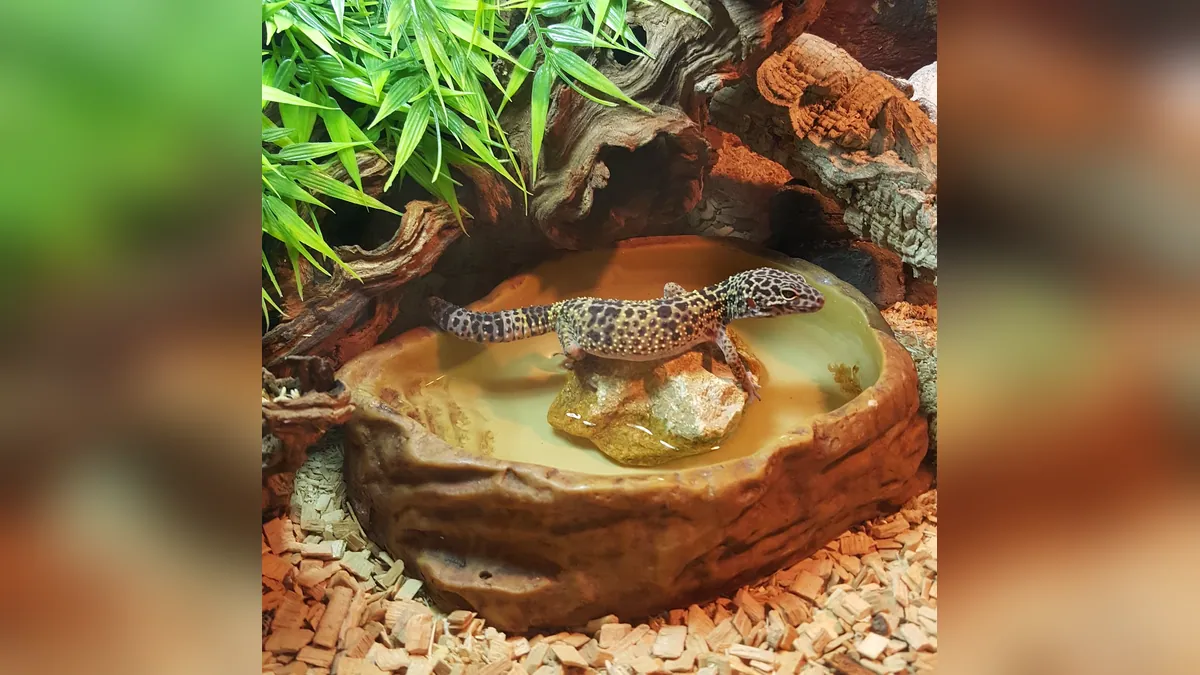
Leopard geckos wag, wave, and rattle their tails to communicate. A slow wave usually means your gecko is excited about food or a mate, while a fast rattle or a raised, stiff tail usually means it feels threatened and is warning you to back off. Tail biting is different and often points to pain, shedding trouble, or a health problem that needs a vet.
This article is educational and is not a substitute for veterinary diagnosis or treatment.
Quick Answer
- A slow, side to side tail wave often happens right before feeding or during breeding behavior. It usually means arousal or excitement, not fear.
- A fast rattle or vibration, especially with a raised tail, is a warning. Your gecko feels threatened and may strike or drop its tail.
- Tail biting, chewing, or constant tail chasing is not normal communication. It often points to shedding problems, skin irritation, injury, or pain.
- Never punish a gecko for tail movements. Punishment adds stress and can make defensive behavior worse.
- If the tail is wounded, swollen, kinked, or being bitten repeatedly, contact a reptile veterinarian.
What Tail Movements Mean in Leopard Geckos
Leopard geckos do not wag their tails the way a dog does. A dog's wag is a social greeting. A gecko's tail movement is a signal, and the meaning depends on speed, height, and what else the body is doing.
Reptiles were long viewed as solitary animals that mostly use vision and smell to communicate [1]. Research now shows that many reptiles also produce sounds and use them as an extra communication channel, which suggests their social lives are more complex than once believed [1]. Tail movement is part of that same visual signaling system.
Why is my leopard gecko wagging its tail slowly?
A slow, rhythmic tail wave is one of the most common and least worrying movements. You will often see it when your gecko is hunting, when it smells food, or when a male is near a female.
This is arousal. The gecko is focused, excited, and getting ready to move. Some keepers call it the "feeding wag" because it shows up right before a strike at a cricket or worm. In this context, it is normal and healthy.
Why is my leopard gecko waving his tail fast?
Speed changes the message. A quick wave or a sharp flick is more likely to be a warning than excitement.
If the tail is moving fast and the body is tense, your gecko may be telling you it feels cornered. This often happens when you reach into the enclosure too quickly, when a new cage mate is introduced, or when the gecko is handled after a stressful event.
Why is my leopard gecko raising its tail?
A raised tail is a defensive posture. The gecko is making itself look bigger and warning that it may bite or drop its tail.
Leopard geckos can shed their tails on purpose when threatened. The tail comes off and later regrows, but the new tail looks different and the gecko loses stored fat. A raised tail is your cue to stop what you are doing and give the animal space.
Why is my leopard gecko rattling his tail?
A rattle is a fast vibration, sometimes so quick it looks like a blur. This is a high alert signal. It usually means the gecko is frightened, startled, or defending itself.
Rattling often comes right before a strike. If you see it, do not pick the gecko up. Close the enclosure, lower the lights if they are bright, and let the animal settle.
Why is my leopard gecko biting his tail?
Tail biting is not a normal communication signal. When a gecko chews or bites its own tail, something is wrong.
Common causes include stuck shed wrapped around the tail, a cut or scrape that itches, a retained piece of skin, or pain from an injury. In some cases, tail biting is linked to stress from a poor enclosure setup or from being housed with another gecko.
This behavior needs attention. A gecko that keeps biting its tail can cause serious wounds and infection.
Medical Causes to Rule Out
Not every tail movement is behavioral. Some movements come from discomfort or disease.
Skin and shedding problems
Stuck shed is a leading cause of tail biting. When old skin does not come off cleanly, it can tighten around the tail and cut off circulation. The gecko bites at the area because it feels tight or itchy.
Check the tail after every shed. Look for gray or white patches of skin that did not come off, especially at the tip. Soaking in shallow, lukewarm water can help loosen mild stuck shed, but a tight ring of skin needs a vet.
Injury and infection
A cut, bite wound, or burn can make the tail twitch or draw the gecko's attention. Infection can cause swelling, redness, discharge, or a foul smell.
If the tail looks swollen, dark, or has an open wound, this is a medical problem. Do not wait to see if it heals on its own.
Nutritional and husbandry problems
Poor diet, low calcium, and incorrect temperatures can affect how a gecko moves and behaves. A gecko that is weak or uncomfortable may show odd tail postures.
Metabolic bone disease can cause tremors, weakness, and abnormal movement. This is a serious condition that needs veterinary care.
Pain and stress
Any source of pain can change tail behavior. A gecko in pain may hold its tail stiffly, flick it, or bite at it. Stress from a new home, a noisy room, or a small enclosure can also trigger defensive tail movements.
When Tail Wagging Becomes a Problem
Most tail wagging is normal. It becomes a problem when it comes with other signs.
Watch for these combinations:
- Fast rattling plus a raised tail and an open mouth. This is a strike warning.
- Tail biting that leaves wounds, blood, or missing scales.
- A tail that is kinked, swollen, or changing color.
- Tail waving that happens constantly, even when there is no food or mate nearby.
- Tail movement with lethargy, loss of appetite, or weight loss.
A gecko that drops its tail needs wound care and monitoring. For more on that, see Leopard Gecko Tail Drop Care.
What to Do Step by Step
Step 1: Stop and observe
Do not reach in. Watch from a distance for a minute. Note the speed of the tail, the height, and whether the gecko is hiding, gaping, or backing away.
Step 2: Check the environment
Make sure the enclosure has the right temperature gradient, hides, and substrate. A gecko with nowhere to hide feels exposed and will stay defensive.
Check for cage mates. Leopard geckos are best housed alone. A second gecko in the same space is a common cause of stress and tail rattling.
Step 3: Review the diet and supplements
Offer a varied diet of appropriate insects and use a calcium supplement as directed. Poor nutrition shows up in behavior and in the tail.
Step 4: Handle gently and briefly
If your gecko rattles when you pick it up, shorten handling sessions. Support the body and never grab the tail. Approach from the side, not in published veterinary research, so you do not look like a predator.
Step 5: Address shedding
Provide a humid hide so your gecko can shed cleanly. Check the tail and toes after each shed and remove loose skin only if it comes off easily.
Step 6: Keep records
Note when the behavior happens, what you did before it, and how long it lasts. This helps your vet or behavior professional find the trigger.
For general husbandry support, see Leopard Gecko Care: Floppy tail syndrome and proper husbandry guide.
What Not to Do
Do not punish your gecko. Tapping, spraying, or shouting will not teach a reptile to stop a defensive behavior. It will make the animal more afraid and more likely to bite or drop its tail.
Do not grab the tail. The tail is designed to break off under pressure. Even a firm hold can cause a drop.
Do not assume tail biting is "just a habit." It usually has a physical cause.
Do not house two leopard geckos together to "keep each other company." This species is territorial, and cohabitation often leads to stress, injuries, and tail loss.
Do not rely on online chatbot advice for medical decisions. A recent review of AI chatbot responses for leopard gecko husbandry found that answers were generally accurate but often incomplete, and completeness varied a lot depending on how the question was asked [2]. Use these tools for general ideas, not for diagnosis.
When a Veterinarian or Certified Behavior Professional Should Be Involved
Contact a reptile veterinarian if you see:
- An open wound, swelling, or discoloration on the tail.
- Tail biting that does not stop.
- A tail that has dropped or is partially detached.
- Tremors, weakness, or trouble walking.
- Loss of appetite, weight loss, or lethargy.
- Stuck shed that will not come off after soaking.
A certified behavior professional can help if the behavior is clearly linked to handling, enclosure setup, or stress and your vet has ruled out medical causes.
Limitations and When to Contact a Veterinarian
This article covers common patterns, but every gecko is an individual. A veterinarian who examines your pet can tell the difference between normal arousal and a medical problem. No online guide can do that.
Call your veterinarian the same day if your gecko has a fresh tail wound, is biting its tail repeatedly, or has stuck shed tightening around the tail.
Go to an emergency clinic now if there is heavy bleeding, a fully detached tail with exposed tissue, or if your gecko is unresponsive, gasping, or having seizures.
Schedule a routine visit if the tail waving or rattling is new, if it happens often, or if you are unsure whether the behavior is normal. Bring notes about when it started and what triggers it.
Frequently Asked Questions
Is tail wagging in leopard geckos ever a sign of happiness?
Not in the way a dog's wag works. A slow tail wave usually means excitement or arousal, often around food or a mate. It is a positive, focused state, but it is not affection.
Can a leopard gecko drop its tail just from wagging it?
No, wagging alone does not cause a drop. The tail detaches when it is grabbed or pinched with enough force. That is why you should never hold or restrain a gecko by the tail.
Why does my leopard gecko wave its tail at food?
This is a normal feeding response. The gecko is excited and preparing to strike. It is one of the most common and harmless tail movements you will see.
Does tail rattling mean my gecko will bite?
It can. Rattling is a warning that the gecko feels threatened. If the tail is raised and the mouth is open, stop handling and give the animal space.
Should I worry if my gecko bites its tail only during shedding?
Yes, because it often means shed is stuck and pulling on the skin. Check the tail carefully, help with a shallow soak if needed, and see a vet if the skin will not loosen or the tail looks damaged.
A Note on Tail Health and Morphs
Some tail problems are linked to husbandry and genetics. If you are unsure what is normal for your gecko's color or pattern, see Leopard Gecko Morphs Explained for Owners. Keeping records of shedding, eating, and behavior helps your vet spot patterns early.
Related Articles
- Leopard Gecko Tail Drop Care
- Leopard Gecko Care: Floppy tail syndrome and proper husbandry guide
- Leopard Gecko Morphs Explained for Owners
- Leopard Gecko Care: Pyramiding & Shell Health Management
- Leopard Gecko Care: Overgrown Dental Spurs & Tooth Trimming Guide
- Leopard Gecko Tail Autotomy: Safe Tail Drop Healing and Nutrition
- Why Is My Leopard Gecko Climbing the Glass? What It Means
- Why Is My Leopard Gecko Biting or Licking Me?
- Why Is My Leopard Gecko Making Noise? Sounds
References
- Hidden social complexity behind vocal and acoustic communication in non-avian reptiles. Philosophical transactions of the Royal Society of London. Series B, Biological sciences, 2024.
- Accuracy and Completeness of AI Chatbot Responses for Leopard Gecko (Eublepharis macularius) Husbandry: An Exploratory Comparison of ChatGPT-4o and Gemini 2.5 Pro. Journal of applied animal welfare science : JAAWS, 2026.