Do Ball Pythons Watch TV? Light, Vision, and Stress
By Dr. Zubair Khalid, DVM, MS, PhD ·
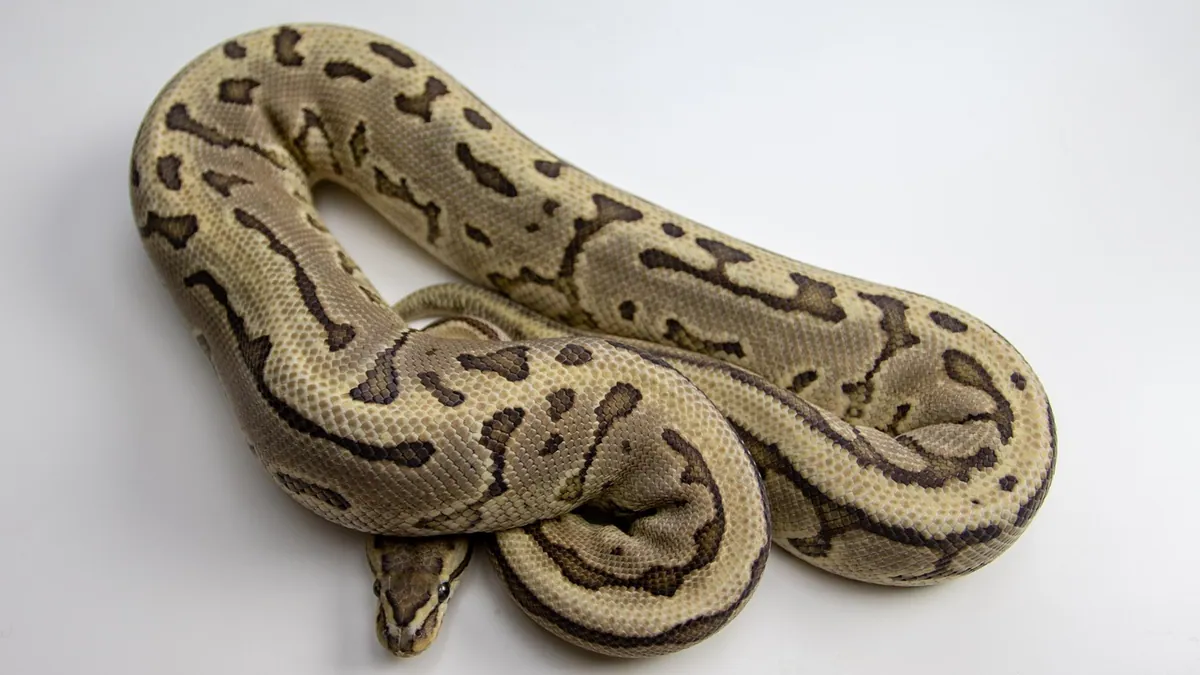
Do ball pythons watch TV? No, not in any meaningful way. A ball python may orient toward a bright moving screen because it detects light and motion, but it does not follow plot, recognize characters, or seek out television for entertainment. What matters far more for your snake is light intensity, light cycles, and whether the enclosure feels secure.
This article is educational and is not a substitute for veterinary diagnosis or treatment.
Quick Answer
- Ball pythons can detect light and movement, but their visual system is built for spotting prey and predators, not for watching screens [1].
- A screen's flicker, brightness, and heat output can attract brief attention or cause avoidance, depending on the individual snake.
- Constant or late-night screen light near the enclosure can disrupt day and night cues, which affects sleep and stress.
- Snakes do sleep, and their sleep-wake patterns can be measured without restraint, which confirms that lighting conditions matter to their welfare [2].
- The best setup is a predictable light cycle, a dark secure hide, and no need for your snake to "watch" anything.
What Ball Pythons Actually See
A snake's eyes are not built like ours
Ball pythons have eyes that work well in dim conditions. They detect movement, contrast, and general shapes. Their brains process visual information through pathways that evolved for survival tasks like finding prey and avoiding predators, not for fine detail or color-rich entertainment [1].
That does not mean they are blind to your living room. A ball python can notice a lamp turning on, a shadow passing the glass, or a bright rectangle flickering in the dark. It just does not interpret those things the way you do.
Motion and brightness get attention
If you wave a hand near the enclosure, your snake may track it. The same thing happens with a TV. Fast motion and sudden brightness changes can trigger a brief orienting response. This is a reflex-like reaction to visual change, not interest in the show.
Some snakes will stare toward a screen for a few seconds. Others will turn away or retreat into a hide. Both responses are normal. The reaction tells you about the snake's comfort level, not its taste in programming.
Heat and light come from screens too
Televisions and monitors emit light, and many also give off some heat. A ball python is highly sensitive to temperature and will move toward or away from warmth. If a screen warms one side of the enclosure, your snake may sit near it for the heat, not the picture. That can pull it away from its proper thermal gradient, which is a husbandry problem, not a bonding moment.
Why Your Snake Seems to Watch the Screen
Normal reasons for screen attention
- Light and motion detection. Bright, moving images are hard for a snake to ignore [1].
- Warmth seeking. Screens and electronics can create a warm spot.
- Curiosity about change. Snakes explore new sights in their environment.
- Reflection. Glass or glossy surfaces can reflect light and movement, which looks like activity to your snake.
When it is not about the screen at all
Sometimes a snake staring toward a screen is actually staring past it. It may be watching a doorway, a ceiling fan, or a reflection. It may also be positioning itself for heat or humidity. Before you assume your snake enjoys TV, check its body position, the temperature on that side of the enclosure, and whether it has access to a hide.
Medical Causes to Rule Out
A sudden change in behavior around light or screens can have a medical cause. If your ball python starts staring constantly, avoids light, or seems disoriented, consider these possibilities with your veterinarian.
- Eye problems. Retained eye caps, infection, or injury can change how your snake responds to light.
- Neurological signs. Head tilting, wobbling, or unusual tracking can point to a neurologic issue.
- Respiratory disease. A snake that sits with its head elevated or near a heat source may be struggling to breathe.
- Thermal burns or overheating. If your snake parks itself near a warm screen or heat source, check for burns and review your heating setup. See Ball Python Care: Thermal burns treatment and enclosure correction.
- Stress from poor husbandry. Wrong temperatures, low humidity, or a lack of hiding spots can make a snake restless and reactive to light.
Any of these need a veterinary exam. Do not wait to see if it improves on its own.
When Screen Light Becomes a Problem
Signs your snake is stressed by light
- Refusing food for more than a normal fasting period
- Hiding constantly, even at night
- Pacing, glass surfing, or pushing at the enclosure
- Striking at shadows or reflections
- Poor shedding or dull skin
- Regurgitation
- Weight loss
Why light cycles matter
Reptiles have sleep-wake cycles that can be recorded with non-invasive brain monitoring, and those cycles respond to environmental light [2]. If your snake's enclosure sits next to a TV that stays on until 2 a.m., its brain gets mixed signals about when to rest. Over time, that can add up to chronic stress.
Light exposure during development also affects reptiles. In some lizard species, light during incubation changed embryonic development speed and hatchling traits [3]. That research was done on eggs, not adult ball pythons, but it shows that light is a real biological signal for reptiles, not just something they ignore.
Screen light versus enclosure light
The bigger issue for most ball pythons is not the TV itself. It is the total light environment. A bright room at night, a red heat lamp left on 24 hours a day, or a screen glowing into the tank all blur the line between day and night. Your snake needs a clear, consistent cycle.
What to Do: Step by Step
Step 1: Set a real light schedule
Give your ball python about 12 hours of light and 12 hours of dark. Use a simple timer for any enclosure lighting. Turn off or dim room lights at night. If you watch TV after dark, keep it away from the enclosure or cover the front of the tank with a light-blocking cloth.
Step 2: Move the screen
If your snake's enclosure faces a TV, move one or the other. Even a few feet of distance reduces glare and flicker. Do not place the enclosure directly beside a monitor or under a bright lamp.
Step 3: Check heat sources
Use a thermostat on every heat source. Measure temperatures with a digital thermometer or infrared gun. If your snake is sitting near a screen for warmth, your enclosure is not providing the right gradient. Fix the enclosure, not the screen.
Step 4: Provide deep cover
A ball python that feels exposed will be more reactive to light and movement. Offer at least two hides, one on the warm side and one on the cool side. Add clutter like cork bark, fake plants, or crumpled paper. A secure snake is a calm snake.
Step 5: Respect the hide
If your snake is in a hide, leave it alone. Do not tap the glass, open the enclosure, or shine a light in to "check on it." That turns a safe space into a stressful one.
Step 6: Keep handling predictable
Handle your snake on a routine, ideally in the evening when it is naturally more active. Keep sessions short and calm. Put it back at the first sign of stress, like rapid breathing, musking, or repeated striking.
Step 7: Review the whole enclosure
Light is only one part of stress. Check substrate, humidity, temperature, and enclosure size. For substrate safety and humidity, see Ball Python Substrate Selection: Evaluating Safety, Humidity Retention, and Ease of Cleaning. For how snakes sense the world, see Snake Senses: How Snakes Hear, See, and Smell the World.
What Not to Do
Do not punish your snake
Never tap, spray, or shake the enclosure to stop a behavior. Snakes do not learn from punishment the way mammals do. They learn that you are unpredictable and unsafe. That increases stress and makes handling harder.
Do not assume your snake enjoys TV
A snake that watches a screen is reacting to light and motion, not enjoying a story. Do not leave a TV on for your snake as entertainment. It is not enrichment in the way a hide, a climb, or a proper thermal gradient is.
Do not use red or colored night lights without a reason
Some owners leave colored bulbs on all night so they can see their snake. That still adds light to the enclosure. If you need night viewing, use a dim, indirect source and keep it brief.
Do not ignore a behavior change
If your ball python suddenly starts staring at lights, avoiding them, or acting disoriented, that is a medical question, not a training question. Book a veterinary visit.
Do not rely on myths
You may hear that snakes are deaf, that they love music, or that they bond with screens. None of that is supported. Ball pythons sense vibrations and some sound, and they see light and motion [1]. They do not form entertainment preferences.
When to Involve a Veterinarian or Behavior Professional
Call a veterinarian who treats reptiles if your snake shows any of these:
- Eye swelling, cloudiness, or discharge
- Head tilt, wobble, or inability to right itself
- Open-mouth breathing, wheezing, or mucus
- Burns, blisters, or discolored scales
- Refusing food for weeks with weight loss
- Regurgitation more than once
- Sudden aggression or constant striking
A certified behavior professional can help if the problem is environmental or handling-related. Many reptile veterinarians can also review your enclosure setup during a routine visit.
Limitations and When to Contact a Veterinarian
This article covers general light and vision information. It cannot tell you what is wrong with your individual snake. Every case needs a veterinarian who can examine the animal, review your husbandry, and run tests if needed.
Contact a veterinarian the same day if your snake has eye swelling, discharge, a burn, or a sudden change in behavior.
Go to an emergency clinic now if your snake is unresponsive, has trouble breathing, is bleeding, or has prolapsed tissue.
Schedule a routine visit if your snake is eating poorly, hiding more than usual, or you are unsure about your lighting and heating setup.
Frequently Asked Questions
Can ball pythons see a television screen clearly?
They can detect the light and motion from a screen, but they do not see a clear image the way you do. Their eyes are tuned for dim light and movement, not fine detail. A screen is just a bright, flickering object to them.
Does leaving the TV on stress my ball python?
It can, especially at night. Constant light disrupts the day and night cycle your snake needs. If your snake hides more, eats less, or paces when the TV is on, move the enclosure or turn the screen off.
Should I put a TV near my snake's enclosure for company?
No. Ball pythons do not get lonely or need entertainment from screens. They need proper heat, humidity, hiding spots, and a calm environment. A screen adds light, heat, and motion that can work against those needs.
Will my ball python sleep with the lights on?
Reptiles do sleep, and their sleep-wake cycles respond to light [2]. Bright light at night can reduce sleep quality and keep your snake stressed. Give a clear dark period every night.
Do ball pythons like music or nature documentaries?
There is no evidence that ball pythons enjoy music or shows. They may react to vibrations or sudden sounds, but that is a startle response, not enjoyment. Keep the area around the enclosure quiet and predictable.
Related Articles
- Ball Python Morphs and Genetics: A Visual Guide to Popular Color and Pattern Variations
- Snake Senses: How Snakes Hear, See, and Smell the World
- Ball Python Care: Thermal burns treatment and enclosure correction
- Ball Python Care: Pyramiding & Shell Health Management
- Ball Python Substrate Selection: Evaluating Safety, Humidity Retention, and Ease of Cleaning
- Ball Python Dysecdysis and Retained Spectacle: Treatment and Humidity Correction
- Do Ball Pythons Sleep? Eye Closing and Sleep Cycles
- Do Ball Pythons Need UVB Light? What Research Says
- Why Is My Ball Python Glass Surfing? Reptile Behavior Guide
References
- Evolution of neural processing for visual perception in vertebrates. The Journal of comparative neurology, 2020.
- Non-invasive wireless electroencephalographic recording of the sleep-wake cycle in freely moving reptiles, birds, and mammals: a novel methodology compatible with animal welfare. Frontiers in veterinary science, 2026.
- The effects of light exposure during incubation on embryonic development and hatchling traits in lizards. Scientific reports, 2016.