Do Ball Pythons Need UVB Light? What Research Says
By Dr. Zubair Khalid, DVM, MS, PhD ·
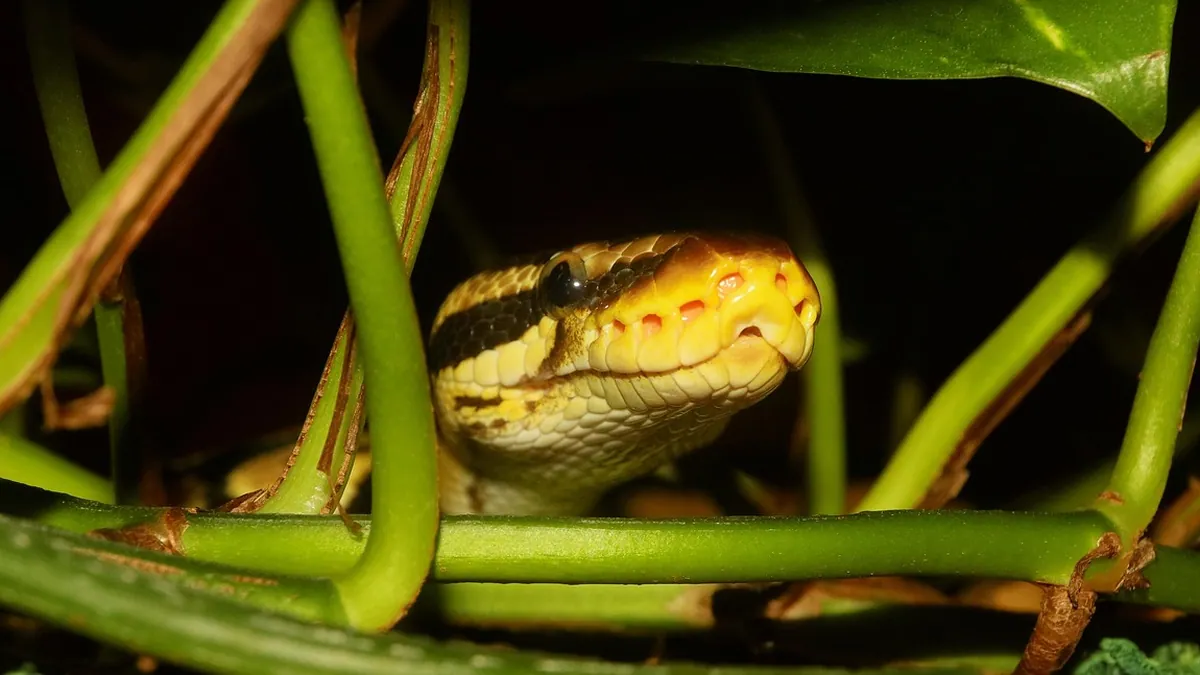
Do ball pythons need UVB? No, they do not strictly need it to survive in captivity, and many thrive for years without it when fed a complete diet and kept warm. That said, a growing body of reptile research shows UVB exposure helps some species build and hold vitamin D, and a low-level UVB lamp may add a safety margin for your snake. This article is educational and is not a substitute for veterinary diagnosis or treatment.
Quick Answer
- Ball pythons are nocturnal and do not require UVB to make vitamin D the way sun-loving lizards do, so UVB is optional, not mandatory.
- If you use UVB, choose a low-output fluorescent tube (2% to 5% UVB) and mount it so the snake gets a very low UV index, never a desert-level dose.
- Heat matters more than UVB. Your ball python needs a warm basking spot and a correct temperature gradient regardless of lighting.
- Avoid UVB-LED lamps for now. Testing found their spectra differ sharply from sunlight, some emit short-wavelength radiation linked to eye injury, and all lacked the 315 to 335 nm band that helps reptiles self-regulate vitamin D production [1].
- Watch for eye problems, refusal to eat, or skin issues after adding any new lamp, and remove it if signs appear.
Do Ball Pythons Require UVB? What the Evidence Shows
Most of the strong UVB research comes from diurnal lizards and skinks, not ball pythons. That gap matters when you decide what to buy.
In blue-tongued skinks, a species often kept without UVB, researchers found that plasma 25-hydroxyvitamin D (the main storage form of vitamin D) was very low at baseline and rose significantly after UVB exposure [2]. Even a short 2-hour daily exposure raised levels, and those levels stayed above baseline for 4 months after the lamp was removed [2]. A separate study found that 2 hours of UVB every 3 days or every 7 days both raised vitamin D levels in skinks, with the more frequent schedule producing a much larger rise [3].
In bearded dragons, UVB exposure increased both total calcium and ionized calcium in the blood compared with diet alone [4]. That supports the idea that UVB helps reptiles manage calcium, which is the mineral most tied to healthy bones.
What does this mean for ball pythons? These studies show UVB can raise vitamin D in reptiles that eat a mixed diet and bask in light. Ball pythons are different. They are crepuscular and nocturnal, they eat whole prey (which supplies preformed vitamin D), and they hide most of the day. There is no published study showing ball pythons require UVB. So the honest answer is that UVB is a reasonable optional add-on, not a requirement.
If you keep other reptiles, the same logic does not transfer automatically. Bearded dragons, for example, have much higher UVB needs. You can compare species needs in Do Bearded Dragons Need UVB Light? and see how wavelength, intensity, and photoperiod differ across species in UVB lighting reptile species requirements.
Do Ball Pythons Need Light at All?
Yes, they need a day and night cycle, but not bright light. A ball python's enclosure should have a clear light period and a dark period so the snake's body clock stays normal. A simple room light or a low-wattage overhead light on a timer for 10 to 12 hours a day is enough.
Do ball pythons need a basking light? They need a warm spot, and a basking light is one common way to provide it. You can also use a radiant heat panel or a heat mat with a thermostat. The heat source matters more than whether it emits visible light. If you use a light for heat, pick one that produces the right temperature at the basking surface and turn it off at night so the snake gets darkness.
Some keepers worry that any light stresses a nocturnal snake. In practice, a normal day and night cycle does not harm ball pythons. Constant darkness, on the other hand, can disrupt feeding and activity patterns.
How to Add UVB Safely: Step by Step
If you decide to try UVB, treat it as a small experiment with your snake's health as the measure.
- Fix heat and humidity first. Get your temperature gradient and humidity stable before adding any lamp. UVB cannot replace correct heat.
- Pick a low-output fluorescent tube. A 2% to 5% UVB tube designed for forest or crepuscular species is a reasonable starting point. Avoid high-output desert bulbs.
- Mount it correctly. Place the tube above the enclosure, not inside where the snake can wrap around it. Follow the manufacturer's distance chart for the bulb you buy.
- Use a timer. Run the UVB lamp for the same light period as your daytime light, then turn it off at night.
- Give a hiding spot away from the light. Your snake should be able to move out of the UVB zone whenever it wants.
- Watch for changes. Check eyes, appetite, shedding, and behavior for the first two weeks.
- Replace bulbs on schedule. Fluorescent UVB output fades over months even when the bulb still glows. Follow the maker's replacement interval.
If you are comparing lamp types, Comparing UVB Lighting Systems for Reptiles breaks down the tradeoffs. For a broader setup overview, see Reptile UVB Lighting: A Complete Guide.
UVB Setup Checklist
| Item | What to look for | Why it matters |
|---|---|---|
| Lamp type | Low-output fluorescent tube (2% to 5% UVB) | Matches a forest species better than a desert bulb |
| Distance | Per the bulb's chart | Too close raises the dose, too far gives almost none |
| Timer | 10 to 12 hours on, off at night | Keeps a normal day and night cycle |
| Hide | At least one hide outside the UVB zone | Lets the snake choose its exposure |
| Heat source | Thermostat-controlled | Prevents burns and keeps digestion working |
| Bulb age | Replace on the maker's schedule | UVB output drops before the bulb looks dim |
Signs Something Is Wrong
Eye problems are the main acute risk with UVB. One report described a case of photo-kerato-conjunctivitis (painful inflammation of the eye surface) linked to a UVB-LED lamp that emitted short-wavelength, non-terrestrial radiation [1]. Signs include squinting, swollen or crusty eyes, rubbing the face, and avoiding light.
Other warning signs after adding UVB include:
- Refusing food for more than a couple of weeks
- Hiding constantly and never using the warm side
- Restlessness or trying to escape the enclosure
- Unusual shedding, retained eye caps, or skin burns
- Tremors, weakness, or a soft jaw, which can point to metabolic bone disease
Metabolic bone disease is the condition most owners worry about. It comes from calcium and vitamin D problems, and it can develop slowly. You can read more about the signs and how lighting fits in at Ball Python Care: Metabolic Bone Disease (MBD) Signs & UVB Lighting.
If you see eye swelling, burns, or a snake that cannot right itself, treat it as urgent. Stop using the lamp and contact an exotic animal veterinarian.
Common Mistakes
Assuming UVB replaces a good diet. Whole prey already supplies vitamin D. UVB is a supplement to good husbandry, not a substitute for it.
Using a desert bulb on a forest snake. High-output lamps can push a ball python past what it needs. Low output is the safer choice.
Skipping the thermostat. An unregulated heat lamp or mat is one of the most common causes of burns in pet reptiles.
Buying a UVB-LED lamp. Testing of 18 UVB-LED lamps found their spectra had little similarity to solar UV, some emitted radiation known to cause eye injury, and all were missing the 315 to 335 nm range that supports natural self-regulation of vitamin D production [1]. Until long-term animal studies are done, these lamps carry avoidable risk [1].
Leaving the light on all night. Ball pythons are nocturnal. Constant light disrupts their natural activity and can reduce feeding.
Never replacing the bulb. A UVB bulb that still glows may have lost most of its useful output.
Ignoring the snake's behavior. If your ball python avoids the light, hides more, or stops eating, the lamp is not helping.
Supplies and Setup Details That Matter
The lamp is only one part of the enclosure. These details affect your snake's health more than UVB does.
Heat gradient. Provide a warm basking area and a cooler end so the snake can choose. Use a thermostat on every heat source. Unregulated heat is a burn risk.
Humidity. Ball pythons need moderate to high humidity to shed cleanly. A humid hide helps during shedding. Low humidity leads to stuck shed and retained eye caps.
Substrate and hides. Use a substrate that holds some moisture and provide at least two hides, one on the warm side and one on the cool side. Add a third hide away from the UVB zone if you use a lamp.
Prey size and schedule. Feed appropriately sized prey. Obesity is common in captive ball pythons, and overfeeding causes more health problems than a missing UVB lamp.
Quarantine and cleaning. New snakes should be quarantined away from your other reptiles. Clean water bowls and remove waste promptly.
A scale and a calendar. Weigh your snake monthly and track feeding and shedding. Trends show problems before you see them.
If you are unsure whether your setup is right, a reptile-experienced veterinarian can review your temperatures, humidity, diet, and lighting together.
Limitations and When to Contact a Veterinarian
The research on UVB is strongest for lizards and skinks, not ball pythons [3][2][4]. That means any recommendation for ball pythons is based on general reptile principles and the absence of harm at low doses, not on a study of ball pythons specifically. Individual cases need a veterinarian who can examine your snake and review your setup.
Contact an exotic animal veterinarian the same day if you see:
- Swollen, cloudy, or crusty eyes
- Burns, blisters, or dark patches on the skin
- Refusal to eat for more than two to three weeks in an adult
- Vomiting, regurgitation, or abnormal droppings
- Tremors, weakness, or trouble moving
Go to an emergency clinic now if your snake:
- Cannot right itself or seems paralyzed
- Has a prolapse (tissue protruding from the vent)
- Is gasping, has discharge from the mouth or nose, or is breathing with the mouth open
- Has a severe burn or a wound that will not stop bleeding
For a routine visit, book an exam if you are setting up a new enclosure, if your snake has never been checked, or if you are unsure whether UVB is appropriate. Bring your temperature and humidity readings and a description of your lighting schedule.
Frequently Asked Questions
Do ball pythons need UVB light to stay healthy?
No, they do not need it to survive, and many live long lives without it. UVB is optional for this species. If you choose to add it, use a low-output lamp and keep the rest of the setup correct.
Do ball pythons require UVB to make vitamin D?
They can make some vitamin D from UVB, but they are not dependent on it the way basking lizards are. Whole prey provides preformed vitamin D. A low-level lamp may add a safety margin, but it is not required.
Do ball pythons need a basking light?
They need a warm basking area, and a basking light is one way to provide it. A radiant heat panel or a thermostat-controlled heat mat can also work. The temperature at the basking spot matters more than the type of heat source.
Can UVB hurt a ball python?
Yes, if the dose is too high or the lamp is the wrong type. High-output bulbs and UVB-LED lamps carry more risk, and one report linked a UVB-LED lamp to painful eye inflammation [1]. Low-output fluorescent tubes used at the correct distance are the safer option.
How long should I leave a UVB lamp on for a ball python?
Match your normal daytime light period, usually 10 to 12 hours, then turn it off at night. Ball pythons are nocturnal and need a dark period. Use a timer so the schedule stays consistent.
Related Articles
- Do Bearded Dragons Need UVB Light?
- UVB lighting reptile species requirements
- Comparing UVB Lighting Systems for Reptiles
- Ball Python Care: Metabolic Bone Disease (MBD) Signs & UVB Lighting
- Reptile UVB Lighting: A Complete Guide
- Ball Python Respiratory Infections: Symptoms, Humidity Control, and Veterinary Care
- Do Ball Pythons Watch TV? Light, Vision, and Stress
- Why Is My Ball Python Out During the Day?
- Do Ball Pythons Sleep? Eye Closing and Sleep Cycles
References
- UVB-emitting LEDs for reptile lighting: Identifying the risks of nonsolar UV spectra. Zoo biology, 2024.
- Measuring the Rise and Fall of Plasma 25-Hydroxyvitamin D Concentrations in Blue-Tongued Skinks (Tiliqua scincoides) Following Ultraviolet B Exposure and Withdrawal. Veterinary sciences, 2025.
- Intermittent ultraviolet B exposure increases plasma 25-hydroxyvitamin D3 in blue-tongued skinks (Tiliqua scincoides). American journal of veterinary research, 2026.
- Effect of different dietary supplements on the growth and blood parameters of bearded dragons (Pogona vitticeps). Acta veterinaria Hungarica, 2026.