Do Ball Pythons Have Teeth? Facts and Regrowth
By Dr. Zubair Khalid, DVM, MS, PhD ·
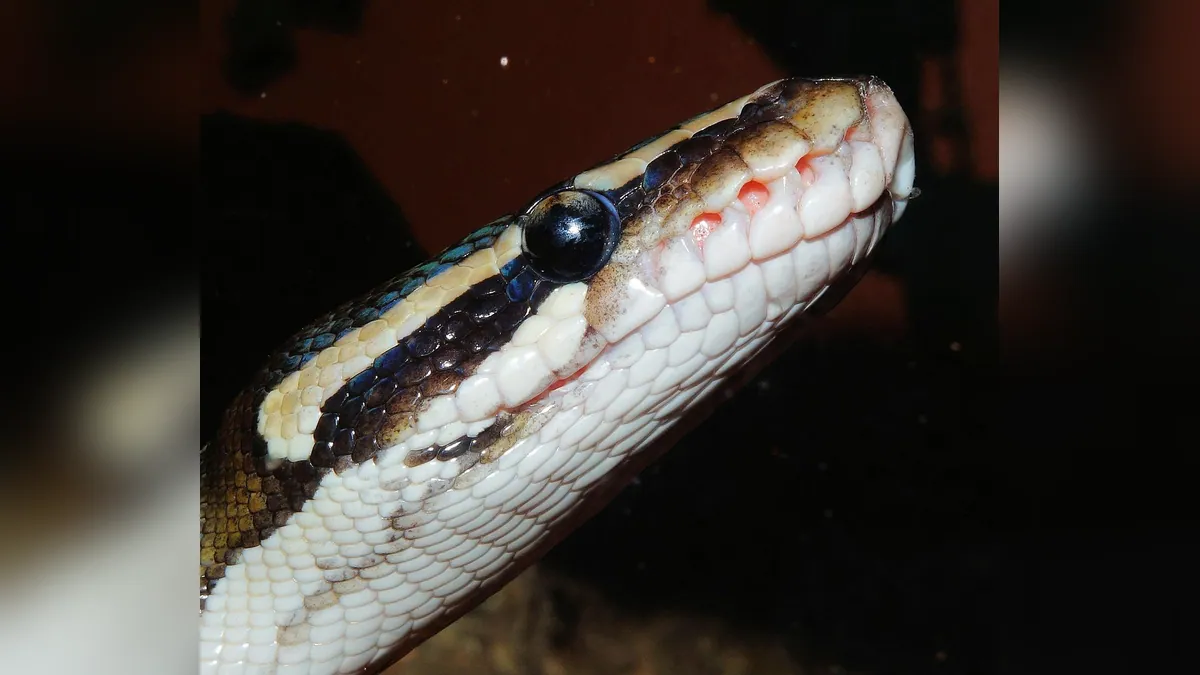
Yes, ball pythons have teeth. They have rows of small, sharp, backward-curving teeth on both the upper and lower jaws, and those teeth are replaced continuously throughout life. So if you have ever wondered "do ball pythons have teeth," the answer is a clear yes, and they can draw blood when they bite.
This article is educational and is not a substitute for veterinary diagnosis or treatment.
Quick Answer
- Ball pythons have teeth on the upper and lower jaws, and they are small, thin, and curved backward to grip prey.
- They do not have fangs and they are not venomous. Their teeth are for holding, not injecting.
- Ball pythons regrow teeth throughout their lives, so a lost or broken tooth is usually replaced.
- A bite from a ball python typically looks like a row of tiny puncture marks or scratches, not two big holes.
- Tooth or mouth problems in ball pythons often trace back to husbandry, so check temperature, humidity, and cage cleanliness first.
Ball Python Teeth: What They Actually Look Like
A ball python's teeth are easy to miss. They are tiny, often only a few millimeters long, and they sit in rows along the jaw. Because the teeth are so small and the snake's mouth is usually closed, most owners never see them.
Reptilian dentition varies a lot across species. Some reptiles have teeth fused to the jawbone, while others have teeth set in sockets, and some have specialized teeth shaped for their diet, such as the peg-like teeth of plant-eating iguanas or the fangs of venomous snakes [1]. Ball pythons fall into the category of snakes with many small, similar, backward-pointing teeth instead of a few large fangs.
That backward curve matters. When a ball python strikes and grabs prey, the teeth hook into the food and help work it down the throat. The teeth are not built for chewing. Snakes swallow prey whole, so the teeth function as anchors.
Do Ball Pythons Have Fangs?
No. Ball pythons are constrictors. They kill prey by squeezing, not by injecting venom. They have no fangs and no venom glands. If you see two large puncture wounds on your hand, that is not a typical ball python bite pattern.
How Many Teeth Does a Ball Python Have?
Ball pythons have dozens of small teeth spread across the upper and lower jaws. The exact count varies between individual snakes, and there is no single fixed number that applies to every ball python. What matters more for owners is that the teeth are numerous, replaceable, and sharp enough to break skin.
How Ball Python Tooth Replacement Works
This is the part that surprises many owners. Ball pythons do not get one set of teeth for life. They replace teeth continuously.
Most vertebrates shed and replace teeth throughout life, and reptiles are a classic example of this pattern [2]. In reptiles, new teeth develop from dental tissue that acts as a source of replacement teeth, and old teeth are resorbed to make room for the next generation [2]. This is very different from mammals, which typically have only two sets of teeth (a baby set and an adult set) [3].
So when an owner asks "do ball pythons regrow teeth," the answer is yes. A tooth that breaks or falls out during feeding, during a shed, or from a minor mouth injury is generally replaced by a new tooth developing behind it.
Does Shedding Cause Tooth Loss?
Shedding skin and shedding teeth are separate processes. A ball python's skin shed does not normally cause teeth to fall out. Tooth replacement happens on its own schedule, driven by the dental tissue in the jaw, not by the skin cycle [2].
That said, a snake that is rubbing its face against cage furniture during a shed can scrape or loosen a tooth. If you find a tiny tooth in the enclosure, it is usually not an emergency, because replacement teeth are already developing.
How Fast Do Replacement Teeth Come In?
Replacement timing varies by species, tooth position, and the individual animal. There is no single number that applies to every ball python. What you can rely on is the general reptile pattern: replacement teeth form continuously, and the old tooth is resorbed to allow the new one to erupt [2].
Step-by-Step: Checking Your Ball Python's Mouth Safely
You do not need to open your snake's mouth every week. But a quick mouth check a few times a year, or any time you suspect a problem, is reasonable.
- Wash your hands before and after handling.
- Wait until your snake is calm. Handling right after feeding is a bad idea, and so is handling during a shed.
- Support the head gently with one hand. Do not force the mouth open with your fingers.
- Use a soft, blunt tool such as a plastic spatula or a clean credit card edge to gently lift the lip. Never use anything sharp.
- Look at the gum line, the teeth, and the inside of the mouth. Healthy tissue is pale pink to light pink, moist, and free of swelling.
- Look for broken teeth, bleeding, swelling, pus, or a bad smell.
- Close the mouth gently and let the snake rest.
If your snake is defensive, stressed, or actively striking, stop. A struggling snake can injure itself or you. If you truly need a full oral exam, let a veterinarian do it.
What a Ball Python Bite Looks Like
A ball python bite usually leaves a row of small puncture marks or fine scratches. Because the teeth curve backward, the snake may hang on briefly, and pulling away can tear the skin and make the wound look worse than it is.
If you are bitten:
- Stay calm and do not yank your hand away.
- Let the snake release on its own, or gently support the head and let it slide off.
- Wash the wound with soap and warm water for several minutes.
- Apply pressure if it is bleeding.
- Cover it with a clean bandage.
- Watch for redness, swelling, or increasing pain over the next few days.
Reptile mouths carry bacteria, and bite wounds can become infected. If the wound is deep, will not stop bleeding, or starts to look infected, contact a doctor. This is a human health issue, not a snake health issue, but it matters.
Ball Python Mouth Health Checklist
Use this as a simple routine. It takes only a few minutes and can catch problems early.
| Check | What to look for | How often |
|---|---|---|
| Mouth and gums | Pink, moist tissue, no swelling or pus | Monthly, and after any bite or injury |
| Teeth | Intact rows, no obvious broken or loose teeth | Monthly |
| Appetite | Consistent feeding response for your snake | Every feeding |
| Shed quality | One complete shed, eye caps included | Every shed cycle |
| Enclosure humidity | Within the range your vet recommends for your setup | Daily |
| Temperature gradient | Warm side and cool side both in range | Daily |
| Substrate and water | Clean, free of waste and mold | Daily spot clean, full change as needed |
| Weight and body condition | Steady weight, no sudden loss | Monthly |
Good husbandry is one of the most effective ways to prevent mouth problems. Oral exams in reptiles commonly reveal conditions such as stomatitis, abscesses, or foreign bodies caused by bacterial infections, and proper husbandry plus regular veterinary checks are critical for prevention [1].
Signs That Something Is Wrong
A ball python with a healthy mouth usually shows no obvious signs. Problems tend to appear as changes in behavior or appearance.
Watch for:
- Swelling along the jaw or lip
- Redness, pus, or a cheesy discharge in the mouth
- A foul smell from the mouth
- Drooling or stringy saliva
- Refusing food when the snake normally eats well
- Open-mouth breathing or wheezing
- Clicking or popping sounds when breathing
- Rubbing the face against cage walls repeatedly
- Bleeding from the mouth
- A tooth that stays visibly loose or displaced
Some of these signs overlap with respiratory disease. If your snake is wheezing, holding its mouth open, or has discharge around the nose or mouth, that needs veterinary attention. You can read more about that in our guide to Ball Python Respiratory Infection: Wheezing, Mouth Rot and Antibiotics.
Mouth rot, also called stomatitis, is a bacterial infection of the oral tissue. It often starts as redness or small sores and can progress to swelling and pus. It is treatable, but it needs a veterinarian. Do not try to treat it at home with human medications.
Common Mistakes Owners Make
Most ball python dental problems are made worse by well-meaning mistakes. Here are the ones I see most often.
Forcing the mouth open. This can break teeth, injure the jaw, and make your snake defensive. Let a veterinarian do a full oral exam.
Pulling a snake off a bite. Pulling away can tear skin and dislodge teeth. Let the snake release on its own.
Assuming a lost tooth is an emergency. In most cases it is not, because ball pythons replace teeth continuously [2]. But repeated tooth loss, bleeding, or swelling is not normal.
Ignoring husbandry. Temperature, humidity, and cleanliness drive most reptile health outcomes. Oral infections are often secondary to poor conditions [1].
Using human antibiotics or antiseptics. Never put human medications in a snake's mouth. The dose and the drug are wrong, and some products are toxic to reptiles.
Skipping the vet because the snake "seems fine." Snakes hide illness well. By the time a ball python looks sick, the problem is often advanced.
Confusing dental spurs with teeth. Some ball pythons develop overgrown dental spurs that need trimming. That is a different issue from normal tooth replacement. Our guide on Ball Python Care: Overgrown Dental Spurs & Tooth Trimming Guide covers that in detail.
Supplies and Setup That Support Mouth Health
You do not need special dental supplies for a ball python. You need a clean, correctly set up enclosure and a few basic items.
- A secure enclosure with no sharp edges, exposed screws, or rough wire that can scrape the face.
- Two hides, one on the warm side and one on the cool side, so your snake can thermoregulate without rubbing.
- A water bowl large enough for soaking but shallow enough to prevent drowning.
- A digital thermometer and hygrometer so you can verify conditions instead of guessing.
- A soft, blunt tool for gently lifting the lip during a mouth check.
- Clean paper towels or a suitable substrate that you can spot clean daily.
- A kitchen scale for tracking weight, since weight loss is an early sign of many problems.
- A log or app for feeding, shedding, and weight records.
If you are new to the species, our overview of Snake Anatomy: Do Snakes Have Teeth, Spines, and Other Structures? explains how the jaw, teeth, and spine fit together.
Feeding Practices That Protect Teeth
Feed appropriately sized prey. Prey that is too large increases the chance of a rough grab, a long struggle, and a tooth injury. Prey that is too small may cause repeated strikes and more wear.
Never feed live prey unsupervised. Live rodents can bite and injure your snake's mouth, eyes, and face. If your snake refuses frozen-thawed prey, work with your veterinarian on a transition plan.
If your snake regurgitates after a meal, do not feed again immediately. Follow a structured refeeding plan, such as the one in Ball Python Care: Regurgitation causes and refeeding protocol.
Limitations and When to Contact a Veterinarian
No article can replace an exam. Individual cases need a veterinarian who can look at your snake, feel the jaw, and decide whether imaging or lab work is needed.
Contact a veterinarian the same day if you see:
- Bleeding from the mouth that does not stop
- A visibly broken or displaced jaw
- Swelling of the face or jaw
- Pus, discharge, or a foul smell in the mouth
- Your snake has not eaten for several weeks and is losing weight
- A bite wound on your snake from live prey
Seek emergency care now if:
- Your snake is having trouble breathing
- Your snake's mouth is stuck open
- Your snake is unresponsive or limp
- There is heavy bleeding
Schedule a routine visit if:
- You notice a loose tooth that does not resolve
- Your snake has had repeated minor mouth injuries
- You are unsure whether your setup meets the species' needs
- Your snake has never had a wellness exam
A veterinarian will examine the oral cavity, check for infection, and decide whether supportive care, antibiotics, or other treatment is needed. Oral exams in reptiles often reveal stomatitis, abscesses, or foreign bodies, and treatment focuses on supportive care and preventing secondary infections [1]. Do not start or stop any medication without veterinary guidance. Your veterinarian calculates any drug dose from your pet's weight and health status.
Frequently Asked Questions
Do ball pythons have teeth or just gums?
Ball pythons have real teeth. They are small, sharp, and arranged in rows along both jaws, and they are easy to overlook because they are so short and the mouth is usually closed.
Are ball python teeth venomous?
No. Ball pythons are non-venomous constrictors with no fangs and no venom glands. Their teeth are built for gripping prey, not for delivering venom.
Do ball pythons regrow teeth after they fall out?
Yes. Ball pythons replace teeth continuously throughout life, which is the normal pattern for most reptiles [2]. A single lost tooth is usually not a concern because a replacement is already developing.
What should I do if my ball python bites me?
Let the snake release on its own instead of pulling away, then wash the wound with soap and warm water and cover it. Watch for redness, swelling, or increasing pain, and see a doctor if the wound looks infected or will not stop bleeding.
Can I trim my ball python's teeth at home?
No. Trimming teeth at home risks breaking the jaw, causing infection, and injuring your snake. If you think your snake has overgrown dental spurs or a tooth problem, have a veterinarian evaluate it.
Related Articles
- Ball Python Care: Overgrown Dental Spurs & Tooth Trimming Guide
- Snake Anatomy: Do Snakes Have Teeth, Spines, and Other Structures?
- Ball Python Respiratory Infection: Wheezing, Mouth Rot and Antibiotics
- Ball Python Breeding: Genetics, Pairing, and Incubation
- Ball Python Care: Regurgitation causes and refeeding protocol
- Bioactive Ball Python Enclosures: Soil Mixes, Live Vegetation, and Mold Prevention
- Do Ball Pythons Bite? Why and How to Avoid It
- Why Is My Ball Python Opening Its Mouth? Causes
- Why Is My Ball Python Rubbing Its Face?
References
- Oral Cavity Disorders in Reptiles. The veterinary clinics of North America. Exotic animal practice, 2025.
- Resilience of the replacing dentition in adult reptiles. Developmental biology, 2024.
- Dentition and Dental Nomenclature of Animals - Digestive System. Merck Veterinary Manual.