Why Is My Ball Python Striking or Biting Me?
By Dr. Zubair Khalid, DVM, MS, PhD ·
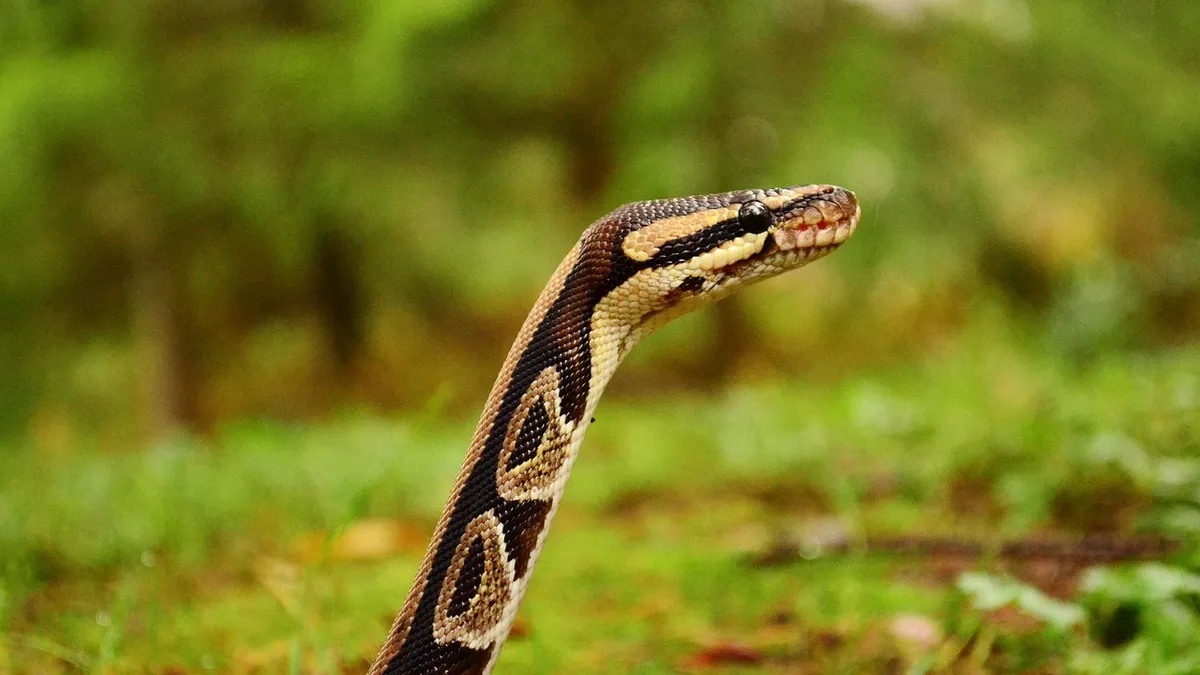
Why is my ball python striking at me? Most strikes are defensive or feeding responses, not hatred or aggression. Ball pythons bite when they feel threatened, when they mistake your hand for food, or when something in their environment or health is off. This article is educational and is not a substitute for veterinary diagnosis or treatment.
Quick Answer
- A single quick strike with a closed mouth or a fast tag is usually fear, not aggression.
- A bite followed by holding on and wrapping is usually a feeding response.
- Ball pythons are one of the least aggressive pet snakes, so repeated biting points to a problem you can fix.
- Check temperature, hiding spots, and handling frequency before assuming the snake is mean.
- Stop all handling and see a reptile veterinarian if biting starts suddenly in a snake that was calm for months.
Why Is My Ball Python Striking at Me?
Ball pythons are shy, nocturnal snakes that would rather hide than fight. A strike is a last resort or a mistake. Understanding which one you are seeing is the first step.
Defensive Strikes
A defensive strike is fast, often aimed at your hand or face, and the snake usually pulls back right after. The mouth may be closed or open. This happens when a snake feels cornered, picked up in published veterinary research, or startled. Snakes that are handled regularly can still show changes in behavior around handling days, including spending more time inactive and out of sight [1]. That does not mean handling is always harmful, but it does mean your snake notices and reacts to it.
Feeding Responses
A feeding response looks different. The snake may track your hand, hold still with the head raised, then strike and constrict. This is a case of mistaken identity. Warm hands, the smell of rodents on your clothes, or reaching into the enclosure at feeding time all trigger it. A snake in feeding mode is not being mean. It is doing exactly what its brain is wired to do.
Why Is My Ball Python Staring at Me?
A ball python that seems to stare at you is usually just watching movement through the glass. Snakes do not have eyelids, so their eyes stay open and can look intense. If the stare comes with a raised head, slow tracking, and a tense body, your snake may be in feeding mode. If the stare comes with a tight coil and a flattened body, it may be stressed.
Why Is My Ball Python Constricting Me?
A ball python that wraps around your arm and squeezes is usually just holding on for balance, not trying to eat you. True constriction follows a bite and is aimed at prey-sized objects. If your snake bites and then wraps, treat it as a feeding response. Do not pull straight back. Support the snake and let it release on its own, or use a small amount of cool water at the mouth if needed.
Why Does My Ball Python Rub His Face on Me?
Face rubbing is often a sign of an upcoming shed, mites, or irritation around the nose and eyes. In a case report, a captive African rock python with a heavy tick infestation showed facial swelling, incomplete shedding, and lethargy [2]. Ball pythons can show similar signs with mites or skin problems. If your snake rubs its face on you, on cage furniture, or on the glass, check for mites and look at the eyes and nostrils.
Medical Causes to Rule Out Before Blaming Behavior
A sudden change in temperament is a medical red flag. Pain, poor vision, and skin parasites can all make a snake strike.
Pain and Injury
A snake with an injury, a burn, or an abscess may bite when that area is touched. Even a snake that has always been calm can become defensive when it hurts.
Mites and Skin Parasites
Mites cause intense itching and irritation. A snake with mites may rub, soak, and act restless. Severe infestations can also lead to anemia and secondary infections. Check the water bowl for tiny dark specks and look between the belly scales.
Shed Problems and Eye Caps
A retained eye cap or stuck shed around the head can reduce vision and make your snake jumpy. A snake that cannot see well is more likely to strike at movement.
Respiratory and Neurological Issues
Wheezing, open-mouth breathing, or a snake that flips or rolls needs urgent care. These signs are not behavioral. They point to infection or neurological disease.
Hunger and Feeding Schedule Errors
A snake that is underfed or fed too small prey will stay in hunting mode. If your ball python is striking at everything that moves, review prey size and feeding frequency with your veterinarian. Our Ball Python Feeding Guide and Refusing to Eat covers normal schedules and prey sizing.
When Does Striking Become a Problem?
One strike during a shed or after a cage move is normal. A pattern is a problem.
- Striking every time you open the enclosure
- Biting and constricting your hand
- Refusing to eat but striking at you
- Striking at cage furniture, glass, or nothing at all
- New biting in a snake that was calm for months
Any of these deserve a closer look at husbandry and health. Aggression in reptiles is driven by brain chemistry and environment, and excitatory signaling plays a major role in how readily a reptile attacks [3]. That means stress and pain can lower the threshold for a bite.
Step by Step: How to Reduce Strikes
Step 1: Stop Handling for Two Weeks
Give your snake a break. This lets you observe behavior without adding stress. Handling changes how much time snakes spend inactive and hidden [1], so a quiet period gives you a clean baseline.
Step 2: Fix the Enclosure
- Two tight hides, one on the warm side and one on the cool side
- A water bowl large enough to soak in
- Correct temperature gradient for ball pythons
- No clear-sided enclosure in a high-traffic room
- Substrate that holds humidity
A snake with nowhere to hide feels exposed and strikes more.
Step 3: Change How You Approach
- Wash your hands before and after handling
- Do not handle right after touching rodents or reptile food
- Approach from the side, not in published veterinary research
- Support the body with both hands
- Keep sessions short at first, five to ten minutes
Step 4: Use a Hook or Tap Training
A soft tap with a snake hook before handling tells your snake this is not feeding time. Use the same signal every time. This separates "food" from "handling" in your snake's routine.
Step 5: Feed Outside the Enclosure or With Tongs
If you feed in the enclosure, use long tongs and never your fingers. If your snake lunges at the door when you open it, feed in a separate container or use a designated feeding spot. Keep the routine consistent.
Step 6: Add Enrichment
Climbing branches, cork bark, and safe handling breaks reduce boredom and stress. Snakes that can choose to hide or explore are calmer. If you also keep birds, the same principle applies to Conure Biting Behavior and Why Does My Bird Bite, and How to Stop It.
Step 7: Track the Pattern
Write down when strikes happen. Note the time of day, whether you fed recently, and whether your snake is in shed. Patterns reveal triggers.
What Not to Do
- Do not punish your snake. Snakes do not learn from punishment the way mammals do. Hitting, flicking, or yelling will make biting worse.
- Do not pull straight back during a bite. This can break teeth and injure your snake.
- Do not handle a snake that is in shed or has just eaten.
- Do not assume a calm snake will stay calm forever. Behavior changes with health and environment.
- Do not use heat rocks or unregulated heat sources. Burns cause pain and defensive biting.
- Do not ignore mites. They are treatable but need proper medication from a veterinarian.
Myths About Ball Python Biting
- Myth: Ball pythons bite for no reason. Truth: There is always a trigger, even if you have not found it yet.
- Myth: A biting snake is aggressive. Truth: Most bites are defensive or feeding mistakes.
- Myth: You should handle a biting snake more to tame it. Truth: More stress often means more bites.
- Myth: Ball pythons are venomous. Truth: They are non-venomous constrictors. Bites can still cause puncture wounds and infection.
When to Involve a Veterinarian or Behavior Professional
Call a reptile veterinarian if:
- Biting starts suddenly in an adult snake
- Your snake has not eaten for several weeks
- You see mites, swelling, discharge, or trouble breathing
- Your snake bites and will not release
- You are bitten and the wound is deep, bleeding heavily, or shows signs of infection
A certified behavior professional can help if husbandry and health are normal but biting continues. For comparison, sudden aggression in mammals often has a pain component, as described in Dog Growling When Touched: Pain or Behavior Problem?. The same logic applies to reptiles.
Limitations and When to Contact a Veterinarian
This article cannot diagnose your snake. Every case needs a veterinarian who can examine the animal, review husbandry, and run tests if needed.
Contact a veterinarian the same day if your snake shows sudden biting with lethargy, loss of appetite, or swelling. Go to an emergency clinic now if your snake has trouble breathing, is bleeding, has a prolapse, or is unresponsive. Schedule a routine visit if biting has lasted more than two weeks despite husbandry fixes, or if you cannot find mites but your snake keeps rubbing.
Frequently Asked Questions
Should I keep handling a ball python that bites?
No, pause handling for at least two weeks. Then restart with short sessions and a hook or tap signal. If biting continues, have your snake checked for pain, mites, and shed problems.
Can a ball python bite through a glove?
Yes, a determined bite can go through thin gloves. Use a snake hook for moving a defensive snake, and keep your hands away from the head. Thick leather gloves help but do not replace good handling habits.
Why does my ball python bite only at night?
Ball pythons are nocturnal, so they are more active and more likely to hunt after dark. If you handle at night, your warm hand looks more like prey. Try handling in the late afternoon or use a hook first.
Does a ball python bite hurt?
A bite from a ball python feels like a sharp pinch and can leave small puncture marks. The bigger risk is infection, so wash the wound with soap and water and watch for redness or swelling.
Will my ball python stop biting after a shed?
Often yes, if the biting was caused by stuck shed or eye caps. If biting continues after a clean shed, look at temperature, hiding spots, mites, and feeding routine.
Related Articles
- Ball Python Feeding Guide and Refusing to Eat
- Ball Python Stuck Shed Help
- My Ball Python Bit Me: Why It Happens and What to Do
- Do Ball Pythons Bite? Why and How to Avoid It
- Why Is My Ball Python Hissing? What It Means and What to Do
References
- Behavioural Welfare Implications of Human Handling Practices in Zoo Snakes. Veterinary medicine and science, 2026.
- Severe Tick Infestation and Haemogregarina spp. Infection in a Captive African Rock Python (Python sebae): A Clinical and Parasitological Case from Nigeria. Veterinary medicine and science, 2026.
- Integrated transcriptomic and metabolomic analysis unravels the molecular basis of conspecific aggression in Pelodiscus sinensis. Comparative biochemistry and physiology. Part D, Genomics & proteomics, 2026.