Why Does My Bearded Dragon Lick or Bite Me? Behavior Explained
By Dr. Zubair Khalid, DVM, MS, PhD ·
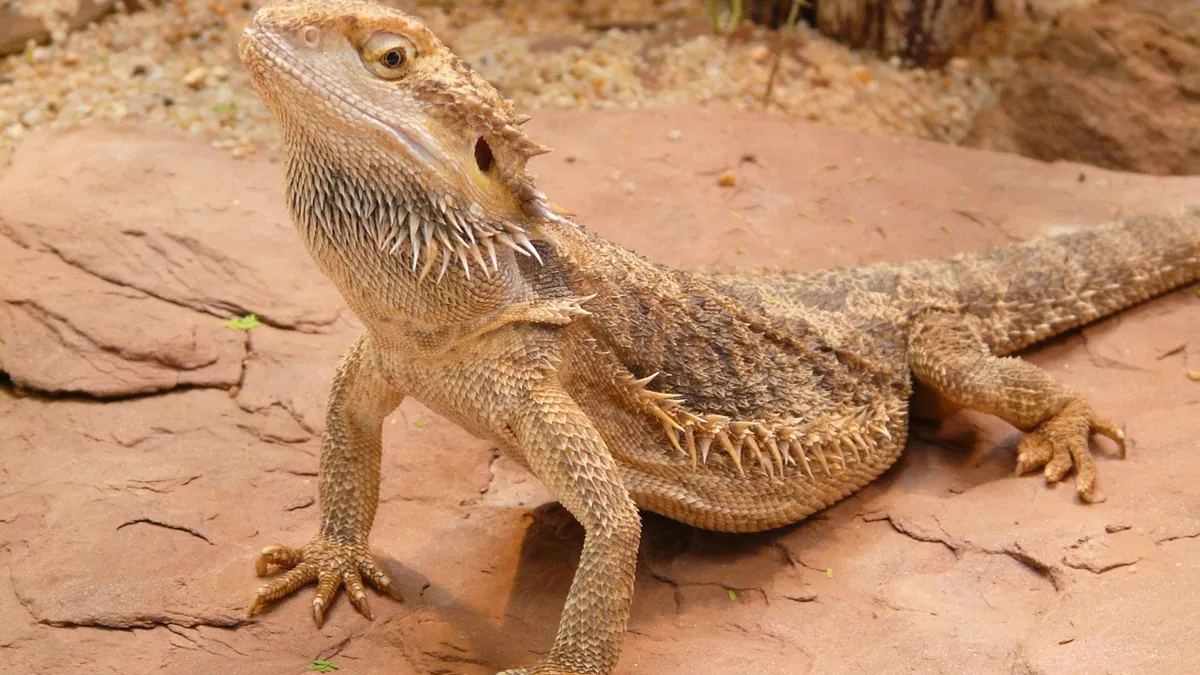
Why does my bearded dragon lick me? Most of the time, licking is a normal sensory behavior. Your dragon is tasting the air and whatever it touches to learn about its world, including you. Biting is different. It usually signals fear, stress, hunger, or a mistake in how you are handling your pet.
This article is educational and is not a substitute for veterinary diagnosis or treatment.
Quick Answer
- Licking (tongue-flicking) is how bearded dragons sample chemicals and explore their surroundings, and it is normal behavior [1][2].
- A dragon that licks you more often in a new place or after a change is likely gathering information, not showing affection or aggression [3].
- A single quick bite or open-mouth lunge is usually defensive. It means your dragon feels threatened or startled.
- Repeated biting during handling often points to stress from too much or too rough handling [4].
- Keep handling sessions short and calm, and see a veterinarian if licking or biting starts suddenly along with other symptoms.
Why Does My Bearded Dragon Lick Me?
Licking Is a Sensory Tool
Bearded dragons do not taste the world the way you do. They use their tongues to collect chemical cues from surfaces, the air, and other animals. The tongue carries those chemicals to a special sensory organ in the roof of the mouth [1][2]. This is called tongue-flicking, and it is a normal part of how lizards and snakes gather information [1].
When your dragon licks your hand, arm, or shirt, it is reading you. Your skin carries salts, oils, and scent. To your dragon, that is data. It may lick once and move on, or it may lick several times to confirm what it found.
Licking Often Increases in New Situations
Tongue-flicking tends to go up when a reptile is in an unfamiliar place or facing something new [3]. That is why your dragon may lick you more when you bring it home from the pet store, rearrange its enclosure, or introduce a new person. The behavior is exploratory, not personal.
This is also why a bearded dragon that "always licks" you may simply be a curious individual. Some dragons investigate more than others. A calm, well-fed dragon in a familiar routine may still lick your hand every time you reach in. That is normal.
Open Mouth, Licking, and the Confusion Around It
Owners often ask why their bearded dragon is opening its mouth at them. An open mouth can mean a few things. It can be a threat display, a sign of heat stress, or part of a defensive posture. If your dragon opens its mouth wide, puffs up, and darkens its beard while looking at you, treat that as a warning. Step back and give it space.
A dark beard is a separate signal worth understanding. You can read more about it in Bearded Dragon Black Beard: What It Means and When to Worry.
Why Does My Bearded Dragon Bite Me?
Biting is not the same as licking. A bite is a defensive or feeding response, and the reason matters.
Defensive biting. This is the most common cause. A dragon that feels cornered, grabbed in published veterinary research, or woken suddenly may bite to protect itself. Babies and juveniles are often more defensive because they are small and see everything as a threat.
Feeding mistakes. Bearded dragons are visual hunters. If your fingers smell like food or move like prey, a hungry dragon may strike. This is usually a quick, single bite followed by confusion.
Stress from handling. Research on bearded dragons found that longer handling sessions (5 or 15 minutes) were linked to more anxiety-related behavior afterward, including more tongue-flicking in new settings [4]. Handling is not automatically harmful, but more is not always better.
Pain or illness. A dragon in pain may bite when touched. This is a medical issue, not a training problem.
Hormonal or territorial behavior. Some adults become more reactive during breeding season. This is normal but requires careful, respectful handling.
Medical Causes to Rule Out
Most licking and biting is behavioral. Still, some health problems can change how your dragon acts.
- Mouth or jaw pain. Stomatitis (mouth rot), abscesses, or injuries can make a dragon reluctant to be touched near the head and more likely to bite.
- Respiratory infection. Labored breathing, mucus, or open-mouth breathing can look like aggression when it is actually illness.
- Impaction or gut problems. A dragon that is uncomfortable may be restless, refuse handling, or bite. Learn the signs in Bearded Dragon Impaction: Signs, Causes, and Veterinary Care.
- Parasites or nutritional problems. Metabolic bone disease and other conditions can cause weakness, tremors, and irritability.
- Vision problems. A dragon that cannot see well may misjudge your hand as food or as a threat.
A sudden change in behavior, especially in an adult dragon that was previously calm, deserves a veterinary visit.
When Licking or Biting Becomes a Problem
Licking is rarely a problem on its own. It becomes a concern when it is constant, frantic, or paired with other signs. A dragon that licks nonstop, paces, or cannot settle may be stressed or unwell.
Biting becomes a problem when it happens often, draws blood, or happens every time you approach. That pattern usually means the dragon is chronically stressed or in pain.
Watch for these patterns:
- Biting only during handling, which points to handling stress [4].
- Biting when you reach into the enclosure, which points to territorial or defensive behavior.
- Biting when food is nearby, which points to a feeding response.
- Biting along with a black beard, hissing, or puffing, which points to fear.
If your dragon is showing these signals, slow down. Forcing interaction will make things worse.
What to Do: Step by Step
1. Change How You Approach
Reach in from the side, not in published veterinary research. A hand coming down looks like a predator. Move slowly and let your dragon see you. Scoop gently from underneath instead of grabbing.
2. Keep Handling Short
Shorter sessions are better tolerated. The research on handling duration found that longer sessions were linked to more anxiety-related behavior afterward [4]. Aim for brief, calm contact and let your dragon tell you when it has had enough.
3. Build Trust Over Time
Start with short sessions near the enclosure. Let your dragon come to your hand if it wants. Offer food by hand only if your dragon is calm and not striking. Never chase or corner your pet.
4. Use Enrichment to Reduce Stress
A bored or stressed dragon is more likely to react. Provide a proper basking spot, hiding places, and a varied diet. Give your dragon time outside the enclosure in a safe, supervised area if it tolerates handling. Understanding natural behavior helps here. See Understanding the Wild Bearded Dragon: Natural Habitat and Behavioral Insights.
5. Check the Environment
Temperature, lighting, and enclosure size affect behavior. A dragon that is too hot, too cold, or cramped may be irritable. Make sure the basking zone and cool zone are correct for the species. Clean the enclosure regularly and remove uneaten food.
6. Rule Out Hunger
If your dragon bites when your fingers are near, it may be hungry or associating hands with food. Feed with tongs or a dish. Wash your hands before handling so you do not smell like prey.
7. Keep a Simple Log
Note when licking or biting happens, what you were doing, and how your dragon looked. This helps you and your veterinarian spot patterns.
What Not to Do
- Do not punish your dragon. Tapping, flicking, or yelling will increase fear and make biting more likely.
- Do not grab in published veterinary research. This triggers defensive behavior.
- Do not force handling. If your dragon is puffing, hissing, or opening its mouth, stop and give it space.
- Do not assume licking means affection. It is sensory behavior, not a hug.
- Do not ignore sudden changes. A calm dragon that starts biting may be sick.
- Do not use gloves to "tough it out." Thick gloves can make you clumsy and increase stress.
Myths to drop: that a biting dragon is "mean," that licking is a sign of love, and that you should handle a defensive dragon more to "tame" it. None of these hold up. Behavior is communication, and your job is to read it.
When to Involve a Veterinarian or Behavior Professional
Call a veterinarian who treats reptiles if:
- Biting starts suddenly in an adult dragon.
- Your dragon shows a black beard, open-mouth breathing, or lethargy along with the behavior.
- You see swelling, discharge, or wounds around the mouth.
- Your dragon stops eating or loses weight.
- Handling causes bleeding or repeated strikes.
A certified behavior professional can help if medical causes are ruled out and the behavior continues. Look for someone with reptile experience.
Limitations and When to Contact a Veterinarian
This article covers common patterns, but every dragon is an individual. A veterinarian needs to examine your pet to know what is happening.
Contact a veterinarian the same day if your dragon bites and breaks skin on you, if it shows sudden aggression with a black beard and open mouth, or if it stops eating. Treat a bite wound on yourself promptly and seek medical care if it is deep.
Go to an emergency clinic now if your dragon is gasping, has trouble breathing, or is unresponsive. These are not behavior problems.
Schedule a routine visit if licking or biting changes slowly over weeks, or if you are unsure whether the behavior is normal.
Frequently Asked Questions
Why is my bearded dragon licking me?
Licking is a normal way for bearded dragons to sample chemicals and learn about their surroundings [1][2]. Your skin carries scent and salts that your dragon can read with its tongue. It is exploratory behavior, not a sign of aggression or affection.
Why does my bearded dragon try to bite me?
Most bites are defensive. Your dragon may feel cornered, startled, or threatened by how you approached. Hunger and pain can also cause biting. Look at when the bite happens to find the trigger.
Why is my bearded dragon opening his mouth at me?
An open mouth can be a warning, a sign of heat stress, or part of a defensive display. If your dragon also puffs up or darkens its beard, give it space. If it opens its mouth while breathing hard, see a veterinarian.
Is licking a sign my bearded dragon likes me?
Not in the way you might think. Licking is sensory, not emotional. Your dragon is gathering information about you. A calm dragon that licks and stays relaxed is comfortable, but the licking itself is not affection.
Can I train my bearded dragon not to bite?
You can reduce biting by changing how you handle your pet, keeping sessions short, and removing stress triggers [4]. You cannot punish the behavior away. If biting continues after these changes, have a veterinarian check for pain or illness.
Related Articles
- Understanding the Wild Bearded Dragon: Natural Habitat and Behavioral Insights
- Bearded Dragon Impaction: Signs, Causes, and Veterinary Care
- Bearded Dragon Black Beard: What It Means and When to Worry
- Bearded Dragon Care: Overgrown Dental Spurs & Tooth Trimming Guide
- Do Bearded Dragons Bite? Why It Happens and What to Do
- My Bearded Dragon Bit Me: What to Do and Why It Happens
- Does My Bearded Dragon Like Me? Bonding Signs
References
- Chemical discrimination by tongue-flicking in lizards: A review with hypotheses on its origin and its ecological and phylogenetic relationships. Journal of chemical ecology, 1994.
- The function of oscillatory tongue-flicks in snakes: insights from kinematics of tongue-flicking in the banded water snake (Nerodia fasciata). Chemical senses, 2012.
- Central and endocrine aspects of tongue-flicking and exploratory behavior in Anolis carolinensis. Brain, behavior and evolution, 1993.
- How to Handle Your Dragon: Does Handling Duration Affect the Behaviour of Bearded Dragons (Pogona Vitticeps)?. Animals : an open access journal from MDPI, 2020.