Black Lab Average Lifespan
By Dr. Zubair Khalid, DVM, MS, PhD ·

The black Lab average lifespan is about 12 years. The largest published study of Labrador retrievers under primary veterinary care, drawn from more than 33,000 UK dogs, found a median lifespan of 12.0 years, with half of all Labradors living between 9.9 and 13.8 years [1]. A Dutch population study reported a similar median of 12 years in veterinary practice data [2]. A smaller, closely managed research colony of 39 Labradors had a median age at end-of-life of 14.0 years [3].
Coat color does not fix a dog's lifespan, but it is linked to measurable differences. Black is the most common Labrador color, making up 44.6% of the UK population [1]. The same study found that chocolate Labradors have a shorter median lifespan than non-chocolate dogs, which include black and yellow Labradors [1]. Chocolate coat color is also an independent risk factor for obesity [4].
The takeaway for owners is straightforward: a black Lab's lifespan depends far more on weight control, body composition, genetics, diet, and preventive care than on the color of its coat. This guide explains what the research shows and what you can do today to support a long, healthy life.
At a Glance: Black Lab Lifespan Facts
| What you want to know | What the research shows | Source |
|---|---|---|
| Median lifespan, UK primary care population | 12.0 years (half of dogs lived 9.9 to 13.8 years) | [1] |
| Median lifespan, Dutch practice data | 12 years | [2] |
| Median age at end-of-life, managed research cohort | 14.0 years | [3] |
| Most common coat color | Black, 44.6% of UK Labradors | [1] |
| Median lifespan of non-chocolate Labradors | 12.1 years | [1] |
| Risk of death per extra kilogram of body weight at age 10 | 19% higher hazard | [3] |
Checklist for a longer black Lab life:
- Keep your dog lean, with a visible waist and easily felt ribs.
- Track body weight monthly and body condition score quarterly.
- Feed to maintain a body condition score of 2 to 4 on a 5-point scale [5].
- Discuss obesity risk with your veterinarian before and after neutering.
- Schedule annual wellness exams, with blood work for senior dogs.
- Choose longevity products and supplements only with veterinary guidance.
What the Research Shows About Lab Dogs Life Expectancy
Population Studies Give the Most Realistic Numbers
The VetCompass study is the largest and most reliable source for Labrador lifespan in the general pet population. It analyzed electronic patient records from UK primary-care veterinary practices and included 33,320 Labradors under care during 2013 [1]. The median longevity was 12.0 years, with an interquartile range of 9.9 to 13.8 years and a maximum recorded age of 16.0 years [1]. A typical Lab can be expected to live into the early teens, and a small number reach 15 or 16.
The VetCompass analysis also showed that females were more likely to be neutered than males (59.7% versus 54.8%) [1]. The mean adult body weight across all Labradors was 33.0 kg, with adult males averaging 35.2 kg and adult females 30.4 kg [1].
A Dutch study drew on four data sources: a veterinary practice management system covering about 35,000 dogs, two animal insurance databases covering about 15,500 and 4,500 dogs, and a histopathology laboratory with about 4,000 records [2]. The median lifespan for Labradors in practice data was 12 years [2]. In insurance data, Labradors lived longer than mixed-breed dogs (10 years versus 8 years) for individuals with known birth and death dates [2]. When censored individuals were included, survival was comparable to mixed-breed dogs up to 10 years of age [2].
Research Cohorts Can Show Better Numbers
The 39-dog prospective cohort reported a median age at end-of-life of 14.0 years [3]. Those dogs lived under uniform housing and management conditions, with body condition maintained between 2 and 4 on a 5-point scale by adjusting food allowances quarterly [5]. This group is not representative of the average pet Lab, but it shows what is possible with strict weight control and consistent care.
Why Lifespan Figures Vary
Lifespan estimates differ because study populations differ. Population studies include every dog that visits a veterinarian, including those with cancer, orthopedic disease, and other life-shortening conditions. Research cohorts exclude many of those variables and enforce strict feeding protocols. Neither number is wrong. The 12-year figure is the best answer to "how long do Lab dogs live" for a typical pet, and the 14-year figure is a realistic goal for a well-managed dog.
Another reason figures differ is how death is recorded. In the Italian longevity study, 58.2% of dogs were euthanized [6]. Euthanasia decisions are influenced by owner finances, access to specialty care, and quality of life, not just biology. That means lifespan figures reflect both medical and human decisions.
Does Coat Color Affect Lifespan?
Black Labradors are the most common color variant of the breed, representing 44.6% of the UK Labrador population [1]. Yellow Labradors make up 27.8% and chocolate Labradors 23.8% [1].
The VetCompass study found that non-chocolate colored dogs had a median longevity of 12.1 years [1]. Chocolate Labradors had a shorter median lifespan, and the study identified chocolate color as a factor associated with reduced longevity [1].
Why would chocolate Labs die younger? The leading explanation is obesity. A 2024 study of 521 British Labradors found that chocolate coat color was a significant risk factor for obesity, along with high food motivation [4]. Obesity is strongly linked to shorter lifespan in this breed [3][7]. The color itself is not a direct cause of death. Instead, chocolate Labs appear to carry a higher risk of weight gain, and weight gain shortens life.
For black Lab owners, the practical implication is reassuring: black Labs do not carry the same obesity risk association as chocolate Labs [4]. But black Labs still face the breed-wide risks of food motivation and weight gain, so the same weight management rules apply.
The Obesity Connection: The Single Biggest Controllable Factor
Body Weight at 10 Years Predicts Survival
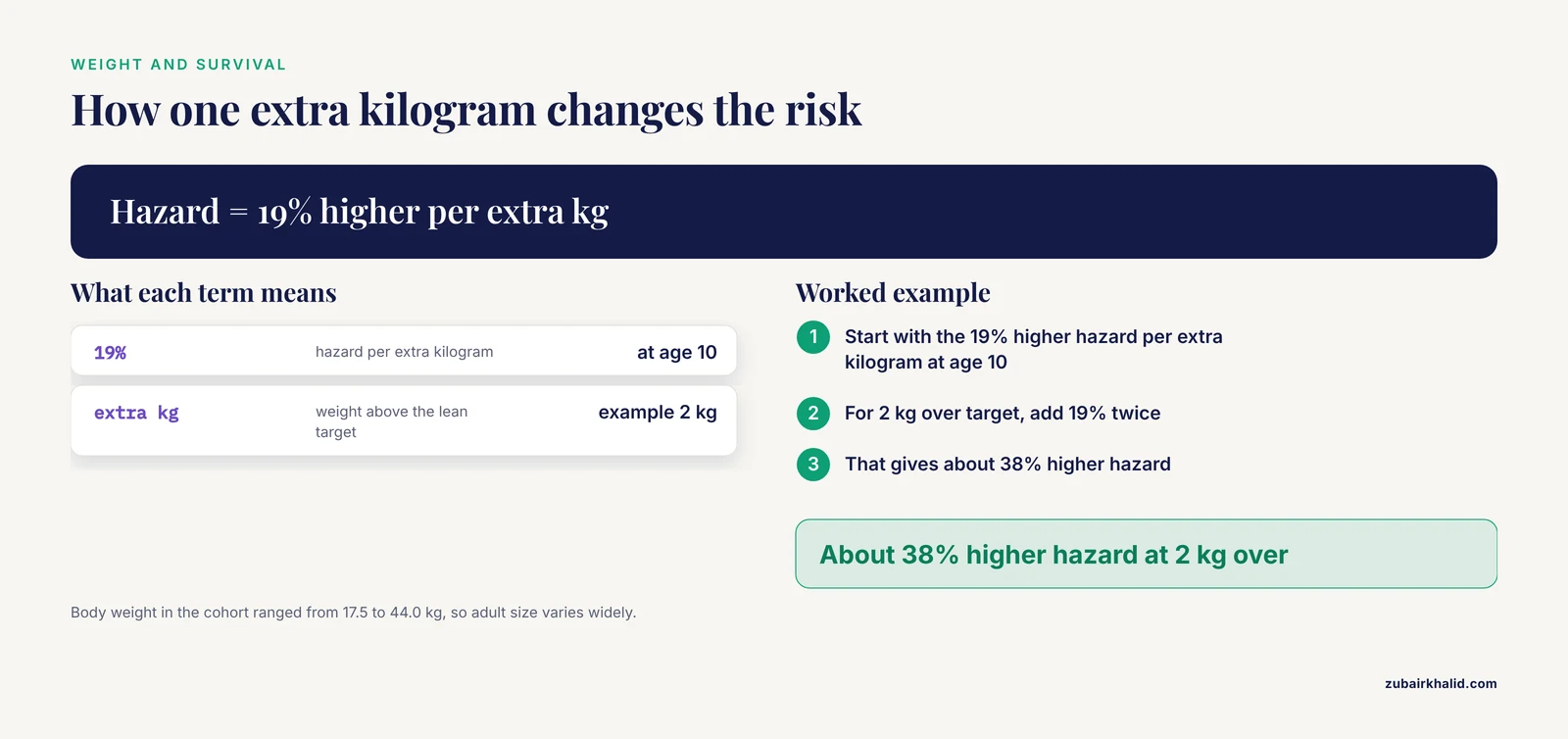
The UC Davis cohort study produced one of the clearest findings in canine longevity research: for every additional kilogram of body weight at 10 years of age, dogs had a 19% higher hazard of dying [3]. Body weight in that cohort varied from 17.5 to 44.0 kg, a wide range that shows how much adult size can vary even within one breed [3].
Body Composition Matters More Than the Scale
The same study used dual-energy x-ray absorptiometry (DEXA) scans to measure fat and lean mass annually. During the study, the mean percent fat was 32.8% and mean lean mass was 64.2%, with a mean lean-to-fat ratio of 2.1 [3]. Dogs that maintained a lower fat mass tended to live longer. Specifically, the increase in absolute fat mass was slower for Long-lifespan dogs compared with Expected-lifespan dogs, while all groups lost similar amounts of lean mass [5].
What the Longevity Groups Teach Us
The 39 dogs were classified into three lifespan groups: Expected (9 to 12.9 years), Long (13 to 15.5 years), and Exceptional (15.6 years and older) [5]. Thirteen dogs (33%) fell into the Expected group, 15 (39%) into the Long group, and 11 (28%) into the Exceptional group, with five still alive at the time of analysis [5].
Body weight increased similarly for all groups until age 9. After that, the patterns diverged. From 9 to 13 years, Exceptional dogs gained weight while Long-lifespan dogs lost weight [5]. This sounds counterintuitive, but it reflects the fact that weight loss in older dogs is often a sign of disease. The healthiest dogs maintained stable body weight into old age rather than gaining or losing rapidly.
Obesity Risk Factors Specific to Labradors
A 2024 study of 521 British Labradors identified several risk factors for obesity:
- Neutering increased obesity in males but not in females [4].
- Older age was associated with obesity in females but not in males [4].
- Chocolate coat color was a risk factor [4].
- High food motivation was a risk factor [4].
Labradors are a food-motivated breed by nature, and that trait is a known driver of weight gain [4]. Owners who understand this can plan for it by measuring food portions, limiting treats, and using non-food rewards.
The Genetics of Canine Obesity
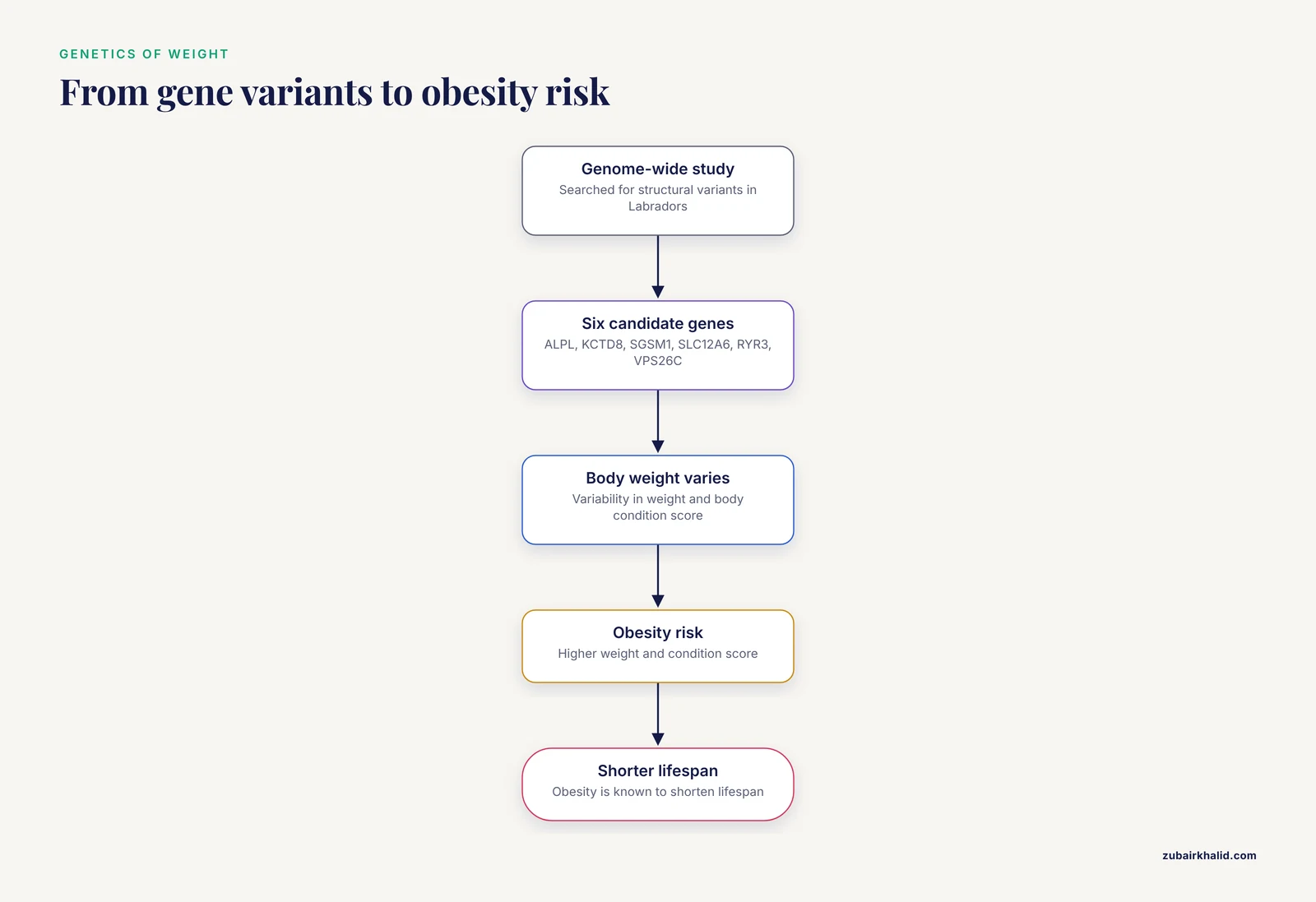
Obesity in Labradors is not purely behavioral. A genome-wide study identified structural variants in or near six genes that may contribute to variability in body weight and body condition score: ALPL, KCTD8, SGSM1, SLC12A6, RYR3, and VPS26C [7]. The study authors note that obesity is known to decrease well-being and shorten lifespan, and they call for more research to validate these associations [7]. This is early-stage science, but it points to a future where obesity risk could be assessed genetically.
Genetics and Longevity: What Science Knows So Far
The SIRT6 Gene
Sirtuin 6 (SIRT6) is a gene involved in regulating cell senescence and lifespan across mammals [8]. A 2025 study examined SIRT6 variants across dog breeds and found that different breeds carry different variants. A specific intronic variant, g.56,075,604 G>T, was previously detected in Labrador Retrievers and was found in the small-breed group in the study [8]. In silico analysis showed this variant creates an exonic splicing enhancer site for the splicing factor ESE_SRp55, meaning it could alter how the SIRT6 gene is spliced [8].
This research is preliminary. There is no commercial genetic test that can tell you your black Lab's lifespan, and the SIRT6 findings should not be used to make clinical decisions. But they help explain why some dogs live to 16 while others die at 9, even with similar care.
Structural Variants and Body Weight
The structural variant study mentioned above is another piece of the genetic puzzle [7]. Six genes were associated with body weight and obesity risk in Labradors. Two of these genes, ALPL and RYR3, have known roles in metabolism and muscle function, which could plausibly influence energy balance [7]. Again, this is research-stage information, not a clinical test.
Sex, Neutering, and Lifespan
Males Versus Females
In the UK Labrador population, 46.4% of dogs were female and 53.6% were male [1]. Adult males were heavier, averaging 35.2 kg, compared with 30.4 kg for females [1]. The VetCompass study did not report a significant lifespan difference between male and female Labradors, and the UC Davis cohort found that gender was not associated with longevity [5].
Neutering
In the UC Davis cohort, age at neutering was not associated with longevity [5]. That is a useful finding for owners deciding when to neuter, because it suggests that within a well-managed population, neuter timing does not drive lifespan.
However, neutering does affect obesity risk. In British Labradors, neutering increased obesity in males but not females [4]. Since obesity shortens lifespan, a neutered male Lab needs especially careful weight management. The mechanism is likely hormonal, with neutering reducing the metabolic effects of testosterone.
In the general dog population in Italy, females and neutered dogs had significantly longer median longevity than males and intact dogs [6]. That study included all breeds, so it does not directly prove the same effect in Labradors, but it is consistent with the broader veterinary literature.
Diet, Nutrition, and Healthy Aging
The Diet Restriction Research
The longest-running diet restriction study in dogs used 24 sibling pairs of Labrador Retrievers, with one dog in each pair fed 75% of what its control-fed sibling received [9]. The study measured antioxidant status annually over a 6-year period when the dogs were between 5 and 10 years of age [9].
Diet restriction reduced serum retinol, vitamin E, copper, and ceruloplasmin [9]. Aging was associated with decreased retinyl palmitate, vitamin A, vitamin E, selenium, and copper, and with increased retinol, ceruloplasmin, and glutathione peroxidase [9]. The authors noted that the antioxidant profiles did not explain how diet restriction contributes to longevity, but the data have practical applications for canine clinical nutrition [9].
The key takeaway is not that your dog needs antioxidant supplements. It is that caloric intake and aging both change how the body handles nutrients. Feeding the right amount is more important than feeding a specific antioxidant blend.
Feeding for Body Condition
The UC Davis cohort maintained body condition scores between 2 and 4 on a 5-point scale by adjusting food allowances quarterly [5]. That means the research team weighed and assessed each dog regularly and changed portions as needed. Owners can do the same at home with a monthly weigh-in and a body condition score chart from their veterinarian.
Health Conditions That Affect Lifespan
Cancer
In the Italian longevity study of nearly 5,000 dogs, neoplasia (cancer) was the most frequent cause of death, accounting for 34.0% of cases, and it occurred more frequently in large breeds [6]. Labradors are a large breed, so cancer is a realistic concern for owners.
Metabolic and Lipid Disorders
Labradors can develop hypertriglyceridemia, a condition of elevated blood fats. A 2023 case report described an 8-year-old, clinically healthy Labrador who developed severe hypertriglyceridemia while receiving low-dose rapamycin, a drug being studied for lifespan extension [10]. The dog was asymptomatic, and the condition resolved completely within 15 days of stopping the drug [10].
This case is directly relevant to owners who hear about rapamycin as an anti-aging drug for dogs. The drug is not approved for lifespan extension in dogs, and this case shows it can cause significant metabolic side effects even in healthy animals [10]. Do not give your dog rapamycin or any compounding pharmacy version of it without veterinary supervision.
Immune System Aging
The immune system ages faster in some breeds than others. A study measuring thymic output through signal joint T cell receptor excision circles (sj-TRECs) found that Labradors, a breed with a median expected lifespan of 11 years, showed an age-associated decline in thymic output, with the greatest decline before 5 years of age [11]. Some geriatric Labradors over 13 years still had detectable sj-TRECs [11]. In short-lived giant breeds, the decline began earlier and undetectable levels appeared at younger ages [11].
This matters because immune competence is linked to lifespan. Keeping your Lab current on vaccines, parasite prevention, and dental care supports the immune system as it naturally declines with age.
Practical Steps to Support a Long Black Lab Life
1. Keep Your Dog Lean
The single most evidence-backed action is weight control. Every extra kilogram at age 10 raises the hazard of death by 19% [3]. Use a digital kitchen scale to weigh food portions and a bathroom scale to weigh your dog monthly.
2. Track Body Condition Score
Feed to maintain a body condition score of 2 to 4 on a 5-point scale [5]. You should be able to feel your dog's ribs without pressing hard, and there should be a visible waist when viewed from above.
3. Plan for Food Motivation
Labradors are highly food motivated, and this trait is a risk factor for obesity [4]. Use kibble from the daily ration as training treats, and substitute praise or play for food rewards when possible.
4. Manage Neutering Risks
If you neuter a male Lab, expect that neutering increases obesity risk [4]. Reduce portions slightly and increase exercise after the procedure. Monitor weight monthly for the first year after neutering.
5. Choose Longevity Products With Caution
The rapamycin case report is a warning that anti-aging drugs can have serious side effects in dogs [10]. Any product claiming to extend lifespan should be discussed with your veterinarian before use.
6. Support Immune Health
Labradors show a significant decline in thymic output before 5 years of age [11]. Regular wellness exams, core vaccines, and parasite prevention are the practical ways to support immune function.
7. Schedule Senior Wellness Care
Most Labradors live 10 to 14 years [1]. Starting at age 8, your dog should have a senior wellness exam at least twice a year, including blood work and a urinalysis. Early detection of cancer, kidney disease, and endocrine disorders gives you more treatment options.
Common Mistakes That Shorten Lifespan
- Free-feeding or leaving a bowl of food out all day
- Giving unlimited treats or table scraps
- Skipping annual wellness exams
- Using anti-aging drugs without veterinary supervision
- Ignoring gradual weight gain because "he is just big boned"
If your dog is already overweight, do not crash-diet. Work with your veterinarian on a gradual weight loss plan with a target rate of 1 to 2% of body weight per week.
Limitations and When to Contact a Veterinarian
This article is educational and is not a substitute for veterinary diagnosis or treatment. Individual dogs vary, and a lifespan estimate cannot predict what will happen with your specific pet.
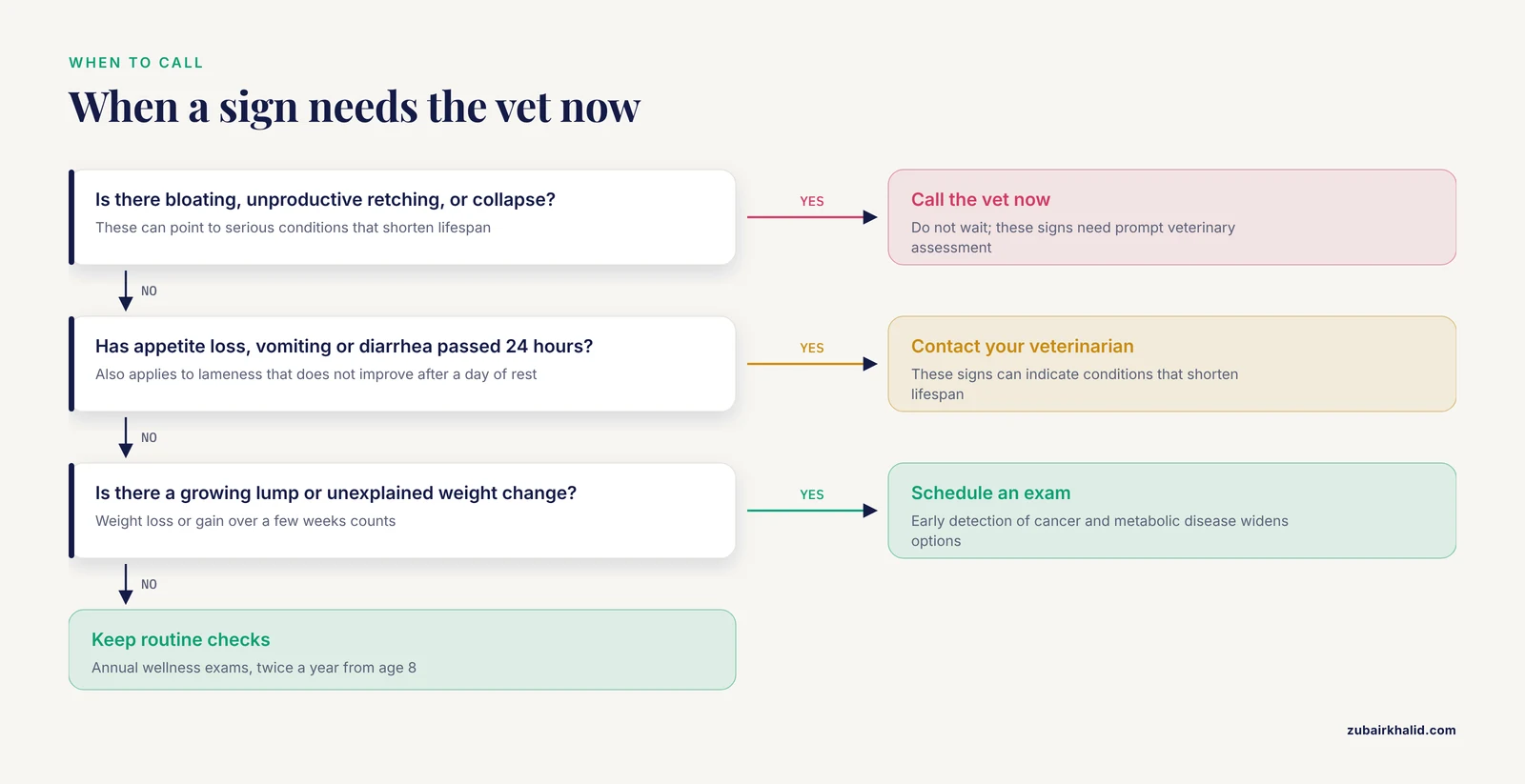
Contact your veterinarian promptly if your black Lab shows any of these signs:
- Unexplained weight loss or weight gain over a few weeks
- Loss of appetite lasting more than 24 hours
- Lameness that does not improve after a day of rest
- Difficulty breathing, coughing, or exercise intolerance
- Abdominal bloating or unproductive retching
- Lethargy, weakness, or collapse
- A lump that is growing, changing, or ulcerated
- Vomiting or diarrhea lasting more than 24 hours
- Increased thirst or urination
- Sudden behavior changes
These signs can indicate conditions that shorten lifespan, including cancer, heart disease, and metabolic disorders. Early veterinary intervention is the best way to protect your dog's future.
Exercise and Mental Stimulation: Supporting a Long, Healthy Life
Regular physical activity and mental enrichment support a black Lab's health in ways that directly affect lifespan. Exercise burns calories, preserves lean muscle, and keeps the cardiovascular system strong, all of which help maintain a healthy body condition. Mental stimulation reduces stress and prevents the frustration behaviors that develop when a working breed is underoccupied. Together, they give a Lab an outlet for the energy and intelligence the breed was built for.
Exercise Guidelines for Black Labs
Most adult Labs thrive on at least one hour of moderate activity daily, split into two sessions. A morning leash walk and an afternoon game of fetch, swimming, or off-leash running work well for most dogs. Puppies need shorter, more frequent play and should not be forced into repetitive running or jumping until their growth plates close, usually between 12 and 18 months. Senior Labs benefit from the same routine with shorter distances, gentler pacing, and more recovery time. Swimming is often the best senior exercise because it works the whole body with minimal impact.
Mental Enrichment Is Part of the Plan
Mental work is genuinely tiring for a dog and can substitute for some physical exercise on rest days. Puzzle feeders, scent games, nose work, and short training sessions engage a Lab's brain, reduce stress, and prevent boredom-related problems such as digging, chewing, and excessive barking. For senior dogs, gentle mental challenges also help maintain cognitive function as part of healthy aging.
Practical Guidelines
- Start new routines gradually, especially for overweight or sedentary dogs.
- Watch your dog's response. Lameness, reluctance to move, or unusual fatigue means stop and check with your veterinarian.
- Avoid vigorous exercise in hot weather; Labs overheat easily.
- For senior dogs, consult your veterinarian before starting any new exercise program, particularly if your dog has a known health condition.
Dental Health: The Overlooked Lifespan Factor
Periodontal disease is the most common health problem in adult dogs, and Labradors are no exception. It is easy to overlook because it develops gradually, but it can shorten a dog's life. The gums are a direct gateway to the bloodstream. When bacteria and inflammatory byproducts from dental plaque enter the circulation, they place stress on the heart, kidneys, and liver. Chronic periodontal disease has been linked to pathological changes in those organs, and managing dental health is therefore part of managing overall longevity.
Home Dental Care
Daily tooth brushing is the single most effective home measure. Use a pet-specific toothbrush and enzymatic toothpaste. Human toothpaste is not safe for dogs. If brushing is not possible every day, aim for at least three to four times per week. Dental chews and specially formulated diets can reduce plaque and tartar, but they are supplements to brushing, not replacements. Water additives and oral rinses are less effective but can help in dogs that resist brushing.
Professional Cleanings
Even with diligent home care, most dogs need professional dental cleaning under general anesthesia. The frequency depends on the individual dog, but an annual oral examination is a reasonable starting point. Professional cleaning removes plaque and tartar above and below the gumline, and it allows the veterinarian to assess and treat periodontal pockets, tooth resorption, and fractured teeth. Do not accept anesthesia-free dental scaling. It does not clean below the gumline, where the most damaging disease occurs, and it can leave rough surfaces that attract more plaque.
Signs That Require a Veterinary Visit
Seek veterinary care if your Lab shows any of these signs: persistent bad breath, red or bleeding gums, visible yellow-brown tartar, loose or missing teeth, drooling, dropping food, chewing on one side, or pawing at the mouth. These signs can indicate advanced periodontal disease, tooth root abscesses, or other oral pathology. A veterinary oral examination under anesthesia is often needed to determine the extent of the problem and to treat it safely.
Managing Joint Health and Osteoarthritis in Aging Labs
Hip dysplasia and osteoarthritis are common reasons aging black Labs slow down. Hip dysplasia is a developmental laxity of the hip joint that can lead to secondary arthritis; osteoarthritis is progressive cartilage and joint change that causes pain and stiffness. Neither condition is curable, but early diagnosis and a multimodal plan preserve mobility and quality of life.
Recognize the Signs Early
Watch for stiffness after rest, reluctance to climb stairs or jump into the car, lagging on walks, shortened stride, bunny-hopping gait, muscle loss over the hips, and licking at joints. Signs often worsen gradually, so owners miss them. A veterinary exam with orthopedic assessment and radiographs confirms the diagnosis and rules out other causes. Start treatment before muscle loss becomes severe.
Weight and Exercise
Keep your Lab lean. Extra body weight increases load on dysplastic hips and arthritic joints, and Labradors are highly food motivated, which raises obesity risk [4]. Measure portions, limit treats, and use body condition scoring. If weight loss is needed, set a gradual plan with your veterinarian.
Exercise should be daily and low impact. Controlled leash walks, swimming, and underwater treadmill work build muscle without pounding joints. Avoid repeated jumping, hard-surface fetch, and sudden intense activity. Short, frequent sessions usually suit arthritic dogs better than weekend bursts. A rehabilitation therapist can design a safe program.
Supplements and Pain Relief
Glucosamine, chondroitin, omega-3 fatty acids, and green-lipped mussel are commonly used joint supplements. Evidence varies, and products are not regulated like drugs. Discuss them with your veterinarian, who can check for interactions and choose a reputable product. Supplements support but do not replace pain control.
Chronic arthritis pain is under-treated. Safe options include prescription NSAIDs, other veterinarian-selected analgesics, joint injections, and physical therapy. Never give human pain medications, which can be toxic to dogs. The best plan combines weight control, exercise, pain relief, and home modifications such as ramps and non-slip rugs. Recheck mobility and pain at least every few months, because arthritis is progressive and treatment needs change.
Related Guides
- Bone Cancer in Dogs: Life Expectancy With and Without Treatment: Bone cancer prognosis is relevant for large breed Labs
- IMHA in Dogs: Survival Rate and Life Expectancy: IMHA survival rates explain a serious immune condition
- Enlarged Liver in Dogs: Symptoms, Causes, and Life Expectancy: Enlarged liver prognosis helps assess senior dog health risks
Frequently Asked Questions
What is the average lifespan of a black Lab?
The typical black Lab lives about 12 years. Most Labs live into their early teens, and a well-managed dog can reach 14 or 15 years.
Do black Labs live longer than chocolate Labs?
Yes. Population data show that non-chocolate Labradors live longer on average than chocolate Labradors, and chocolate color is linked to a higher risk of obesity.
What is the oldest age a black Lab can reach?
Some Labradors reach 16 years. Exceptional longevity is generally defined as living past 15 and a half years.
How can I help my black Lab live longer?
Keep your dog lean, feed measured portions, exercise daily, and schedule regular veterinary checkups. Weight control is the strongest evidence-backed factor.
Does neutering affect a black Lab's lifespan?
Neutering itself does not appear to shorten lifespan, but it increases obesity risk in males. Obesity does shorten lifespan, so adjust portions after neutering.
Are black Labs prone to obesity?
Labradors as a breed are prone to obesity because of high food motivation. Black Labs need the same portion control as any Lab.
What do Labradors most commonly die from?
Cancer is the most common cause of death in large-breed dogs. Weight-related conditions are also a major contributor to earlier death.
At what age is a black Lab considered a senior?
A black Lab is typically considered a senior around age 8. Senior wellness exams twice a year are recommended from that age onward.
Sources
- Labrador retrievers under primary veterinary care in the UK: demography, mortality and disorders.
- Quantification of the health-status of the Dutch Labrador retriever population.
- Body weight at 10 years of age and change in body composition between 8 and 10 years of age were related to survival in a longitudinal study of 39 Labrador retriever dogs.
- Obesity risk factors in British Labrador retrievers: Effect of sex, neuter status, age, chocolate coat colour and food motivation.
- Exceptional longevity and potential determinants of successful ageing in a cohort of 39 Labrador retrievers: results of a prospective longitudinal study.
- Factors related to longevity and mortality of dogs in Italy.
- Uncovering structural variants associated with body weight and obesity risk in labrador retrievers: a genome-wide study.
- Investigating the influence of the SIRT6 gene and alternative splicing on canine longevity: an in-depth bioinformatics analysis and experimental confirmation via NGS-based targeted sequencing.
- Antioxidant status of pair-fed labrador retrievers is affected by diet restriction and aging.
- Case report: Severe asymptomatic hypertriglyceridemia associated with long-term low-dose rapamycin administration in a healthy middle-aged Labrador retriever.
- An Age-Associated Decline in Thymic Output Differs in Dog Breeds According to Their Longevity.