Black and White Cat Coat Genetics Explained
By Dr. Zubair Khalid, DVM, MS, PhD ·
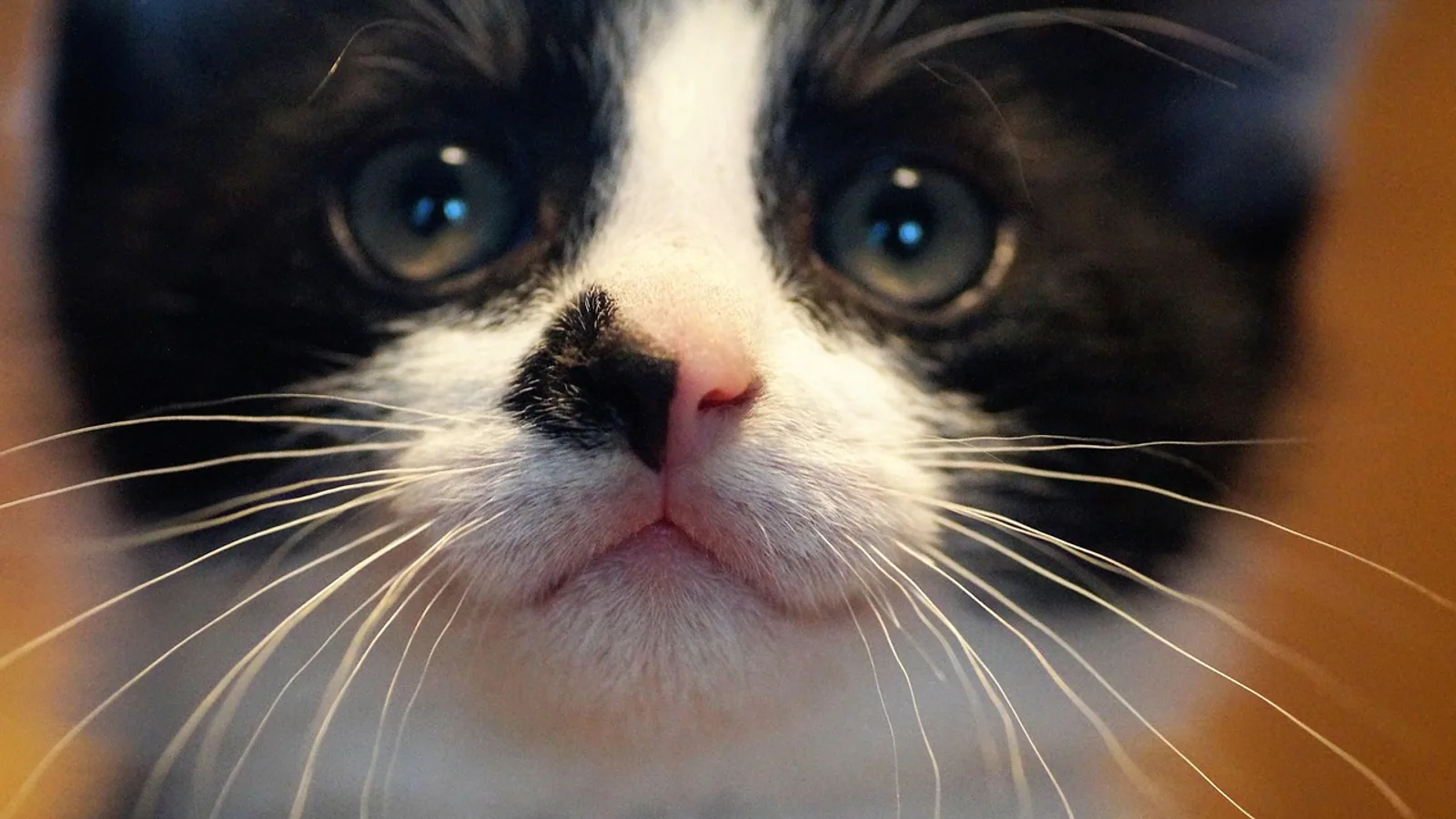
A black and white cat gets its black from one gene and its white from a completely separate gene. The black comes from the agouti locus, where two copies of the non-agouti allele stop the hair from banding and let solid black pigment fill the coat. The white comes from the KIT gene on feline chromosome B1, where an inherited retrovirus insertion produces the white spotting pattern that creates tuxedo, bicolor, and van cats [1][2].
Those two systems are independent. A cat can be solid black with no white at all, solid black with a white chest patch, or nearly all white with black on the head and tail. The amount of white is the variable part, and it is the part that confuses owners most. This article explains what is settled science, what is still debated, and what a black and white cat actually passes on to its kittens.
This article is educational and is not a substitute for veterinary diagnosis or treatment.
The Two Genes Behind Every Black and White Cat
Owners often assume that black and white is a single trait that gets passed down as a package. It is not. Two separate genetic systems are working at the same time, and each one follows its own rules.
The Black Comes From the Agouti Locus
The agouti (A) locus controls whether a cat's individual hairs carry bands of light and dark pigment. The dominant form, written as A, produces the banded hairs you see in tabby cats. The recessive form, written as a, blocks that banding. When a cat inherits two copies of the recessive allele (aa), the hair shafts become solidly pigmented instead of banded.
That solid pigmentation is what we call non-agouti, or solid. Combined with the black pigment gene (which is the default in most cats), non-agouti produces a solid black coat. In population surveys of domestic cats, the recessive non-agouti allele is common. In Polish cat populations, the frequency of the non-agouti allele ranged from 0.487 to 0.774 depending on the location [3]. That means solid-colored cats are not rare. They are a normal, well-established part of the domestic cat gene pool.
The key point for a black and white cat is this. The black is a solid color decision made at the agouti locus. It has nothing to do with the white.
The White Comes From the KIT Gene
White spotting is a different story entirely. The gene responsible sits on feline chromosome B1, in a region that contains the KIT gene [1]. Linkage analysis in a large pedigree of cats segregating for ventral white spotting supported linkage to three markers on chromosome B1 near KIT, but not to markers on chromosome A1 near a different candidate gene called EDNRB [1]. That study identified KIT, or another gene in the linked region, as the leading candidate for white spotting in cats.
The mechanism was later pinned down. A feline endogenous retrovirus, abbreviated FERV1, inserted itself into the KIT gene and changed how the gene is expressed in pigment-producing cells [2]. This is a remarkable finding. The insertion interrupts a DNAse I hypersensitive site in KIT intron 1, a regulatory region that is highly conserved across mammals and that normally governs the timing and tissue-specific expression of KIT in melanocytic and hematopoietic cells [2].
Two versions of that retrovirus insertion produce two different phenotypes. A full-length FERV1 element, about 7125 base pairs, is associated with white spotting. A FERV1 long terminal repeat (LTR) alone is associated with Dominant White, the pattern where the cat is entirely white [2]. For genetic analysis, the wild-type sequence, the full FERV1 element, and the LTR-only version define a three-allele marker [2].
That distinction matters for owners. A cat that is mostly white with a few colored patches is not the same genetically as a cat that is completely white. The complete white cat carries the Dominant White allele, which has known associations with deafness and iris hypopigmentation, though those effects are incompletely penetrant, meaning not every cat with the allele shows them [2].
Why the Amount of White Varies So Much
The white spotting allele does not produce a fixed amount of white. It produces a range. Two cats with the same genotype can look quite different, and this is the single most misunderstood part of black and white cat genetics.
Incomplete Dominance and the S Allele
White spotting is described as incompletely dominant. In the classic model, a cat with one copy of the white spotting allele (Ss) has white on less than half its body, and a cat with two copies (SS) has white on more than half [4]. This is the model breeders have used for decades.
Under that model, the allele dosage determines roughly how much white appears. One dose gives a modest amount, often a white chest, paws, or a facial blaze. Two doses gives a large amount, often a cat that is mostly white with color restricted to the head and tail.
What Recent Research Shows
That clean model does not hold up perfectly. A large study of Siberian cats examined two pedigree databases with 23,905 and 21,650 individuals and looked at how much white appeared in the offspring of cats with different amounts of white [4]. The researchers found significant differences from the expected distributions. In many cases, cats that were supposed to be homozygous (SS) had less than 50 percent white on the body. In many supposedly heterozygous (Ss) cats, the amount of white was over 50 percent [4].
The authors presented verified family examples that excluded possible errors in how breeders judged the amount of white. Their conclusion was direct. Other factors are involved in the inheritance of the amount of white in cats, and the current hypothesis should be revised [4].
So the honest answer is this. The S allele sets the general direction, but it does not fully determine the outcome. Modifier genes, and possibly other loci, fine-tune how much white actually shows up. Breeders who expect a predictable percentage from a given pairing are often surprised.
The White Spotting Categories
The amount of white is usually grouped into loose categories. These are descriptive labels, not separate genes.
- Bicolor. Roughly half the body is white and half is colored. The color often covers the back and the top of the head, with white on the legs, chest, and belly.
- Tuxedo. A form of bicolor where the white is concentrated on the chest, paws, and often a chin or facial marking, with the black forming a jacket-like shape over the back and shoulders. This is the classic black and white cat look.
- Van. The cat is predominantly white, with color limited to the head and tail. This pattern is named after the Turkish Van breed.
- Harlequin. A high-white pattern with a few distinct colored patches on an otherwise white body.
These categories sit on a continuum. The boundaries between them are somewhat arbitrary, and different breed registries define them differently. A review of Siberian cat color genetics noted that breed standards show inconsistencies in how white spotting categories are defined and named across major feline organizations [5]. That is a naming problem, not a biological one.
Inheritance: What Two Bicolor Parents Can Produce
If white spotting is incompletely dominant, then two bicolor parents, each carrying one copy of the spotting allele (Ss), should produce a predictable ratio of offspring. The table below shows the classic model.
| Parent Genotypes | Offspring Genotype | Expected White Amount | Proportion of Litter |
|---|---|---|---|
| Ss x Ss | SS | More than half white (high white, van-type) | 25% |
| Ss x Ss | Ss | Less than half white (bicolor, tuxedo) | 50% |
| Ss x Ss | ss | No white (solid black or other solid color) | 25% |
Read that table with the caveat from the Siberian study in mind. The 25/50/25 split is the expected ratio under the simple model. Real litters often deviate, because the amount of white in any individual cat is influenced by factors beyond the S allele itself [4]. The genotype proportions should still hold in a large enough sample, but the amount of white in each kitten is not tightly predictable.
Two important points follow from this table.
First, two black and white cats can produce a solid black kitten. The solid black kitten inherits the recessive non-agouti genotype for color and two copies of the non-spotting allele for white. It has no white at all.
Second, two black and white cats can produce a kitten that is almost entirely white. That kitten inherits two copies of the spotting allele. Owners who are surprised by a mostly white kitten from two tuxedo parents are seeing incomplete dominance at work.
A cat with no white (ss) bred to a cat with two copies of spotting (SS) will produce all Ss kittens, all of which should have a moderate amount of white. A cat with no white bred to a bicolor (Ss) will produce roughly half Ss (some white) and half ss (no white) kittens.
The Black Color Is Inherited Separately
It bears repeating because it is the most common source of confusion. The gene that makes a cat black and the gene that makes a cat white are on different chromosomes and are inherited independently.
A black and white cat is simply a cat that inherited the non-agouti genotype (aa) at the agouti locus and at least one copy of the white spotting allele at the KIT locus. Change the agouti genotype to A and the same white pattern appears on a tabby cat. Change the color gene and the same white pattern appears on an orange cat or a gray cat.
This is why white spotting appears across so many colors and breeds. The spotting allele does not care what color the underlying coat is. It only controls where pigment-producing cells end up during development.
The biology behind this is worth understanding. During embryonic development, pigment-producing cells called melanocytes migrate from the neural crest to the skin. The KIT gene regulates that migration. When the retrovirus insertion disrupts normal KIT expression, some regions of skin do not receive melanocytes in time, and those regions develop without pigment. The result is white fur [2]. The underlying color genes determine what the pigmented areas look like.
Breed Associations
White spotting appears in many breeds, but a few associations are worth knowing.
Tuxedo in Domestic Shorthairs
The tuxedo pattern is most strongly associated with the domestic shorthair, the general population of non-pedigree cats. It is not a breed trait. It is a common expression of the bicolor pattern in cats that carry one copy of the white spotting allele. Because the non-agouti allele is common in domestic cat populations, and because the spotting allele is also common, black and white tuxedo cats show up frequently in shelters and households [3].
Van Pattern in Turkish Vans
The van pattern, where color is restricted to the head and tail on an otherwise white body, is named after the Turkish Van breed. This is a high-white expression of the spotting gene. Owners sometimes describe a van-pattern cat as "mostly white with a colored hat and tail."
White Spotting in Siberian Cats
Siberian cats show a wide range of white spotting, and the breed has been the subject of detailed genetic study because of it. A comprehensive review of Siberian coat color genetics noted that the breed has complex and partially breed-specific genetic determinants of coat coloration, and that inconsistencies in nomenclature across feline registries make the categories harder to compare than they should be [5]. The large pedigree study on the amount of white also used Siberian cats, which is why the breed features prominently in the research on this topic [4].
Dominant White and Deafness
Cats that are entirely white, with no colored patches at all, carry the Dominant White allele rather than the spotting allele. This allele is associated with deafness and iris hypopigmentation, though the penetrance is incomplete, meaning not every cat with the allele develops these features [2]. A study of Maine Coon cats with a different white-related trait (dominant blue eyes) found reduced to absent auditory responses on brainstem auditory evoked response testing in all eight examined affected animals [6]. That study involved a PAX3 variant, not KIT, but it illustrates the general principle that white pigmentation traits can be linked to hearing loss in cats.
If you have a completely white cat, particularly one with blue eyes, a veterinary hearing assessment is reasonable. This is a different situation from a black and white cat with patches of color, which does not carry the same risk profile.
Common Myths About Black and White Cats
Several myths circulate about black and white cat genetics. Here is what the science says.
Myth: Black and white cats are a breed. They are not. Black and white is a coat pattern, not a breed. Any breed or mixed-breed cat can be black and white if it carries the right alleles.
Myth: The white patches are caused by the black gene. No. The black comes from the agouti locus. The white comes from the KIT gene. They are independent [1][2].
Myth: Two black and white cats always produce black and white kittens. They can produce solid black kittens, high-white kittens, or anything in between, depending on which alleles each kitten inherits [4].
Myth: The amount of white is fully predictable from the parents. The simple model predicts a general range, but real litters deviate significantly from expectations, and other factors are involved [4].
Myth: A black and white cat with a lot of white is unhealthy. White spotting itself is not a health problem. The health concerns are associated with the Dominant White allele, which produces completely white cats, not with the spotting allele that produces patterned cats [2].
Myth: Male and female black and white cats pass on different amounts of white. White spotting is autosomal, meaning it is not carried on the sex chromosomes. Both parents contribute equally.
Practical Implications for Owners and Breeders
For most owners, the genetics of a black and white cat is interesting but not medically actionable. The coat pattern itself does not require any special care.
There are a few practical points worth knowing.
Breeding decisions. If you are breeding cats and want to predict the amount of white in kittens, understand that the S allele gives you a rough guide only. The 25/50/25 ratio for two bicolor parents is a starting point, not a guarantee. Breeders who track their own litters over time will get a better sense of how the trait expresses in their specific lines.
Health screening. White spotting in a patterned cat is not linked to deafness in the way that Dominant White is. If you have a completely white cat, or a cat with dominant blue eyes, discuss hearing assessment with your veterinarian. The Maine Coon study found that all eight examined cats with the dominant blue eyes trait had reduced or absent auditory responses [6]. That is a specific trait, not the same as ordinary white spotting, but it is worth knowing if your cat has that phenotype.
Shelter and adoption. Black and white cats are common in shelters, partly because the underlying alleles are common in the general cat population [3]. There is no genetic reason to prefer or avoid them. They are ordinary cats with a common coat pattern.
Registry naming. If you are registering a cat with a breed registry, be aware that white spotting categories are named inconsistently across organizations [5]. What one registry calls bicolor, another may call something else. This is a paperwork issue, not a health issue.
What Is Still Uncertain
The genetics of white spotting is not fully solved. Several questions remain open.
The exact role of modifier genes is unclear. The Siberian study demonstrated that the amount of white does not always match the expected genotype, and the authors concluded that other factors are involved [4]. What those factors are, and how many there are, is not yet known.
The relationship between different white-causing variants is still being mapped. A recently identified variant called salmiak, found in Finnish domestic cats, produces a distinctive white hair pattern and is caused by a 95-kilobase deletion downstream of the KIT gene [7]. The affected cats did not carry any of the known white variants (full White, Spotting, or the Birman white Gloves allele), which means there is at least one more pathway to white coat patterns than was previously recognized [7].
Other genes also produce white patterning. The PAX3 gene has been linked to dominant blue eyes and minimal white spotting in several breeds, with different variants identified in British shorthairs, Maine Coons, Celestial cats, and others [8][9][10][11]. These are separate from the KIT-related spotting that produces most black and white cats, but they show that white patterning in cats has multiple genetic routes.
For owners, the practical takeaway is that the basic framework is solid. Black comes from non-agouti. White comes from KIT. The amount of white is variable and incompletely dominant. The details are still being worked out.
Limitations and When to Contact a Veterinarian
This article explains coat color genetics. It does not diagnose or treat any medical condition. Individual cats vary, and a veterinarian who can examine your cat is the right person to answer questions about its health.
Contact a veterinarian if your cat shows any of the following.
- A sudden change in coat color or texture, which can indicate an underlying health problem rather than a genetic trait.
- Hair loss, bald patches, or skin lesions in pigmented or white areas.
- A completely white cat, especially one with blue eyes, that does not respond to sound. This warrants a hearing assessment.
- Any cat that seems unwell, is eating poorly, or has changes in behavior or activity.
- Questions about breeding, inherited conditions, or genetic testing. A veterinarian can refer you to appropriate testing services and help you interpret results.
Coat color genetics is a fascinating topic, but it is not a substitute for veterinary care. If something about your cat's health concerns you, make an appointment.
Frequently Asked Questions
Why is my black and white cat mostly white?
Your cat likely inherited two copies of the white spotting allele (SS), which is associated with a high amount of white. The classic model predicts more than half the body will be white with two copies, though real cats vary [4].
Can two black and white cats have a solid black kitten?
Yes. If both parents carry one copy of the spotting allele (Ss), roughly 25 percent of kittens will inherit two non-spotting alleles (ss) and have no white at all. Those kittens are solid black if they also have the non-agouti genotype.
Is the white spotting gene the same as the black color gene?
No. The black color comes from the agouti locus, where two copies of the non-agouti allele produce solid pigment. The white comes from the KIT gene on chromosome B1 [1][2]. They are separate genes on separate chromosomes.
What is a tuxedo cat genetically?
A tuxedo cat is a black and white cat with a bicolor pattern, usually carrying one copy of the white spotting allele. The white is concentrated on the chest, paws, and sometimes the face, with black covering the back and shoulders.
Does white spotting cause deafness in cats?
White spotting in a patterned cat is not the same as Dominant White. Deafness is associated with the Dominant White allele, which produces completely white cats, and the effect is incompletely penetrant [2]. If your cat is entirely white, discuss hearing assessment with your veterinarian.
What is the van pattern?
The van pattern is a high-white coat where color is restricted to the head and tail. It is named after the Turkish Van breed and represents an extreme expression of the white spotting gene.
Can a black and white cat have a tabby kitten?
Yes. Coat color and pattern are inherited independently. If one parent carries the dominant agouti allele, the kitten can be tabby regardless of the parents' solid coloring.
Is black and white a breed of cat?
No. Black and white is a coat pattern, not a breed. Any breed or mixed-breed cat can be black and white if it carries the right combination of alleles.
Related Articles
- Argentine Black and White Tegu Care Guide
- Black Cat
- Quantitative Buffy Coat Analysis for Blood Parasite Detection
- Bearded Dragon Black Beard Meaning
- Rabbit Grooming: Coat, Nail, and Ear Care for Different Breeds
- Siberian Husky Care, Temperament & Health: Exercise, Escape Prevention & Coat Guide
- Grey and White Cat Breeds: Patterns and Personalities
Sources
- White spotting in the domestic cat (Felis catus) maps near KIT on feline chromosome B1.
- Endogenous retrovirus insertion in the KIT oncogene determines white and white spotting in domestic cats.
- Pelage mutant allele frequencies in domestic cat populations of Poland.
- Genetic Determination of the Amount of White Spotting: A Case Study in Siberian Cats.
- Colour Variants in Siberian Cats: A Comprehensive Review of Phenotype, Genetics, and Breed Registry Standards.
- PAX3 haploinsufficiency in Maine Coon cats with dominant blue eyes and hearing loss resembling the human Waardenburg syndrome.
- A new Finnish flavor of feline coat coloration, "salmiak," is associated with a 95-kb deletion downstream of the KIT gene.
- Additional PAX3 Variants for Dominant Blue Eyes in Cats.
- Dominant blue eyes in Maine Coon cats: New PAX3 variant and updated phenotypic data.
- Different Founding Effects Underlie Dominant Blue Eyes (DBE) in the Domestic Cat.
- A PAX3 insertion in the Celestial breed and certain feline breeding lines with dominant blue eyes.