Russian Terrier (Black Russian Terrier) Breed Guide
By Dr. Zubair Khalid, DVM, MS, PhD ·
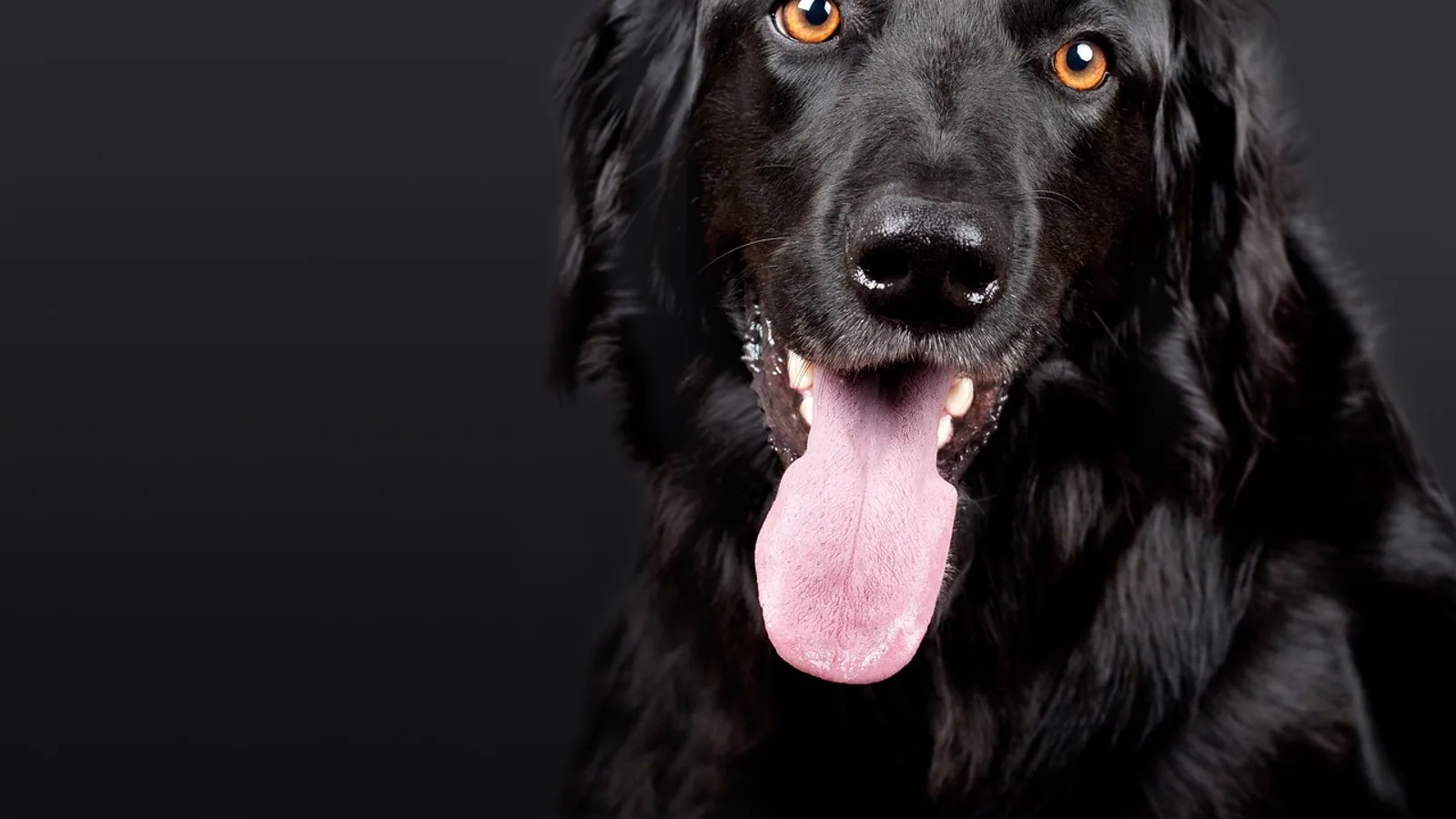
The Black Russian Terrier is a large, powerful, heavily coated working dog developed in the Soviet Union after World War II for military and guard duty. The breed is also called the Russian Terrier or BRT. Despite the name, it is not a true terrier. It was built from a mix of large working breeds to produce a hardy, weather-resistant guard dog that could handle the Soviet climate and the demands of service work [1]. Modern owners describe the breed as calm, confident, and territorial, which makes it a serious choice for experienced handlers rather than first-time dog owners.
This guide covers where the breed came from, how big it grows, what its temperament and grooming demands are really like, and the inherited health conditions that responsible breeders and veterinarians screen for. It focuses on the specific conditions with published genetic and clinical data in the breed, including a juvenile neurologic disease, a urinary stone disorder, several orthopedic problems, eye disease, and heart disease.
This article is educational and is not a substitute for veterinary diagnosis or treatment.
At a Glance
| Attribute | Detail |
|---|---|
| Other names | Russian Terrier, BRT, Black Russian Terrier |
| Origin | Soviet Union, after World War II |
| Original purpose | Military, guard, and service work |
| Breed group | Working and guard dog, not a true terrier |
| Size | Large to giant |
| Weight | Roughly 36 to 65 kg (80 to 145 lb) for adult dogs |
| Height | Roughly 66 to 76 cm (26 to 30 in) at the withers |
| Coat | Dense double coat with a thick, weather-resistant outer layer |
| Grooming | High, requires frequent brushing plus periodic trimming |
| Energy level | Moderate to high, needs daily structured exercise |
| Trainability | High, but best suited to experienced owners |
| Good with children | Often good with respectful children in a supervised home |
| Good with other pets | Variable, strong prey and territorial drives are possible |
| Common health concerns | Neurologic disease, hyperuricosuria, hip and elbow dysplasia, eye disease, heart disease, some tumors |
What Kind of Dog Is the Black Russian Terrier?
The Black Russian Terrier is a giant working breed, not a small rodent-hunting terrier. The confusion comes from the name alone. In function and build, the breed is closer to a guard dog and military service dog than to any terrier.
Several nicknames circulate for the breed in English, including "bear dog" and "bear dog Russia." Owners use these terms because the BRT has a massive, bear-like body and a thick black coat. The bear comparison is informal. The breed is not related to bears and is a domestic dog, part of the family Canidae. Genetic work comparing large breeds placed the Black Russian Terrier in a cluster with the German Shepherd and Swedish Elkhound [1], a grouping that reflects shared large working-dog ancestry rather than any connection to wildlife.
The breed exists because Soviet planners wanted a dog that could handle cold weather, work long hours, and defend a territory. The result is a dog with moderate energy for its size, a strong protective instinct, and a coat built for harsh conditions. These traits shaped both the breed standard and the health problems that appear in the population today.
History and Purpose of the Russian Terrier
The Black Russian Terrier was developed in the Soviet Union after World War II. The breed was created for military and guard work, and it was shaped for service rather than for the show ring. Breeders combined several large working and herding breeds to produce a dog with the strength, coat, and temperament needed for protection and patrol tasks.
Genetic analysis supports the breed's place among large working dogs. A mitochondrial DNA study that examined the Tibetan Mastiff and twelve other domestic breeds clustered the German Shepherd, Swedish Elkhound, and Black Russian Terrier in one group, while the Tibetan Mastiff, Old English Sheepdog, Leonberger, and Saint Bernard grouped together [1]. This work also confirmed that domestic dogs, including the BRT, descend from the gray wolf [1]. The grouping is useful for owners because it frames the BRT as a member of the large working-dog lineage, which is consistent with its physical build and drive.
Because the breed was developed as a working animal, its original selection pressures favored function over appearance. Dogs had to be physically sound, tolerant of cold, and capable of guarding. Those pressures also concentrated certain genetic traits within a closed population, which is one reason several inherited conditions appear at recognizable rates in the breed. When a breed is built from a limited founder group and then expanded, recessive conditions can become more common. The juvenile neurologic disease discussed below follows exactly that pattern [2].
Size, Appearance, and Coat
The Black Russian Terrier is a large, muscular, well-boned dog. Adults commonly fall in roughly the 36 to 65 kg (80 to 145 lb) range, with males generally heavier and taller than females. Height at the withers is typically about 66 to 76 cm (26 to 30 in). Individual dogs can fall above or below these ranges. Because the breed is still growing through the first year and beyond, adult size should be judged from the parents and the breeder's records rather than from a puppy's size at eight weeks.
The most distinctive feature is the coat. The BRT has a dense double coat made up of a thick, weather-resistant outer layer and a soft, insulating undercoat. The breed standard calls for a black coat, which is where the full name comes from. The coat protects the dog in cold and wet conditions, which suited the breed's original working environment, but it also means the dog sheds a great deal and traps debris, moisture, and mats.
Facial furnishings, including the beard and eyebrows, are part of the breed's look. They also collect food, water, and saliva, so owners should expect to clean the face and the beard regularly. Between grooming appointments, the coat needs frequent attention. A neglected BRT coat mats close to the skin, and matting is painful and can hide skin problems.
Temperament and Behavior
The Black Russian Terrier is typically calm, confident, and watchful at home. The breed was created to guard, and that background shows in a strong territorial instinct and a tendency to notice and announce changes in its environment. Many BRTs are reserved with strangers and need careful, positive introductions to new people.
Temperament varies by individual and by early socialization. A well-socialized BRT can be steady and gentle with family members, including children, when interactions are supervised and children are taught to respect the dog. The breed is large and powerful, so even friendly body contact can knock over a small child. Supervision during play is a safety issue, not a training preference.
Because the breed has guarding instincts and significant size, it suits experienced owners who can provide clear structure, consistent training, and secure containment. Owners who want a dog that greets every visitor with enthusiasm may find the BRT's reserved nature frustrating. Owners who want a calm, imposing companion that takes its job seriously often find the breed rewarding.
The breed's drive to protect can interact poorly with unfamiliar dogs and small animals if the dog was not socialized early. Some BRTs are fine with other pets they were raised with, and others show strong prey or territorial behavior. Early, ongoing socialization and management are the practical tools here.
Exercise and Training Needs
The Black Russian Terrier is a working breed with moderate to high exercise needs. Daily structured exercise matters more than endless free running, because the breed was selected to work alongside people. Walks, training sessions, and controlled play all serve the breed well.
Training should begin early. The breed is intelligent and capable, but it can also be independent and strong-willed. Short, consistent sessions with clear rules and rewards work better than harsh corrections. Because the dog will grow into a powerful adult, teaching loose-leash walking, reliable recalls, and calm greetings while the dog is still small is far easier than fixing those habits later.
Mental work matters as much as physical exercise. Guarding breeds that are left without a job or a routine often develop problem behaviors such as excessive barking, destructive chewing, or pacing. Structured tasks, obedience training, and scent or trick work give the dog a constructive outlet.
Secure fencing is essential. A large, territorial, powerful dog should not be left in an unsecured yard. Owners should also plan for the breed's strong reaction to strangers and consider how the dog will be managed when guests arrive.
Grooming Demands
Grooming is the single largest ongoing commitment for most BRT owners. The dense double coat requires frequent brushing, typically several times a week, and periodic trimming or stripping to keep the coat healthy and manageable. Owners should budget both time and money for professional grooming.
Key grooming tasks include:
- Brushing the coat down to the skin several times a week to prevent mats.
- Line brushing in sections so the undercoat does not compact.
- Cleaning and drying the beard and facial furnishings after meals and water.
- Checking the ears regularly, especially given the breed's heavy ear furnishings.
- Trimming nails on a regular schedule.
- Bathing as needed, followed by thorough drying so the dense coat does not stay damp against the skin.
Because the coat is so thick, skin problems can go unnoticed until they are advanced. Owners who groom at home should part the coat and look at the skin regularly. Any hot spots, lumps, or unusual odor should be evaluated by a veterinarian.
Feeding Considerations
Feeding should match the dog's life stage, body condition, and activity level. Large and giant breeds have specific nutritional needs during growth, and feeding a growing BRT into excessive body condition can add stress to developing joints. Owners should ask their veterinarian for a feeding plan suited to the individual dog, because diet selection and portion size depend on age, weight, activity, and any diagnosed condition.
One breed-specific feeding concern relates to uric acid stones. A study of Black Russian Terriers found that a specific genetic mutation associated with hyperuricosuria, first identified in Dalmatians, also appears to cause hyperuricosuria in BRTs [3]. In that study, the allele frequency of the mutation was 0.51 in BRTs, and about 27 percent of the BRT population was estimated to be hyperuricosuric [3]. Dogs that form urate stones may need a specific diet and management plan, which a veterinarian should design after diagnosis. Owners should not change a dog's diet or add supplements to treat a suspected stone problem without veterinary guidance.
Inherited and Common Health Problems
The Black Russian Terrier is a closed-population breed with several recognized inherited conditions. Responsible breeders screen for these conditions with a mix of genetic testing, imaging, and clinical examination. Breed clubs recommend screening so that affected dogs are not bred and so that carriers can be managed. The table below lists the main conditions, the screening method, and the typical age at which screening is performed.
| Condition | Screening method | Typical age at screening |
|---|---|---|
| Polyneuropathy with ocular abnormalities and neuronal vacuolation (POANV) | DNA test for the RAB3GAP1:c.743delC mutation | Any age, usually before breeding |
| Hyperuricosuria and urate urolithiasis | DNA test for the SLC2A9 Cys181Phe mutation plus urine uric acid to creatinine ratio | Any age, before breeding and when stones are suspected |
| Hip dysplasia | Hip radiographs (OFA, PennHIP, or equivalent) | Around 2 years for official hip evaluation |
| Elbow dysplasia | Elbow radiographs | Around 2 years for official elbow evaluation |
| Progressive retinal atrophy and other eye disease | Veterinary ophthalmologist examination | Annually, starting before breeding |
| Cardiac disease | Veterinary cardiologist examination, including auscultation and echocardiography as needed | Before breeding and when a murmur is found |
| Tumors, including melanoma | Veterinary examination, biopsy and histopathology | When a mass is found |
Polyneuropathy with Ocular Abnormalities and Neuronal Vacuolation
A serious inherited neurologic disease affects Black Russian Terriers. It was previously described as a juvenile-onset laryngeal paralysis and polyneuropathy similar to Charcot-Marie-Tooth disease in humans, and affected dogs also show microphthalmia, cataracts, and miotic pupils [2]. On histopathology, affected dogs have a spongiform encephalopathy with abnormal membrane-bound vacuoles in neuronal cell bodies, axons, and adrenal cells [2]. The condition is called polyneuropathy with ocular abnormalities and neuronal vacuolation, or POANV.
The underlying cause is an autosomal recessive mutation. Researchers used whole genome sequencing from an affected dog and identified a homozygous RAB3GAP1:c.743delC mutation that was absent from 73 control canine whole genome sequences [2]. An additional 12 Black Russian Terriers with POANV were homozygous for the same mutation [2]. DNA from 249 Black Russian Terriers with no known signs of POANV were either heterozygotes or homozygous for the reference allele [2]. Mutations in the human version of this gene cause Warburg micro syndrome, a severe developmental disorder involving the eyes, genitals, and nervous system, including a predominantly axonal peripheral neuropathy [2].
The practical implication is that the disease follows a recessive pattern. Two carriers can produce affected puppies. A DNA test lets breeders identify carriers before mating, which is why testing is a core part of responsible breeding in the breed. The neurologic findings also fit a broader picture in veterinary neurology. Inherited motor and sensory neuropathies form a group of degenerative diseases affecting motor, sensory, and autonomic peripheral nerves in dogs, and degenerative neuropathies have been described in Russian Black Terriers [4].
Hyperuricosuria and Urate Urolithiasis
Black Russian Terriers are known to form urate stones. A study of 101 BRTs found significantly higher urinary uric acid to creatinine ratios in some dogs compared with other dogs of the same breed, and those dogs were homozygous for the SLC2A9 Cys181Phe mutation [3]. The allele frequency of this mutation was 0.51 in BRTs, and about 27 percent of the BRT population was estimated to be hyperuricosuric on the basis of that frequency [3]. These results suggested that the mutation linked to hyperuricosuria in Dalmatians also causes hyperuricosuria in BRTs, and that similar management strategies apply [3].
Hyperuricosuria is a risk factor for urate bladder stones. Stones can cause straining to urinate, blood in the urine, frequent attempts to urinate, or a blockage that is a medical emergency. Owners should treat any of these signs as urgent. A DNA test identifies the genetic status of a dog, and a urine uric acid to creatinine ratio can help assess whether a dog is actually hyperuricosuric. The two tests answer different questions, which is why both appear in screening protocols.
Hip and Elbow Dysplasia
Hip and elbow dysplasia are developmental orthopedic problems in large and giant breeds. Dysplasia means abnormal development of the joint, and it can lead to arthritis, pain, and lameness. The Black Russian Terrier's size and rapid growth make it a breed where joint screening matters.
Hip and elbow evaluations use radiographs, with official evaluations typically performed when the dog is about two years old and the growth plates have closed. Earlier radiographs can identify problems but may not give a final grade. Breeders use these evaluations to select breeding dogs with sound joints. Owners should ask to see the hip and elbow results of the parents of any puppy they consider.
Progressive Retinal Atrophy and Other Eye Disease
Progressive retinal atrophy describes a group of inherited conditions in which the retina degenerates over time, leading to vision loss. The BRT also has other eye conditions documented in the breed. The POANV disease described above includes microphthalmia, cataracts, and miotic pupils, which means eye abnormalities in a BRT are not automatically a separate condition [2]. A veterinary ophthalmologist examination is the standard screening tool, and the same examination documents changes in the lens, retina, and other eye structures.
Because some eye changes progress and some are stable, breeding dogs should have regular examinations rather than a single one-time check. Owners who notice a change in their dog's vision, a change in the appearance of the eye, or signs such as bumping into objects should schedule an examination.
Cardiac Disease
Heart disease appears in the breed, and screening is part of the recommended approach. A veterinary cardiologist examination can identify murmurs and other abnormalities, and echocardiography can define the specific problem when one is found. For some heart conditions, an inherited pattern has been suggested, but a specific mutation has not been identified in dogs for the neuropathies the way it has been for POANV [4]. Owners should follow their veterinarian's plan for follow-up once a murmur or other abnormality is detected.
Tumors, Including Melanoma
Cancer is a concern in the breed. Data from the Swiss Canine Cancer Registry, drawn from 54,986 tumors diagnosed by histology and cytology at four Swiss veterinary pathology laboratories between 2008 and 2020, uncovered potential novel breed-specific predispositions [5]. The registry reported high incidence rates for malignant tumors in Russian Black Terriers, specifically melanomas [5]. Other findings in that registry included high overall tumor incidence rates in another large breed and high rates of adenocarcinoma in a different breed [5].
The registry data come from a specific population and a defined period, so the numbers should not be read as a personal prediction for an individual dog. They do support regular veterinary examinations and prompt evaluation of any new lump, changing skin lesion, or unexplained weight loss. Early detection matters for many tumor types, and a veterinarian can examine, sample, and stage a suspicious mass.
Screening Recommendations for Breeders and Owners
Breed clubs recommend screening because the breed's health problems are largely inherited and some are devastating. The recommended approach combines genetic testing, imaging, eye examination, and cardiac examination. Breeders who follow the protocol test for the RAB3GAP1:c.743delC mutation and the SLC2A9 Cys181Phe mutation, obtain hip and elbow radiographs, have breeding dogs examined by a veterinary ophthalmologist, and have the heart evaluated by a veterinarian [2][3].
Owners can support this work in practical ways:
- Ask the breeder for documentation of parent screening results.
- Ask specifically whether the parents were tested for POANV and hyperuricosuria.
- Ask for hip and elbow results, not just a verbal assurance.
- Keep records of your own dog's examinations and share them with your veterinarian over time.
- Report a diagnosis to the breeder, which helps the breeder adjust future pairings.
Screening is not a guarantee. A dog with normal results on all available tests can still develop a condition later, and a carrier dog can be healthy itself while passing a recessive gene to offspring. The value of screening is population-level: it lowers the chance that an affected dog is produced and gives owners better information.
Which Bear Dog Nickname Applies to the BRT?
The "bear dog Russia" and "bear dog russian" nicknames describe the BRT's appearance. The breed has a heavy frame, a broad head, and a black double coat that resembles a small bear at a distance. The comparison is a description, not a taxonomic claim. The same Russian origin also applies to other large breeds such as the Caucasian Shepherd and the South Russian Shepherd, and some breed guides use "bear dog" loosely for several of them.
Owners searching for "bear russian dog" should confirm which breed a listing actually describes, because the informal nickname does not identify one specific breed. The Black Russian Terrier is the breed with military and guard origins that developed in the Soviet Union after World War II, and it is the breed described in the health literature on POANV and hyperuricosuria [2][3].
Finding a Responsible Breeder or Rescue
A responsible breeder in this breed should be able to discuss health testing in detail, show results for the parents, and explain how the breed's inherited conditions affect breeding decisions. Buyers should ask which tests were performed, when they were performed, and what the results showed.
Useful questions for a breeder:
- Have both parents been tested for the RAB3GAP1:c.743delC mutation?
- Have both parents been tested for the SLC2A9 Cys181Phe mutation?
- What were the parents' hip and elbow evaluation results?
- When were the parents last examined by a veterinary ophthalmologist?
- Has either parent had a cardiac examination?
- Can I meet the dam and see the puppies' environment?
- What is the breed club's recommended screening protocol, and how did you follow it?
- What health guarantees do you provide, and what do they cover?
Rescue is a strong option for this breed. Adult BRTs that need rehoming are occasionally available through breed-specific rescue organizations. Rescue dogs often come with unknown health histories, so a full veterinary examination and baseline screening after adoption is a sensible early step. Rescue staff can also tell you about the dog's temperament, which matters for a breed with strong guarding instincts.
Owners should be cautious about any breeder who cannot provide documentation, who dismisses questions about health testing, or who produces multiple litters without regard to the breed's known conditions.
Who Should Not Get This Breed
The Black Russian Terrier is not a fit for every household. Prospective owners should think carefully about these factors:
- First-time dog owners. The breed is large, powerful, and territorial. It benefits from an owner who has handled a strong working breed before.
- Owners who want low grooming demands. The dense double coat needs frequent brushing and periodic trimming for the dog's lifetime.
- Owners in apartments with no plan for daily exercise. The breed needs structured daily activity and mental work.
- Owners who want a dog that is friendly with everyone. BRTs are often reserved with strangers.
- Owners who cannot secure the yard. A giant guard breed needs secure containment.
- Owners who cannot fund routine care and screening. Large breeds, thick coats, and inherited conditions all carry real ongoing costs.
- Owners who want a dog to live outdoors full time. The breed is a family dog with strong social needs despite its working origins.
Households with very young children, elderly adults who are unsteady on their feet, or frequent visitors who dislike large dogs should consider whether the breed's size and guarding instinct fit their daily life.
Limitations and When to Contact a Veterinarian
This guide describes the breed in general terms. Individual dogs vary in size, temperament, and health, and a veterinarian who examines your dog can give advice specific to that animal.
Contact a veterinarian promptly if you notice any of the following:
- Difficulty breathing, noisy breathing, or a change in bark that could indicate laryngeal or airway problems.
- Vision changes, cloudiness in the eye, or a dog that bumps into objects.
- Straining to urinate, frequent urination attempts, blood in the urine, or an inability to pass urine (this is an emergency).
- Lameness, stiffness after rest, reluctance to climb stairs, or reluctance to rise.
- A new lump, a changing skin lesion, unexplained weight loss, or loss of appetite.
- A new murmur, fainting, exercise intolerance, or a persistent cough.
- Weakness, wobbliness, or a change in gait that could signal a neurologic problem.
- Skin lesions, hot spots, or a persistent odor under the coat.
Genetic testing and screening examinations do not diagnose a dog with a disease on their own. A veterinarian interprets test results alongside the physical examination and history. If your dog has been diagnosed with POANV, hyperuricosuria, dysplasia, eye disease, or a tumor, follow the treatment and follow-up plan your veterinarian provides.
Frequently Asked Questions
Is the Black Russian Terrier a true terrier?
No, the Black Russian Terrier is not a true terrier. The breed was developed in the Soviet Union after World War II for military and guard work, and its name reflects that history rather than any terrier ancestry.
How big does a Black Russian Terrier get?
Adults commonly reach roughly 36 to 65 kg (80 to 145 lb) and about 66 to 76 cm (26 to 30 in) at the withers. Males tend to be larger than females. Individual dogs can fall outside these ranges.
Why is the Black Russian Terrier called a bear dog?
The bear dog nickname comes from the breed's heavy frame and thick black coat, which give it a bear-like silhouette. The comparison is informal and does not mean the breed is related to bears.
Does the Black Russian Terrier need a lot of grooming?
Yes, the dense double coat requires frequent brushing, usually several times a week, plus periodic trimming or stripping. The beard and facial furnishings also need regular cleaning.
What inherited disease is best documented in the breed?
Polyneuropathy with ocular abnormalities and neuronal vacuolation, or POANV, is well documented. It is caused by an autosomal recessive RAB3GAP1:c.743delC mutation, and a DNA test lets breeders identify carriers.
Do Black Russian Terriers get bladder stones?
They can. A genetic mutation linked to hyperuricosuria appears at a high frequency in the breed, and about 27 percent of the BRT population was estimated to be hyperuricosuric in one study. Urate stones can cause painful or dangerous urinary signs.
What screening tests should a breeder perform?
Breeders should test for the RAB3GAP1 and SLC2A9 mutations, obtain hip and elbow radiographs, arrange veterinary ophthalmologist examinations, and have the heart evaluated. Breed clubs recommend this type of screening.
Are Black Russian Terriers good with children?
Many BRTs are steady and gentle with respectful children when interactions are supervised. The breed's size means even friendly contact can knock a child over, so supervision is a safety measure.
Related Articles
- Russian Blue Cat: Complete Breed Guide, Personality & Care Tips
- Russian Tortoise Diet Guide
- Russian Tortoise Care Guide
- Black Cat
- Fencing and Barriers for Apiary Protection from Bears and Other Predators
- Bearded Dragon Black Beard Meaning
- Sable Animal: Species, Habitat and Fur Biology
- Norwich Terrier: Breed Traits and Health Problems
- Black Copper Maran: Eggs and Breed Guide
Sources
- Origin and phylogenetic analysis of Tibetan Mastiff based on the mitochondrial DNA sequence.
- A mutation in the Warburg syndrome gene, RAB3GAP1, causes a similar syndrome with polyneuropathy and neuronal vacuolation in Black Russian Terrier dogs.
- Validation of a urine test and characterization of the putative genetic mutation for hyperuricosuria in Bulldogs and Black Russian Terriers.
- Canine inherited motor and sensory neuropathies: an updated classification in 22 breeds and comparison to Charcot-Marie-Tooth disease.
- Incidence rates of the most common canine tumors based on data from the Swiss Canine Cancer Registry (2008 to 2020).