Why Do Puppies Jump So Much? Is It Bad for Them?
By Dr. Zubair Khalid, DVM, MS, PhD ·
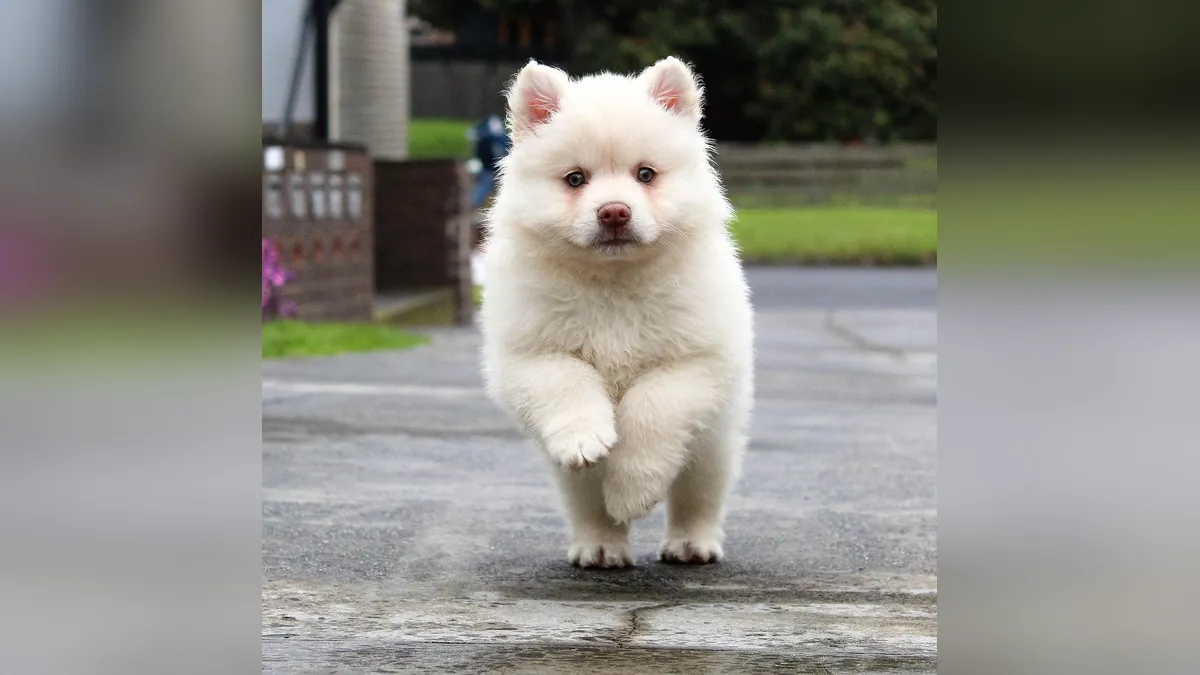
Puppies jump up because it is a normal greeting and play behavior, and most of the time it does not harm their joints. The bigger concerns are the wear and tear of repeated high-impact landings and the fact that jumping on people usually gets rewarded with attention. This article is educational and is not a substitute for veterinary diagnosis or treatment.
Quick Answer
- Jumping up is normal puppy behavior. It is how puppies reach faces, get attention, and release excitement [1].
- Occasional jumping on soft ground is usually fine. Repeated jumps onto and off hard, high surfaces are where joint stress adds up [2].
- Puppies are not perfectly balanced when they jump. In one study, even healthy adult dogs landed with less than 90% symmetry between their left and right legs [2].
- The fix is management plus reward. Keep four paws on the floor, ask for a sit, and pay only when the puppy is calm [1].
- Never yell, hit, or knee a puppy in the chest. It can hurt, confuse, or excite them more [1].
Why Puppies Jump Up So Much
It is a greeting behavior
Puppies jump to reach your face. That is where scent, breath, and social contact happen. When a puppy plants two paws on your shins and stretches up, they are trying to get closer to your eyes and mouth. This is normal canine greeting, and it peaks during excited reunions.
It works, so it repeats
If jumping gets a laugh, a push, a knee, or a "down!" in a loud voice, the puppy learns that jumping starts the interaction. Any attention can be a reward. That is why the behavior often gets worse before it gets better when owners first try to ignore it.
Excitement and under-exercised energy
Jumping is common when a puppy is over-aroused. Leash time, doorways, and the moment you pick up the leash are classic trigger points [1]. A puppy who has been crated or alone for hours often has a full tank of energy and no polite way to spend it.
Play and social signaling
Puppies also jump during play with other dogs and with people. It is part of wrestling, chasing, and body-slamming games. This is normal, but it is also the behavior that gets reinforced every time a playmate responds.
Breed and body type
Some breeds are built to bounce. Terriers, herding breeds, and sporting breeds often jump more readily. Small dogs may also jump more because they are closer to the ground and get less distance per stride. Size matters for landing mechanics too, since smaller dogs tend to show more asymmetry and variation when jumping on and off a platform [2].
Is Jumping Bad for a Puppy's Growing Joints?
This is the question most owners really want answered, and the honest answer is: it depends on how much, how high, and how often.
What the research shows
Researchers measured healthy dogs jumping onto and off a platform set near their shoulder height. The dogs were less than 90% symmetric between their left and right limbs on both the jump up and the jump down [2]. Smaller dogs were more likely to be asymmetric and more variable in their landings [2]. That does not mean jumping is harmful. It means the body does not land perfectly evenly, and the smaller the dog, the more that variation shows up [2].
Growth plates are the real concern
Puppies have open growth plates in their leg bones until roughly 12 to 18 months of age, depending on breed and size. Growth plate injuries are a genuine risk with repeated high-impact landings, hard surfaces, and jumps from heights well above the puppy's shoulder. Your veterinarian can tell you when your puppy's growth plates are likely closed based on breed and size.
Practical limits
There is no single published number for how many jumps per day is safe for a puppy. That threshold is not well established in veterinary research, and it varies with breed, age, body condition, and surface. A reasonable approach is to limit repetitive high jumps (onto beds, couches, tailgates, and out of cars), favor low-impact play, and let your veterinarian set specific limits for your puppy.
Signs a jump hurt
Watch for yelping at the moment of landing, reluctance to rise after a jump, stiffness after rest, or a sudden change in gait. These are reasons to call your veterinarian, not to wait and see.
Medical Causes to Rule Out
Most jumping is behavioral, but a few medical problems can make a puppy jump more, jump oddly, or seem unable to settle.
Pain or discomfort
A puppy with a sore hip, knee, or spine may jump up to avoid bearing weight normally, or may become restless and bouncy when uncomfortable. If jumping started suddenly in a puppy who was previously calm, a pain check is reasonable.
Neurologic problems
Conditions affecting balance or coordination can produce unusual, repetitive, or poorly controlled movements. A puppy who seems to "bounce" involuntarily, or who cannot land normally, needs a veterinary exam.
Skin and parasite irritation
Itching from fleas, mites, or allergies can cause frantic, jumpy behavior. If your puppy is also scooting or chewing at their rear, see Why Is My Dog Scooting?.
Metabolic and hormonal issues
Increased thirst, urination, appetite, or restlessness can point to problems beyond behavior. If your puppy is also drinking and peeing more than usual, see Why Is My Dog Peeing So Much?. If they are panting heavily at rest, see Why Is My Dog Panting So Much?.
Vision or hearing changes
A puppy who cannot see or hear you well may jump toward you to make contact. A veterinary exam can sort this out.
When Puppy Jumping Becomes a Problem
Jumping is a problem when it causes injury, fear, or conflict. Common trouble signs include:
- Scratching or bruising people, especially children, older adults, and anyone with thin skin
- Knocking over a toddler or an adult with balance problems
- Jumping on guests who are afraid of dogs
- Jumping on counters or tables to grab food
- Jumping in the car or at the door and bolting
- Jumping that continues past 6 to 12 months of age with no improvement
- Jumping paired with barking, nipping, or mounting
Behavior that starts in puppyhood and is never redirected often continues into adolescence. Jumping up at handlers during walks is described as a common behavior in adolescent dogs [1], which is exactly why early training matters.
What to Do: Step by Step
Step 1: Remove the reward
Every jump should end the fun. Turn away, cross your arms, and wait. When four paws are on the floor, re-engage. The ASPCA guidance is to only open the door, release a treat, or continue the walk when all four feet are on the ground [1].
Step 2: Ask for a sit
Teach a solid sit and use it as the default greeting. If your puppy does not know sit yet, simply wait until all four paws are on the floor [1]. Sitting or standing are both fine, as long as the puppy is not jumping [1].
Step 3: Keep greetings calm
Start each walk calmly. Use a calm tone and avoid exciting phrases like "do you want to go for a walk?" [1]. The same rule applies at the front door. A calm arrival gets a calm dog.
Step 4: Deliver treats low and fast
Move your hand quickly down to your puppy's muzzle so they do not have to raise their head to take the treat. Bringing the treat down slowly invites a jump [1]. Reward the position you want, not the jump you are trying to stop.
Step 5: Practice in short sessions
Five to ten repetitions, several times a day, beats one long session. Practice with family members first, then friends, then strangers. Add distance and distraction slowly.
Step 6: Build enrichment and exercise
A tired puppy jumps less. Provide sniff walks, food puzzles, chew toys, and training games. Keep high-impact jumping to a minimum while growth plates are open. For more on redirecting the behavior, see Dog Training Tips For Jumping Up.
Step 7: Manage the environment
Use baby gates, exercise pens, and tethers during high-traffic times. Put a mat by the door and reward your puppy for going to it. Block access to furniture you do not want them launching onto. If you cannot supervise, crate or confine.
Step 8: Teach an alternative behavior
Teach "go to your mat," "sit," or "four on the floor." A puppy cannot jump and hold a down-stay at the same time. Give them a job that pays better than jumping.
What Not to Do
Do not punish with yelling, hitting, or kneeing
The ASPCA specifically warns against yelling, hitting, or kneeing a dog in the chest. It can hurt and confuse your dog, or make them more excited and jump more frantically [1]. Punishment also damages the trust you need for training.
Do not push off or grab the paws
Pushing is contact, and contact is often a reward. Grabbing paws can also be painful if there is an underlying injury.
Do not assume it is dominance
Jumping is not a power play. It is excitement, greeting, and habit. Framing it as dominance leads owners toward punishment, which makes the behavior worse.
Do not expect instant results
Jumping is a strongly practiced habit. Expect weeks of consistent work, not days. Progress is often uneven, especially during adolescence.
Do not skip socialization
The socialization window runs roughly 3 to 12 weeks of age, when puppies form primary social bonds and adapt to new experiences [3]. Puppies adopted at 1 or 2 months showed more fear, anxiety, and attention-seeking behaviors as adults compared to those adopted later [3]. Calm, positive exposure to people during this window supports better adult behavior. Reputable small-scale breeders often emphasize early-life care, socialization, and training [4], and those early habits carry forward.
When to Involve a Veterinarian or Behavior Professional
Call your veterinarian if your puppy:
- Yelps, limps, or refuses to rise after jumping
- Has a sudden change in gait, posture, or willingness to play
- Shows swelling, heat, or pain in a joint
- Jumps in a way that looks involuntary or uncoordinated
- Has other symptoms like vomiting, diarrhea, or appetite loss
Ask for a referral to a board-certified veterinary behaviorist or a certified applied animal behaviorist if:
- Jumping continues despite consistent training for 8 to 12 weeks
- Jumping is paired with growling, snapping, or biting
- Your puppy injures people or themselves
- You feel unsafe or overwhelmed
- There are children, older adults, or immunocompromised people in the home
Limitations and When to Contact a Veterinarian
No article can tell you whether your specific puppy's joints are safe. Growth rate, breed, body condition, surface, and jump height all matter, and your veterinarian is the only one who can examine your puppy and give you a real answer.
Contact your veterinarian the same day if your puppy yelps during a jump, lands awkwardly and then refuses to walk, or shows sudden lameness. Go to an emergency clinic immediately if there is an obvious fracture, a limb held at an abnormal angle, non-weight-bearing lameness, collapse, or a jump followed by vomiting, tremors, or unresponsiveness.
Schedule a routine visit if the jumping is new, if it is getting worse, if your puppy seems uncomfortable after activity, or if you want guidance on safe exercise limits during growth. Bring a short video of the jumping behavior. It helps your veterinarian see what you see.
Frequently Asked Questions
Do puppies jump a lot?
Yes, jumping is one of the most common puppy behaviors. Puppies jump to greet, to play, and to release excitement, and the behavior often peaks during adolescence [1]. It usually improves with consistent training and maturity.
Should puppies not jump at all?
Puppies can jump, but repeated high-impact jumping onto and off hard, high surfaces is best limited while growth plates are open. Even healthy adult dogs land with less than perfect left-right symmetry when jumping on and off a platform [2], so moderation and safe surfaces make sense.
Is it bad for puppies to jump on people?
Jumping on people is not physically harmful to the puppy in most cases, but it can hurt the person and it teaches the puppy that jumping works. Redirect to a sit and reward four paws on the floor [1].
At what age should puppy jumping stop?
There is no fixed age. Many puppies improve between 6 and 12 months with consistent training, but jumping up at handlers is still described as common in adolescent dogs [1]. If your puppy is past a year and still jumping, get professional help.
Can jumping cause long-term joint damage?
Repeated high-impact landings during growth can stress open growth plates, but the exact risk for any individual puppy is not well established in veterinary research. Your veterinarian can assess your puppy's growth stage and set safe activity limits.
Does early adoption affect jumping and attention-seeking?
It can. Puppies adopted at 1 or 2 months showed higher signs of fear, anxiety, and attention-seeking than those adopted later in one study of 107 dogs [3]. That does not doom your puppy, but it does mean calm, consistent training matters even more.
Related Articles
- Dog Training Tips For Jumping Up
- Why Is My Dog Panting So Much?
- Why Is My Dog Scooting?
- Why Is My Dog Peeing So Much?
- Why Is My Dog Gaining Weight?
- Why Is My Dog Suddenly Scared of the Stairs?
- Why Does My Puppy Jump on Me? Stopping Jumping Up
- Is It Bad for Dogs to Jump Off Beds and Couches?
- Dog Jumped After Surgery: Is It Dangerous?
References
- Jumping Up on Walks. ASPCA Animal Poison Control Center.
- Orthopedically normal dogs are asymmetric during standing platform jump up and down. American journal of veterinary research, 2026.
- The Puppies' Age at Adoption Time Influences the Behavioral Responses of Adult Dog. Veterinary sciences, 2025.
- A Survey of Reported Practices and Values of Smaller-Scale Dog Breeders in Canada. Animals : an open access journal from MDPI, 2026.