Why Does My Puppy Jump on Me? Stopping Jumping Up
By Dr. Zubair Khalid, DVM, MS, PhD ·
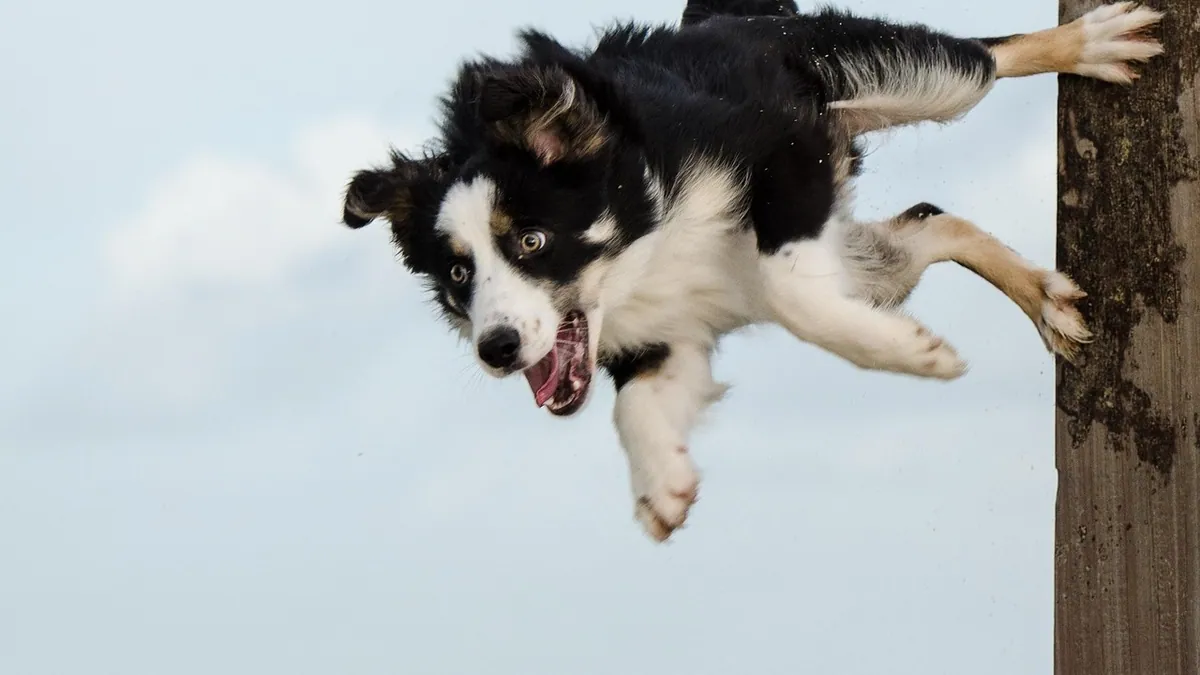
Puppies jump on people because jumping is a normal canine greeting and attention-seeking behavior, and it usually works. Your puppy learns fast that leaping up gets eyes, hands, voice, and sometimes a treat or a push away. The fix is not punishment. It is consistent, calm training that rewards four paws on the floor.
This article is educational and is not a substitute for veterinary diagnosis or treatment.
Quick Answer
- Jumping is normal dog behavior. Puppies jump to greet, to get attention, and to release excitement.
- Any reaction, including pushing, kneeing, yelling, or eye contact, can reward the jump.
- Teach an incompatible behavior. A sit or a hand target gives your puppy something to do instead of jumping.
- Everyone in the household and every visitor must respond the same way, every single time.
- Sudden new jumping, or jumping paired with pain signs, limping, or behavior change, needs a veterinary visit.
Why Does My Puppy Jump on Me? The Normal Reasons
Jumping starts as a greeting. Dogs greet each other face to face, and a puppy who wants to sniff your face has to come up to get there. When your puppy jumps, your face comes closer, your hands move, and your voice usually starts. From your puppy's point of view, the jump worked.
Attention is the second driver. Puppies have a short list of behaviors that reliably get a human response. Jumping is on that list. Even scolding is a response, and for many puppies, any attention beats no attention.
Excitement is the third driver. Coming home, a visitor at the door, or the leash coming out all raise arousal. High arousal makes jumping more likely and makes it harder for your puppy to hear a cue.
Why does my dog jump on me when I come home?
Homecoming is the highest-value greeting of the day. You were gone, now you are back, and your puppy is flooded with relief and excitement. If you have ever petted your puppy while it was jumping, you paid for the jump. The behavior will repeat tomorrow.
Why does my puppy jump on me during walks?
Walks add novelty, other dogs, and strangers. Your puppy may jump on you when it wants to move forward, when it is frustrated by the leash, or when it is over-aroused by something ahead. Jumping during walks is often a sign that the environment is too much right now.
Why does my dog keep jumping on me?
If the jumping keeps happening, the reward is still there somewhere. Common leaks include one family member who pets the dog mid-jump, guests who say "it's fine, I love dogs," and inconsistent rules between home and the street. Dogs do what gets reinforced.
Medical Causes to Rule Out
Most jumping is behavioral, but a veterinarian should check for pain or illness when jumping is new, sudden, or out of character. A puppy who was never a jumper and now leaps at you while whining may be uncomfortable, not rude.
Orthopedic pain is a common reason for changed movement. In sound dogs, jumping is not perfectly symmetric. Mean symmetry for jumping up onto a platform was 83.91% for the hind limbs, and jumping down was 74.94% for the forelimbs, with smaller dogs showing more asymmetry and more variation between attempts [1]. A separate study of stationary jump tests found mean hind limb symmetry of 83.27% for a stand-to-head-height jump and 73.49% for a stand-to-withers-height jump with side rails [2]. These numbers come from healthy dogs, which means small differences are normal. Large, sudden changes are not.
Body shape also affects how a dog jumps. In agility dogs, body weight and body weight-to-height ratio significantly influenced jump kinematics, with heavier dogs showing greater jump heights at take-off, over the hurdle, and at landing, and shorter jump distances [3]. A puppy carrying extra weight may find jumping harder and may show more effort or reluctance.
Other medical factors to discuss with your veterinarian include skin allergies or fleas that make a puppy restless, gastrointestinal discomfort, and vision or hearing changes. If your puppy is also scooting, that is a separate problem worth a look (see Why Is My Dog Scooting?).
When Jumping Becomes a Problem
Jumping is a problem when it causes injury or fear. A large puppy can knock over a child, an older adult, or someone using a walker. Jumping can scratch skin, snag clothing, and scare visitors who then avoid your home.
It is also a problem when it happens constantly, not just at greetings. A puppy who jumps on you during every walk, every meal prep, and every phone call is not getting its needs met. That pattern points to an enrichment gap as much as a training gap.
Finally, jumping becomes a welfare issue when it leads to surrender or failed adoption. Concerns about managing behavior are a major reason dogs are surrendered or not adopted from shelters, which is why training everyday obedience behaviors matters for dog welfare [4].
What to Do Step by Step
1. Remove the reward
Decide what your puppy gets for jumping. The answer should be nothing. No petting, no talking, no eye contact, no push. Turn away, cross your arms, and wait. The moment all four paws are on the floor, mark it and reward.
2. Teach a sit as the greeting
A sit is physically incompatible with jumping. Ask for a sit before any petting, before the leash goes on, and before the door opens. Reward with calm petting on the chest or shoulder, not a wild head pat that invites another leap.
3. Teach a hand target
Hold your palm out and reward your puppy for touching it with its nose. A hand target gives you a tool for redirecting a puppy that is already winding up to jump. It also works at the door and on walks.
4. Practice greetings in low-distraction settings
Start in your living room with a family member. One person leaves and comes back. The puppy sits, then gets greeted. Repeat ten times. Then move to the front door, then the porch, then the sidewalk.
5. Manage the front door
Put a leash on before guests arrive. Step on the leash so your puppy cannot launch, or use a baby gate. Ask guests to wait until your puppy is sitting before they enter. If your puppy jumps, the guest turns away and the greeting pauses.
6. Handle walks with a plan
If your puppy jumps on you during walks, stop moving. A forward-moving walk is a reward. When the jumping stops and your puppy sits or looks at you, walk again. If your puppy cannot settle, the walk is too stimulating, so shorten it and add a sniff break in a quiet spot.
7. Add enrichment and play
A tired, mentally satisfied puppy jumps less. Sniff walks, food puzzles, chew items, and short training sessions all help. Play after training may support learning in some dogs, though results have been mixed across studies [4]. Even so, play is a reasonable way to end a session and build a positive association with training.
8. Keep sessions short and consistent
Two to five minutes, several times a day, beats one long session. Reward the behavior you want within a second or two. If you are working on other manners at the same time, these Dog Training Tips For Jumping Up and Dog Training Techniques To Stop Jumping can help you build a plan.
9. Track your progress
Write down what triggers the jumping and what your puppy does instead. If jumping at the door drops from ten leaps to two, you are winning. If it is not changing after two to three weeks of consistent work, get help.
What Not to Do
Do not knee your puppy in the chest. It can cause injury, and it often reads as rough play to a puppy, which can increase arousal.
Do not shout or push your puppy away. Both are attention. Both can reward the jump.
Do not grab the front paws and hold your puppy up. This rewards the jump with contact and can strain the shoulders.
Do not use a shock, spray, or citronella collar for greeting behavior. These tools can create fear and can damage your relationship with your puppy.
Do not expect one family member's training to fix the problem. If one person allows jumping, the behavior survives.
Do not assume your puppy is being dominant. Jumping is not a status claim. It is a greeting and attention behavior.
Do not wait for your puppy to "grow out of it." Jumping that is rewarded for months becomes a strong habit.
When to Get Veterinary or Behavior Help
Call your veterinarian if the jumping started suddenly in an adult dog, if your puppy yelps or limps after jumping, or if your puppy avoids stairs, floors, or furniture. Fear of surfaces can look like stubbornness. Two related reads are Why Is My Dog Suddenly Scared of the Stairs? and Why Is My Dog Suddenly Scared of the Floor?.
Ask for a referral to a veterinary behaviorist or a certified behavior professional if your puppy is injuring people, if jumping comes with growling, snapping, or freezing, or if you have followed a consistent plan for a month with no improvement.
Limitations and When to Contact a Veterinarian
This article covers common, normal jumping. It cannot tell you whether your individual puppy has pain, a medical problem, or a behavior disorder. Individual cases need a veterinarian who can examine your dog.
Contact your veterinarian the same day if your puppy yelps when jumping, refuses to bear weight on a limb, or shows sudden swelling or heat in a joint.
Go to an emergency clinic now if your puppy cannot stand, has a limb that looks deformed, is dragging a leg, or is crying and unable to settle.
Schedule a routine visit if the jumping is new in an adult dog, if your puppy is also scooting, licking, or chewing at the skin, or if you notice weight gain or a change in body shape.
Frequently Asked Questions
Should I ignore my puppy when it jumps?
Yes, ignoring the jump removes the reward, but you must also reward the calm behavior that follows. Turn away during the jump, then mark and pet your puppy the instant all four paws are down. If you only ignore and never reward, your puppy may try harder before it gives up.
Does kneeing a dog stop jumping?
No, and it can cause harm. A knee to the chest can injure a growing puppy, and many puppies read the contact as play. Use your body position instead. Turn away, step back, and wait for a sit.
Why does my puppy jump on me during walks but not at home?
Walks add novelty, other dogs, and leash pressure, all of which raise arousal. Your puppy may be jumping to move forward, to get your attention, or because the environment is overwhelming. Stop moving when the jumping starts, and reward a sit or a check-in before you continue.
How long does it take to stop a puppy from jumping?
Most puppies improve within a few weeks if every person in the household responds the same way every time. Full reliability around visitors and on walks often takes longer because those settings are harder. If nothing changes after a month of consistent work, ask your veterinarian for a behavior referral.
Can I train my puppy not to jump without treats?
You can, but food makes the lesson faster and clearer for most puppies. Use small pieces of your puppy's regular food or a low-calorie training treat, and phase them out as the sit becomes automatic. Praise and calm petting can replace food once the behavior is solid.
Related Articles
- Dog Training Tips For Jumping Up
- Dog Training Techniques To Stop Jumping
- Why Is My Dog Scooting?
- Why Is My Dog Suddenly Scared of the Stairs?
- Why Is My Dog Suddenly Scared of the Floor?
- Why Does My Dog Keep Scooting On The Carpet
- Why Do Puppies Jump So Much? Is It Bad for Them?
- Why Is My Puppy Attacking Me? Play Biting vs Aggression
- Why Do Puppies Hump? Normal Behavior and When to Stop
References
- Orthopedically normal dogs are asymmetric during standing platform jump up and down. American journal of veterinary research, 2026.
- Stationary jump tests demonstrate potential as objective return-to-sport outcomes based on hind limb symmetry in healthy dogs. American journal of veterinary research, 2026.
- Influence of height, body weight and body weight-to-height ratio on jump kinematics in agility dogs. Research in veterinary science, 2026.
- Does Play After Training Improve a Canine Good Citizenship Skill in Pet Dogs?. Animals : an open access journal from MDPI, 2025.