Is It Bad for Dogs to Jump Off Beds and Couches?
By Dr. Zubair Khalid, DVM, MS, PhD ·
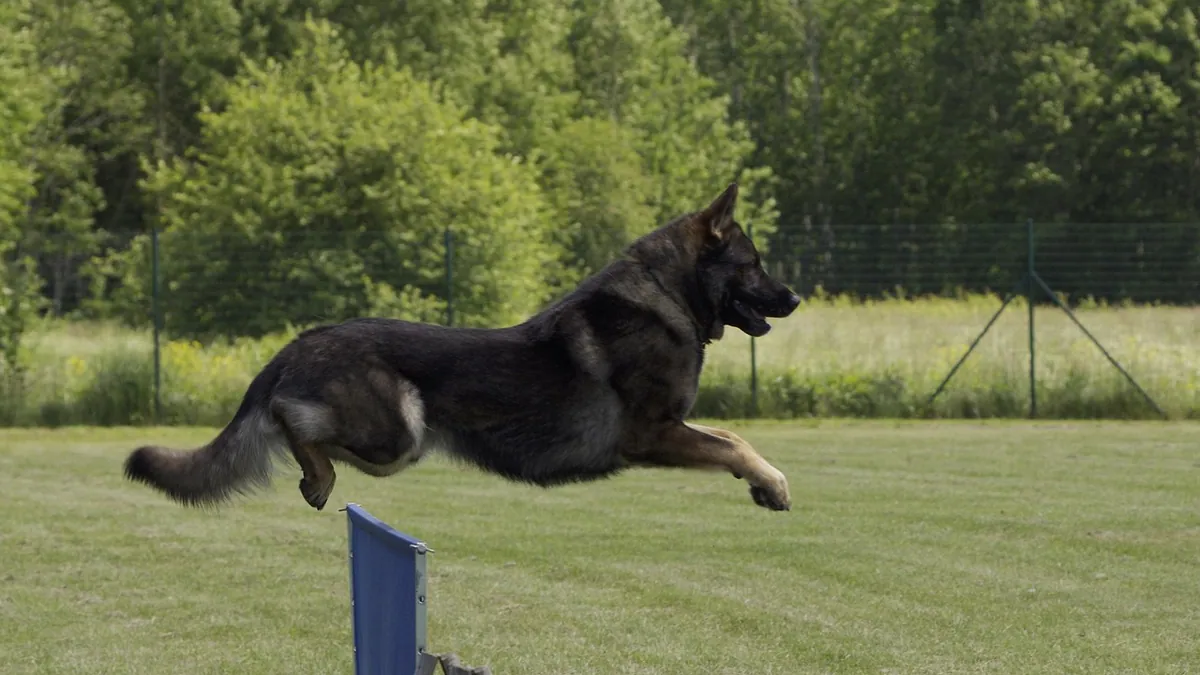
Is it safe for dogs to jump off beds? For many dogs, an occasional hop off the bed is fine, but repeated jumping does put real stress on the joints, especially for puppies, seniors, and small dogs. Landing forces are not evenly distributed, and research shows dogs are less than 90% symmetric when jumping on and off a platform [1]. This article is educational and is not a substitute for veterinary diagnosis or treatment.
Quick Answer
- Jumping down is harder on the front legs, and dogs show only about 75% symmetry in the forelimbs when landing [1].
- Small dogs land with more asymmetry and more variation than large dogs, so they may be at higher risk of strain [1].
- Puppies have open growth plates, and seniors often have arthritis, so both groups should avoid repeated bed and couch jumping.
- A dog that limps after jumping off a bed needs a veterinary exam, because limping is a sign of pain, not just stiffness.
- Ramps, steps, and blocking access to furniture are the simplest ways to cut landing impact.
What Normal Jumping Looks Like and What Changes
A healthy dog jumping off a couch usually lands with a slight crouch, then moves on without hesitation. You may see a small stutter step or a quick shake-off. That is normal.
What is not normal is a dog that pauses before landing, yelps, holds up a leg, or refuses to jump again. Those are signs of discomfort.
Is It Bad for Dogs to Jump on Beds?
Jumping up and jumping down are different movements. Going up uses the hind limbs to push off, while coming down loads the forelimbs on landing [1]. Both directions matter.
Research on standing platform jumps found that dogs were less than 90% symmetric in both directions, which means one side of the body does more work than the other [1]. That asymmetry is normal in sound dogs, but it also means the joints absorb uneven force with every jump.
Is It Bad for Dogs to Jump Off Beds?
Landing is the part owners worry about most, and for good reason. The forelimbs take the impact when a dog comes down [1]. A bed is often higher than a couch, so the drop is longer and the landing force is greater.
Dogs with higher body weight and a higher body weight-to-height ratio tend to jump higher at take-off and at landing [2]. More height at landing means more force through the joints.
Main Causes of Injury From Bed and Couch Jumping
Most injuries from jumping are soft tissue strains, joint sprains, or flare-ups of existing arthritis. Less often, a dog can tear a ligament or fracture a bone.
Table: Cause, Clues, and Urgency
| Cause | Typical clues | How urgent |
|---|---|---|
| Muscle strain | Stiffness after rest, mild limping that improves with movement | Routine visit within a few days |
| Joint sprain | Swelling, reluctance to bear weight, pain when touched | Same-day vet call |
| Arthritis flare | Long-standing stiffness, worse after jumping, slow to rise | Routine visit, sooner if severe |
| Ligament tear (such as cranial cruciate) | Sudden non-weight-bearing lameness, clicking, unstable knee | Same-day or emergency visit |
| Fracture | Cannot bear weight, swelling, deformity, crying out | Emergency now |
| Spinal or disc problem | Yelping, arched back, wobbling, dragging a limb | Emergency now |
Why Puppies Are at Higher Risk
Puppies have growth plates that are still open, which are softer than mature bone. A hard landing can injure a growth plate and affect how the leg grows.
Puppies also have less coordination and weaker muscle support around the joints. A jump that a adult dog handles easily can cause a puppy to land awkwardly.
Why Seniors Are at Higher Risk
Older dogs often have arthritis, thinner cartilage, and weaker muscles. A single jump off a high bed can trigger a pain flare that lasts days.
Seniors may also have vision or balance changes that make landing less controlled. If your older dog is limping after jumping off a bed, treat it as a pain signal and call your vet.
Why Small Dogs May Struggle More
Small dogs showed more asymmetry and more variation in jump trials than larger dogs [1]. The researchers suggested this may relate to difficulty getting valid measurements, but it also reflects how small dogs move.
Small dogs have shorter legs and less room to absorb landing force. That can mean more stress per step on the joints.
Red Flags That Make It an Emergency
Call an emergency clinic right away if you see any of these:
- Your dog cannot bear weight on a leg at all.
- The leg looks bent at a strange angle or is swollen and hot.
- Your dog cries out when you touch the leg or back.
- Your dog is dragging a limb or wobbling when walking.
- Your dog's gums are pale, or breathing is fast and shallow.
- Your dog yelps and then cannot use the back legs.
These signs can point to a fracture, a torn ligament, or a spinal injury. Waiting can make the damage worse.
What You Can Do at Home While Waiting for the Vet
Keep your dog quiet and confined to a small area with soft bedding. Do not let your dog jump on or off furniture.
Limit Movement
Use a leash for potty breaks, even in a fenced yard. Short, slow walks on a leash are better than free running.
Do not play fetch, tug, or chase games. Do not let your dog go up and down stairs if you can avoid it.
Check for Swelling and Heat
Gently compare the injured leg to the other side. Look for swelling, heat, or a spot that feels different. Do not press hard or stretch the leg.
If your dog pulls away or yelps, stop. That is a sign of pain.
Do Not Give Human Pain Medications
Never give ibuprofen, acetaminophen, or aspirin to a dog without veterinary direction. These can cause serious harm.
Your veterinarian will calculate the right dose from your dog's weight and health. Do not guess.
Keep Your Dog Warm and Comfortable
A soft, supportive bed can help a dog rest more comfortably. Orthopedic beds may help dogs with joint pain, though the evidence for specific products varies. You can read more about Are Orthopedic Dog Beds Good For Dogs.
If your dog is limping on a front leg after a couch jump, see Dog Limping Front Leg After Jumping Off Couch.
What Your Veterinarian Will Check and Test
Your vet will start with a full physical exam. They will watch your dog walk, trot, and stand. They will feel each joint for swelling, heat, and pain.
Orthopedic Exam
The vet will test range of motion in the shoulders, elbows, hips, knees, and ankles. They may check for a cranial drawer sign, which can suggest a cruciate ligament tear.
They will also check the spine and neck. A dog that yelps after jumping may have a disc or muscle problem in the back, not just a leg injury.
Imaging
X-rays are common for limping after a jump. They can show fractures, arthritis, and some ligament injuries. X-rays do not show soft tissue well, so your vet may recommend ultrasound or advanced imaging.
Gait Analysis
Some clinics use pressure-sensitive walkways or force plates to measure how your dog distributes weight. Research on jump symmetry uses similar tools to measure peak vertical force [1][3]. These tests help vets track recovery over time.
Treatment Options
Treatment depends on the diagnosis. Mild strains may need rest and pain medication. More serious injuries may need surgery.
Your vet will set the dose and plan based on your dog's weight, age, and health. Never use a dose from another pet or a human medication.
Prevention and Monitoring
The best way to protect your dog's joints is to reduce how often they jump off high furniture.
Use Ramps and Steps
A ramp or a set of pet stairs lets your dog walk up and down instead of jumping. This lowers the landing force on the front legs.
Place the ramp where your dog usually gets on and off the bed or couch. Train your dog to use it with treats and praise.
Block Access When You Are Not Home
Close the bedroom door or use a baby gate. If your dog cannot get on the bed, they cannot jump off it.
This is especially important for puppies and seniors. It also helps prevent other behavior issues, like Dog Peeing On Couch or Dog Peeing On Furniture.
Keep Your Dog at a Healthy Weight
Extra weight increases the force on every joint. Ask your vet what a healthy weight is for your dog.
Weigh your dog monthly and adjust food and treats as needed. Even a small weight loss can reduce joint stress.
Build Strength With Low-Impact Exercise
Swimming, leash walks, and gentle hill work can build muscle without hard landings. Strong muscles support the joints and may reduce injury risk.
Avoid repetitive high jumps, especially on hard floors. Agility dogs show consistent jump patterns, but they also train and condition for it [4]. A pet dog jumping off a bed is not conditioned for that force.
Watch for Subtle Signs
Monitor your dog after any jump. Look for stiffness when rising, reluctance to climb stairs, or a change in how they sit.
If you see these signs, call your vet. Early treatment often means a faster recovery.
Limitations and When to Contact a Veterinarian
This article gives general information, not a diagnosis. Every dog is different, and only your veterinarian can examine your dog and decide on treatment.
Contact your vet the same day if your dog is limping, stiff, or reluctant to move after a jump. Contact an emergency clinic now if your dog cannot bear weight, cries out, or has a swollen or deformed leg.
Routine visits are fine for mild stiffness that improves with rest, but do not wait more than a few days. If your dog has a history of arthritis or a previous injury, call sooner.
Frequently Asked Questions
Is it bad for dogs to jump off beds every day?
Daily jumping off a bed can add up over time, especially for puppies, seniors, and small dogs. The landing force is uneven, and repeated stress can lead to joint pain or injury. Use a ramp or block access to reduce daily impact.
Can a dog hurt its back jumping off a bed?
Yes. A hard landing can strain back muscles or, less often, injure a disc. Signs include yelping, an arched back, or wobbling. Call your vet right away if you see these signs.
Should I let my puppy jump off the couch?
It is safer to prevent it. Puppies have open growth plates that are more easily injured. Use steps or a ramp, and keep the puppy on the floor when you can.
How long does limping last after a dog jumps off a bed?
Mild strains may improve in a few days with rest, but limping that lasts more than 24 to 48 hours needs a vet visit. Limping is a pain sign, and the cause may be more serious than a simple strain.
What can I give my dog for pain after a jump?
Do not give human pain medications. Your veterinarian will choose a safe drug and calculate the dose from your dog's weight and health. Some human drugs can be toxic to dogs.
Related Articles
- Prevent Dogs From Peeing On Furniture
- Dog Limping Front Leg After Jumping Off Couch
- Dog Peeing On Furniture
- Dog Peeing On Couch
- Are Orthopedic Dog Beds Good For Dogs
- Is Orthopedic Bed Good For Dogs
- Dog Jumped After Surgery: Is It Dangerous?
- Why Do Puppies Jump So Much? Is It Bad for Them?
- My Dog Keeps Jumping After Being Neutered: Is It Safe?
References
- Orthopedically normal dogs are asymmetric during standing platform jump up and down. American journal of veterinary research, 2026.
- Influence of height, body weight and body weight-to-height ratio on jump kinematics in agility dogs. Research in veterinary science, 2026.
- Stationary jump tests demonstrate potential as objective return-to-sport outcomes based on hind limb symmetry in healthy dogs. American journal of veterinary research, 2026.
- Assessment of the inter and intra-individual variability in the jump of agility dogs. Research in veterinary science, 2025.