How Far and High Can a Cat Jump? Facts and Safety
By Dr. Zubair Khalid, DVM, MS, PhD ·
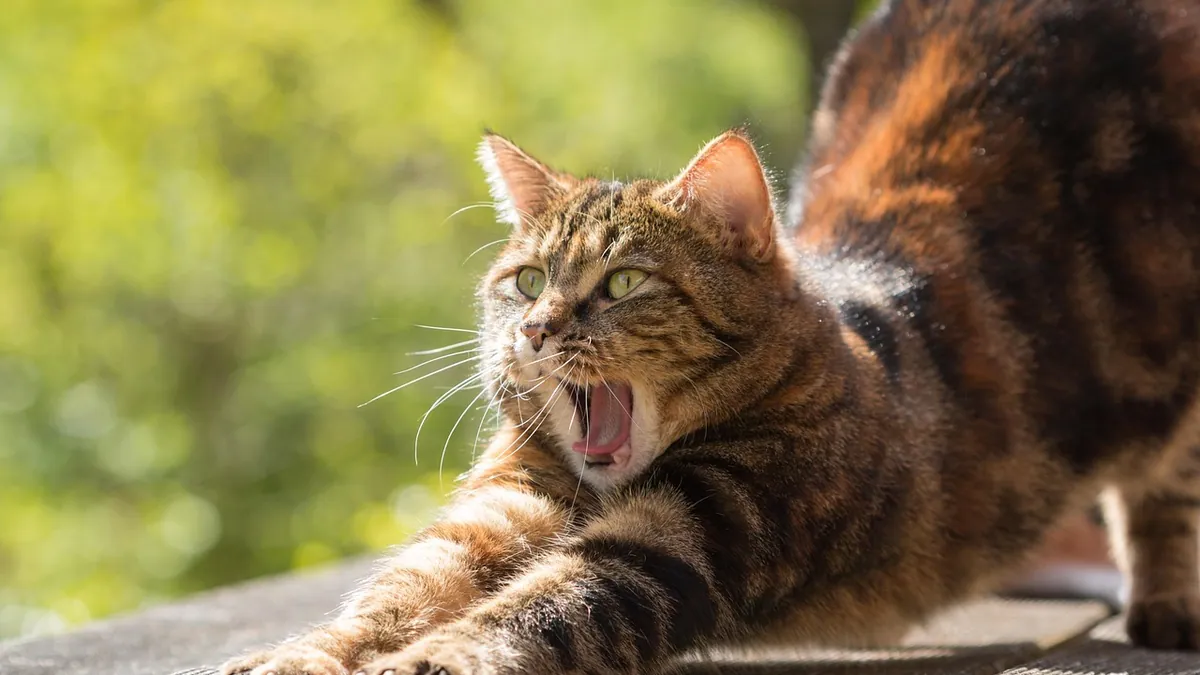
Most healthy adult cats can jump roughly five to six times their own body height, which works out to about 5 to 6 feet straight up, and they can cover around 8 feet horizontally from a standing start. That is why your cat can appear on top of the refrigerator without warning. How far can a cat jump depends on age, body condition, joint health, and confidence, so the range varies a lot from one cat to the next.
This article is educational and is not a substitute for veterinary diagnosis or treatment.
Quick Answer
- A healthy adult cat typically jumps 5 to 6 feet high and up to about 8 feet long, though individual cats vary widely.
- Kittens and senior cats jump lower and shorter distances because their muscles, balance, and joints are still developing or have aged.
- Pain, obesity, and neurological problems are common reasons a cat suddenly stops jumping or misses targets.
- You can support jumping safely with sturdy cat trees, non-slip surfaces, and ramps or steps for cats who need them.
- A sudden drop in jumping ability, especially with limping or hiding, deserves a veterinary visit.
Why Cats Jump So Well
Built for vertical movement
Cats are compact, muscular, and light relative to their power output. Their hind legs contain large muscle groups that contract fast and hard, and their flexible spines let them coil and release energy in one motion. Even a house cat that spends most of the day asleep retains this basic athletic design.
The spine plays a major role. In a study of cat cadavers, the thoracic spine (the section connected to the ribcage) showed a larger range of motion, a larger neutral zone, and lower stiffness than the lumbar spine [1]. That flexibility helps cats twist, extend, and right themselves in the air. It also supports the explosive extension you see right before a jump.
Why cats jump in the first place
Jumping is normal cat behavior, not mischief. Cats jump to:
- Reach elevated resting spots where they feel safe
- Survey their territory from a high vantage point
- Escape perceived threats, including other pets and loud noises
- Reach food, toys, or windows
- Get away from things they dislike on the floor
A study of cats in a cat café found that elevated structures mattered a great deal, especially when human occupancy was high. Cats preferred vertical levels or cat-only rooms during busy periods [2]. That finding applies at home too. Height is security for a cat.
When cats jump most
Kittens start experimenting with jumping early, and their ability improves through their first year as coordination and muscle strength develop. Most cats are at their peak jumping ability between about 1 and 8 years of age. Senior cats often jump less, not because they are lazy but because arthritis, muscle loss, and reduced vision make landings less reliable. If your older cat has started hesitating, see How to Help Your Senior Cat Get Up and Down from High Places Safely.
How High and How Far Can a Cat Jump?
Height
For a healthy adult cat, 5 to 6 feet is a reasonable expectation. Some athletic cats reach higher, and some cats never clear 3 feet. Body condition matters more than breed. A lean cat with strong hind legs will usually outjump a heavier cat of the same size.
Distance
Horizontally, most cats can cover about 8 feet from a standing jump. A running start adds distance. Cats also use height to gain distance, which is why they often leap from a counter to a shelf instead of jumping straight across a gap.
What changes the numbers
- Age: kittens and seniors jump lower
- Weight: extra body fat reduces jump height and increases landing force
- Joint health: arthritis, cruciate ligament injury, and hip problems limit push-off
- Neurological health: tremors and balance disorders affect takeoff and landing
- Surface: carpet grips, hardwood and tile slip
- Confidence: a cat who has slipped before may stop trying
One example of a medical limit on jumping comes from a case report of an 11-month-old cat with a low-frequency tremor in both pelvic limbs that appeared only when standing or actively extending the stifle. The cat remained playful but often lay down and seemed to have difficulty jumping [3]. That is a reminder that a cat who "just stopped jumping" may have a real physical reason.
Medical Causes to Rule Out
Orthopedic problems
Cranial cruciate ligament disease, arthritis, and patellar problems all reduce a cat's ability to push off. A study of 28 cats that had tibial plateau leveling osteotomy for cranial cruciate ligament disease found that the median lameness grade improved from 3 out of 5 before surgery to 0 out of 5 afterward [4]. In plain terms, cats with this injury were visibly lame before treatment and largely sound after. If your cat limps after a jump, see Cat Limping After a Jump: Is It a Sprain or a Break?.
Neurological problems
Tremors, weakness, and incoordination can all interfere with jumping. The cat in the case report above had a tremor only when bearing weight, and treatment with gabapentin at 10 to 20 mg/kg by mouth every 8 hours for 3 weeks, followed by clonazepam at 0.1 mg/kg by mouth every 12 hours for 1 day, did not improve the signs [3]. Clonazepam caused unacceptable side effects in that cat [3]. This is why dosing decisions belong with your veterinarian, who calculates the dose from your cat's weight and health.
Pain and other causes
Dental pain, abdominal pain, and urinary problems can all make a cat reluctant to move. If your cat is also urinating less or not at all, that is a separate emergency. Read How Long Can A Cat Go Without Peeing Before It Is Dangerous for timing.
When Jumping Becomes a Problem
For the cat
Jumping hurts cats when they land badly, fall from a height, or jump onto unstable surfaces. Indoor cats can fracture legs, dislocate joints, or suffer spinal injury from a fall. Cats with existing joint disease can make things worse with repeated hard landings.
For your home
Cats knock things over, land on hot stoves, and reach shelves with medications or toxic plants. A cat who can jump 6 feet can reach almost anything in a typical kitchen.
For you
If your cat suddenly stops jumping, starts missing targets, or cries when landing, that is a change in health, not attitude. Cats hide pain well, so a behavior change is often the first clue.
What to Do: Step by Step
1. Get a baseline
Watch your cat jump for a few days. Note the height, the surface, and whether the landing looks smooth. This helps you spot changes later.
2. Make the environment safer
- Place cat trees near walls for stability
- Add non-slip mats under landing zones
- Move breakable items away from jump paths
- Block access to stoves, medications, and toxic plants
- Provide a low, easy route to favorite high spots
3. Support cats who need help
For seniors or cats with arthritis, add ramps, steps, or low platforms. Keep food, water, and litter boxes on one level if stairs are hard. Warm bedding helps stiff joints.
4. Encourage appropriate jumping
Use wand toys and food puzzles to encourage movement. Short play sessions several times a day work better than one long session. Cats in a café setting interacted with each other infrequently, about 0.58 interactions per cat per hour, and most of those were friendly [2]. At home, your cat may prefer play with you over play with another cat.
5. Keep the litter box and water easy to reach
A cat in pain may avoid the box if it requires a jump. That can lead to holding urine, which is dangerous. If your cat has not urinated in a while, see How Long Can A Cat Safely Go Without Urinating.
6. Track weight
Extra weight is one of the most common and most fixable reasons a cat stops jumping well. Ask your veterinarian for a target weight and a feeding plan.
What Not to Do
Do not punish jumping
Yelling, spraying water, or shaking cans does not teach a cat where to jump. It teaches the cat to avoid you. Cats respond better to redirection and to making the desired spot more appealing.
Do not assume it is laziness
A cat who stops jumping is often in pain. Assuming the cat is "just getting old" delays treatment.
Do not give human pain medications
Many common human pain relievers are toxic to cats. Never give any medication without veterinary guidance.
Do not rely on myths
Cats do not always land safely. The righting reflex helps, and the flexible thoracic spine supports it [1], but it does not prevent injury from a bad fall or a bad landing. A cat who falls from a height needs to be checked, even if they walk away.
Do not skip the carrier
If you need to travel with a cat who is injured or in pain, use a secure carrier. See Cat Travel Safety for setup tips.
When to Involve a Veterinarian or Behavior Professional
Call your veterinarian if your cat:
- Stops jumping or jumps noticeably lower than before
- Limps, cries, or hides after jumping
- Misses targets that used to be easy
- Shows tremors, weakness, or wobbling
- Has swelling, heat, or pain in a limb
A certified behavior professional can help if the jumping is safe physically but causing problems, such as night waking, counter surfing, or conflict with another cat in the home. Behavior help works best after a veterinarian has ruled out pain and medical causes.
Limitations and When to Contact a Veterinarian
This article gives general information. Your cat's individual situation needs a veterinarian who can examine them.
Contact a veterinarian the same day if your cat:
- Limps or refuses to bear weight after a jump
- Cries out when moving or being picked up
- Has a visible deformity or swelling in a limb
- Is hiding and refusing food
Go to an emergency clinic now if your cat:
- Fell from a height greater than about 6 feet
- Is having trouble breathing
- Cannot use the back legs
- Is dragging a limb
- Has been hit by a car or trapped in a door
Schedule a routine visit if your cat:
- Gradually jumps less over weeks to months
- Has gained weight and seems stiff
- Hesitates before jumping but is not limping
Frequently Asked Questions
Can a cat jump higher than 6 feet?
Some athletic cats can, but most healthy adults top out around 5 to 6 feet. Height depends on muscle strength, body condition, and confidence. A cat with a running start or a launch from furniture can reach higher surfaces.
Do all cats jump the same height?
No. Kittens, seniors, and cats with joint or neurological disease jump lower. Body weight and surface grip also change the result. Two cats of the same size can have very different jumping ability.
Why did my cat suddenly stop jumping on the counter?
Pain is the most common reason, followed by a bad landing that made the cat cautious. Arthritis, cruciate ligament injury, and neurological problems can all reduce jumping. A veterinary exam is the fastest way to sort out which one applies.
Is it safe to let my cat jump from high places?
It depends on the height and the landing surface. Short jumps onto stable, carpeted furniture are usually fine. Falls from counters, shelves, or balconies can cause fractures and spinal injury. Block access to the highest and hardest landing zones.
Can I teach my cat to jump lower?
You can shape where your cat jumps by making low routes easier and high routes less rewarding. Add steps and ramps, and reward your cat for using them. If your cat avoids jumping entirely, have a veterinarian check for pain first.
A Final Word on Jumping and Safety
Jumping is one of the most natural and impressive things your cat does. Most of the time it needs no intervention at all. Your job is to know your cat's normal, keep the environment safe, and treat a change in jumping as a health signal worth checking.
Related Articles
- How to Help Your Senior Cat Get Up and Down from High Places Safely
- How Long Can A Cat Go Without Peeing Before It Is Dangerous
- Cat Limping After a Jump: Is It a Sprain or a Break?
- Cat Travel Safety
- How Long Can A Cat Safely Go Without Urinating
- Cat Hiding After Moving: How to Help Your Cat Adjust
- How Do Cats Jump So High? Feline Jumping Explained
- Is It Safe for Cats to Jump from High Places?
- Do Cats Always Land on Their Feet? The Truth
References
- Torsional flexibility of the thoracic spine is superior to that of the lumbar spine in cats: Implications for the falling cat problem. Anatomical record (Hoboken, N.J. : 2007), 2026.
- Cats in a Cat Café: Individual Cat Behavior and Interactions with Humans. Animals : an open access journal from MDPI, 2025.
- Pseudo-orthostatic tremor in a cat. Journal of veterinary internal medicine, 2025.
- Short- and Intermediate-Term Outcomes in 28 Cats that have Undergone a Tibial Plateau Leveling Osteotomy for Cranial Cruciate Ligament Disease. Veterinary and comparative orthopaedics and traumatology : V.C.O.T, 2026.