How to Stop Your Cat Opening Doors and Running Outside
By Dr. Zubair Khalid, DVM, MS, PhD ·
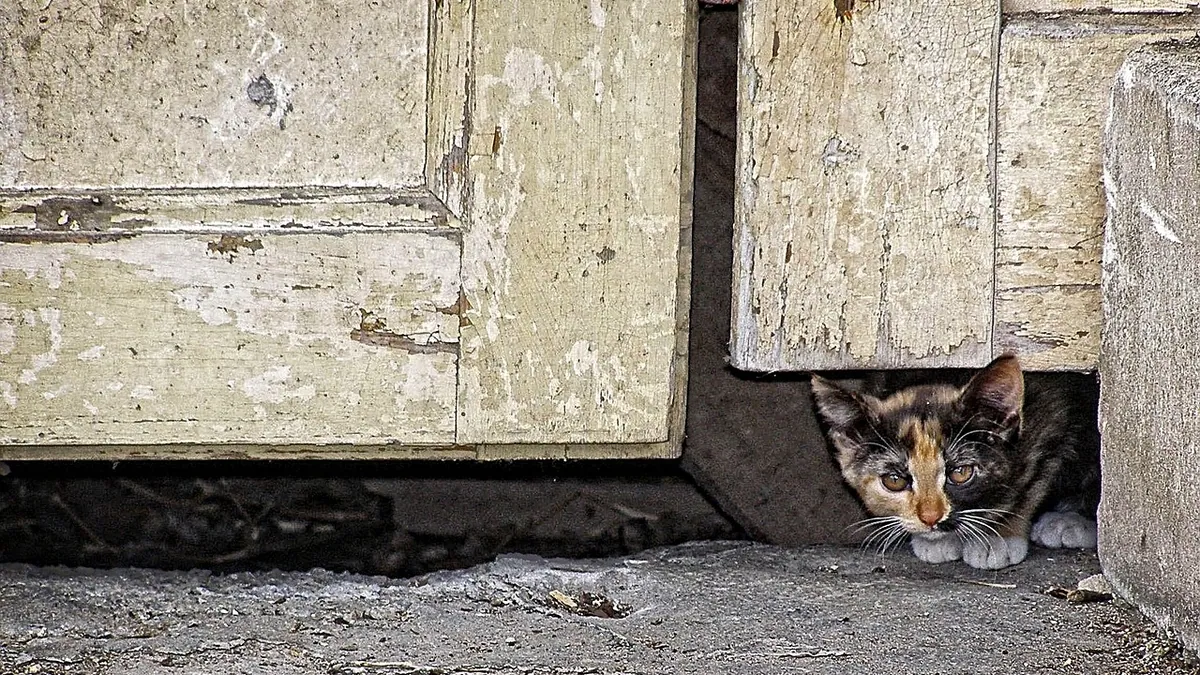
Most cats open doors and bolt outside because they are bored, curious, or stressed, and the fix is a mix of secure hardware, enrichment, and training. You can stop your cat from opening doors by making the door physically hard to operate, giving your cat better things to do, and never punishing the behavior. This article is educational and is not a substitute for veterinary diagnosis or treatment.
Quick Answer
- Install child-proof locks, door latches, or lever covers on every exterior door and on cabinets your cat targets.
- Add daily interactive play with a wand toy and rotate toys to reduce boredom-driven door testing [1][2].
- Redirect scratching to approved posts and pads placed right next to the door your cat scratches.
- Keep exterior doors closed and use a screen door or catio for safe outdoor access instead of free roaming.
- Talk to your veterinarian if the behavior starts suddenly, comes with other behavior changes, or your cat seems anxious or stressed [3][4].
Why Cats Open Doors and Try to Escape
Cats are not trying to be naughty. Door opening and door darting usually come from normal cat motivations that get reinforced every time the door moves.
Curiosity and exploration
Cats are naturally interested in new spaces, smells, and movement. A door that opens leads to a whole new area, which is highly rewarding. Play and exploration are linked to better quality of life, and cats that play more tend to have higher welfare scores [1]. That same drive to investigate is what pushes a cat to paw at a door handle or push a cabinet open.
Boredom and under-stimulation
Indoor cats depend on you for mental and physical activity. When daily play is short or predictable, cats often invent their own entertainment. Research on cat play found that individual cats differ consistently in how interested they are in toys, and that interest stays fairly stable over time [2]. A cat with a strong play drive who does not get enough outlet is more likely to work on doors, drawers, and cupboards.
Stress and anxiety
Some door rushing is anxiety-driven. Cats with behavioral problems can show different stress hormone patterns than cats without them, and stress can show up as repetitive or escape-oriented behavior [3]. Indoor cats can live with low stress when their environment is enriched with litter boxes, hiding places, vertical space, and predatory play opportunities [4]. If your cat paces, vocalizes excessively, or hides more than usual, stress may be part of the picture.
Learned behavior and reinforcement
Every time your cat opens a door and gets to explore, the behavior is rewarded. Every time you chase, yell, or pick your cat up, you may add excitement or attention. The behavior gets stronger because it works.
Medical Causes to Rule Out First
Sudden door darting is not usually a medical problem, but a few health issues can look like behavior changes.
- Pain or discomfort can make a cat restless, especially at night.
- Hyperthyroidism can cause increased activity, vocalization, and pacing.
- Cognitive dysfunction in older cats can cause disorientation, night waking, and new door-focused behavior.
- Vision or hearing loss can make a cat startle more easily and bolt through openings.
- Anxiety-related conditions can drive escape attempts and excessive vocalization, and cats showing isolation and excessive vocalization have shown higher stress hormone levels [4].
If the behavior is new, ask your veterinarian for a physical exam and baseline lab work before you assume it is purely behavioral.
When Door Opening Becomes a Real Problem
A cat who opens interior doors is annoying. A cat who gets outside is at risk.
Outdoor cats face traffic, other animals, infectious disease, and parasites. Even a cat who only slips out for a minute can be gone for hours. If your cat has already escaped more than once, treat this as a safety problem, not a training project.
Door scratching also causes real damage. Scratched frames, torn screens, and ruined trim are common. Scratching is normal cat behavior, so the goal is redirection, not elimination. The same principle applies to other scratching problems, like when you need to How Do I Stop A Cat From Clawing Furniture or How To Stop A Cat From Scratching A Sofa.
If your cat is also marking or eliminating outside the box, that is a separate issue. See Cat Spraying in the House: How to Stop It and Cat Peeing Outside Box.
How to Stop My Cat From Opening Doors: Step by Step
Work on three fronts at once: make the door harder to open, make the behavior less rewarding, and give your cat a better outlet.
Step 1: Secure the doors
- Add child-proof locks or sliding bolts high on exterior doors, above your cat's reach.
- Use lever handle covers or swap lever handles for round knobs. Most cats cannot grip and turn a round knob.
- Add a second latch to doors your cat has already defeated.
- For sliding doors, use a charley bar or a dowel in the track.
- Keep exterior doors closed. Do not leave a door cracked for airflow if your cat darts.
Step 2: Block the drawers and cupboards
Cats who open drawers and cupboards are usually after food, interesting objects, or a hiding spot.
- Use magnetic cabinet locks or adhesive child locks on lower cabinets.
- Store food in sealed containers inside a latched cabinet.
- Remove or secure items your cat bats out, since that play behavior rewards the habit.
- Give your cat a dedicated "allowed" cabinet or box with safe toys if they love exploring containers.
Step 3: Redirect door scratching
- Place a sturdy scratching post or horizontal pad directly beside the door your cat scratches.
- Reward your cat with a treat or play session the moment they scratch the post instead.
- Trim nails every one to two weeks to reduce damage while you retrain.
- Cover scratched areas temporarily with double-sided tape or a plastic shield while the new post becomes the habit.
Step 4: Build a richer indoor environment
Enrichment is the long-term fix. Indoor cats do well when owners provide litter boxes, hiding places, vertical spaces, and predatory play opportunities [4].
- Play with a wand toy for several short sessions daily. More games and longer play are linked to better cat quality of life and a stronger cat-owner relationship [1].
- Let your cat "catch" the toy at the end of each session so the hunt feels complete.
- Rotate toys weekly. Cats show consistent individual differences in toy interest, so find what your specific cat loves and use it [2].
- Add cat trees, window perches, and shelves so your cat can climb and watch outside safely.
- Use puzzle feeders to make mealtime more work.
Step 5: Train an alternative behavior
Teach your cat to go to a mat or perch when you approach the door.
- Pick a spot a few feet from the door.
- Toss a treat onto the mat, then walk to the door and back.
- Repeat in short sessions, adding distance and door movement slowly.
- Reward calm behavior at the mat, never door rushing.
Step 6: Safe outdoor access
If your cat wants outside, give them a controlled version.
- Use a catio, window box, or screened porch.
- Train with a harness and leash indoors first, then in a fenced yard.
- Supervise every outdoor session.
- Never rely on a cat "knowing" to stay close.
What Not to Do
- Do not punish your cat. Yelling, spraying water, or shaking cans can increase fear and anxiety, which can make escape behavior worse.
- Do not chase your cat at the door. That turns the door into a game.
- Do not use a squirt bottle as a deterrent. It teaches your cat to avoid you, not the door.
- Do not declaw your cat to stop scratching. Declawing is a major surgery with pain and behavior risks, and it does not address the reason for scratching.
- Do not assume your cat is "just stubborn." Behavior has a function, and you need to change the function.
- Do not leave a door open "just for a second." Escape-artist cats need zero opportunities.
When to Involve a Veterinarian or Behavior Professional
Call your veterinarian if:
- The behavior started suddenly in an adult cat.
- Your cat is also vocalizing more, pacing, hiding, or eating less.
- Your cat is older and seems confused or disoriented.
- Your cat has escaped and been injured, or you cannot keep them inside safely.
- You have tried locks, enrichment, and training for several weeks with no improvement.
Your veterinarian can rule out medical causes and may refer you to a veterinary behaviorist or certified applied animal behaviorist. Anxiety-related door darting sometimes needs a behavior plan plus medication, and the dose is calculated by your veterinarian based on your cat's weight and health.
Limitations and When to Contact a Veterinarian
No article can tell you why your individual cat is opening doors. A veterinarian who examines your cat can sort out medical from behavioral causes.
Contact your veterinarian the same day if your cat:
- Escapes and returns limping, bleeding, or breathing hard.
- Shows sudden confusion, circling, or inability to settle.
- Stops eating or drinking.
- Has a seizure or collapses.
Go to an emergency clinic now if your cat:
- Is hit by a car or has a known trauma.
- Has trouble breathing.
- Is bleeding heavily or has an open wound.
- Ate something toxic or unknown.
- Is unable to urinate, especially a male cat straining in the litter box.
Schedule a routine visit if the door behavior is new, worsening, or paired with other behavior changes like hiding, over-grooming, or house soiling. If your cat is hiding more after a move or household change, see Cat Hiding After Moving: How to Help Your Cat Adjust.
Frequently Asked Questions
Why does my cat keep opening doors even when I give them toys?
Because door opening is rewarding on its own. The door leads to new smells, spaces, and movement, which is more exciting than a toy left on the floor. You need active play sessions, not just toys sitting around, plus physical barriers on the door.
Can I train my cat to stop running out the front door?
Yes, with repetition and rewards. Teach your cat to go to a mat away from the door, reward calm behavior, and practice opening the door slowly while your cat stays put. Pair training with a second latch or child lock so a mistake does not turn into an escape.
Do child locks really stop cats from opening cabinets?
They stop most cats, especially when combined with removing the reward. If your cat is opening a cabinet for food, lock it and move the food somewhere else. If your cat is opening it for fun, give them a safe box or cabinet with toys instead.
Is scratching the door a sign of anxiety?
Sometimes. Scratching can be normal marking and stretching behavior, or it can increase when a cat is stressed. If your cat scratches the door and also hides, vocalizes, or avoids you, talk to your veterinarian about a full behavior evaluation.
Will my cat grow out of opening doors?
Usually no. Cats repeat behaviors that work, and door opening works very well. The behavior tends to continue or get better with practice unless you change the environment and provide better outlets. Start with locks and enrichment now instead of waiting.
Related Articles
- How Do I Stop A Cat From Clawing Furniture
- Cat Spraying in the House: How to Stop It
- How To Stop A Cat From Scratching A Sofa
- Cat Peeing Outside Box
- Cat Hiding After Moving: How to Help Your Cat Adjust
- How to Stop a Cat from Scratching the Carpet: Effective Deterrents
- How to Stop Your Cat From Roaming and Leaving Home
- How to Stop Your Cat Attacking Your Feet and Ankles
- How to Stop Your Cat From Biting and Nipping You
References
- Cats just want to have fun: Associations between play and welfare in domestic cats. Animal welfare (South Mimms, England), 2023.
- Utilizing citizen science to assess consistent individual variation in play behaviour of the domestic cat, Felis catus. Behavioural processes, 2026.
- Hair cortisol levels in cats with and without behavioural problems. Journal of feline medicine and surgery, 2023.
- Stress in Indoor and Outdoor Cats: Association between Hair Cortisol Levels, Housing Style, and Guardians' Perceptions of Behavior. Journal of applied animal welfare science : JAAWS, 2026.