Why Dogs Open Doors and How to Stop It
By Dr. Zubair Khalid, DVM, MS, PhD ·
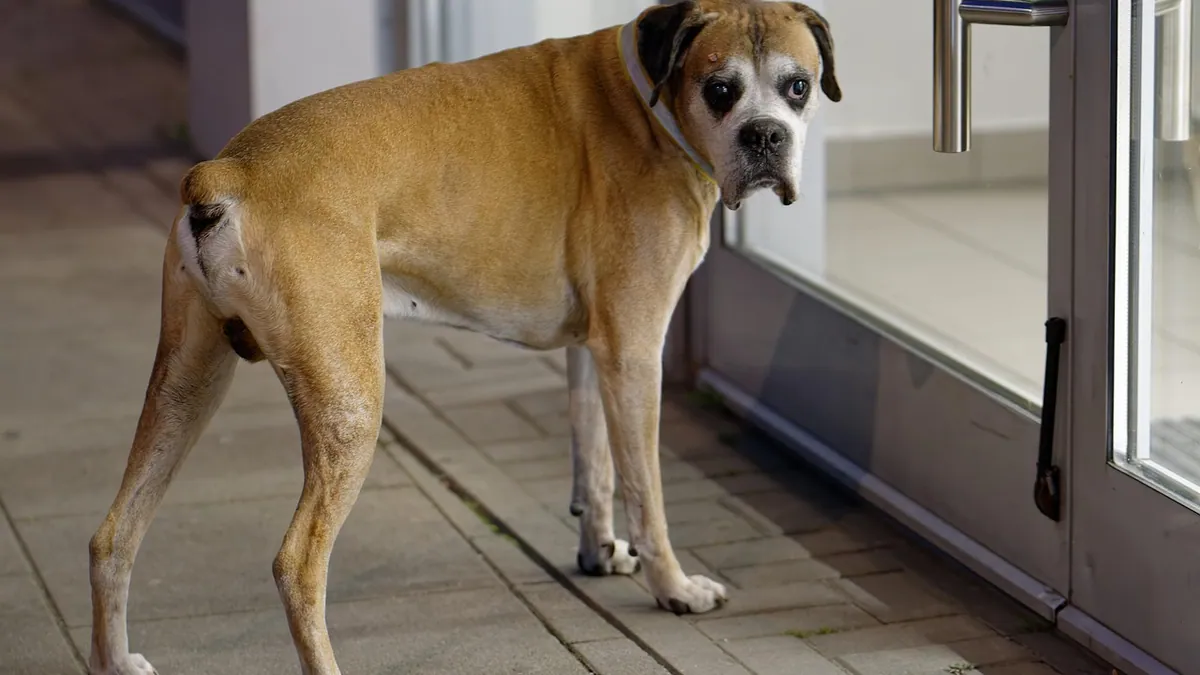
Most dogs open doors because they have learned it works, usually through pawing, nose nudging, or jumping at a handle. If you want to know how to stop my dog from opening doors, the fix is part training, part management, and part ruling out a medical reason. This article is educational and is not a substitute for veterinary diagnosis or treatment.
Quick Answer
- Most door opening is a learned behavior, not a sign of dominance or spite.
- Some dogs open doors out of boredom, curiosity, or separation distress, and distress-related behavior can include restlessness, whining, barking, and salivation [1].
- Pain or discomfort can change behavior, and a conservative review found about one third of referred dog behavior cases involved a painful condition [2].
- Management comes first: childproof covers, round handles, deadbolts, and secure crates or gates.
- Training works best when you reward calm behavior near doors and give your dog other outlets for energy and problem solving.
Why Dogs Open Doors
How do dogs open doors
Dogs use their paws, noses, and body weight. A lever handle is easy to push down. A round knob can be turned with two paws or a muzzle. Some dogs jump and hit the handle, then push the door with their shoulder. Once the door moves, the behavior gets rewarded because the dog gets access to another room, the yard, food, or you.
This is normal learning. The door opening itself is not the problem. The problem is what the dog gets from it and what risk comes with it.
Is it normal for dogs to open doors
Yes, it can be normal. Dogs are good at solving problems when the reward is clear. Prairie voles, which are rodents used in research on helping behavior, learned to open a door to reach a distressed companion, and their door-opening speed improved over sessions [3]. That study is about voles, not dogs, but it shows a simple point. Animals learn door-opening when the outcome matters to them.
For dogs, the outcome might be:
- Reaching you or another pet
- Getting to food, trash, or a toy
- Going outside to chase, explore, or eliminate
- Escaping a sound, crate, or room that feels stressful
Normal reasons first
Curiosity and exploration are common. A dog who is bored may test every handle in the house. A dog who has learned that the pantry holds treats may open that door again and again.
Attention is another reason. If opening a door makes you appear, even to scold, the behavior can still get stronger. Dogs repeat what works.
Separation-related distress is a bigger concern. Dogs with separation-related problem behavior differ from other dogs in signs such as restlessness, excitement, whining, howling, lip licking, barking, and salivation [1]. If your dog opens doors mainly when you leave, that is a clue. The door opening may be part of a panic response, not simple mischief.
Frustration can also drive door opening. Dogs show less frustration when their owner is present during a hard task, which is called social buffering [4]. If your dog is alone and frustrated, the door may become the target.
Medical Causes to Rule Out
Behavior always has a body attached. Pain can change how a dog moves, sleeps, eats, and acts. A review of dog behavior cases found that around one third involved some form of painful condition, and in some groups the number was close to 80% [2]. Musculoskeletal, gastrointestinal, and skin conditions were commonly linked to problem behavior [2].
Your veterinarian may look for:
- Arthritis or back pain that makes crating or lying still uncomfortable
- Dental pain that changes chewing or pawing at the face
- Ear infections that cause head shaking or scratching
- Gastrointestinal pain that causes pacing, whining, or house soiling
- Skin pain or itching that causes restless nights
If your dog has started opening doors suddenly, or if the behavior comes with pacing, panting, drooling, or not settling, book a veterinary visit. A trial of pain relief may be part of the plan, and your veterinarian will decide if that is appropriate [2].
When Door Opening Becomes a Problem
Door opening is a problem when it creates risk. That includes:
- Escaping the house or yard
- Getting into trash, medication, or toxic food
- Reaching another pet who may fight or be injured
- Letting strangers or children out
- Causing injury from jumping at handles or crashing through doors
- Happening only when you are gone, which suggests separation distress [1]
Behavior that threatens safety is serious. A study of behavioral euthanasia in pet dogs found that human-directed aggression, especially toward adults in the home, was the most common reason owners chose euthanasia, followed by aggression toward other animals, especially other dogs in the same home [5]. Door opening by itself is not in that category. But if door opening leads to aggression, biting, or repeated severe incidents, the risk level changes [5].
How to Stop My Dog From Opening Doors: Step by Step
Step 1: Manage the environment today
Management stops the behavior from being practiced while you train.
- Replace lever handles with round knobs, or add childproof covers.
- Use a deadbolt or a second lock above your dog's reach.
- Keep doors closed and latched, including closet and bathroom doors.
- Use a sturdy crate, pen, or baby gate that your dog cannot climb or push over.
- Block access to the door with an ex-pen if needed.
- Put food, trash, and medication behind a locked door.
If your dog is escaping the yard, check the fence line, gate latches, and any dog door. A dog door can be useful for some dogs, but it can also give a door-opening dog a free exit. If you use a bell or door signal for potty training, keep it separate from the exit door so your dog does not learn to open the main door. See Dog Potty Training Bell For Door for more on that.
Step 2: Teach an alternative behavior
You want your dog to do something else when they want to go out or reach you.
- Teach a solid "wait" or "stay" at the door.
- Reward your dog for sitting or lying down near the door.
- Practice opening the door only when your dog is calm and four paws are on the floor.
- If your dog jumps at the handle, close the door and wait. Reward the moment all paws are down.
- Use a mat or bed near the door as a station. Reward your dog for going there.
Keep sessions short. Five minutes, two or three times a day, is plenty. End before your dog gets frustrated.
Step 3: Add enrichment and exercise
A tired, mentally satisfied dog is less likely to invent door games.
- Food puzzles, snuffle mats, and scatter feeding
- Chew toys and long-lasting food toys
- Training games that use nose work or find-it
- Daily walks and sniff time
- Rotating toys so they stay interesting
If your dog is barking at sounds near the door, that is a related but separate issue. See How to Stop a Dog from Barking at the Doorbell: Training Tips and How To Get My Dog To Stop Barking.
Step 4: Address separation distress
If door opening happens mainly when you leave, treat it as a distress problem.
- Set up a camera to see what happens after you leave.
- Practice very short absences and build up slowly.
- Leave a food toy or safe chew right before you go.
- Keep arrivals and departures calm.
- Ask your veterinarian about a behavior plan.
Dogs with separation-related problem behavior show more restlessness, vocalization, and salivation than other dogs [1]. Punishment will not fix that. A behavior plan and, in some cases, medication prescribed by your veterinarian can help.
Step 5: Use barriers that fit your dog
Not every barrier works for every dog.
- A crate must be sized correctly and introduced slowly.
- A baby gate works for some dogs but not climbers.
- A pen can work if it is tall and stable.
- A closed door with a cover is often the simplest fix.
If your dog has injured themselves on a crate or barrier, stop and call your veterinarian.
What Not to Do
Do not punish your dog for opening doors. Punishment can increase fear and anxiety, and it does not teach the behavior you want. It can also make your dog avoid you or become defensive near doors.
Do not use shock mats, scary noises, or sprays at the door. These tools can create new fears and make escape behavior worse.
Do not assume your dog is being stubborn or dominant. Door opening is learned behavior, and it often has a function.
Do not leave your dog loose in the house if they can open an exterior door. That is a safety risk, not a training opportunity.
Do not skip the veterinary visit if the behavior is new, sudden, or comes with other signs of distress.
When to Involve a Veterinarian or Certified Behavior Professional
Call your veterinarian if:
- Your dog has started opening doors suddenly
- Your dog shows pacing, panting, drooling, or not settling
- Your dog is hurting themselves at the door or crate
- Your dog is escaping the house or yard
- Your dog shows aggression when you try to block the door
- Your dog only opens doors when alone [1]
Your veterinarian can check for pain and medical causes [2]. They can also refer you to a certified behavior professional. Look for a veterinarian behaviorist or a certified applied animal behaviorist. A trainer who uses reward-based methods can help with door manners and enrichment.
If your dog has a bite history or severe aggression, get help quickly. Aggression toward people in the home was the most common reason for behavioral euthanasia in one survey of dog owners [5]. Early professional help gives you more options.
Limitations and When to Contact a Veterinarian
This article gives general information. Your dog's case needs a veterinarian who can examine your dog and review the full history.
Contact your veterinarian the same day if your dog:
- Opens a door and eats something toxic or unknown
- Is limping, crying, or holding a limb oddly
- Has vomiting, diarrhea, or not eating
- Seems painful when you touch them
- Is pacing and cannot settle
Go to an emergency clinic now if your dog:
- Is struggling to breathe
- Has a swollen or painful abdomen
- Collapsed or had a seizure
- Ate medication, chocolate, grapes, raisins, xylitol, or another toxin
- Has a deep wound or heavy bleeding
Call your veterinarian for a routine visit if:
- Door opening is new and you cannot find a simple trigger
- The behavior happens only when you leave
- You have tried management and training for two to four weeks with no change
- Your dog seems anxious, restless, or vocal when alone [1]
If you are in the United States and your dog may have eaten something toxic, call the ASPCA Animal Poison Control Center at (888) 426-4435 or the Pet Poison Helpline at (855) 764-7661. A consultation fee may apply.
Frequently Asked Questions
Can all dogs learn to open doors?
No, but many can. Dogs with strong problem-solving skills, tall enough bodies, and access to lever handles learn fastest. Round knobs and childproof covers make it much harder.
Is door opening a sign of separation anxiety?
Sometimes. If your dog only opens doors when you are gone, and also whines, paces, drools, or barks, separation distress is possible [1]. A camera and a veterinary visit can help sort this out.
Will a crate stop my dog from opening doors?
A crate can help if your dog is comfortable in it and it is the right size. A dog who panics in a crate may hurt themselves. Ask your veterinarian or a behavior professional before using a crate for a dog with distress.
Do I need to punish my dog to stop this behavior?
No. Punishment can increase fear and does not teach a safer behavior. Reward-based training plus management works better and is safer for your relationship.
Can pain make my dog open doors?
Pain can change behavior in many ways, and a review found that about one third of referred dog behavior cases involved a painful condition [2]. If the behavior is new or comes with other changes, see your veterinarian.
How long does training take?
Most dogs need weeks of consistent practice. If there is no improvement after two to four weeks of daily management and training, ask your veterinarian for help. If your dog is also marking indoors, see How to Stop a Dog from Marking in the House: Tips That Work.
Related Articles
- How to Stop a Dog from Barking at the Doorbell: Training Tips
- How To Get My Dog To Stop Barking
- Dog Potty Training Bell For Door
- How to Stop a Dog from Marking in the House: Tips That Work
- Stop Dog In Heat
- Why Is My Dog Suddenly Scared of the Stairs?
- How to Stop Your Dog From Running Out the Door
- How to Teach Your Dog to Use a Doggy Door
- Dog Attacking Other Dogs in the Home: How to Stop It
References
- Factors Influencing Isolation Behavior of Dogs: A Holder-Based Questionnaire and Behavioral and Saliva Cortisol Responses during Separation. Animals : an open access journal from MDPI, 2023.
- Pain and Problem Behavior in Cats and Dogs. Animals : an open access journal from MDPI, 2020.
- Helping behavior in prairie voles: A model of empathy and the importance of oxytocin. iScience, 2022.
- Social buffering in domestic dogs: Are the owners able to decrease dogs' frustration during a non-social task?. Behavioural processes, 2026.
- Factors associated with behavioral euthanasia in pet dogs. Frontiers in veterinary science, 2024.