Why Is My Cat Yowling at the Door? Causes and Help
By Dr. Zubair Khalid, DVM, MS, PhD ·
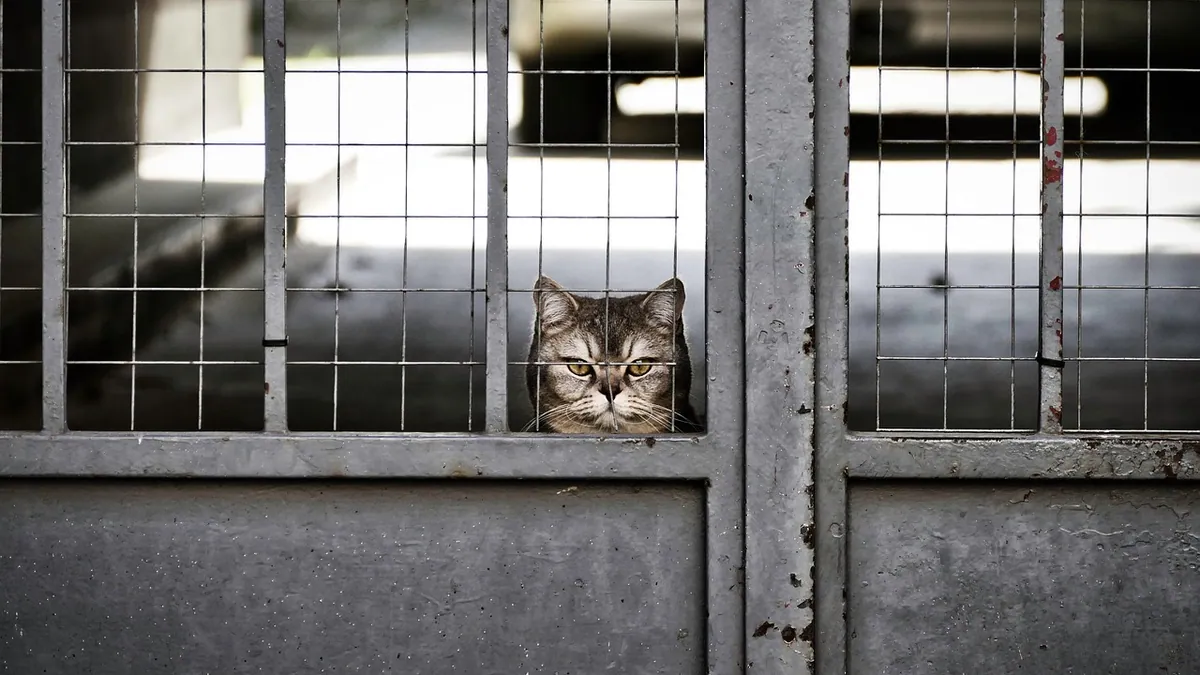
Cats yowl at doors because they want something on the other side, because they feel territorial or stressed, or because an underlying medical problem is making them vocal. The sound is long, loud, and drawn out, and it usually means your cat is trying to get your attention or express distress. This article is educational and is not a substitute for veterinary diagnosis or treatment.
Quick Answer
- A yowl is different from a meow. It is longer and more melodic, and adult cats use it with each other mainly during breeding season [1].
- The most common triggers are wanting to go out, wanting food or attention, seeing or smelling another cat outside, and stress from changes in the home.
- Pain, thyroid disease, high blood pressure, and vision loss can all make a cat vocal, so a veterinary exam is the first step for any new or sudden yowling.
- Punishment does not work and usually makes door behavior worse. Cats respond to routine, enrichment, and removing the trigger.
- Pheromone diffusers and structured environmental changes can reduce stress-related vocalization over weeks, not hours [2].
Why Is My Cat Yowling at the Door? The Normal Reasons First
Meowing is how cats talk to people. Adult cats do not meow at each other, only at humans, and they keep doing it because it works [1]. Yowling is the louder, more insistent version of that same request. When your cat plants herself at the door and yowls, she is usually asking for one of a few predictable things.
She wants to go outside
This is the most common reason owners search for answers. An indoor cat who has tasted the hallway, the porch, or the backyard may decide that door equals freedom, and she will announce that opinion loudly. Cats who were once outdoor cats often do this most.
She wants you to follow her
Some cats yowl at a door and then look back at you. That is an invitation. She may want you to open it, feed her, play, or simply come with her. If you have ever gotten up to check, you have already taught her that yowling at the door gets a human response.
She hears or smells another cat
Doors are information channels. Your cat can smell another cat's markings and hear activity in the hallway or yard. If a neighborhood cat patrols outside your door, your indoor cat may yowl as a territorial response. This is especially common in multi-cat homes where one cat guards a doorway.
She is bored or under-stimulated
Indoor cats depend on their owners for resources. A study of indoor and outdoor cats found that indoor cats with enriched environments (litter boxes, hiding places, vertical spaces, and predatory play opportunities) had low physiological stress levels [3]. When those resources are missing, vocalization often fills the gap.
She is a naturally talkative breed
Some breeds, Siamese in particular, are prone to excessive meowing and yowling [1]. If your cat has always been loud, breed tendency may be part of the picture. That does not mean you cannot reduce door yowling, but it does mean silence is not a realistic goal.
Medical Causes to Rule Out
Any sudden increase in vocalization in an adult cat deserves a veterinary visit. Cats hide illness well, and yowling is sometimes the first visible sign.
Pain
Cats in pain vocalize more. A study of cats recovering from eye surgery found that pain behaviors included a lowered head position and other changes that owners can learn to spot [4]. Pain anywhere in the body, from dental disease to arthritis, can show up as nighttime or doorway yowling. If your cat yowls at the door and also seems stiff, hides, or eats less, pain belongs on the list.
Sensory decline
Older cats who are losing vision or hearing often yowl, especially at night or when they feel disoriented. They may stand at a closed door and call because they cannot tell where you are. This is common and manageable, but it needs a diagnosis first.
Hormonal and metabolic disease
Conditions such as an overactive thyroid, high blood pressure, and chronic kidney disease can increase vocalization. A veterinarian can screen for these with a physical exam and blood work. Do not assume your older cat's new yowling is just aging.
Medication side effects
Some drugs change how much a cat talks. In a survey of owners using a transdermal appetite stimulant, 20% reported side effects, and increased vocalization was among the most common [5]. If yowling started after a new medication, call your veterinarian.
Cognitive dysfunction
Senior cats can develop a dementia-like syndrome. Disorientation, night vocalization, and staring at doors or walls are typical. Your veterinarian can assess this and discuss options.
When Door Yowling Becomes a Problem
The line between normal and excessive is personal, and it depends on how much the behavior disrupts your household [1]. A few things push it into problem territory.
- It happens for long stretches every day, not just at mealtimes.
- It starts suddenly in a cat who was previously quiet.
- It comes with other changes, such as appetite loss, weight loss, hiding, or irritability.
- It happens mostly at night and wakes the household. Night crying has its own set of causes and solutions, which you can read about in Why Is My Cat Crying at Night?.
- It is directed at one specific door, and your cat seems anxious or fixated instead of simply asking.
Stress-related vocalization is real and measurable. Cats showing isolation and excessive vocalization had higher hair cortisol levels, a marker of chronic stress, in one study [3]. That does not mean every yowl is stress, but it does mean repeated vocalization deserves attention instead of earplugs.
What to Do: A Step-by-Step Plan
Step 1: Get a veterinary exam
Book a visit before you start any behavior plan. Your veterinarian will check for pain, thyroid disease, high blood pressure, dental problems, and vision or hearing loss. If your cat is on medication, bring the list. This step rules out the causes that training cannot fix.
Step 2: Identify the trigger
Watch your cat for two or three days and note the pattern. Does she yowl at the front door at the same time the neighbor's cat walks by? Does she yowl at the back door only when you are in the kitchen? Does she yowl at the bedroom door at 4 a.m.? The pattern tells you what to change.
Step 3: Remove or block the trigger
If another cat is coming to the door, block the view. Use a privacy film, close the blinds, or place a piece of furniture in front of the sightline. If your cat is reacting to smells, clean the doorframe and the area around it. If she is reacting to sounds in the hallway, a white noise machine near the door can help.
Step 4: Build a routine that meets the need
Cats do best with predictable schedules. Feed, play, and groom at roughly the same times each day. A solid play session before bed can reduce nighttime door yowling because it tires your cat out and satisfies the hunting sequence.
Step 5: Enrich the indoor environment
The study of indoor cats found that enriched homes included litter boxes, hiding places, vertical spaces, and predatory stimuli [3]. In practice, that means cat trees near windows, shelves or perches, cardboard boxes, puzzle feeders, and toys that mimic prey. A cat with a full indoor life yowls at the door less often.
Step 6: Teach an alternative behavior
Decide what you want your cat to do instead of yowling. A common choice is to sit on a mat a few feet from the door. Reward that behavior with treats and praise. When she yowls, wait for a pause, then reward the quiet. This takes weeks, not days, and consistency matters more than intensity.
Step 7: Try pheromone support
Feline pheromone products are part of the standard strategy for stress-related behaviors. In a two-month study of cats with undesirable behaviors at home, a long-acting gel diffuser significantly improved six behaviors, including excessive vocalization, while an electric diffuser improved four [2]. Pheromones are not a cure, but they can lower the background stress that fuels door yowling.
Step 8: Manage your own response
Every time you open the door during a yowl, you reward the behavior. If your cat yowls to go out and you let her out, she learns that volume works. If she must go out, wait for a quiet moment, even a brief one, before you open the door.
What Not to Do
Do not punish
Yelling, spraying water, or shaking a can does not teach your cat what you want. It adds stress, and stress makes vocalization worse. Cats do not connect punishment to a behavior the way dogs often do, and a scared cat at a door is more likely to yowl, not less.
Do not assume it is just attention seeking
Sometimes it is. Often it is not. Pain, sensory decline, and chronic stress all look like attention seeking from the outside. That is why the veterinary exam comes first.
Do not let the cat out to "fix" it
Letting your cat outside every time she yowls solves the moment and creates a bigger problem. It reinforces the behavior, exposes her to traffic and disease, and does nothing for the underlying need. If you want to give her outdoor access, a secure catio or harness walks on your schedule are safer options.
Do not ignore sudden changes
A cat who has yowled at the door for years is one thing. A cat who started last week is another. Sudden onset always warrants a call to your veterinarian.
Do not expect overnight results
Behavior change in cats is slow. Pheromone studies measure improvement over two months [2]. Training plans take similar time. If you quit after three days, you will conclude nothing works.
When to Involve a Veterinarian or Behavior Professional
Call your veterinarian if the yowling is new, if it comes with any change in appetite, weight, thirst, or litter box habits, or if your cat seems painful or disoriented. If your cat is also hiding, over-grooming, or avoiding you, that points toward an anxiety problem. A sudden fear of familiar people is a separate pattern worth reading about in Why Is My Cat Suddenly Afraid of Me?.
If your veterinarian finds no medical cause, ask for a referral to a veterinary behaviorist or a certified applied animal behaviorist. These professionals can build a plan for severe or long-standing cases. Some cats need medication alongside behavior work, and your veterinarian will calculate any dose based on your cat's weight and health.
Limitations and When to Contact a Veterinarian
This article covers common patterns, not your individual cat. Every case needs a veterinarian who can examine the cat, run tests, and see the home situation. No article can do that.
Contact your veterinarian the same day if your cat is yowling and also vomiting, not eating, straining in the litter box, or showing sudden weakness or wobbliness. These combinations suggest a medical problem that needs prompt attention.
Go to an emergency clinic now if your cat is yowling in pain, breathing with an open mouth, collapsing, having a seizure, or if you suspect she ate something toxic. For poison emergencies in the United States, call the ASPCA Animal Poison Control Center at (888) 426-4435 or the Pet Poison Helpline at (855) 764-7661.
Schedule a routine visit within a week or two if the yowling is new, gradually worsening, or paired with weight loss, increased thirst, or nighttime restlessness. If your cat is older and the behavior changed, do not wait. Early diagnosis of thyroid, kidney, and blood pressure problems makes a real difference.
Frequently Asked Questions
Should I open the door when my cat yowls?
No. Opening the door during a yowl teaches your cat that yowling works, and the behavior will get louder and more frequent. Wait for a pause in the noise, even a short one, then open the door or give attention. Over time, your cat learns that quiet gets results.
Is it cruel to ignore my cat at the door?
It is not cruel if you have ruled out medical causes and you are meeting her needs with play, food, and enrichment. Ignoring a demand behavior is different from neglecting a cat. If the yowling comes with distress signs like pacing, hiding, or not eating, that is not a behavior to ignore, that is a reason to call your veterinarian.
Why does my cat only yowl at the door at night?
Night yowling often reflects a shifted sleep schedule, hunger, or a cat who is awake when the household is quiet. Senior cats with sensory decline or cognitive changes also yowl more at night. A play session and a meal before bed help some cats, but new nighttime vocalization in an older cat should be checked by a veterinarian.
Can a second cat cause door yowling?
Yes. Cats are territorial, and a door is a boundary. If one cat in the home guards a doorway or yowls at it, tension with another cat may be the cause. Watch for staring, blocking, and resource guarding. A veterinarian or behavior professional can help you sort out whether this is territorial stress or something else.
Will my cat grow out of door yowling?
Most cats do not grow out of it on their own, because the behavior keeps getting rewarded. Kittens may vocalize less as they mature, but adult cats who yowl at doors usually need a plan. Addressing the trigger, adding enrichment, and rewarding quiet behavior is what changes the pattern.
Related Articles
- Why Is My Cat Crying at Night?
- Why Is My Cat Suddenly Clingy?
- Why Is My Cat Sneezing?
- Why Was My Cat Choking
- Why Is My Cat Suddenly Afraid of Me?
- Why Is My Cat So Itchy?
- Why Is My Cat Yowling? Nighttime and Daytime Causes
- Why Do Cats Yowl? Causes of Excessive Meowing
- How to Stop Your Cat Yowling in the Morning
References
- Meowing and Yowling. ASPCA Animal Poison Control Center.
- A long-lasting gel-based diffuser of feline pheromone can help reduce undesirable behaviors in cats at home: comparison with an electric diffuser. Frontiers in veterinary science, 2024.
- Stress in Indoor and Outdoor Cats: Association between Hair Cortisol Levels, Housing Style, and Guardians' Perceptions of Behavior. Journal of applied animal welfare science : JAAWS, 2026.
- Keeping an eye on pain: Characterization of pain behaviours in cats undergoing ophthalmic surgery. Veterinary journal (London, England : 1997), 2026.
- Owner's Perspective About the Use of Mirtazapine Transdermal Ointment in Cats-A Survey-Based Study. Animals : an open access journal from MDPI, 2025.