How to Stop Your Cat Attacking Your Feet and Ankles
By Dr. Zubair Khalid, DVM, MS, PhD ·
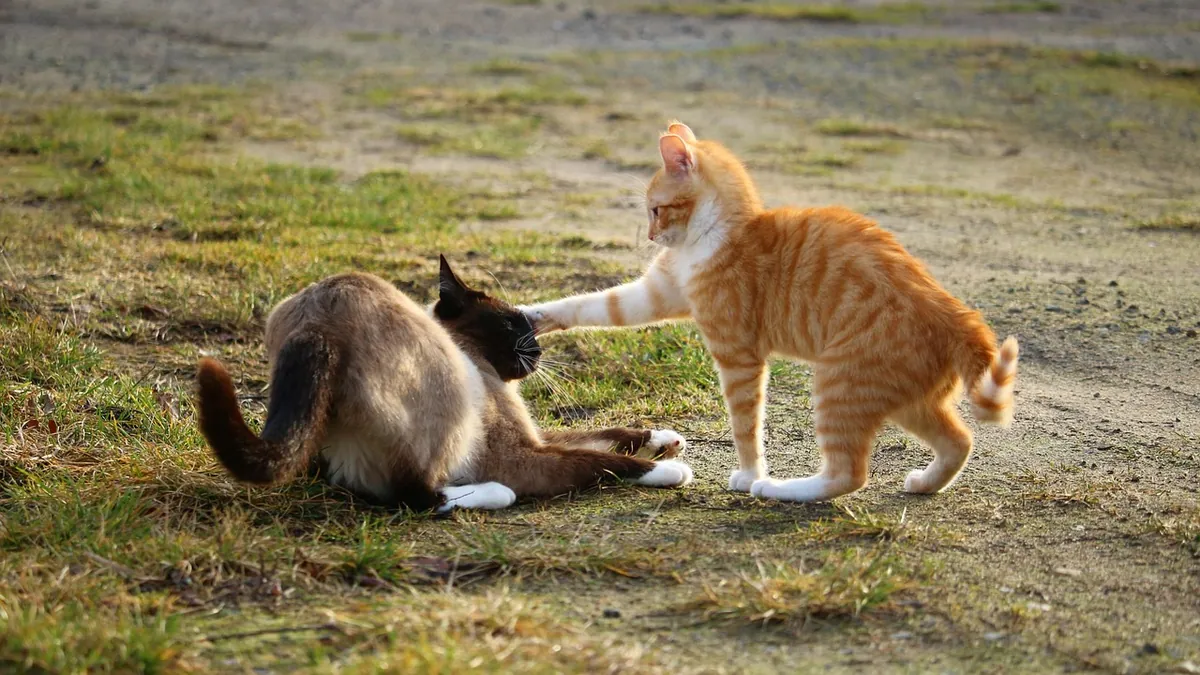
You can stop your cat from attacking your feet by giving her a better outlet for hunting energy. Most foot attacks are predatory play, not anger or revenge. The fix is scheduled interactive play, redirection to toys, and never letting hands or feet act like prey.
This article is educational and is not a substitute for veterinary diagnosis or treatment.
Quick Answer
- Play with your cat using a wand toy for two or three focused sessions every day, and end each session with a small treat or meal so the hunt has a finish.
- Keep a toy within arm's reach of where you sit or sleep, and toss or drag it the moment your cat crouches and stares at your ankles.
- Never pull your foot away fast or wiggle it under the covers. That motion looks exactly like fleeing prey and rewards the attack.
- Say nothing, freeze, and redirect. Punishment and loud reactions usually make ambushes more frequent.
- If the behavior starts suddenly in an adult cat, or comes with other changes, book a veterinary visit to rule out pain or illness.
Why Your Cat Attacks Feet and Ankles
Predatory play is normal cat behavior
Cats are built to stalk, chase, pounce, and grab. When that sequence has no outlet, ankles become the target. Your moving foot is small, fast, and low to the ground, which is close to ideal prey size for a cat.
Aggression is a common concern in pet cats, and researchers continue to sort out how genetics and environment shape it [1]. What matters for you is that the behavior usually has a trigger and a payoff. The trigger is movement. The payoff is the grab.
Boredom and too much stored energy
Indoor cats often have plenty of calories and not much to hunt. A cat who naps all day and gets ten minutes of lazy toy batting in the evening has a full tank at bedtime. That is when feet under the covers become irresistible.
Your cat learned it works
Every time you yelp, jerk your foot, or kick the blanket, the "prey" responds. From your cat's point of view, the game worked. The behavior gets stronger with repetition.
Play style and early experience
How a cat learned to play as a kitten shapes adult habits. Socialization during kittenhood supports normal social and behavioral development, and many owners never receive formal guidance on it [2]. A cat who was encouraged to wrestle hands as a kitten often graduates to ankles as an adult.
Household stress and conflict
Stress can lower a cat's threshold for all kinds of arousal, including play aggression. In multi-cat homes, the quality of relationships between cats matters. Overt positive interactions such as allogrooming and co-sleeping are reported more often when cats are related, have lived together longer, are neutered males, live indoors only, or share a single feeding area [3]. Tension between cats can spill into redirected attacks on whoever is nearby, including your feet.
Pain or a medical problem
Not every ankle grab is play. Cats in pain sometimes become irritable and reactive, especially when touched or startled. Skin problems, arthritis, dental pain, and thyroid disease can all change behavior. A sudden change in an adult cat deserves a veterinary exam.
Medical Causes to Rule Out First
Before you build a training plan, make sure your cat is healthy. Your veterinarian will decide what testing is needed based on your cat's age, history, and exam findings.
- Pain anywhere. Arthritis, dental disease, and soft tissue injuries can make a cat defensive. A cat who used to tolerate handling and now swats or bites needs a physical exam.
- Skin parasites or allergies. Itching and irritation can make a cat twitchy and reactive, especially at night.
- Hyperthyroidism and other metabolic disease. These can increase activity, restlessness, and irritability in older cats.
- Vision or hearing changes. A cat who cannot see or hear you approach may startle and strike.
- Cognitive changes in senior cats. Disorientation and night waking can come with increased biting and grabbing.
Aggression at the veterinary clinic is common, reported in 42.6% of cats in one US survey, and it is linked to behavior problems at home, including owner-directed aggression and resistance to restraint [4]. That does not mean clinic aggression causes home aggression. It means the two often travel together, so tell your veterinarian about both.
When Foot Attacks Become a Real Problem
Occasional ambushes are annoying. These signs mean it is time for a plan.
- Skin is broken. Any bite that punctures skin needs same-day veterinary attention for your cat's behavior and for your own wound care.
- Someone is getting hurt. Children, older adults, and anyone on blood thinners face higher risk.
- The behavior is escalating. Attacks get harder, more frequent, or happen without warning.
- It happens at night and ruins sleep. Repeated night attacks wear owners down and strain the bond.
- Your cat seems distressed. Hiding, hissing, flattened ears, or avoiding you suggests fear or pain, not play.
- There are other behavior changes. House soiling, overgrooming, appetite changes, or new aggression toward other pets.
How to Stop My Cat From Attacking My Feet: Step by Step
Step 1: Build a daily play schedule
Predictable play beats random play. Cats do best with routine.
- Two to three sessions per day, about 10 to 15 minutes each.
- One session should land right before your cat's most active period, often late evening or just before bed.
- Use a wand toy with feathers or a small plush. Move it like prey: dart, pause, hide behind furniture, then dash.
- Let your cat catch the toy several times. A hunt with no catch is frustrating.
- End with a small treat or a portion of her meal. Hunt, catch, eat, groom, sleep is the natural sequence.
Step 2: Redirect the instant you see the crouch
Most cats give a warning. Watch for dilated pupils, a low crouch, tail twitching, and a fixed stare at your ankles.
- Freeze. Do not jerk your foot.
- Grab the nearest toy and toss or drag it away from your body.
- If your cat pounces the toy, keep the game going for a few minutes.
- If your cat ignores the toy, stand up slowly and walk away. The game ends when the target is boring.
Step 3: Make ankles a bad target
- Wear shoes or slippers indoors during the training period. It reduces injury and makes your feet less interesting.
- Keep a toy or a crumpled paper ball in your pocket or beside your chair.
- Use a treat toss to move your cat away from your feet and onto a mat or scratching post.
Step 4: Fix the bed and blanket problem
Night attacks under the covers are the hardest version of this behavior because your cat cannot see you and you cannot see her.
- Play a full wand session 20 to 30 minutes before bed.
- Feed a meal or a substantial snack right after play.
- Close your bedroom door for two to four weeks while you build the new routine.
- If your cat must sleep with you, tuck the blanket under the mattress so feet are not moving lumps.
- Keep a toy on the nightstand. If an attack starts, toss the toy off the bed and let your cat chase it.
- Do not kick or shove. That is prey behavior and it feeds the game.
Step 5: Add enrichment so boredom does not rebuild
- Food puzzles and scatter feeding. Make your cat work for part of her daily calories.
- Window perches and bird feeders. Watching wildlife drains hunting drive safely.
- Rotating toys. Swap toys every few days so they stay novel.
- Climbing and scratching outlets. Vertical space and appropriate scratching reduce overall arousal. If scratching is also a problem, see How Do I Stop A Cat From Clawing Furniture and How To Stop A Cat From Scratching A Sofa.
- Pheromone diffusers or sprays. These can take the edge off in some cats. Ask your veterinarian if they are worth trying.
Step 6: Manage multi-cat tension
If you have more than one cat, watch for staring, blocking, and ambushing between cats. Those patterns raise overall arousal and can spill onto your ankles. Separate feeding stations, extra litter boxes, and more vertical space often help. If you also see urine marking, read Cat Spraying in the House: How to Stop It.
Step 7: Track progress
Keep a simple log for two weeks. Note the time, what happened right before, and what you did. Most owners see a pattern within a few days, and patterns are what you change.
What Not to Do
Do not punish
Yelling, spraying water, or swatting teaches your cat that hands and feet are unpredictable and scary. It can turn play aggression into defensive aggression. It also does not remove the hunting drive, so the behavior usually returns.
Do not use your hands or feet as toys
Every wrestling session with bare hands teaches your cat that skin is fair game. Once that lesson lands, ankles are a short step away.
Do not pull away fast
Fast withdrawal mimics fleeing prey. It confirms the game and makes the next ambush more likely.
Do not lock your cat in a small space as punishment
Confinement without enrichment increases frustration. If you need a break, use a separate room with water, a litter box, and toys, and treat it as a time-out for both of you, not a punishment.
Do not believe these myths
- "He is doing it for revenge." Cats do not plan revenge. They repeat what works.
- "She will grow out of it." Some cats do mellow with age, but most need an outlet and a plan.
- "He is just being affectionate." Biting and grabbing ankles is predatory behavior, not affection.
- "A second cat will fix it." Adding a cat can help some cats and make tension worse in others. Get advice before you adopt.
Do not skip the veterinary visit
If the behavior is new in an adult cat, or if your cat also seems off in any other way, a medical check comes first. Behavior changes can be the first sign of illness.
When to Involve a Veterinarian or Behavior Professional
Call your veterinarian if:
- The behavior is new, sudden, or getting worse.
- Your cat is a senior and showing night waking, confusion, or irritability.
- Your cat has other behavior changes such as house soiling, overgrooming, or appetite loss.
- Your cat has a history of aggression at the clinic. Clinic aggression is linked to a higher chance of behavior problems at home, so your veterinarian needs the full picture [4].
- You have tried scheduled play and redirection for four to six weeks with no improvement.
Ask for a referral to a veterinarian who specializes in behavior, or a certified applied animal behaviorist, for severe or dangerous cases. Medication is sometimes part of a behavior plan. Your veterinarian calculates any dose from your cat's weight and health, so never use a dose from the internet or from another pet.
Limitations and When to Contact a Veterinarian
This plan works best for healthy cats with normal predatory play drive. It will not fix pain, metabolic disease, or a stressful home environment on its own. Every cat is an individual, and your cat's case needs a veterinarian who can examine her and review her history.
Contact a veterinarian the same day if:
- A bite punctured your skin. Cat bites can inject bacteria deep into tissue and infections can move fast.
- Your cat is limping, crying out, hiding, or refusing food.
- Your cat suddenly attacks without any warning or trigger.
Go to an emergency clinic now if:
- A person in the home has a deep bite, heavy bleeding, or signs of infection such as spreading redness, heat, or fever.
- Your cat is showing signs of severe pain, collapse, trouble breathing, or seizures.
- A child or an older adult was bitten on the hand, face, or over a joint.
Schedule a routine visit if:
- The behavior has lasted more than a few weeks.
- You are losing sleep.
- You are considering rehoming your cat. Talk to your veterinarian first. There are more options than most owners realize.
Frequently Asked Questions
Why does my cat only attack my feet and not my hands?
Feet are low, fast, and close to the ground, which matches the size and movement of prey. Hands usually stay higher and move more slowly, so they are less tempting. If your cat does go after hands, the same rules apply: freeze, redirect to a toy, and never wrestle with bare skin.
Does my cat feel guilty after attacking my feet?
No. Cats do not process guilt the way people do. What looks like guilt is usually a response to your tone or body language. Your cat is reacting to your reaction, not reflecting on the bite.
Will my cat stop attacking my feet if I get another cat?
Sometimes, but not reliably. A compatible playmate can absorb some energy. A mismatched pair can raise tension and make the behavior worse. Positive cat-cat relationships are more common in related cats, cats who have lived together longer, neutered males, indoor-only cats, and homes with a single feeding area [3]. Get advice before adding a cat.
Can I use a spray bottle to stop my cat from biting my feet?
No. Spray bottles can suppress the behavior briefly, but they add fear and stress. A scared cat often becomes more defensive, and the underlying hunting drive is still there. Scheduled play and redirection address the cause.
How long does it take to stop this behavior?
Many cats improve within two to four weeks of consistent daily play and redirection. Cats with a long history of ankle attacks, or with pain or household stress in the mix, take longer. If you see no change after four to six weeks of steady work, ask your veterinarian about a behavior referral.
Related Articles
- How Do I Stop A Cat From Clawing Furniture
- Cat Spraying in the House: How to Stop It
- What Can I Use To Stop My Cat From Scratching My Furniture
- How To Stop A Cat From Scratching A Sofa
- How to Stop a Cat from Scratching the Carpet: Effective Deterrents
- Cat Hiding After Moving: How to Help Your Cat Adjust
- How to Stop Your Cat From Biting and Nipping You
- Why Does My Kitten Attack My Feet? Play Aggression
- Why Does My Kitten Attack My Hands and Feet?
References
- Genetic and Environmental Causes of Aggression in the Domestic Cat. Veterinary sciences, 2026.
- Socialising kitties: A quantitative survey of US cat owner attitudes towards kitten and adult cat socialisation programmes. Animal welfare (South Mimms, England), 2025.
- US and Canadian cat caregiver's ratings of cat-cat interactions: A video-based survey. Animal welfare (South Mimms, England), 2024.
- Correlation between aggression at the veterinary clinic and problem behaviors at home for cats in the USA. Journal of feline medicine and surgery, 2024.