Is Rough Play Normal in Puppies? How to Tell It's Healthy
By Dr. Zubair Khalid, DVM, MS, PhD ·
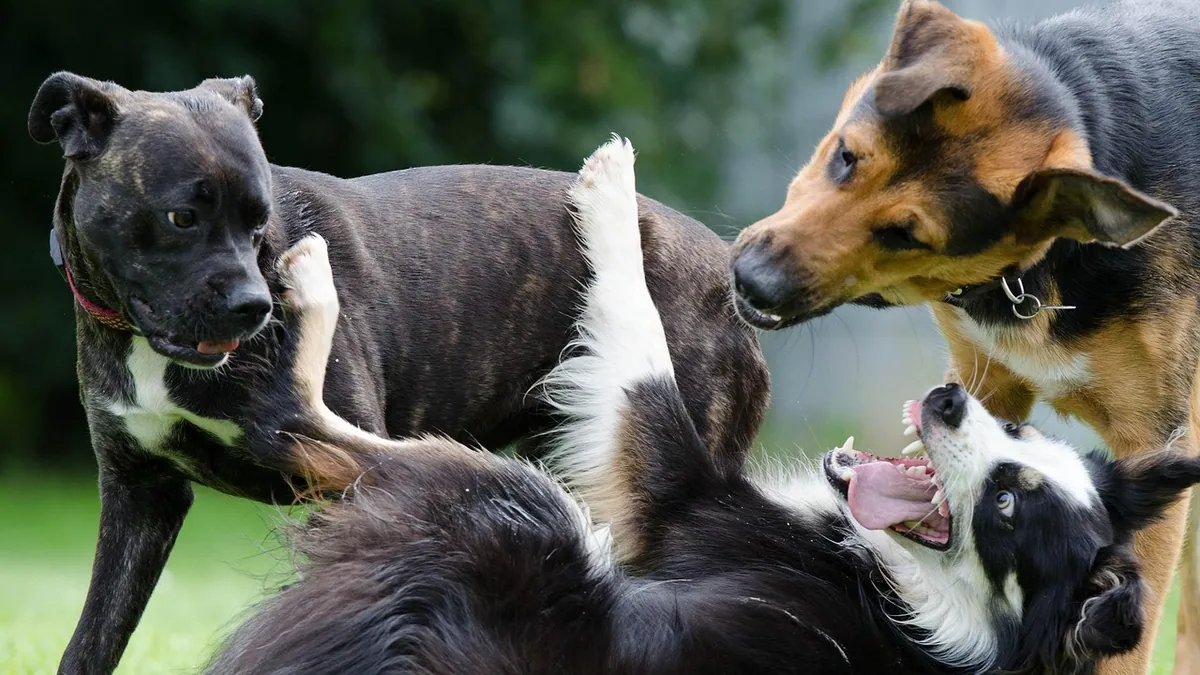
Yes, it is normal for puppies to play rough. Roughhousing is a core part of how young dogs learn bite control, body language, and social limits. The real question is not whether your puppy plays rough, but whether the play stays balanced and both dogs keep coming back for more. This article is educational and is not a substitute for veterinary diagnosis or treatment.
Quick Answer
- Rough, mouthy, wrestling play is normal and expected in puppies, especially between dogs of similar age and size.
- Healthy play swings back and forth. Both puppies take turns being on top, chasing, and pausing.
- Play has gone too far when one puppy keeps trying to escape, yelps repeatedly, stiffens, or hides and the other keeps pressing.
- Puppy rough play biting at your hands or clothes is normal mouthing, but it should be redirected to toys and taught to soften over time [1].
- Interrupt rough play with a calm pause, not punishment. Separate the puppies for a short break, then let play resume only if both are relaxed.
Why Puppies Play Rough: The Normal Reasons
Play is a prominent part of juvenile behavior in many animals, and dogs are no exception [2]. Puppies start with solitary play, like batting a toy around, and social play with littermates develops later [2]. That social play is where the rough stuff happens: wrestling, chasing, body slamming, and mock biting.
Dogs are highly social animals that communicate through body postures, facial expressions, tail and ear positions, raised hackles, vocalizations, and scent [3]. Puppy play is basically a rehearsal for those skills. Your puppy is learning how to read another dog's signals and how to send its own.
Rough play also teaches bite inhibition. When a puppy bites a littermate too hard, the other puppy yelps or quits playing. That feedback teaches the biter to ease up. This is one reason puppy play biting is so common and so useful [1].
Play is not always purely joyful, though. Research suggests play can swing between competition and cooperation, and it may involve a range of emotional states, from bonding to conflict [4]. That is why two puppies can look like they are fighting one second and be best friends the next. The rough-and-tumble look is often normal.
One more normal reason: energy. Young dogs have a lot of it, and wrestling is an efficient way to burn it off. If your puppy has been cooped up, rough play is often the release valve.
Is It Normal for Puppies to Rough Play? How to Read the Signals
The best way to judge rough play is to watch the overall pattern, not any single moment.
Signs play is healthy:
- Both puppies take turns. One is on top, then the other. Play stays roughly symmetrical [5].
- There are pauses. One puppy freezes, shakes off, or steps away, then comes back.
- Bodies stay loose. Movements are bouncy and exaggerated.
- Faces stay relaxed. A playful dog usually has a relaxed body and face, and the muzzle may look wrinkled without much tension in the facial muscles [1].
- Bites are soft. Playful mouthing is usually less painful than serious, aggressive biting [1].
- Both keep choosing to re-engage. If a puppy keeps returning for more, it is probably having fun.
Signs play is tipping over:
- One puppy is always on the bottom or always being chased.
- One puppy keeps trying to leave and the other blocks, pins, or chases it.
- Yelping happens over and over, not just once.
- The body goes stiff. An aggressive dog's body will look stiff, and it may wrinkle its muzzle and pull back its lips to expose teeth [1].
- Bites get quicker and harder. Serious, aggressive bites are usually quicker and more painful than play bites [1].
- One puppy hides, tucks its tail, or avoids the other after the session.
Symmetry matters. In a study of German Shepherd puppies, researchers measured play interactions between littermates and looked at how evenly the "wins" were distributed [5]. Balanced give-and-take is a hallmark of healthy social play. When one puppy dominates every exchange, that is a warning sign.
If you are unsure whether your dog's behavior is normal or a problem, this guide can help you sort it out: How Do I Know If My Dog Has Behavior Problems.
Medical Causes to Rule Out
Sometimes what looks like rough play or sudden aggression has a physical cause. Pain is a common trigger for behavior changes in dogs. A puppy with an injury, dental pain, or an upset stomach may snap during play that used to be fine.
If your puppy's play style changes suddenly, or if it becomes irritable, defensive, or withdrawn, a veterinary exam is a reasonable first step. This article explains the link: How to Tell If Your Dog's Aggression Is Pain-Related.
Other things to consider:
- Vision or hearing problems. A puppy that cannot see or hear another dog approaching may react defensively.
- Neurologic issues. Rare in young puppies, but sudden behavior change with other symptoms warrants a vet visit.
- Illness. A puppy that feels unwell may have less patience for rough play. If your puppy also has loose stool but seems otherwise fine, see Dog Diarrhea but Acting Normal: Should You Worry?.
Your veterinarian can rule out medical causes before you invest in behavior training.
When Rough Play Becomes a Problem
Rough play crosses into a problem when it stops being mutual.
Bullying looks like this:
- One puppy repeatedly pins, mounts, or blocks the other.
- The other puppy tries to disengage and cannot.
- Play continues after clear signals to stop (yelping, lip licking, turning away, tucking the tail).
- The "winner" never lets the other puppy have a turn.
Aggression looks different from play:
- Stiff, tense body posture [1].
- Lips pulled back to expose teeth [1].
- Hard, fast bites that cause pain or injury [1].
- Growling that is low, steady, and paired with a freeze.
- One puppy goes silent and still instead of bouncy.
Growling during play is often normal. Play growls tend to be higher pitched and paired with a loose body and wagging tail. A growl that comes with a stiff body and a hard stare is not play.
Mouthing at people is a separate issue. Most mouthing is normal dog behavior, but some dogs bite out of fear or frustration, and that type of biting can indicate problems with aggression [1]. Puppy mouthing at your hands is usually normal, but it should be managed so it does not become a habit in an adult dog with adult jaws [1].
What to Do Step by Step
1. Interrupt, do not punish
When play gets too rough, calmly separate the puppies. Use a cheerful "break" cue, then walk one puppy away for 10 to 30 seconds. If both puppies relax, let them resume. If the same puppy immediately resumes bullying, end the session.
A short pause teaches the puppies that rough play stops the fun. It also gives the over-aroused puppy a chance to reset.
2. Match playmates carefully
Puppies do best with partners of similar size, age, and play style. A large, bouncy puppy paired with a small, shy one is a recipe for trouble. Supervise all puppy play, especially with unfamiliar dogs.
3. Teach bite inhibition
When your puppy mouths your hand, yelp or say "ouch" in a high, sharp tone, then pause the interaction for a few seconds. If the mouthing continues, offer a toy instead. Over time, this teaches your puppy that teeth on skin ends the fun [1].
4. Redirect to appropriate outlets
Give your puppy legal ways to use its mouth and body:
- Tug toys
- Chew toys of appropriate hardness
- Flirt poles
- Puzzle feeders
- Short training sessions
A tired puppy is a calmer puppy. Physical exercise and mental work both help.
5. Build a routine
Predictable meals, potty breaks, play sessions, and naps reduce the frantic energy that fuels rough play. Puppies need a lot of sleep, often 16 to 20 hours a day. An overtired puppy is more likely to bite hard and ignore signals.
If your puppy's routine has recently changed and other training has slipped, this article may help: Puppy Potty Training Going Well Then Not.
6. Socialize early and often
Early and frequent socialization with many different dogs can improve a dog's ability to interact with other dogs and people [3]. Puppy classes, supervised playgroups, and calm introductions to friendly adult dogs all help. Different breeds also signal differently, and those variations can make communication harder [3]. Exposure to a range of dogs builds your puppy's social skills.
What Not to Do
Do not punish rough play with physical corrections. Hitting, alpha rolls, or scruff shakes can increase fear and defensive aggression. They also damage your puppy's trust in you.
Do not assume all growling is bad. Play growls are common. Punishing a growl can suppress the warning without fixing the underlying feeling, which is dangerous.
Do not let "let them work it out" run unchecked. Some owners believe dogs always sort out their own disputes. That is not true for puppies. A confident bully can traumatize a shy puppy, and the shy puppy may learn that other dogs are scary.
Do not use your hands as toys. Wrestling with your hands teaches your puppy that hands are for biting. That is cute at 10 pounds and painful at 60.
Do not ignore sudden behavior changes. A puppy that was playful yesterday and is snapping today needs a veterinary exam.
When to Involve a Veterinarian or Behavior Professional
Call your veterinarian if:
- Your puppy's play style changes suddenly.
- Your puppy shows pain, lameness, or reluctance to be touched.
- Your puppy bites a person hard enough to break skin.
- Your puppy seems fearful or aggressive toward other dogs outside of play.
- You feel unsafe or overwhelmed managing your puppy's behavior.
A veterinarian can rule out medical causes and may refer you to a certified applied animal behaviorist or veterinary behaviorist. These professionals have advanced training in behavior modification. A general trainer is not the same as a behavior specialist, and for aggression or serious anxiety, you want the specialist.
Limitations and When to Contact a Veterinarian
This article covers general patterns. Every puppy is an individual, and your veterinarian needs to evaluate your specific dog.
Contact your veterinarian the same day if:
- Your puppy is limping, crying, or holding a body part after a play session.
- Your puppy has a wound, swelling, or bleeding from a bite.
- Your puppy stops eating or drinking.
- Your puppy seems painful when touched.
Go to an emergency clinic now if:
- There is heavy bleeding that will not stop.
- Your puppy collapses, has a seizure, or has trouble breathing.
- Your puppy has a deep puncture wound, especially near the eye, throat, or chest.
- Your puppy is unresponsive or extremely lethargic.
Schedule a routine visit if:
- Play biting is getting harder or more frequent.
- Your puppy is bullying other dogs at the park or in class.
- You are unsure whether the behavior is normal.
- You want help with training and socialization.
Frequently Asked Questions
Is it normal for puppies to rough play with adult dogs?
Yes, as long as the adult dog is tolerant and the play stays balanced. Adult dogs often teach puppies manners by giving calm corrections. Watch for the adult dog to disengage, and step in if the puppy keeps pestering.
Do puppies play rough to establish dominance?
Puppies play rough to practice social skills, not to dominate. Play is a mix of competition and cooperation, and it can shift between the two [4]. A puppy that always "wins" is not dominant, it is just not getting feedback.
Should I let my puppy growl during play?
Yes, if the body is loose and the play is mutual. Play growls are normal. If the growl comes with a stiff body, hard stare, or snapping, separate the puppies and assess the situation.
How much rough play is too much for a puppy?
There is no set number. Watch the balance. If both puppies take turns, pause, and return for more, the play is probably fine. If one puppy is trying to escape or is getting hurt, it is too much.
Can rough play make my puppy aggressive?
Rough play with other puppies does not create aggression. Rough play with your hands can teach biting habits that are hard to break in adult dogs [1]. Redirect mouthing to toys and teach bite inhibition early.
Related Articles
- How to Tell If Your Dog's Aggression Is Pain-Related
- How Do I Know If My Dog Has Behavior Problems
- Dog Diarrhea but Acting Normal: Should You Worry?
- Puppy Potty Training Going Well Then Not
- Chewy Dog Food: Is It a Healthy Choice for Your Pup?
- Why Is My Dog Limping On Front Leg But No Pain
- Is It Normal for Puppies to Fight? Play vs Real Aggression
- Why Does My Puppy Growl When Playing? Normal or Not
- Is It Normal for Dogs to Bite Each Other When Playing?
References
- Mouthing, Nipping and Play Biting in Adult Dogs. ASPCA Animal Poison Control Center.
- A Descriptive Methodology for Studying the Ontogeny of Object Play and Breed Differences in Dogs (Canis lupus familiaris). Animals : an open access journal from MDPI, 2023.
- Normal Social Behavior in Dogs - Dog Owners. Merck Veterinary Manual.
- Nuancing 'Emotional' Social Play: Does Play Behaviour Always Underlie a Positive Emotional State?. Animals : an open access journal from MDPI, 2024.
- Friendship or Competition? Symmetry in Social Play within the Two Packs of German Shepherd Puppies. Animals : an open access journal from MDPI, 2020.