Is It Normal for Kittens to Play Rough With Each Other?
By Dr. Zubair Khalid, DVM, MS, PhD ·
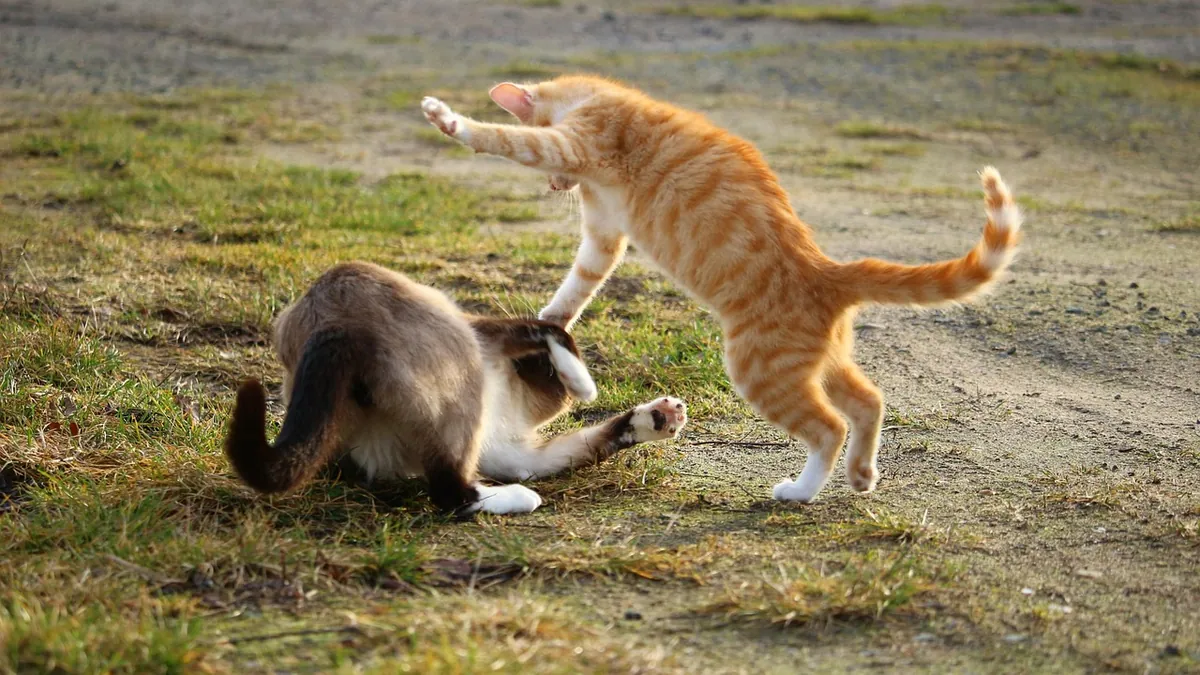
Yes, it is normal for kittens to rough house. Play fighting is how kittens build coordination, learn bite control, and practice social skills with their littermates. The tricky part is telling normal rough-and-tumble play apart from real aggression, and knowing when to step in.
This article is educational and is not a substitute for veterinary diagnosis or treatment.
Quick Answer
- Rough play between kittens is normal and healthy. It peaks in young cats and usually involves chasing, pouncing, swatting, and wrestling [1].
- Kittens learn to inhibit their bites and keep their claws sheathed during play. How well they learn this varies from cat to cat [1].
- Real aggression looks different. Watch for flattened ears, hissing, growling, puffed fur, yowling, and one kitten trying to escape or hide.
- Give kittens at least two play sessions a day, 10 to 15 minutes each, ideally before meals. Let them catch the toy at the end and offer a treat [1].
- Never punish rough play with hitting, yelling, or scruffing. Redirect the energy into toys and enrichment instead.
Why Kittens Rough House
Rough play is a normal part of how cats develop. Play helps cats build physical and mental abilities along with social skills. When cats play, they pretend to stalk, chase, pounce on, swat, and bite prey, and they are drawn to moving things [1].
Kittens raised together get a built-in classroom. They learn bite inhibition and claw control through repeated play with their siblings. A kitten that bites too hard gets a yelp or a swat back, and over time learns to soften the bite. How much a cat learns to inhibit their play varies from one cat to the next [1].
Social development starts early. The basic feline social unit is the mother cat and her kittens, and weaning happens between 5 and 8 weeks. In stable outdoor groups, kittens often stay with their mother or her extended social group for the first 12 to 18 months of life [2]. Play is one of the main ways kittens practice the social rules they will use as adults.
Socialization matters here too. A survey of US cat owners found that most had not heard of socialization programs for kittens, though about half said they would be interested in enrolling in one [3]. If you are raising a kitten, early positive experiences with people, other cats, and handling set the stage for calmer behavior later.
What Normal Play Looks Like
Normal kitten play has a give-and-take rhythm. One kitten pounces, the other rolls and swats back, then they switch roles. You may see:
- Chasing and being chased, with roles swapping back and forth
- Pouncing, wrestling, and bunny-kicking
- Claws mostly sheathed and bites that look soft
- Pauses between rounds, with both kittens shaking off or walking away briefly
- Both kittens coming back for more
If both kittens keep re-engaging, it is usually play. If one kitten is trying to get away and the other keeps pursuing, that is a warning sign.
When Play Tips Into Aggression
Rough play can lead to aggression, and there are key differences between play and other types of aggression [1]. Play aggression is often triggered by boredom, long hours alone, or being encouraged as a kitten to chase hands and feet. That behavior can be cute in a small kitten, but as the cat grows stronger, the bites and scratches really start to hurt, and by then the habit can be hard to change [1].
Aggression between cats is not rare. In a survey of US and Canadian caregivers of two cats, overt negative interactions were reported in some households, while positive interactions like allogrooming and co-sleeping were more common when cats were related, had lived together longer, were neutered males, lived indoors only, or shared a single feeding area [4]. That tells you the relationship history and home setup matter a lot.
Medical Causes to Rule Out
Sometimes what looks like rough play is actually pain, fear, or illness. Cats that feel unwell may become irritable and swat or bite when touched or approached.
Aggression at the veterinary clinic has been linked to behavior problems at home. In one US survey, 42.6% of cats showed aggression at the vet, and clinic aggression was positively associated with problems at home, including stranger-directed aggression, owner-directed aggression, resistance to restraint, aggression toward familiar cats, house-soiling, and separation-related behaviors [5]. That does not mean clinic aggression causes home problems. It means both can stem from the same underlying fear or stress.
Genetic and environmental factors both play a role in feline aggression, and the evidence is still incomplete [6]. If a kitten's rough behavior seems sudden, intense, or out of character, a veterinary exam is the right first step. Pain, dental disease, arthritis, vision problems, and hormonal conditions can all change how a cat interacts with others.
If you notice a kitten straining to pee, crying in the litter box, or licking the genital area, that is a medical emergency, not a behavior issue. See Cat Straining To Pee for what to do.
Is It Normal for Kittens to Play Rough With Each Other, or Is It a Problem?
Most of the time, yes, it is normal. The behavior becomes a problem when it stops being mutual, when it causes injury, or when it spills over onto people.
Signs It Is Still Play
- Both kittens initiate and re-initiate
- Movements are exaggerated and bouncy
- Claws stay mostly in and bites stay soft
- Ears are forward or relaxed
- No hissing, growling, or yowling
- Both kittens can disengage and walk away without being chased
Signs It Has Become a Problem
- One kitten hides, avoids the other, or stops eating
- Hissing, growling, yowling, or puffed fur
- Flattened ears, dilated pupils, and a stiff, low body posture
- Bites that break skin or draw blood
- One kitten cornered with no escape route
- Rough play directed at your hands, feet, or ankles
If the pattern has shifted and one cat is now targeting another, see Why Is My Cat Suddenly Aggressive Towards Other Cats?. If you just brought home a new kitten and the resident cat is hissing, that is a different situation, covered in Cat Hissing at New Kitten: How Long Will It Last?.
What to Do: Step by Step
1. Build a Daily Play Routine
Make play part of your daily routine. At least twice each day, set aside 10 to 15 minutes to play with your cat, ideally before meals. At the end of playtime, always let your cat catch the toy one last time and give a few treats [1].
For two kittens, use two wand toys so both can play at once. This prevents one kitten from monopolizing the action and reduces frustration.
2. Redirect Rough Play to Toys
Kittens who chase hands and feet are usually bored or under-stimulated. Keep hands out of play entirely. If a kitten grabs your ankle, freeze, then offer a toy instead. Do not yank your hand away, since that mimics prey and rewards the pounce.
3. Increase Environmental Enrichment
Boredom fuels rough play. Add cat trees, window perches, puzzle feeders, and rotating toys. Cats are drawn to movement, so toys that mimic prey are the most engaging [1].
4. Give Each Kitten Space and Resources
In multi-cat homes, spread out food, water, litter boxes, and resting spots. The survey data suggest that related cats and those with more shared history tend to show more positive interactions, and household setup plays a role too [4]. Separate feeding stations and multiple litter boxes reduce competition and tension.
5. Use Time-Outs Instead of Punishment
If play gets too intense, calmly separate the kittens for a few minutes. A short break lets arousal drop. Then let them re-engage. Repeat as needed. This teaches them that rough play ends the fun.
6. Keep Sessions Short and End on a Win
End every play session with a successful catch and a treat [1]. This gives the kitten a sense of completion and reduces the frustration that can spill into aggression.
What Not to Do
- Do not hit, yell at, or scruff a kitten for playing rough. Punishment increases fear and can make aggression worse.
- Do not use your hands or feet as toys, even when the kitten is tiny. It teaches habits that hurt when the cat is grown [1].
- Do not assume all wrestling is bad. Mutual, bouncy play is healthy and should not be interrupted.
- Do not separate kittens permanently after one scuffle. Brief, supervised breaks work better than isolation.
- Do not skip the vet visit. Sudden behavior changes need a medical check before any training plan.
When to Involve a Veterinarian or Behavior Professional
Call your veterinarian if:
- Bites or scratches are breaking skin or causing wounds
- One kitten is hiding, not eating, or avoiding the other
- Rough play is directed at people and leaves marks
- The behavior started suddenly in an adult cat
- You see signs of pain, such as limping, drooling, or sensitivity to touch
A veterinarian can rule out medical causes and, if needed, refer you to a certified behavior professional. Behavior problems at home often travel with fear and stress in other settings, so a full picture helps [5]. If aggression is escalating in a multi-cat home, see Cat Aggression Towards Other Cats: How to Manage Multi-Cat Households. For sudden changes in an adult cat, Cat Sudden Aggression: What Could It Mean? walks through possible triggers.
Limitations and When to Contact a Veterinarian
This article covers general patterns, not your specific kittens. Individual cases need a veterinarian who can examine the cats, review their history, and rule out medical causes.
Contact your veterinarian the same day if a kitten has a wound from a fight, is limping, is hiding and refusing food, or has a sudden change in behavior.
Go to an emergency clinic now if a kitten is straining to pee, crying in the litter box, vomiting repeatedly, breathing hard, or collapsed. Urinary blockage in male cats is fatal within hours without treatment.
Schedule a routine visit if rough play is escalating, if one kitten is losing weight, or if you feel unsure whether the behavior is play or aggression. Early help is easier than fixing a long-standing pattern.
Frequently Asked Questions
Should I break up kittens when they wrestle?
No, not if both kittens keep coming back for more. Mutual wrestling with soft bites, sheathed claws, and role swapping is healthy play. Step in only when one kitten is trying to escape, hiding, or showing fear.
Why does my kitten attack my hands and feet?
Kittens chase hands and feet because they mimic prey and because the behavior gets rewarded when you pull away. This is often made worse when kittens are encouraged to chase hands and feet early on [1]. Keep hands out of play and redirect to wand toys every time.
At what age do kittens stop playing rough?
Rough play usually peaks in the first few months and gradually settles as kittens mature. Some cats stay playful for life. The intensity tends to drop once kittens learn bite inhibition through play with littermates [1].
Can rough play turn into real aggression?
Yes, rough play can lead to aggression, especially when kittens are bored, left alone for long hours, or taught to target hands and feet [1]. Watch for the shift from bouncy, mutual play to tense, one-sided pursuit with hissing or growling.
Do kittens grow out of rough play on their own?
Most kittens calm down as they mature, but the habit can stick if they never learn limits. Providing daily play sessions, enrichment, and consistent redirection helps shape calmer behavior [1]. If rough play is escalating or causing injuries, talk to your veterinarian.
Related Articles
- Why Is My Cat Suddenly Aggressive Towards Other Cats?
- Cat Hissing at New Kitten: How Long Will It Last?
- Cat Aggression Towards Other Cats: How to Manage Multi-Cat Households
- Cat Sudden Aggression: What Could It Mean?
- Cat Straining To Pee
- Why Is My Cat suddenly house-soiling? FLUTD Stress and Litter Box Aversion
- Is It Normal for Kittens to Wrestle? Play vs. Fighting
- Is It Normal for Cats to Fight? Play vs Real Fights
- Why Does My Kitten Attack My Hands and Feet?
References
- Cats Who Play Rough. ASPCA Animal Poison Control Center.
- Normal Social Behavior in Cats - Cat Owners. Merck Veterinary Manual.
- Socialising kitties: A quantitative survey of US cat owner attitudes towards kitten and adult cat socialisation programmes. Animal welfare (South Mimms, England), 2025.
- US and Canadian cat caregiver's ratings of cat-cat interactions: A video-based survey. Animal welfare (South Mimms, England), 2024.
- Correlation between aggression at the veterinary clinic and problem behaviors at home for cats in the USA. Journal of feline medicine and surgery, 2024.
- Genetic and Environmental Causes of Aggression in the Domestic Cat. Veterinary sciences, 2026.