Is It Normal for Puppies to Fight? Play vs Real Aggression
By Dr. Zubair Khalid, DVM, MS, PhD ·
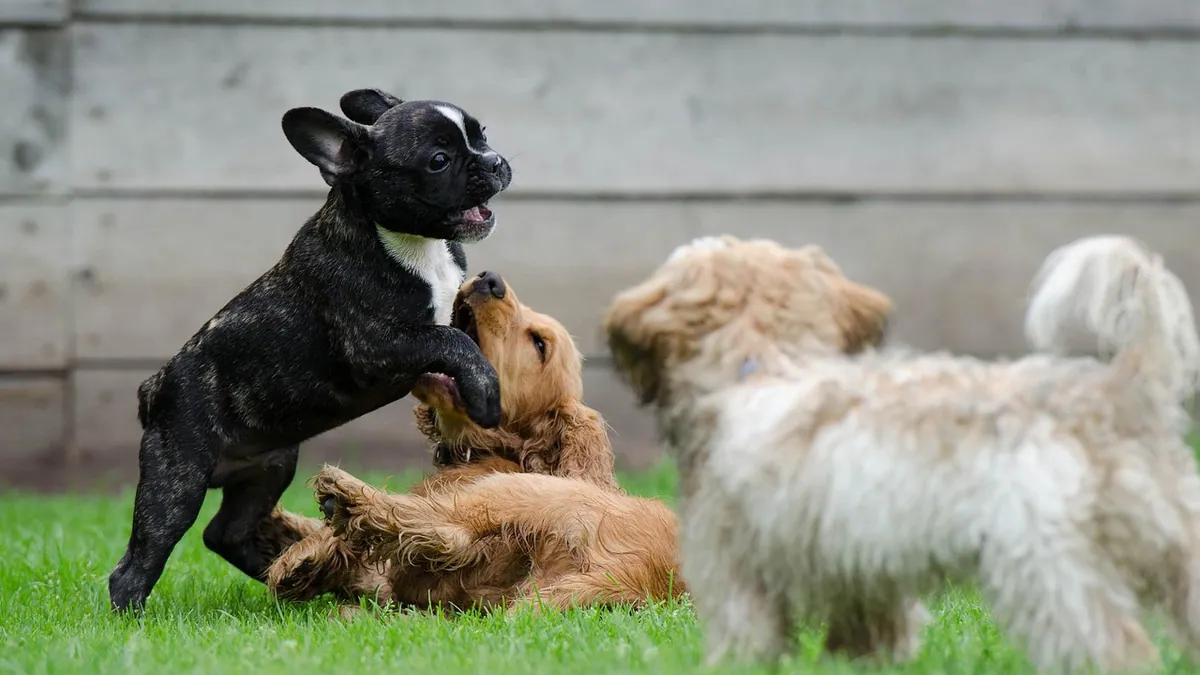
Yes, it is normal for puppies to fight. Most of what looks like fighting is play, and it helps puppies learn bite control and social skills. Real aggression looks different, and it needs a different response from you.
This article is educational and is not a substitute for veterinary diagnosis or treatment.
Quick Answer
- Play fighting is normal and healthy. Puppies chase, pounce, wrestle, and bite each other all over, and this teaches them to control their bite strength [1].
- Watch for role reversal. In play, puppies take turns being on top and on the bottom. If one puppy is always pinned and trying to escape, stop the session.
- Loose, bouncy bodies and play bows mean play. Stiff bodies, hard stares, and tucked tails mean stress or aggression.
- A yelp and a brief pause is normal. Puppies bite too hard, the other puppy yelps, both stop for a moment, then play resumes [1]. That is how they learn.
- Intervene right away if you see contact that causes injury, a puppy who cannot get away, or aggression aimed at you.
Is It Normal for Puppies to Fight With Each Other?
Yes. Puppies spend a huge amount of time playing, chewing, and exploring, and all of those activities involve their mouths and their sharp baby teeth [1]. When two puppies get together, wrestling and mouthing are how they communicate.
Puppies usually learn bite inhibition during play with other puppies [1]. If you watch a litter or a puppy playgroup, you will see chasing, pouncing, and wrestling. Puppies also bite each other all over. Every so often, one puppy bites a playmate too hard. The bitten puppy yelps and usually stops playing. The biter is often startled by the yelp and also pauses. Soon both puppies are back at it [1].
That cycle matters. Through repeated play, puppies learn to control how hard they bite so nobody gets hurt and the fun can continue [1]. A puppy who never gets this feedback from other puppies may struggle to learn a soft mouth later.
What Normal Play Fighting Looks Like
Healthy play has a rhythm. Look for these signs:
- Play bows (front legs down, rear end up)
- Loose, wiggly, exaggerated movement
- Role reversal, where the puppy on top becomes the puppy on the bottom
- Open mouths and air snaps that miss
- Pauses where both puppies shake off, sniff, or take a break
- Both puppies keep coming back for more
If both puppies are volunteers, it is play.
What Real Aggression Looks Like
Real aggression has a different shape. In dogs with severe dog-directed aggression, biting attacks start with short latencies and happen far more often than in typical dogs. High intensity attacks involve crushing and shearing bites and guttural growls, and they target vulnerable areas like the throat [2].
You will rarely see that level of violence in a puppy playgroup, but the early warning signs matter:
- A stiff, frozen body
- A hard stare with no play bow
- Lips pulled back with a closed mouth
- A tucked tail or ears pinned flat
- One puppy trying to leave and the other following to continue
- Yelps that do not lead to a pause
- Growls that are low and continuous instead of short and playful
If you see these, separate the puppies calmly and give them a break.
Is It Normal for Puppies to Fight Aggressively?
Sometimes, yes, and that is when you need to pay attention. Puppies can show real aggression, and it is not always just play that got out of hand.
A case report described a 9-month-old spayed female Australian Shepherd with escalating aggression toward familiar and unfamiliar people. She had bitten multiple times and caused human injury. Her aggression showed up in many contexts, including handling, play, resource guarding, and meeting visitors and dogs outside the home [3].
Her risk factors are worth knowing because they apply to many puppies. She was removed from her dam at 6 weeks of age, had minimal early socialization, had chronic illness during early development, and both parents were later found to have aggressive traits [3]. A full medical workup found no underlying medical cause, and her diagnoses included generalized anxiety, impulse-control aggression, fear-related aggression, possessive aggression, and socialization deficits [3].
That case is severe, but it shows the pattern. Early-onset aggression that shows up in many situations and keeps getting worse is not normal puppy behavior. It needs professional help.
Is It Normal for Puppies to Attack You?
Puppies mouth and nip at people constantly. That is normal, and it is the same mouth-focused behavior they show with other puppies [1]. It may look cute at seven weeks, but it is much less cute at three or four months when the puppy is bigger and those teeth are stronger [1].
The line between normal mouthing and aggression toward people is about intent and intensity. A puppy who grabs your sleeve during play and lets go when you yelp is mouthing. A puppy who freezes, stares, growls, and then lunges at your hand when you reach for a toy is showing something else.
Puppies can learn bite inhibition from people too. If they can learn it from other puppies, they can learn the same lesson from you [1]. That means yelping or saying "ouch" in a high pitch, pausing the play, and rewarding gentle mouths.
Is It Normal for Dogs to Occasionally Fight?
Yes, occasional squabbles between adult dogs happen, and most are brief and resolve on their own. The question is whether the dogs can be together safely afterward.
Some factors raise the risk. A study of terrier-type dogs found that participation in breed-specific working trials and aptitude tests was linked to higher scores for aggression toward other dogs and toward strangers, while non-participation was linked to higher owner-directed aggression, fear, and attention-seeking [4]. Male dogs in that group showed higher dog-directed aggression than females [4].
That does not mean activities cause aggression. It means breed, sex, and lifestyle all shape how a dog behaves around other dogs. If your adult dogs fight more than rarely, or if a fight draws blood, treat it as a behavior problem and get help.
Medical Causes to Rule Out First
Before you assume a behavior problem, rule out pain and illness. A puppy who suddenly snaps when picked up, touched on the ear, or moved off the couch may be hurting.
Your veterinarian will do a full physical exam and may recommend lab work or imaging. In the Australian Shepherd case, repeated laboratory testing and neurological assessment found no medical abnormalities, which is why the diagnosis moved to behavior [3]. That is the right order. You check the body first, then the behavior.
Common medical issues that can look like aggression include:
- Dental pain or a broken tooth
- Ear infections
- Orthopedic pain, especially in growing large-breed puppies
- Skin infections or hot spots
- Neurologic disease
- Hormonal problems
If your puppy's behavior changed suddenly, book a veterinary visit before you book a trainer.
When Puppy Fighting Becomes a Problem
Play is fine. Problems look like this:
- Injuries. Any bite that breaks skin, causes a puncture, or leaves a bruise is not play.
- One-sided play. If one puppy is always pinned, always chased, or always hiding, the play is not fair.
- No pauses. Healthy play has breaks. Constant, escalating action with no role reversal is a warning sign.
- Aggression toward people. Growling, snapping, or biting when you handle your puppy, take a toy, or approach food is a problem.
- Escalation over time. Behavior that gets worse week after week needs help sooner, not later.
A puppy who is repeatedly involved in real fights may be at risk for long-term behavior problems. Early intervention works better than waiting.
What to Do Step by Step
1. Learn to Read Body Language
Spend a few sessions just watching your puppy play without intervening. Note who starts, who stops, and who controls the pace. You will get better at spotting the shift from play to stress.
2. Interrupt Early, Not Late
If you see stiffness, a hard stare, or a puppy trying to leave, call a break. Use a cheerful voice, clap once, or toss a treat away from the other puppy. Do not grab collars or yell.
3. Teach Bite Inhibition
When your puppy mouths you, yelp in a high pitch, stop moving for a second, then resume. If the biting continues, end the play session for a minute. This mirrors what puppies do with each other [1].
4. Use Short, Supervised Play Sessions
Keep playdates short, especially for young puppies. Five to ten minutes is plenty. End on a good note while both puppies are still having fun.
5. Add Enrichment
Tired puppies fight less. Give your puppy safe chews, food puzzles, sniff walks, and training games. Mental work tires a puppy as much as running.
6. Manage the Environment
Separate puppies at feeding time. Give each puppy its own bed and space. Remove high-value toys when more than one dog is around. Most fights start over resources.
7. Socialize During the Sensitive Window
The socialization phase runs roughly from 3 to 12 weeks, when puppies form primary social bonds and adapt to new things. A lack of positive experiences during this window can lead to adult problems like fear, aggression, or anxiety [5].
Puppies adopted at 1 or 2 months of age showed higher signs of fear, anxiety, and attention-seeking than puppies adopted later [5]. If you have a young puppy, keep exposing it to safe, positive new experiences now.
8. Get Help Early
If your puppy is showing real aggression, do not wait. Ask your veterinarian for a referral to a certified behavior professional. For more on this topic, see Dog Behavior Problems Aggression and Puppy Behavior Problems.
What Not to Do
Do not punish growling. A growl is information. If you punish it, you may get a dog who bites without warning.
Do not use alpha rolls, scruff shakes, or physical corrections. These methods raise fear and can make aggression worse.
Do not assume it is "just play" when a puppy is injured or terrified. That is a myth, and it delays help.
Do not separate puppies from their mother and littermates too early. Early removal from the dam at 6 weeks was a risk factor in a severe aggression case [3], and puppies adopted at 1 or 2 months showed more fear and anxiety later [5].
Do not rely on advice from people who minimize the problem. In the case report, prior advisors downplayed the behavior and no treatment was started before referral [3].
Do not expect a quick fix. Behavior change takes weeks to months of consistent work.
When to See a Veterinarian or Behavior Professional
Contact your veterinarian if:
- Your puppy's behavior changed suddenly
- Your puppy shows pain, limping, or reluctance to be touched
- Biting is getting harder or more frequent
- Your puppy guards food, toys, or space
- You feel unsafe handling your puppy
Ask for a referral to a board-certified veterinary behaviorist or a certified applied animal behaviorist if:
- Your puppy has bitten a person and broken skin
- Fights between your dogs cause injury
- Aggression happens in many contexts, not just one
- You have tried training and see no improvement
For training-focused help, see Dog Training To Help With Aggression. If pain might be involved, read How to Tell If Your Dog's Aggression Is Pain-Related.
Veterinarians see aggressive behavior often. In one national survey, more than 60% of responding small animal veterinarians managed at least five aggressive dogs per year, and 80% saw an active preventive role for themselves [6]. Your vet is a good first stop.
Limitations and When to Contact a Veterinarian
This article covers general patterns. Your puppy is an individual, and individual cases need a veterinarian who can examine your dog in person.
Call your veterinarian the same day if:
- Your puppy was bitten and has a wound, swelling, or lameness
- Your puppy is suddenly aggressive after being fine before
- Your puppy is not eating, is vomiting, or seems painful
- Aggression started after a fall, a fight, or a change in the home
Go to an emergency clinic now if:
- A bite broke skin on a person or another animal
- There is heavy bleeding, a deep puncture, or a wound on the throat or face
- Your puppy cannot walk or is collapsing
- Your puppy is showing neurologic signs like circling, head tilt, or seizures
Book a routine visit if:
- Play fighting is getting rougher over weeks
- Your puppy guards food or toys
- You want help with bite inhibition or socialization
Frequently Asked Questions
Should I let my puppies play fight?
Yes, in most cases. Play fighting teaches bite inhibition and social skills, and puppies learn to control their bite strength through it [1]. Supervise the sessions, keep them short, and step in if one puppy cannot get away.
How do I know if puppy play is turning into a real fight?
Watch the pauses and the body language. Play has loose bodies, play bows, and role reversal. A real fight has stiff bodies, hard stares, and bites that land and cause injury. Severe dog-directed aggression involves crushing bites and guttural growls aimed at vulnerable areas like the throat [2].
At what age should I worry about puppy aggression?
Worry when aggression is severe, early, and getting worse. A 9-month-old puppy in one case report had already caused human injury through bites, with problems across many contexts [3]. Any puppy who bites a person hard enough to break skin needs a veterinary and behavior evaluation.
Can I fix puppy aggression on my own?
Mild mouthing and rough play often improve with consistent training at home. Real aggression usually needs professional help. A multimodal treatment plan, which can include behavior modification and other support, was used successfully in a severe juvenile case [3]. Ask your veterinarian for a referral.
Does early adoption make puppies more aggressive?
It can raise the risk of fear and anxiety, which are linked to aggression. Puppies adopted at 1 or 2 months showed higher behavioral signs of fear, anxiety, and attention-seeking than puppies adopted later [5]. The socialization window from 3 to 12 weeks is a sensitive time, and poor experiences then can lead to adult behavior problems [5].
Related Articles
- Dog Behaviour Problems Aggression
- Dog Behavior Problems Aggression
- How to Tell If Your Dog's Aggression Is Pain-Related
- Puppy Behavior Problems
- Dog Training To Help With Aggression
- Dog Training Tips For Aggressive Behavior
- Why Is My Puppy Attacking Me? Play Biting vs Aggression
- Is Rough Play Normal in Puppies? How to Tell It's Healthy
- Is It Normal for Dogs to Bite Each Other When Playing?
References
- Mouthing, Nipping and Biting in Puppies. ASPCA Animal Poison Control Center.
- Topography of violent intraspecific aggression in a subset of dogs from directionally selected lines of Canis familiaris. PloS one, 2025.
- Evaluation of a Young Dog for Escalating Aggression Toward Both Familiar and Unfamiliar People. Case reports in veterinary medicine, 2026.
- Participation in Breed-Specific Cynological Activities Is Associated with Behavioral Variation in Terrier-Type Dogs: A C-BARQ Study. Animals : an open access journal from MDPI, 2026.
- The Puppies' Age at Adoption Time Influences the Behavioral Responses of Adult Dog. Veterinary sciences, 2025.
- Small Animal Veterinarians' Perceptions and Practices in Dog Aggression Prevention in Italy: A National Survey. Animals : an open access journal from MDPI, 2026.