Why Does My Puppy Chase His Tail? Normal or Problem?
By Dr. Zubair Khalid, DVM, MS, PhD ·
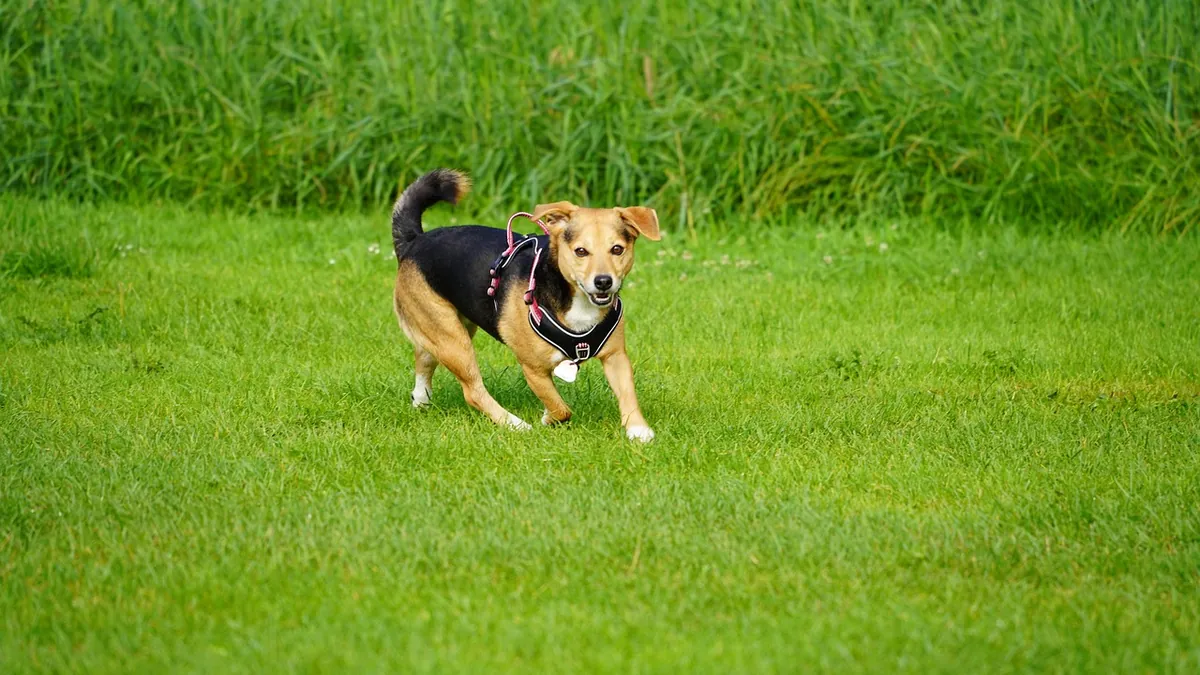
Why does my puppy chase his tail? Most of the time, it is normal play or exploration, especially in puppies under six months old who are still learning how their body moves. It becomes a concern when the chasing is frequent, intense, hard to interrupt, or paired with biting, licking, or signs of pain. This article is educational and is not a substitute for veterinary diagnosis or treatment.
Quick Answer
- Occasional tail chasing in a young puppy is usually play, curiosity, or a way to burn off energy.
- Sudden onset, frantic spinning, or chasing that continues even when you try to distract him points to a medical or behavioral problem.
- Common medical triggers include fleas, anal gland pain, skin infections, and (rarely) seizures or neurological disease.
- Compulsive tail chasing is a real diagnosis in dogs and often needs both medication and a behavior plan [1].
- Step one is always a veterinary exam. You cannot train away pain.
Why Does My Puppy Chase His Tail?
Normal reasons puppies chase their tails
Puppies explore the world with their mouths and their bodies. A tail is a moving object attached to them, and for a few weeks it can seem genuinely fascinating. Many puppies chase, nip, or spin after their tail during play, then lose interest when something better comes along.
Other normal reasons include:
- Burning off energy. A puppy with no outlet for play may invent his own game.
- Teething and oral exploration. Chewing and nipping at the tail can feel good, similar to chewing a toy.
- Attention. If chasing the tail made you laugh or reach for him the first time, he may repeat it.
- Breed tendency. Some herding and high-drive breeds are more likely to spin and chase.
Veterinarians draw a clear line between normal but unwanted behaviors (pulling, digging, chewing, play biting) and behaviors caused by an underlying disorder [2]. Tail chasing can fall on either side of that line, and the difference usually comes down to frequency, intensity, and whether your puppy can stop.
When it looks more like a compulsion
Compulsive disorder in dogs involves repeated behaviors that are out of place and take over the dog's daily life [1]. Tail chasing is one of the most common forms of compulsive behavior reported in dogs [1]. In one documented case, a dog chased his tail hard enough to cause severe wounds on his tail and thigh [1].
That is the extreme end, but it shows why early attention matters. Compulsive behavior tends to get worse over time, not better, if nothing changes.
The role of anxiety and arousal
Fear and anxiety are common in dogs. In a large United States sample of 43,517 dogs, owners reported a range of anxiety and fear behaviors on a 5-point severity scale [3]. An anxious puppy is more likely to develop repetitive behaviors, including spinning and tail chasing.
Behavior problems rooted in fear, anxiety, excessive arousal, and impulsivity can develop from genetics, a stressful early environment, poor socialization, medical conditions affecting the brain, or traumatic events [2]. Pain is also a major risk factor. In one review of veterinary behavior cases, between 28% and 82% of patients showed signs of pain [2].
If your puppy has other behavior concerns beyond tail chasing, see Puppy Behavior Problems for a broader look at what is normal at this age.
Medical Causes to Rule Out First
Before you treat this as a training issue, have your veterinarian examine your puppy. Several physical problems can make a puppy fixate on his rear end.
Fleas and other parasites
Fleas are the classic culprit. A flea bite near the tail base itches intensely, and a puppy will spin, bite, and chase to reach it. Tapeworms, other intestinal parasites, and skin infections can cause similar irritation. Your veterinarian can check the skin and coat and recommend parasite prevention.
Anal gland problems
Anal glands sit on either side of the anus. When they become impacted or infected, the area hurts and itches. Puppies may scoot, lick, bite at the rear, or spin after the tail. Anal gland disease is common and treatable, but it needs a veterinary diagnosis.
Skin and orthopedic pain
Hot spots, allergies, and flea allergy dermatitis all cause itching around the tail and hind end. Hip or spine pain can also make a puppy turn and snap at his rear. Remember that pain is a significant risk factor for behavior problems in dogs [2].
Seizures and neurological disease
Rarely, tail chasing is a seizure activity or a sign of neurological disease. Circling, tremors, hypersalivation, and progressive neurological deficits are signs of classic distemper in puppies, and these have been reported in young puppies after vaccination with a live attenuated vaccine [4]. This is uncommon, but it is one reason a sudden change in behavior deserves a veterinary visit instead of a wait-and-see approach.
Other medical triggers
Your veterinarian may also consider:
- Food or environmental allergies
- Hormonal conditions
- Gastrointestinal discomfort
- Vision or hearing changes that make the puppy startle more easily
When Does Tail Chasing Become a Problem?
Ask yourself these questions.
- Can I interrupt it? A playful puppy stops when you call his name or offer a toy. A compulsive puppy does not.
- How often? Once or twice a day during play is very different from many times an hour.
- How intense? Whining, growling at the tail, biting hard enough to break skin, or ignoring food are red flags.
- Does it cause harm? Any wound, hair loss, or raw skin means this is no longer harmless.
- Does it happen in other contexts? Chasing during play is normal. Chasing while alone, stressed, or seemingly for no reason is not.
If your puppy's tail chasing is one of several behavior issues, Dog Having Behavior Problems covers how to sort out what needs professional help.
What to Do: Step by Step
Step 1: Get a veterinary exam
Book a visit. Describe when the behavior started, how often it happens, what triggers it, and whether your puppy has any itching, scooting, or skin changes. Your veterinarian will check the tail, rear end, anal glands, skin, and nervous system.
If a medical cause is found, treating it often resolves the behavior. If no medical cause is found, your veterinarian can discuss whether this looks like a compulsive disorder.
Step 2: Interrupt without drama
When your puppy starts to chase, calmly redirect. Say his name once, then toss a toy or ask for a simple behavior like "sit." Reward the moment he disengages. Keep your voice neutral. A loud reaction can turn the behavior into a game or add stress.
Step 3: Increase physical and mental exercise
A tired puppy chases his tail less. Match activity to your puppy's age and breed. Short, frequent play sessions work better than one long one for young puppies. Add puzzle feeders, snuffle mats, chew toys, and training games.
Enrichment matters. In shelter dogs, social interaction with other dogs and food-based olfactory stimulation produced short-term behavioral changes [5]. The same principle applies at home: give your puppy something to do that uses his nose and his brain.
Step 4: Build a predictable routine
Anxious puppies do better with structure. Feed, walk, play, and train at similar times each day. Give him a quiet place to rest. Make sure he gets enough sleep, since overtired puppies are more likely to spin and nip.
Step 5: Teach an incompatible behavior
Train a strong "come," "sit," and "leave it." Then practice them in low-distraction settings before you need them. If your puppy learns that coming to you pays better than chasing his tail, he will start choosing you.
Step 6: Manage the environment
Remove the audience effect. If family members laugh or chase him when he spins, ask them to stop. Keep the house calm during episodes. If the behavior happens at a certain time of day, plan a walk or training session right before it.
Step 7: Track it
Keep a simple log. Note the time, what happened right before, how long the episode lasted, and how you responded. This record is genuinely useful to your veterinarian and to any behavior professional you work with.
What Not to Do
- Do not punish. Yelling, leash jerks, or physical correction can increase fear and arousal. Aggression toward family members is often driven by fear, conflict, or redirected behavior, and physical restraint and control are common triggers [6].
- Do not grab or hold the tail. This adds pain and stress to an already sensitive area.
- Do not assume it is "just a phase." Many puppies do grow out of it. Some do not, and the ones who do not often get worse.
- Do not use a shock collar or spray bottle. These tools can suppress the visible behavior while making the underlying anxiety worse.
- Do not skip the vet visit. You cannot train away fleas, an infected anal gland, or a seizure.
- Do not believe the myth that tail chasing is always harmless fun. For some dogs it is a sign of a real disorder [1].
When to Involve a Veterinarian or Behavior Professional
Call your veterinarian if:
- The behavior started suddenly in a puppy who never did it before
- Your puppy cannot be interrupted
- He bites, chews, or wounds his tail
- He also scoots, licks his rear, or has skin or coat changes
- The behavior happens when he is alone or stressed
- It is getting more frequent or more intense
Your veterinarian may refer you to a veterinary behaviorist. Compulsive disorder often needs a combined approach. In one case report, a dog with severe tail chasing improved after treatment with fluoxetine and alpha-s1 casozepine plus a behavioral recovery program, and had no new episodes over the following three months [1]. Another dog with compulsive disorder improved with a combination of cannabis and melatonin alongside a five-month behavioral program [7]. These are individual cases, and medication choices and doses must be set by your veterinarian based on your dog's weight and health.
If your puppy has other behavior concerns, Why Is My Dog Having Behavior Problems and My Dog Has Behavior Problems explain how normal canine behaviors can become serious problems when they happen in excess [2].
Limitations and When to Contact a Veterinarian
This article cannot tell you what is causing your puppy's behavior. Only a veterinarian who examines your puppy can do that, and individual cases always need a veterinary assessment.
Contact a veterinarian the same day if:
- Your puppy has a wound, raw skin, or hair loss on the tail or rear
- He is scooting, straining, or licking his rear constantly
- The behavior started suddenly and is intense
- He seems painful when you touch his back end
Go to an emergency clinic now if:
- Your puppy has a seizure, collapses, or is unresponsive
- He circles uncontrollably, has tremors, or cannot stand
- He is vomiting, has diarrhea, or has trouble breathing along with the behavior
- He cannot be calmed at all and is injuring himself
Schedule a routine visit if:
- The behavior is occasional but you want to rule out fleas or anal gland issues
- It is increasing in frequency
- You have tried redirection and enrichment without improvement
Frequently Asked Questions
Is it normal for puppies to chase their tails?
Yes, occasional tail chasing is normal in young puppies, especially during play or when they are bored. It becomes abnormal when it is frequent, intense, hard to interrupt, or causes injury. A veterinary exam is the fastest way to tell the difference.
At what age should tail chasing stop?
Most puppies lose interest in their tail as they mature and find better things to do. There is no fixed age, and the timing varies by breed and individual. If your puppy is still chasing intensely past the puppy stage, or if it is getting worse instead of better, have him evaluated.
Can tail chasing be a sign of pain?
Yes. Fleas, anal gland disease, skin infections, and hind end pain can all make a puppy spin and bite at his rear. Pain is a well-recognized risk factor for behavior problems in dogs [2]. Treating the pain often stops the behavior.
Do certain breeds chase their tails more?
High-drive working and herding breeds seem more prone to spinning and tail chasing, and compulsive disorder is thought to have a genetic component. That said, any breed can develop the behavior. Breed tendency raises your index of suspicion, but it does not replace a veterinary exam.
Will my puppy grow out of it on his own?
Some do, especially if the chasing is simple play. Others do not, and compulsive behavior tends to worsen without treatment. If the behavior is frequent, intense, or causing any harm, do not wait it out. Start with your veterinarian.
Related Articles
- Why Is My Dog Having Behavior Problems
- My Dog Has Behavior Problems
- Puppy Behavior Problems
- Dog Behavior Problem
- Dog Having Behavior Problems
- Why Is My Dog Scooting?
- Tail Chasing in Dogs: When It Becomes Compulsive
- Why Do Puppies Get the Zoomies? Normal or a Problem?
- Why Do Puppies Whimper? Normal Crying vs. a Problem
References
- An Interdisciplinary Approach for Compulsive Behavior in Dogs: A Case Report. Frontiers in veterinary science, 2022.
- Behavior Problems of Dogs - Behavior. Merck Veterinary Manual.
- Owner-reported prevalence and severity of fear and anxiety in dogs. Veterinary research communications, 2026.
- Investigation of post-vaccinal canine distemper involving the Rockborn-like strain in nine puppies in New Zealand. New Zealand veterinary journal, 2025.
- Comparing behavioural sampling methods in shelter dogs: implications for enrichment studies. Animal cognition, 2026.
- Behavior Problems in Dogs - Dog Owners. Merck Veterinary Manual.
- Combining cannabis and melatonin treatment with a rehabilitation program improved symptoms in a dog with compulsive disorder: A case report. Research in veterinary science, 2023.