Do Dogs Laugh? Canine Play Signals Explained
By Dr. Zubair Khalid, DVM, MS, PhD ·
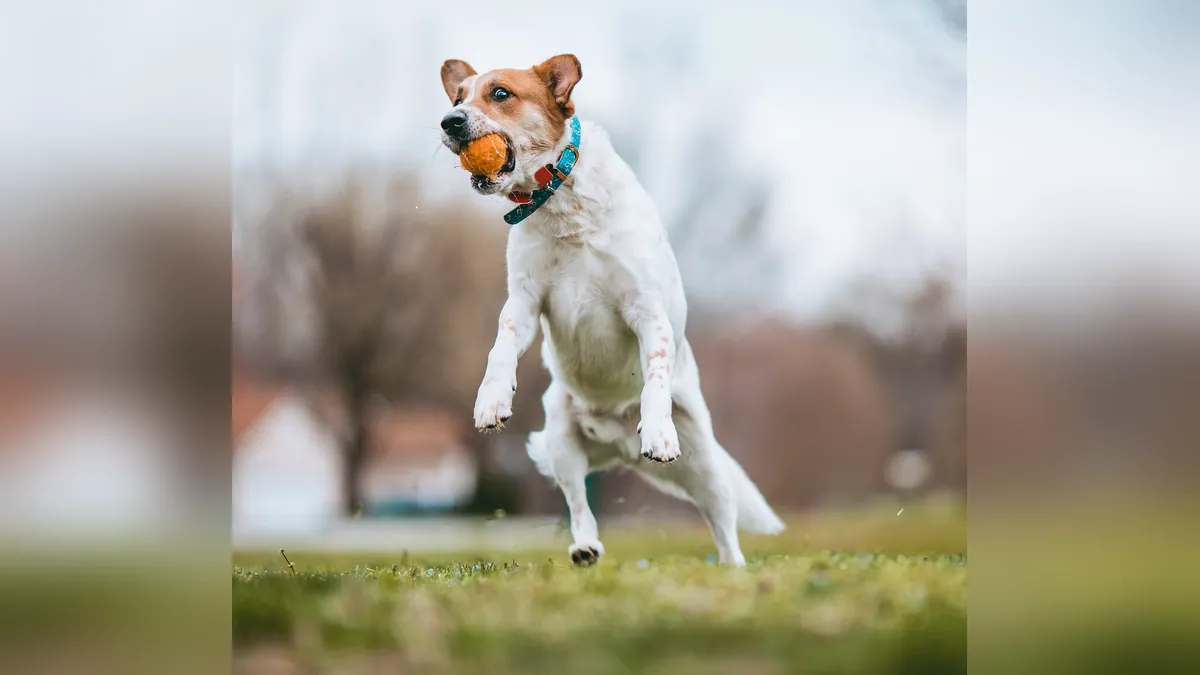
Do dogs laugh? Not the way people do, but dogs make a rhythmic panting sound during play that researchers describe as laughter-like, and they use a rich set of play signals to communicate. If you have ever watched two dogs bow, chase, and pant at each other, you have seen most of what passes for canine humor. This article is educational and is not a substitute for veterinary diagnosis or treatment.
Quick Answer
- Dogs produce a breathy, rhythmic pant during play that is often called a dog laugh, and it is a real vocal signal, not just heavy breathing.
- The play bow (front legs down, rear end up) is the most recognizable play signal and works to restart play when it stalls [1].
- Play signals tell the other dog "this is play, not a fight," which is why dogs can mouth and chase each other without conflict.
- Dogs play more when their owner is watching, so your attention is part of the play system [2].
- Sudden, repetitive, or one-sided "laughing" panting outside of play is a reason to call your veterinarian.
What Is the Dog Play Pant?
The sound people call dog laughter is a wide-mouthed, forced pant that dogs make mostly during social play. It is faster and more regular than normal heat panting, and it usually shows up when a dog is bowing, chasing, or wrestling. Researchers who study animal play expressions describe these open-mouth play faces in carnivores as counterparts of primate play faces, which are related to human laughter and laugh faces [3].
That does not mean your dog is telling jokes. It means the play pant is a positive-emotion signal that says "I am having fun and I want to keep going." The same research line notes that animal play expressions likely communicate positive emotions and help build social skills [3].
Do Dogs Have a Sense of Humor?
This is where owners and scientists part ways. Dogs clearly enjoy play, and they clearly seek it out. Whether they experience humor the way humans do is not well established in veterinary research. What is well documented is that dogs are a highly playful species and that their play depends on social context, including whether a person is paying attention [2].
So the honest answer is: dogs have play, joy, and social intelligence. Calling that a sense of humor is a reasonable everyday word, but it is not a scientific claim you can make with confidence.
Why Dogs Use Play Signals
Play looks like fighting. Dogs chase, tackle, mouth, and pin each other. Without signals, that behavior would be dangerous. Play signals solve the problem by marking the interaction as not real.
The Play Bow
The play bow is the most iconic playful posture in dogs [1]. One study of Czechoslovakian Wolfdogs found that every play bow was performed within the playmate's visual field, meaning the sender was checking whether the other dog was watching [1]. The same study found that play bows happened mainly during short pauses in an ongoing session and that the bow triggered the playmate to re-engage [1]. In other words, the bow is less a magic word and more a nudge that says "let's keep playing."
Other Signals You Will See
Dogs communicate through body posture, facial expressions, tail and ear position, vocalizations, scents, pheromones, and touch [4]. In off-leash park studies, snout-to-muzzle contact was nearly universal during greetings, and non-contact behaviors like the play bow and pull-rear-away appeared to function as visual signals that shaped how the interaction continued [5]. That is a lot of information moving back and forth in a few seconds.
Why Your Attention Matters
Play is not just dog-to-dog. In one experiment, familiar dog pairs played significantly more when an attentive owner was present than when the owner was inattentive or absent, and the effect held across repeated sessions [2]. Your presence is part of the social environment that supports play.
Medical Causes to Rule Out
Most play panting is normal. Some panting is not.
When Panting Is Not Play
If your dog pants heavily at rest, pants in cool conditions, or pants with a wide-open mouth and a worried expression, that is not a play signal. Causes can include pain, respiratory disease, heart disease, heat stress, and anxiety. Your veterinarian will sort this out with an exam and testing.
Coughing, Gagging, or Collapse During Excitement
Some dogs cough or gag when they get excited or pull on the leash. That is a different problem from play panting. If your dog coughs, gags, or makes honking sounds when excited, read Why Does My Dog Cough And Gag When Excited and have your veterinarian evaluate the airway and heart.
Play That Turns Into Swallowing
Dogs who play with toys sometimes swallow them. A toy that does not pass can cause a blockage. If your dog swallowed a toy, see My Dog Ate a Toy: How to Tell If It Will Pass or Cause a Blockage and call your veterinarian or a pet poison control service right away.
When Play Becomes a Problem
Play is normal and healthy. Problems show up when play stops being mutual.
Red Flags in Dog-Dog Play
- One dog keeps trying to disengage and the other keeps pursuing.
- Body language is stiff, with a high, rigid tail and a closed mouth.
- You hear repeated yelps, growls that do not pause, or see pinned dogs who cannot get up.
- Play is always directed at one dog, or one dog is always the target.
Red Flags in Play With People
- Mouthing that leaves marks or breaks skin.
- Jumping and nipping that escalates when you try to stop it.
- Growling or snapping when you reach for a toy.
- Play that only happens when you are present, which can suggest the dog is playing to you, not with the other dog [2].
If you are unsure whether what you are seeing is play or a problem, read How Do I Know If My Dog Has Behavior Problems for a structured way to assess it.
What to Do: Step by Step
1. Learn Your Dog's Play Face
Watch your dog during play and note the open mouth, the loose body, the wagging that involves the whole rear end, and the play pant. That is your baseline. Changes from baseline are what matter.
2. Build Daily Play Into the Routine
Play is a normal behavior that develops early. In one study of puppies, solitary object play appeared before social object play, and breed differences showed up in how play developed [6]. That means play is not a single skill. Give your dog chances to play alone with toys and with you.
3. Use Play Signals Yourself
Bows, bouncy movement, and a happy voice invite play. If your dog bows at you, bow back. You are speaking the language.
4. Manage the Environment
Separate dogs who cannot play safely. Use gates, leashes, or separate rooms. Rotate toys so they stay interesting. Keep play sessions short enough that both dogs stay under threshold.
5. Watch for Fatigue and Overarousal
Stop play when a dog starts grabbing, body-slamming, or ignoring disengagement signals. A short break resets the interaction.
6. Reward Calm
Teach a settle cue and reward it. Dogs who can switch from play to calm are easier to live with and safer at the dog park.
7. Track What You See
Keep notes on when play happens, who starts it, and how it ends. Patterns help your veterinarian or trainer give you useful advice.
For a broader framework, see Dog Behavior Problem Solving.
What Not to Do
Do Not Punish Play Signals
A play bow is not defiance. A play pant is not mocking you. Punishing normal play communication damages your relationship and can make your dog anxious.
Do Not Assume Every Open Mouth Is a Smile
The open-mouth play face is a play expression, not a human smile. For a full explanation of why the "smile dog" idea causes confusion, read The Smile Dog: Separating Myth from Reality in Canine Behavior.
Do Not Use Aversive Tools During Play
Yanking, shouting, or startling a dog mid-play can turn a friendly interaction into a conflict. It also teaches the dog that other dogs predict bad things.
Do Not Rely on Breed Stereotypes
Breed differences in play exist, but they are about development and style, not about whether a dog is safe [6]. Judge the individual dog in front of you.
Do Not Ignore Scent
Dogs communicate with scents and pheromones, and humans cannot access most of that information [4]. If a dog reacts oddly to another dog, there may be a whole conversation you cannot smell.
When to Involve a Veterinarian or Behavior Professional
Call your veterinarian if play panting happens at rest, if your dog coughs or gags during excitement, if your dog collapses, or if panting comes with vomiting, diarrhea, or not eating.
Call a certified behavior professional if play repeatedly escalates to injury, if one dog in the home is being bullied, if your dog cannot be redirected from mouthing people, or if you feel unsafe during play.
Your veterinarian can rule out medical causes and may refer you to a veterinary behaviorist. A trainer who uses reward-based methods can help you build skills. Ask about credentials before you hire anyone.
Limitations and When to Contact a Veterinarian
No article can tell you what is happening in your living room. Individual cases need a veterinarian who can examine your dog, ask questions, and see the behavior in context.
Contact your veterinarian the same day if your dog pants heavily at rest, pants in a cool room, or seems distressed instead of playful.
Go to an emergency clinic now if your dog collapses, has trouble breathing, has a distended abdomen, or is retching without producing anything.
Schedule a routine visit if the panting is new, if it happens only in specific situations, or if you are not sure whether it is play.
Frequently Asked Questions
Do dogs laugh when they are happy?
Dogs make a rhythmic play pant that sounds like laughter when they are playing and aroused in a positive way. It is a real vocal signal, but it is not the same as human laughter. Think of it as a play sound, not a joke response.
Is the play bow always friendly?
The play bow is a play signal, and it usually invites or restarts play [1]. It can also appear in tense moments as an attempt to defuse a situation. Watch the rest of the body. A loose, wiggly dog is playing. A stiff dog is not.
Why does my dog bow at me?
Your dog has learned that bowing gets you to engage. The bow is a social signal directed at a playmate, and dogs check whether the playmate is watching before they send it [1]. Bow back and see what happens.
Can play panting mean my dog is sick?
Play panting during active play is normal. Panting at rest, panting in cool conditions, or panting with a worried expression is not normal and needs a veterinary exam. Your veterinarian will decide what testing is needed.
Do dogs have a sense of humor?
Dogs enjoy play and seek it out, and their play expressions likely communicate positive emotions [3]. Whether they experience humor as humans do is not well established in veterinary research. The safe answer is that they have joy and play, and we should not overclaim the rest.
How much play does my dog need?
There is no single number that fits every dog. Age, breed, health, and temperament all matter, and play development differs across breeds [6]. Aim for daily play that leaves your dog tired but not sore, and adjust based on how your dog recovers.
Should I stop my dog from mouthing during play?
Mouthing during play is normal if it is soft and mutual. Stop the session if mouthing gets hard, if your dog cannot be redirected, or if anyone gets hurt. Then work with a reward-based trainer on impulse control.
Related Articles
- The Smile Dog: Separating Myth from Reality in Canine Behavior
- How Do I Know If My Dog Has Behavior Problems
- Dog Behavior Problem Solving
- Why Does My Dog Cough And Gag When Excited
- My Dog Ate a Toy: How to Tell If It Will Pass or Cause a Blockage
- What Does It Mean When Your Dog's Behavior Changes
- Do Dogs Smile? What a Dog's Smile Really Means
- Do Dogs Understand Kisses? How Dogs Read Human Affection
- Why Do Dogs Wag Their Tails? What It Really Means
References
- Don't stop me now, I'm having such a good time! Czechoslovakian wolfdogs renovate the motivation to play with a bow. Current zoology, 2023.
- Owner attention facilitates social play in dog-dog dyads (Canis lupus familiaris): evidence for an interspecific audience effect. Animal cognition, 2021.
- Laughter, play faces and mimicry in animals: evolution and social functions. Philosophical transactions of the Royal Society of London. Series B, Biological sciences, 2022.
- Social Behavior of Dogs - Behavior. Merck Veterinary Manual.
- Social behaviour of domestic dogs (Canis familiaris) in a public off-leash dog park. Behavioural processes, 2018.
- A Descriptive Methodology for Studying the Ontogeny of Object Play and Breed Differences in Dogs (Canis lupus familiaris). Animals : an open access journal from MDPI, 2023.