Do Dogs Smile? What a Dog's Smile Really Means
By Dr. Zubair Khalid, DVM, MS, PhD ·
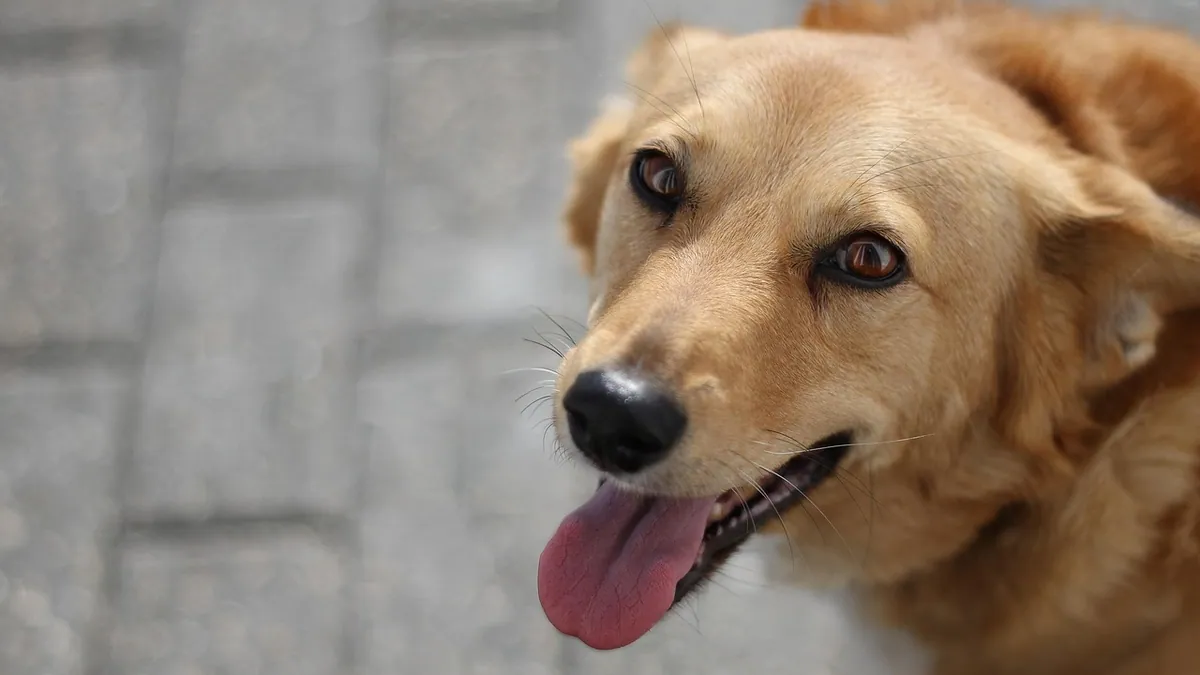
Do dogs smile? Yes, but not the way people do. A dog's grin can be a relaxed sign of comfort, or it can be a submissive or appeasing signal that means your dog is uncomfortable. The mouth is only one part of the picture, and the rest of the body tells you which one you are seeing.
This article is educational and is not a substitute for veterinary diagnosis or treatment.
Quick Answer
- A relaxed dog smile usually comes with a soft, slightly open mouth, loose lips, relaxed ears, and a wagging tail at a middle height.
- A submissive grin is a retracted, toothy lip curl that often appears with a lowered head, flattened ears, and a crouched posture. It is an appeasement signal, not joy.
- Dogs read faces closely. They tend to focus on the eye and nose areas of other dogs, while people also look at the mouth [1].
- A dog showing teeth with a stiff body, hard stare, or growl is not smiling. Give space and do not reach for the face.
- If a new grin appears along with drooling, pawing at the mouth, or a change in eating, book a veterinary visit.
What a Dog's Smile Actually Is
Dogs are highly social animals. They interact with each other and with people through body postures, facial expressions, tail and ear positions, raised hackles, vocalizations, and scent [2]. A "smile" is one small piece of that larger communication system.
Dogs do not have the same facial muscles or social reasons for smiling that humans do. People smile to greet, to show warmth, and sometimes to mask discomfort. Dogs use their mouths in a few different ways, and each one carries a different message.
One helpful clue comes from how dogs process faces. In one study, dogs mostly gazed at the eye and nose areas of faces, while humans also focused on the mouth [1]. That tells you something practical. Your dog may be reading your eyes more than your smile, and you should read your dog's whole face and body, not just the lips.
Dogs are also good at reading human emotion. Brain imaging work found that happy human faces produced a stronger response than neutral faces in a right temporal region that extends to the caudate nucleus, and a machine-learning classifier could tell happy faces apart from angry, fearful, and sad faces [3]. Your dog is paying attention to your expressions. That does not mean every dog grin is a mirror of your mood.
Do Dogs Actually Smile When They Are Happy?
Some dogs do appear to smile when they are relaxed and content. The classic version is a slightly open mouth with the lips loose and pulled back a little, often after play, during petting, or while resting near you. The eyes are soft, the ears sit in their natural position, and the body is loose.
This is the version most owners mean when they ask if dogs smile when happy. It is a relaxed facial posture, not a deliberate human-style grin. You will usually see it in a dog who feels safe.
Context matters. A dog who just finished a game of fetch and flops down with a soft open mouth is likely content. A dog who shows the same mouth while being cornered is not.
The Dog Teeth Smile and the Submissive Grin
A dog teeth smile is different. This is when the lips pull back far enough to show the front teeth, sometimes the whole row. Owners often describe it as a grin or a snarl, and the two can look similar in a photo.
The key is the rest of the body.
A submissive grin is an appeasement signal. It usually comes with a lowered head, ears pulled back, a crouched or lowered body, squinting eyes, and sometimes a slow tail wag tucked low. The dog is saying "I am not a threat" or "please back off." This is not happiness. It is a dog trying to defuse a situation that feels uncomfortable.
A defensive or warning display looks different. The body is stiff. The dog may stand tall or lean forward, stare directly, wrinkle the muzzle, and growl or snap. The teeth are bared with a hard, fixed look. This is a distance-increasing signal, and it deserves respect.
If you are unsure which one you are seeing, look at the eyes, ears, tail, and weight distribution. A grin with a loose, wiggly body is very different from a grin with a frozen, leaning-away body.
Why the Behavior Happens
Normal reasons come first. Most grins and smiles fall into a few categories.
Relaxation and positive arousal
A soft, open mouth with loose lips often shows up during play, greeting, or rest. It is part of a relaxed face.
Appeasement
A submissive grin is a social tool. Dogs use it to reduce tension when they feel unsure, especially around new people, tall strangers, or someone leaning over them.
Attention and learned behavior
Some dogs learn that a certain face gets a reaction. If a grin earns laughter, treats, or a photo session, the behavior can repeat. This is normal learning, not manipulation.
Breed and facial structure
Domestication and breeding have created wide variation in how dogs look and signal [2]. Flat-faced breeds, heavy jowls, and tight lips can all change how a "smile" reads. A dog with a short muzzle may look like he is grinning when he is simply breathing.
Socialization history
Puppies need exposure to the environments and experiences they will meet throughout life, such as grooming, car rides, visitors, and traffic sounds, so they become habituated to them. Missing that window, roughly 3 to 12 weeks of age, raises the risk of fearful behavior later [4]. A dog who grins out of fear may simply never have learned that the situation is safe.
Medical Causes to Rule Out
Not every odd mouth movement is communication. Some are physical.
Dental pain, a broken tooth, gum disease, or an oral mass can cause a dog to hold the lips strangely, drool, or paw at the mouth. Pain changes facial expression in animals, and researchers have developed grimace scales for several species because facial cues track with painful states [5]. Dogs are not the only species studied this way, but the principle holds. A face can show pain.
Other possibilities include nausea, which often brings lip licking and drooling, and neurological conditions that change facial muscle control. If the grin is new, one-sided, or comes with trouble eating, see your veterinarian.
A dog who suddenly cannot close the mouth, has a swollen face, or is drooling heavily needs prompt care.
When a Dog Smile Becomes a Problem
A relaxed smile is not a problem. A submissive grin can become one if it happens often, if it is paired with hiding, freezing, or growling, or if your dog seems stressed in everyday situations.
Watch for these patterns.
- The grin appears whenever a specific person, sound, or handling task happens.
- Your dog avoids contact, turns away, or freezes.
- The grin comes with tucked tail, flattened ears, or a lowered body.
- Your dog has started growling, snapping, or air-snapping.
- The behavior is getting more frequent or more intense.
A dog who is repeatedly pushed past his comfort zone may escalate. Appeasement signals are early warnings. If they are ignored, a dog can move to growling or biting. That is not a bad dog. That is a dog with no other way to say stop.
If your dog's overall behavior has shifted, not just the grin, read What Does It Mean When Your Dog's Behavior Changes for a fuller picture.
How to Read the Rest of the Body
Treat the mouth as one clue among many.
Eyes. Soft, relaxed eyes with a normal pupil size suggest comfort. A hard stare, wide whites, or tight squinting suggest stress or pain.
Ears. Ears in their natural position are neutral. Ears pinned back or flattened often signal worry. Ears forward and stiff can signal alertness or threat.
Tail. A loose, mid-height wag is friendly. A tucked tail means fear. A high, stiff tail with a fast wag can mean arousal or tension.
Body weight. A dog leaning away or shifting weight backward wants space. A dog leaning forward with a stiff body is more likely to escalate.
Mouth. Loose lips and a soft open mouth are relaxed. A retracted lip curl with a crouched body is appeasement. A wrinkled muzzle with a stare is a warning.
Context. Who is present, what just happened, and can your dog leave? A grin during a hug is very different from a grin during play.
What to Do: Step by Step
1. Stop and observe before you react
Do not assume a grin is happiness. Pause, look at the whole body, and ask what your dog is trying to communicate.
2. Give space when you see appeasement
If your dog is grinning with a lowered body, step back, turn slightly away, and let him come to you. Do not loom over him or reach for his head.
3. Reward relaxed behavior
When your dog is loose and comfortable, offer calm praise or a treat. This builds positive associations with the situation.
4. Change the environment
If visitors trigger the grin, have them toss treats from a distance and avoid direct eye contact at first. If handling triggers it, break the task into smaller steps and pair each with something good.
5. Build skills with positive training
Teach a simple hand target or "go to mat" so your dog has a way to move away instead of freezing. Keep sessions short and end on success.
6. Support socialization at every age
Puppies need broad, positive exposure during the socialization window, and adult dogs benefit from continued pleasant experiences with new people, places, and sounds [4]. Early and frequent socialization with many different dogs can improve a dog's ability to interact with other dogs and people [2].
7. Track what you see
Note when the grin happens, who is there, and what happened just before. Patterns help your veterinarian or trainer.
8. Rule out pain
If the grin is new or comes with drooling, dropping food, or mouth sensitivity, schedule a veterinary exam.
What Not to Do
Do not punish a submissive grin. Scolding a dog for an appeasement signal can suppress the warning without fixing the fear. The dog may stop grinning and go straight to growling or biting.
Do not force interaction. Pushing your dog to greet someone while he is grinning and crouching teaches him that his signals do not work.
Do not assume a wagging tail means happy. Tail position and stiffness matter as much as motion.
Do not believe the myth that a dog grin is always a human-style smile. Dogs communicate through body postures, facial expressions, tail and ear positions, hackles, vocalizations, and scent [2]. The mouth is one channel.
Do not use aversive tools or leash jerks to stop a grin. They add stress and can make the behavior worse.
Do not ignore repeated appeasement. A dog who grins every time you pick up the nail clippers is telling you the task needs a slower approach.
If you enjoy sorting canine fact from fiction, The Smile Dog: Separating Myth from Reality in Canine Behavior digs into the popular stories. And if you have ever wondered how much of your dog's behavior is truly human-like, Is Your Dog Human? Understanding Canine Behavior and Bonding is a good next read.
When to Call a Behavior Professional
Bring in a veterinarian or a certified behavior professional when the grin is paired with growling, snapping, or biting, when your dog cannot be handled for basic care, or when the behavior is getting worse over time.
A veterinarian can check for pain, dental disease, and other medical causes. A certified behavior professional can build a plan that changes the environment and teaches your dog new coping skills. In some cases, medication may be part of the plan. Your veterinarian calculates any dose from your dog's weight and health.
Limitations and When to Contact a Veterinarian
This article cannot tell you what your individual dog is feeling. Every dog is different, and individual cases need a veterinarian who can examine your dog in person.
Contact a veterinarian the same day if your dog has sudden facial swelling, a new one-sided droop, heavy drooling, trouble swallowing, or a mouth injury.
Go to an emergency clinic now if your dog cannot breathe normally, has a swollen tongue or throat, is bleeding from the mouth, or has collapsed.
Book a routine visit if the grin is new, if your dog is dropping food or chewing on one side, if there is bad breath with tartar or red gums, or if the behavior appears alongside other changes.
Call a certified behavior professional if your dog is showing appeasement signals often, if he has started growling or snapping, or if you feel unsafe handling him.
Frequently Asked Questions
Do dogs actually smile?
Some dogs show a relaxed, open-mouthed expression that looks like a smile when they are comfortable. Others show a submissive grin that signals appeasement or stress. The mouth alone does not tell you which one it is, so read the eyes, ears, tail, and body posture too.
Are dogs happy when they smile?
Sometimes. A soft, loose mouth with relaxed eyes and a wiggly body usually means a happy, comfortable dog. A toothy grin with a crouched body, flattened ears, and a tucked tail means your dog is trying to reduce tension, not celebrating.
What does a dog teeth smile mean?
A dog teeth smile can mean two very different things. If the body is loose and the eyes are soft, it is likely a relaxed or playful expression. If the body is stiff, the stare is hard, or the dog is leaning away, it is a warning or appeasement signal and you should give space.
Is a submissive grin the same as a snarl?
No. A submissive grin comes with a lowered head, flattened ears, squinting eyes, and a crouched body. A snarl comes with a stiff body, a direct stare, and often a growl. The first is appeasement. The second is a warning that can escalate.
Should I punish my dog for grinning?
No. Punishing an appeasement signal can suppress the warning without addressing the fear behind it, which raises the risk of a bite with no warning. Instead, give your dog space, reward relaxed behavior, and get help from your veterinarian or a certified behavior professional if it keeps happening.
Related Articles
- The Smile Dog: Separating Myth from Reality in Canine Behavior
- What Does It Mean When Your Dog's Behavior Changes
- Is Your Dog Human? Understanding Canine Behavior and Bonding
- Cute Dogs: The Science of Cuteness and Its Impact
- Ugly Dogs: Celebrating Unique Canine Beauty
- How to Tell If Your Dog's Aggression Is Pain-Related
- How to Tell If My Puppy Is Happy or Sad: Dog Emotions
- How Do Dogs Show Affection? Real Signs of Love
- Does My Dog Love Me? Real Signs of Bonding
References
- Species-dependent gazing behavior of emotional facial expressions in dogs (Canis familiaris) and adult humans (Homo sapiens). Journal of comparative psychology (Washington, D.C. : 1983), 2026.
- Normal Social Behavior in Dogs - Dog Owners. Merck Veterinary Manual.
- Dog brain representations of human facial expressions: Encoding happiness and differentiating specific negative expressions. iScience, 2026.
- Social Behavior of Dogs - Behavior. Merck Veterinary Manual.
- How facial expressions reveal acute pain in domestic animals with facial pain scales as a diagnostic tool. Frontiers in veterinary science, 2025.