Do Dogs Understand Kisses? How Dogs Read Human Affection
By Dr. Zubair Khalid, DVM, MS, PhD ·
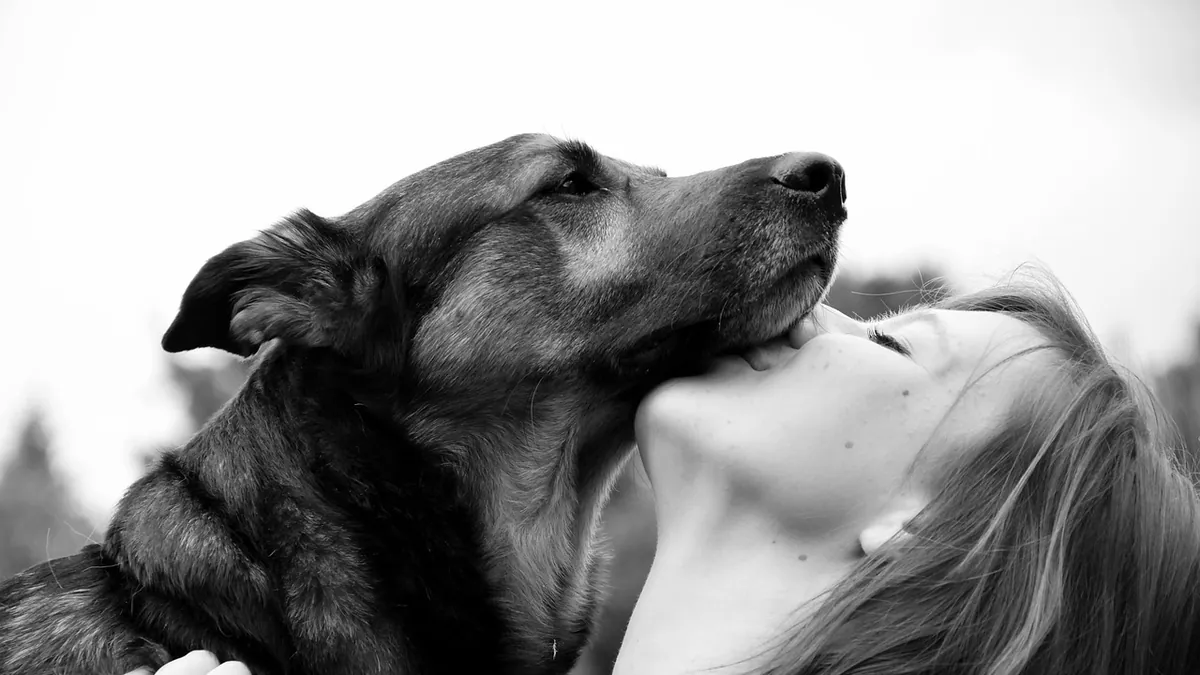
Do dogs understand kisses? Not the way humans do. Dogs do not attach romantic or symbolic meaning to a kiss, but they are excellent readers of human behavior, and many learn that a kiss predicts warmth, attention, and safety [1]. Some dogs tolerate kisses, some lean in for more, and some find face-to-face contact stressful.
This article is educational and is not a substitute for veterinary diagnosis or treatment.
Quick Answer
- Dogs read body posture, facial expression, and scent far better than they read the human concept of a kiss [1].
- A kiss is close facial contact. For many dogs this is neutral or pleasant, but for others it is pressure they cannot escape.
- Watch the whole body, not the tail alone. A relaxed, soft body and a lean toward you suggests enjoyment.
- Turning the head away, lip licking, yawning, or stiffening are common signs a dog wants space.
- If your dog moves away, let them go. Respecting that choice protects your bond and lowers bite risk [2].
How Dogs Interpret Kisses
What a kiss looks like from your dog's side
A kiss puts your face inches from your dog's face. You lean over them, you make eye contact or close your eyes, and you make a soft sound. From the dog's point of view, that is a lot of information arriving at once.
Dogs communicate with each other and with people through body postures, facial expressions, tail and ear positions, raised hackles, vocalizations, and scent [1]. Your dog is reading all of those channels when you lean in. They are not decoding a symbol of love. They are reading your posture, your smell, and your tone.
That is why the same kiss can land differently on different days. A calm approach after a nap reads very differently from a fast lean-in during play.
Why many dogs seem to like it
Dogs are highly social animals and are well adapted to living in groups [1]. They also form attachment bonds with their owners that look a lot like the bonds human children form with caregivers. Puppies under 6 months of age already show attachment behavior toward their owners [3].
That attachment is not just emotional. Dogs who are more willing to maintain contact with their caregiver show lower heart rate and lower long-term cortisol levels, which suggests secure attachment protects them from chronic stress [4]. If your dog has learned that your face near theirs means comfort, a kiss can genuinely feel good.
There is also a hormonal side. Oxytocin, a hormone linked to bonding, shows up in dog-human interaction research, though levels do not differ cleanly between breeds [5]. What matters more for you is the pattern: closeness with a trusted person is rewarding for many dogs.
The licking question
Owners often ask whether a dog licking your face is the dog's version of a kiss. It is closer to a greeting and a social behavior than a romantic gesture. In securely attached dogs, lip licking has been linked with oxytocin, which hints that mouth and tongue behaviors carry social meaning [6]. That does not make it the same as a human kiss. It means your dog is using their mouth to communicate, and the meaning depends on context.
Kissing behavior itself appears across the animal kingdom, including in large apes, and likely evolved in that lineage long before humans existed [7]. Dogs are not part of that kissing lineage in the same way. So when your dog presses their nose to your cheek, they are doing something else.
If you are curious how much of your dog's behavior is truly human-like, it helps to separate real canine signaling from the stories we tell about it. Our guide on Is Your Dog Human? Understanding Canine Behavior and Bonding walks through that line.
Do Puppies Understand Kisses?
Puppies do not understand kisses as affection at first. They learn what your face and your approach mean through repetition, and young puppies already show attachment behavior toward their owners before 6 months of age [3].
That means early experiences shape the answer. A puppy who is handled gently and given the choice to move away learns that faces are safe. A puppy who is held still for kisses learns that faces are something to endure.
Puppies also go through sensitive periods for socialization. Early and frequent positive exposure to different people and dogs improves a dog's ability to interact with both later in life [1]. Kisses are a small part of that bigger picture. Let your puppy approach you instead of chasing them with affection.
Do Dogs Like Kisses? Reading Your Dog's Answer
Signs your dog enjoys it
- Soft, loose body with no stiffness
- Leaning into you or pressing closer
- Staying in place when they could easily walk away
- Soft eyes, relaxed mouth, slow tail wag
- Coming back for more after you stop
Signs your dog wants space
- Turning the head away or pulling back
- Lip licking or nose licking when nothing food-related is happening
- Yawning, blinking hard, or showing the whites of the eyes
- Freezing, stiffening, or holding the breath
- Flattened ears, tucked tail, or a sudden shift to standing
Lip licking and shaking are not simple stress meters. Research shows these behaviors do not rise and fall in a straight line with stress levels, and their meaning depends on the situation and the dog's attachment style [6]. So read the whole dog, not one signal.
Why the answer can change
Attachment style matters. Dogs with anxious attachment patterns show stronger acute stress responses, including higher heart rate, rectal temperature, and salivary cortisol [4]. A dog like that may tolerate a kiss while quietly stressed.
Age matters too. In senior dogs, attachment scores increase with age, and in adult dogs, training experience is linked to lower attachment scores and higher acceptance of friendly strangers [3]. Your dog's response to kisses may shift over the years.
Medical Causes to Rule Out
Sometimes a dog who suddenly avoids your face is not making a statement about affection. They may be in pain.
Dental disease, ear infections, eye problems, neck pain, and arthritis can all make a dog pull away when a face comes close. A dog with an ear infection may flinch when you lean toward that side. A dog with neck pain may avoid looking up at you.
Any sudden change in how your dog responds to touch, handling, or closeness deserves a veterinary exam. Your veterinarian will examine the mouth, ears, eyes, and neck, and will decide whether bloodwork, imaging, or other testing is needed. Do not guess at a cause or reach for leftover medication. Doses are calculated by your veterinarian based on your dog's weight and health.
When Kissing Becomes a Problem
Close physical contact, including petting, hugging, and kissing, is among the interactions linked to bite and scratch injuries in dog owners [2]. That does not mean kisses are dangerous. It means face-to-face contact removes your dog's easiest escape route.
The risk rises when:
- Your dog has a history of growling, snapping, or stiffening during handling
- Your dog is resting, eating, or guarding a toy or chewed item
- Your dog is sick, painful, or recently had a stressful change
- Children are involved, since kids often lean in fast and miss warning signs
Growling is information. A dog who growls when you approach their face is telling you the current setup is not working. Punishing the growl removes the warning without removing the discomfort, and that is how bites happen.
What to Do Step by Step
1. Let your dog choose
Offer your face at a distance and pause. If your dog leans in, great. If they stay put or turn away, that is your answer for today. Choice is the single most useful change you can make.
2. Build a positive association
Pair gentle closeness with something your dog already loves. A calm voice, a treat, or a short pet on the chest while your face is nearby teaches your dog that your approach predicts good things.
3. Keep sessions short
Two or three seconds is plenty. End while your dog is still comfortable, not after they have started to pull away.
4. Use affection your dog already accepts
Most dogs prefer a chest scratch, a shoulder rub, or sitting close together over a face-to-face kiss. Find the contact your dog leans into and do more of that.
5. Add enrichment that meets social needs
Dogs are a gregarious species with a flexible social structure, and they form loose associations with unrelated dogs [8]. If your dog enjoys other dogs, supervised play and walks with compatible dogs can meet social needs that a kiss cannot.
6. Train useful skills
Teaching a hand target, a "go to mat," and a relaxed stay gives your dog clear ways to communicate and gives you clear ways to interact without crowding their face. Training experience is linked to differences in how adult dogs handle social situations, including lower anxiety scores [3].
7. Watch the environment
A dog who is startled by a kiss while sleeping may react before thinking. Wake your dog with your voice from a distance, not with your face. Give resting dogs a quiet space where no one leans over them.
8. Check the bond from your dog's side
The strength of your relationship shows up in everyday interactions, not in one gesture. Our article on What Is a 'Dog Man'? Understanding the Bond Between Men and Their Dogs looks at how these bonds form and what they look like in practice.
What Not to Do
- Do not punish a growl, a head turn, or a pull away. Those are warnings, and warnings keep everyone safe.
- Do not hold your dog still for a kiss. Restraint during close contact is a common setup for a bite [2].
- Do not assume a wagging tail means yes. Tail position and motion are only one part of a much larger set of signals [1].
- Do not believe the myth that a dog who shows teeth is smiling. Our guide on The Smile Dog: Separating Myth from Reality in Canine Behavior explains what that expression usually means.
- Do not assume a dog who tolerates kisses enjoys them. Tolerance and enjoyment look different.
- Do not lean over a dog who is eating, chewing, or guarding something.
When to Involve a Veterinarian or Behavior Professional
Call your veterinarian if your dog's response to touch or closeness changes suddenly, if they show pain signs such as yelping, limping, or reluctance to chew, or if they have stopped seeking contact they used to enjoy.
Ask for a referral to a veterinarian who specializes in behavior, or a certified behavior professional, if your dog:
- Growls, snaps, or bites during handling or close contact
- Freezes or stiffens when people approach their face
- Has injured a person or another animal
- Shows fear or avoidance that is getting worse over time
- Cannot be examined or groomed without a struggle
Behavior problems have a better outcome when they are addressed early. Waiting usually makes the pattern stronger.
Limitations and When to Contact a Veterinarian
No article can tell you what your individual dog is feeling. Your dog's age, breed, health, history, and attachment style all shape how they respond to close contact, and those factors need to be assessed in person [5][4][3].
Contact your veterinarian the same day if your dog:
- Yelps or pulls away sharply when you touch their head, neck, or ears
- Stops eating or drinking
- Has swelling, discharge, or a bad smell from the mouth or ears
- Shows a sudden change in personality or tolerance for handling
Go to an emergency clinic now if your dog:
- Bit a person and broke the skin
- Has a wound that will not stop bleeding
- Is having trouble breathing, collapsing, or showing severe pain
- Seems disoriented or has a sudden change in vision
Schedule a routine visit if your dog has gradually become more head shy, has bad breath, or has started avoiding contact they used to enjoy.
Frequently Asked Questions
Do dogs know what kisses are?
Dogs do not understand a kiss as a symbolic gesture of love. They learn through experience that your face coming close predicts attention, comfort, or nothing at all, and they read your posture and scent to decide how to respond [1].
How do dogs interpret kisses?
Most dogs treat a kiss as close social contact from a familiar person. Because dogs rely on body postures, facial expressions, and scent to communicate, they respond to how you approach more than to the kiss itself [1].
Do dogs like kisses?
Some do, some tolerate them, and some dislike them. The reliable answer comes from your dog's body language and whether they choose to stay close or move away, not from the gesture itself.
How can I tell if my dog likes kisses?
Look for a soft, relaxed body, leaning in, and staying close when they could leave. Head turning, lip licking, yawning, or stiffening suggest your dog would rather have space [6].
Are kisses bad for my dog?
A kiss is not harmful on its own. The concern is close facial contact with a dog who is uncomfortable, since hugging and kissing are among the interactions linked to bite and scratch injuries in owners [2]. Read your dog first and let them opt out.
Related Articles
- Is Your Dog Human? Understanding Canine Behavior and Bonding
- What Is a 'Dog Man'? Understanding the Bond Between Men and Their Dogs
- The Smile Dog: Separating Myth from Reality in Canine Behavior
- Cute Dogs: The Science of Cuteness and Its Impact
- Are Dog Licks Kisses? What Licking Really Means
- How Do Dogs Show Affection? Real Signs of Love
- Does My Dog Love Me? Real Signs of Bonding
References
- Normal Social Behavior in Dogs - Dog Owners. Merck Veterinary Manual.
- When Affection Becomes Risk: Human-Dog Interactions Associated with Bite and Scratch Injuries in a Survey of Dog Owners' Knowledge, Attitudes, and Practices in Thailand. Animals : an open access journal from MDPI, 2026.
- Human-analogue age-related dynamics of dog-human attachment. GeroScience, 2026.
- Attachment patterns toward the caregiver modulate canine physiological indicators of acute and chronic stress. Scientific reports, 2026.
- Attachment-like behavioral expressions to humans in puppies are related to oxytocin and cortisol: A comparative study of Akitas and Labrador Retrievers. Peptides, 2024.
- Rethinking dog stress behaviours: contextual and physiological insights from the attachment framework. The veterinary quarterly, 2026.
- A comparative approach to the evolution of kissing. Evolution and human behavior : official journal of the Human Behavior and Evolution Society, 2026.
- Social Behavior of Dogs - Behavior. Merck Veterinary Manual.