Why Do Dogs Wag Their Tails? What It Really Means
By Dr. Zubair Khalid, DVM, MS, PhD ·
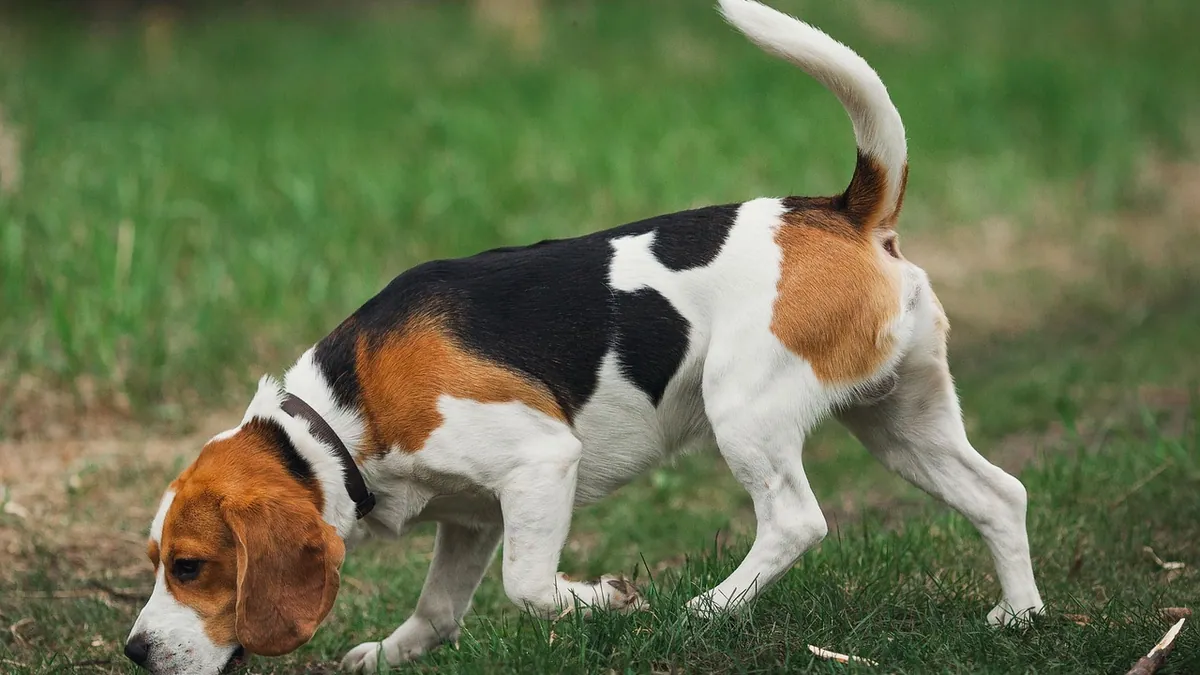
Dogs wag their tails to communicate, and the message is not always happiness. A wag can signal joy, arousal, nervousness, or even a warning. Learning when dogs wag their tails, and how they hold and move them, helps you read your dog's true emotional state.
This article is educational and is not a substitute for veterinary diagnosis or treatment.
Quick Answer
- Tail wagging is a social signal, not a single emotion. Position, speed, and direction all carry meaning.
- A loose, wide, mid-height wag usually means a relaxed or friendly dog.
- A high, stiff, fast wag often signals high arousal, which can tip into tension or aggression.
- A low or tucked tail that wags quickly usually means nervousness, fear, or appeasement.
- Sudden changes in tail use, or a tail that seems painful, need a veterinary exam.
Why Do Dogs Wag Their Tails?
Tail wagging is one of the most visible behaviors in domestic dogs, yet it has been studied far less than you might expect [1]. Researchers describe it as a complex display shaped by domestication, social learning, and each dog's individual personality [1]. In other words, there is no single answer to why a dog wags. The tail is a signaling tool, and your dog uses it to communicate with you and with other dogs.
Do dogs wag their tails when happy?
Often, yes. A happy wag tends to be loose and broad, with the tail held near its natural carriage height. The whole rear end may swing along with it. This is the wag most owners picture, and it usually appears during greetings, play, and moments of excitement.
Studies of dog-human greetings show that dogs wag their tails more than wolves do when approaching a familiar person [2]. Dogs also spend more time near the human and gazing at them during these greetings [2]. That pattern suggests tail wagging became part of how dogs bond and communicate with people over the course of domestication [1][2].
Do dogs wag their tails when nervous?
Yes, and this is where owners most often misread their dogs. A nervous or appeasing wag is typically held low, sometimes tucked between the legs, and moves in a fast, tight rhythm. The dog may also lower the head, flatten the ears, or lick their lips.
Dogs also respond to subtle emotional cues from their owners. In one study, dogs exposed to owner-derived signals of stress showed greater attention toward those stimuli than dogs in a relaxation condition [3]. Your dog is reading you closely, and their tail may reflect that read.
How do dogs wag their tails? Position, speed, and side
Three features matter most: height, speed, and direction.
Height. A tail carried high above the spine suggests confidence or arousal. A tail at spine level is neutral. A tail below spine level suggests caution, submission, or fear.
Speed. A slow, sweeping wag usually means a relaxed dog. A fast, narrow wag often means high arousal, which can be excitement or anxiety. A stiff, rapid wag with little hip movement is a common early warning sign.
Direction. Dogs show asymmetric tail wagging in response to different social stimuli [4]. In one study, tail wagging developed a bias toward the right side over three days of dog-human interaction, which the authors suggest is a time-sensitive indicator of social familiarity [4]. A separate study of detection dogs found higher left-sided tail-wagging amplitude in the area where a target odor was present [5]. These findings are still developing, but they support the idea that the tail carries more information than most owners assume.
Individual dogs wag differently
Tail wagging is not identical from dog to dog. Researchers tracking tail-tip movement found that individual dogs show unique and stable wagging characteristics [4]. Your dog has a wagging "signature." That is why the best way to read your dog is to learn their normal baseline first, then watch for changes.
If your dog's overall behavior shifts alongside their tail signals, that combination deserves attention. See What Does It Mean When Your Dog's Behavior Changes for a closer look.
Medical Causes to Rule Out
Not every tail problem is emotional. Some are physical, and they can look like a behavior change.
Tail injury. A dog who wags hard and often can strike the tail against walls, furniture, or crates. This causes swelling, bleeding, or an open sore at the tip. The dog may then hold the tail low or stop wagging because it hurts.
Muscle or nerve pain. A dog with pain at the base of the tail, in the hips, or in the lower back may carry the tail stiffly, tuck it, or avoid wagging. Anal gland disease, spinal problems, and pelvic issues can all change tail carriage.
Skin and parasite problems. Fleas, allergies, and skin infections near the tail base cause itching and chewing. If your dog is also scooting or licking the rear end, see Why Is My Dog Scooting?.
Ear and head conditions. Ear pain can change a dog's whole body posture, including tail carriage. If your dog is also pawing at the head, see What Does It Mean When Your Dog Scratches Their Ears.
Neurologic disease. A tail that suddenly stops moving, drags, or hangs limp with no other explanation needs a veterinary exam. This can point to nerve damage.
If your dog is drooling more than usual along with any of these signs, that is another reason to call your vet. See Why Is My Dog Drooling?.
When Tail Wagging Becomes a Problem
Tail wagging itself is normal. It becomes a concern in a few specific situations.
The wag does not match the rest of the body. A stiff, high, fast wag paired with a hard stare, closed mouth, and weight shifted forward is not a friendly greeting. That dog is aroused and may be preparing to react.
The wag appears with other distress signals. Whining, pacing, panting without heat or exercise, hiding, and refusing food all point to stress. If your dog is also vocalizing, see Dog Whining All the Time: What Is Your Dog Trying to Tell You?.
The wag is constant and hard to interrupt. Some dogs wag almost nonstop in a way that suggests chronic over-arousal. This can make it hard for them to settle, rest, or learn.
The tail is injured or painful. A bleeding tail tip, swelling, or a dog who yelps when the tail is touched needs medical care, not training.
The wag has stopped. A dog who used to greet you with a wag and no longer does may be in pain, anxious, or unwell.
What to Do: Step by Step
Step 1: Learn your dog's baseline
Spend a week watching your dog in calm, happy, and stressful moments. Note tail height, speed, and how much the hips move. Write it down if that helps. You cannot spot a change until you know what is normal for your dog.
Step 2: Read the whole dog
Never judge by the tail alone. Look at the ears, eyes, mouth, body weight shift, and hair along the spine. A wagging tail on a tense body is not a green light to approach.
Step 3: Give your dog choice and space
If you see a low, fast, tucked wag, do not crowd your dog. Step back, turn slightly away, and let them come to you. Forced greetings make nervous dogs more nervous.
Step 4: Manage the environment
If your dog injures their tail by wagging against hard surfaces, pad the crate, move furniture away from walls, and give them a clear space to turn around. Ask your veterinarian about protecting the tail tip while it heals.
Step 5: Add enrichment and calm routines
Dogs who are over-aroused need outlets and rest. Offer sniff-based walks, food puzzles, and scheduled downtime. Keep greetings low-key. A calm, predictable routine lowers arousal over time.
Step 6: Teach a settle cue
Reward your dog for lying down calmly with a relaxed tail. Practice in short sessions in a quiet room, then add mild distractions. This gives your dog a skill to use when they feel wound up.
Step 7: Track changes over time
Because tail wagging can reflect social familiarity and familiarity grows with time [4], keep watching how your dog's wag changes with different people. A wag that becomes looser and more symmetrical around a familiar person is usually a good sign.
What Not to Do
Do not punish a wagging dog. A wag is communication. Punishing it does not remove the emotion behind it. It teaches your dog to stop signaling, which makes them harder to read and more likely to react without warning.
Do not assume a wag means "safe to pet." Many bites happen because a person read a wag as an invitation. Check the whole body first.
Do not grab or pull the tail. The tail is an extension of the spine. Pulling it can cause real injury.
Do not rely on the "right side means happy, left side means scared" rule as a hard fact. Research shows dogs do wag asymmetrically in response to social stimuli [4][5], but this is an active area of study, not a simple owner checklist. Use it as one clue among many.
Do not ignore a limp or injured tail. A dog who stops wagging because of pain will not get better with training alone.
When to Involve a Veterinarian or Behavior Professional
Call your veterinarian if your dog's tail carriage or wagging changes suddenly, if the tail looks swollen, bent, bleeding, or painful, or if your dog yelps when the tail or rear end is touched. These are medical questions first.
Ask for a behavior referral if your dog shows a stiff, high, fast wag along with a hard stare, growling, snapping, or freezing. A certified behavior professional can assess the full picture and build a safe plan.
If your dog's wagging is tied to constant anxiety, whining, or an inability to settle, that is also a good time to get help. Your veterinarian can rule out pain and medical causes, then guide you toward the right support.
Limitations and When to Contact a Veterinarian
Tail wagging is a useful clue, not a diagnosis. Every dog is an individual, and only a veterinarian who examines your dog can assess their specific situation.
Contact a veterinarian the same day if:
- Your dog's tail is bleeding, swollen, or bent at an odd angle
- Your dog yelps or snaps when the tail or hind end is touched
- Your dog suddenly stops wagging and holds the tail limp or tucked
- Your dog is licking or chewing the tail base constantly
Go to an emergency clinic now if:
- Your dog cannot use the back legs or drags a limb
- Your dog is crying out in pain without being touched
- Your dog has a deep wound, heavy bleeding, or exposed tissue at the tail
- Your dog collapses, has trouble breathing, or seems disoriented
Schedule a routine visit if:
- Your dog's wagging pattern has changed slowly over weeks
- Your dog seems anxious or over-aroused most of the day
- Your dog's tail carriage changed after a fall, jump, or rough play
- You are unsure whether the behavior is medical or emotional
Frequently Asked Questions
Does a wagging tail always mean a dog is friendly?
No. A wagging tail means a dog is engaged and communicating, and the emotion behind it can be positive or negative. Read tail height, speed, and the rest of the body before you approach. A stiff, high, fast wag with a tense body is not an invitation.
Why does my dog wag their tail only at certain people?
Dogs wag differently depending on who they are interacting with and how familiar that person is. Research shows tail wagging can shift toward one side over days of interaction with a person, which suggests it tracks social familiarity [4]. Your dog may simply be more relaxed or more alert around certain people.
Can a dog hurt themselves by wagging too hard?
Yes. Hard, repeated wagging against walls, crates, or furniture can split the skin at the tail tip and cause swelling or bleeding. If your dog's tail tip looks raw or bloody, call your veterinarian. They can advise on wound care and how to protect the tail while it heals.
My dog's tail hangs limp but they seem fine. Should I worry?
A limp tail with no other signs can still be a problem, especially if it came on suddenly. It may reflect muscle strain, nerve injury, or pain at the tail base. Have your veterinarian examine your dog, particularly if the change happened after swimming, rough play, or a fall.
Do dogs wag their tails in their sleep?
Many dogs twitch or move their tails during sleep, and this is usually part of normal dreaming. It is not the same as the social wagging dogs use while awake. If the movements are violent, frequent, or come with crying out, mention it to your veterinarian at your next visit.
Related Articles
- Why Is My Dog Drooling?
- Dog Whining All the Time: What Is Your Dog Trying to Tell You?
- What Does It Mean When Your Dog's Behavior Changes
- Why Is My Dog Scooting?
- What Does It Mean When Your Dog Scratches Their Ears
- Why Is My Dog Shaking?
- Why Is My Dog Wagging His Tail in His Sleep?
- Dog Not Lifting or Wagging Its Tail: What It Means
- Why Does My Puppy Chase His Tail? Normal or Problem?
References
- Why do dogs wag their tails?. Biology letters, 2024.
- Differences in dogs' and wolves' human-directed greeting behaviour: facial expressions, body language, and the problem of human biases. Animal cognition, 2025.
- Dogs display context-dependent behavioral responses to subtle owner-derived multimodal stimuli. Frontiers in veterinary science, 2026.
- Left-right asymmetry and attractor-like dynamics of dog's tail wagging during dog-human interactions. iScience, 2022.
- Does the tail show when the nose knows? Artificial intelligence outperforms human experts at predicting detection dogs finding their target through tail kinematics. Royal Society open science, 2025.