Do Dogs Know When You're Mad at Them?
By Dr. Zubair Khalid, DVM, MS, PhD ·
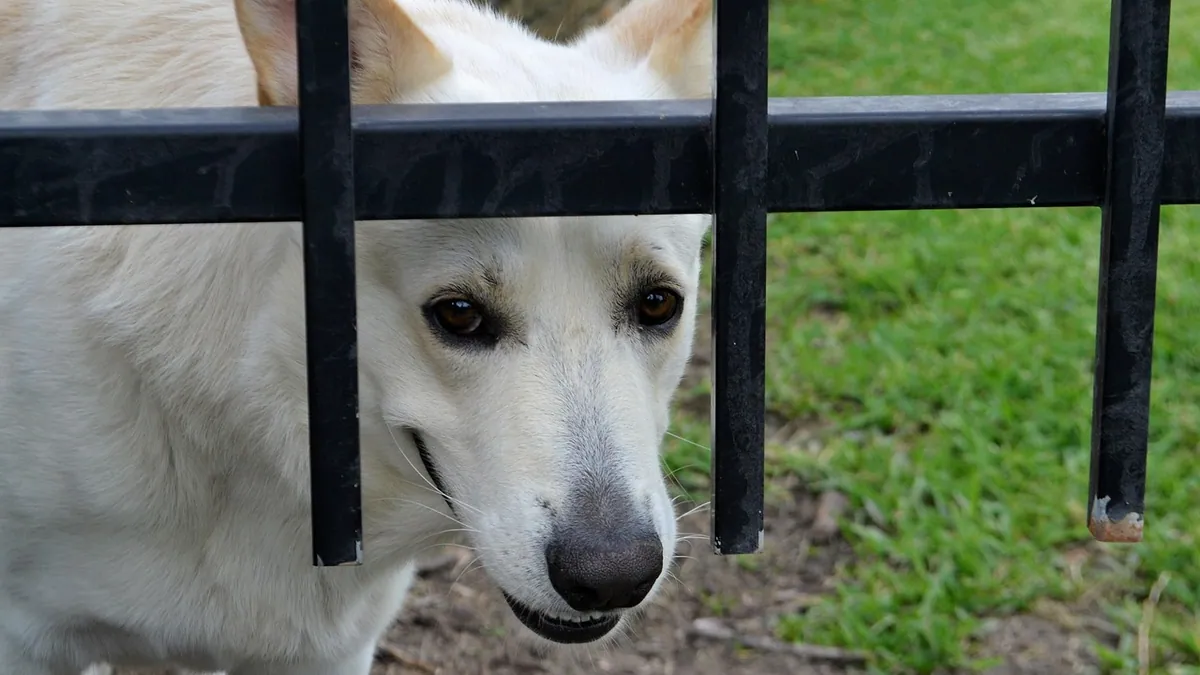
Do dogs remember when you get mad at them? In a practical sense, yes. Your dog remembers that you became scary or unpredictable, and that memory shapes how your dog greets you the next time you are upset. What your dog does not do is replay the event later and feel moral guilt about it. This article is educational and is not a substitute for veterinary diagnosis or treatment.
Quick Answer
- Dogs read your tone of voice, posture, and facial expression in the moment, and they form lasting associations with people and situations that frightened them [1].
- The classic "guilty look" is usually a response to your body language or your scolding, not evidence that your dog is confessing to a past misdeed.
- Dogs can tell happy human faces from negative ones, and their brains respond differently to anger, fear, and sadness, but they do not sort those feelings into right and wrong the way people do [1].
- Punishment delivered after the fact teaches your dog to fear you, not to understand what went wrong.
- The fix is timing, redirection, and management of the environment, plus a veterinary visit if the behavior is new or sudden.
What Your Dog Actually Perceives When You Are Angry
Dogs read faces and voices, not moral rules
Dogs are tuned in to human emotional signals. In brain imaging work with awake pet dogs, happy human faces triggered a stronger response than neutral faces in a region that includes the caudate nucleus, and a machine-learning classifier could tell happy faces apart from angry, fearful, and sad faces [1]. The same study found that dogs' brain activity patterns could distinguish angry faces from fearful faces, and sad faces from fearful faces, but not angry faces from sad faces [1]. In plain terms, your dog picks up that something is negative and roughly how intense it is, without labeling it as "Mom is disappointed in me."
Your tone and body language carry the message
A dog's reaction to an angry voice is real and fast. Dogs are a highly social species with a flexible social structure, and they evolved to be attentive to humans, which is part of why they bond so readily with us [2]. Human understanding of canine communication is limited because we cannot smell what dogs smell, but we can learn to read body language, vocalizations, and touch signals [2]. That channel runs both ways. When you raise your voice, stiffen, or loom over your dog, you are sending a clear signal even if your words are meaningless to your dog.
Scent may add another layer
Dogs also gather emotional information through smell. In one study, dogs presented with odor samples from an unfamiliar dog that were collected after joyful, stressful, and relaxing events discriminated between joy and baseline odors and between joy and stress odors, and they showed different behaviors, posture, and proximity to their owner depending on the emotional content of the odor [3]. This does not prove your dog smells your anger, but it supports the idea that dogs pick up emotional states through multiple channels at once.
Do dogs remember when you get mad at them?
They remember the pattern, not the lecture. If yelling reliably predicts that you will stomp, point, or grab a collar, your dog learns to expect that sequence. That learning can stick for a long time and can generalize to anyone who looks or sounds like you did. This is why a dog who was scolded harshly may flinch for months when a person raises a hand, even in play.
Why the "Guilty Look" Happens
That tucked tail, flattened ears, and sideways glance is one of the most misread signals in dog ownership. It is a submissive, appeasing posture, and it appears most often when a dog expects a confrontation, not when a dog has reviewed its own conduct.
Here is the sequence most owners see. You come home, find a chewed shoe, and your dog slinks over before you say a word. Your dog is reacting to your arrival, your posture, and the tension in the room. Dogs that have been scolded for messes in the past learn that a mess plus a returning owner equals trouble, so they offer appeasement preemptively. The dog is not admitting anything. The dog is trying to turn off a threat.
This matters because owners often punish the appeasement, which makes the dog more anxious and more likely to show the same posture next time. The cycle deepens without teaching a single thing about the shoe.
Medical and Physical Causes to Rule Out
Sudden behavior change deserves a medical workup before anyone calls it disobedience. Pain, dental disease, vision or hearing loss, arthritis, and cognitive changes in older dogs can all show up as irritability, accidents in the house, or a dog who suddenly avoids you. A dog who snaps when touched may be guarding a sore spot, and the article on how to tell if your dog's aggression is pain-related walks through that possibility.
House soiling is a good example. A dog who urinates indoors after years of reliable habits may have a urinary tract infection, diabetes, or another medical problem. Scolding will not fix any of those. Your veterinarian can sort out whether the behavior has a physical driver.
Also watch for the broader picture. If your dog is hiding more, pacing, panting at rest, or refusing food, that combination points toward a health or anxiety issue, and the guide on dog hiding and when to worry covers the signs that need a same-day call.
When Does This Become a Problem?
Occasional appeasement after a scolding is normal. It becomes a welfare problem when fear starts running your dog's daily life. Warning signs include:
- Your dog avoids you, hides when you stand up, or refuses to come when called.
- Your dog cowers, trembles, drools, or urinates when you raise your voice.
- Your dog growls, snaps, or freezes when approached, especially near food, toys, or a resting spot.
- Your dog's behavior changed suddenly in an adult dog with no obvious trigger.
- Your dog is destructive, vocalizing, or soiling only when left alone.
If several of these apply, this is no longer a training question. The article on how do I know if my dog has behavior problems helps you decide whether you are looking at normal dog behavior, a training gap, or something that needs professional help. A sudden shift in an adult dog also deserves attention, and what it means when your dog's behavior changes explains why timing matters so much.
How to Communicate Discipline Without Fear
Catch behavior in the first two seconds
Correction only works in the moment. If you find the chewed shoe an hour later, the window has closed and any scolding is just noise and threat. Interrupt the behavior while it is happening with a neutral sound, then immediately offer the correct option.
Redirect, then reward
If your dog is chewing the couch, hand over an appropriate chew toy and praise the switch. If your dog jumps on guests, ask for a sit and reward it. Dogs repeat what gets them something good. This is the core of humane training and it works far better than punishment for building a dog who chooses the right behavior.
Teach a strong "come" and a calm "settle"
A reliable recall gives you a way to interrupt almost anything without confrontation. Practice in short sessions, reward generously, and never call your dog to you for something unpleasant. Pair a settle cue with a mat or bed so your dog has a place to go when the house gets busy.
Manage the environment
Most "bad behavior" is really a management failure. Crate or gate your dog when you cannot supervise. Put food and trash out of reach. Give your dog a walk, sniff time, and chew time before you leave. A tired, mentally satisfied dog has far less reason to redecorate your home.
Keep your voice low and your movements slow
You can be firm without being frightening. A calm, low "no" or "leave it" carries more information than shouting. Remember that your dog is reading your whole body, and a looming posture reads as a threat regardless of your words.
Build a predictable routine
Dogs do best with structure. Feeding, walks, training, and rest at roughly the same times each day reduce anxiety and make your expectations easier to read. Puppies in particular need early, positive exposure to people and everyday situations, since the window for learning to handle new experiences is widest before about 16 to 20 weeks of age [4]. Puppies kept away from people past 14 weeks of age may have severely underdeveloped social skills [4]. If you are raising a puppy, start gentle socialization now, and remember that do puppies know when you're mad at them is really the same question as it is for adults. They read your tone and face, not your intent.
What Not to Do
Do not punish after the fact
Yelling about a mess from hours ago teaches your dog that your arrival is unpredictable. It does not connect to the mess.
Do not use the "guilty look" as evidence
Treating appeasement as a confession leads owners to punish harder, which increases fear and does not change the behavior.
Do not rub a dog's nose in waste
This is an old myth with no training value. It creates fear of you and can make house soiling worse because the dog learns to hide the evidence.
Do not rely on shock, prong, or spray corrections for fear-based problems
Tools that add pain or startle can suppress behavior in the moment while making underlying anxiety worse. A dog who is already afraid of you does not need more reason to be afraid.
Do not assume your dog "knows better"
Dogs do not generalize well. A dog who is perfect in the kitchen may have no idea the same rule applies in the living room. Teach each situation, and reward what you want to see again.
When to Involve a Veterinarian or Behavior Professional
Call your veterinarian if the behavior is new, if your dog seems painful or unwell, or if fear and anxiety are interfering with daily life. Your veterinarian can rule out medical causes and discuss whether a referral to a veterinary behaviorist or a certified applied animal behaviorist is appropriate. For aggression, especially toward children or toward people in the household, get help before the next incident. Your veterinarian sets any treatment plan, including medication and dosing, based on your dog's weight, health, and history.
Limitations and When to Contact a Veterinarian
This article covers general principles. Individual cases need a veterinarian who can examine your dog and review the full history.
Contact your veterinarian the same day if your dog suddenly stops eating, hides constantly, or shows a sharp personality change. Seek emergency care now if your dog has bitten a person or another animal and caused injury, if your dog is showing signs of severe pain such as crying out or refusing to move, or if your dog is panting heavily, pacing, and unable to settle for hours. Schedule a routine visit if the fear or appeasement has been building for weeks, if house soiling has returned, or if you feel stuck after trying basic training. For possible poisoning, call the ASPCA Animal Poison Control Center at (888) 426-4435 or the Pet Poison Helpline at (855) 764-7661.
Frequently Asked Questions
Does my dog know I'm angry?
Your dog knows something is wrong with you, and it reads your face, voice, and posture to figure out how serious it is. Brain imaging shows dogs process happy faces differently from angry, fearful, and sad faces, and they can tell some negative expressions apart [1]. What your dog cannot do is attach a moral judgment to your anger.
Do dogs feel guilt?
There is no good evidence that dogs experience guilt as people understand it. The look owners call guilt is an appeasement posture triggered by your signals or by a learned pattern. It often appears before you have even found the mess.
How long does a dog remember being scolded?
Dogs remember the association, not the specific incident. A single harsh event can create a lasting fear of a person, a room, or a situation. Repeated scary events strengthen that association, which is why consistency and calm matter more than intensity.
Should I ignore my dog after getting mad?
Briefly pausing interaction is fine, but prolonged withdrawal is confusing and can increase anxiety. It is better to interrupt the behavior, redirect to something appropriate, and reward the correct choice. Then move on and keep your routine predictable.
Can a dog tell when you are sad instead of angry?
Dogs respond to sadness differently from anger in some ways. One study found that dogs' brain activity patterns could distinguish sad faces from fearful faces, though not angry faces from sad faces [1]. Dogs also pick up emotional cues through scent, and odor from a stressed dog changed their behavior and their proximity to their owner [3]. Your dog may not name the emotion, but your dog notices the change in you.
Related Articles
- Dog Whining All the Time: What Is Your Dog Trying to Tell You?
- How Do I Know If My Dog Has Behavior Problems
- What Does It Mean When Your Dog's Behavior Changes
- How to Tell If Your Dog's Aggression Is Pain-Related
- Dog Hiding: When to Worry About Your Dog's Behavior
- Why Is My Dog Having Behavior Problems
- Are Dogs Jealous? Signs of Jealousy and How to Help
- Do Dogs Judge Us? What Canine Behavior Really Shows
- How Long Can a Dog Remember? Memory Explained
References
- Dog brain representations of human facial expressions: Encoding happiness and differentiating specific negative expressions. iScience, 2026.
- Social Behavior of Dogs - Behavior. Merck Veterinary Manual.
- Dogs (Canis familiaris) distinguish conspecific emotional chemosignals. Scientific reports, 2026.
- Normal Social Behavior in Dogs - Dog Owners. Merck Veterinary Manual.