Do Cats Know When You're Sad? Feline Empathy Explained
By Dr. Zubair Khalid, DVM, MS, PhD ·
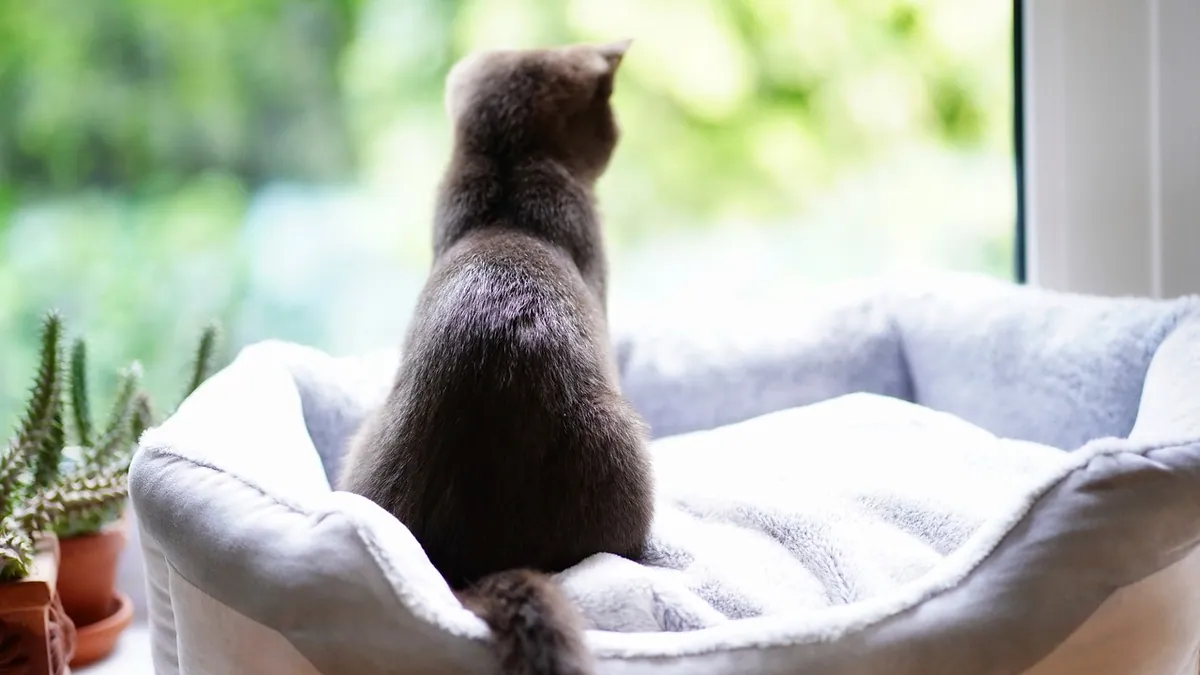
Do cats know when you're sad? Many cats do seem to notice and change their behavior when their owner is upset. They may not feel sadness the way humans do, but they can pick up on changes in your voice, routine, and body language. This article is educational and is not a substitute for veterinary diagnosis or treatment.
Quick Answer
- Cats can learn to connect certain human cues (crying, low voice, stillness) with comfort or attention, based on past experience.
- A cat that stays close, kneads, or head-bumps you when you cry is usually responding to your behavior, not sharing your grief.
- Some cats do the opposite and hide or leave when you are upset. That is also normal.
- Sudden clinginess or hiding can be a sign of pain or illness in your cat, not empathy.
- If your cat's behavior changes for more than a day or two, call your veterinarian.
Do Cats Feel Sadness the Way People Do?
This is one of the most common questions owners ask, and the honest answer is that we do not know for sure. Cats have emotions, but the science on whether they experience sadness as a human does is not well established.
What we do know is that cats are social animals with a strong capacity for attachment. The basic feline social unit is a mother cat and her kittens, and kittens stay with their mother or her social group for the first 12 to 18 months of life in stable outdoor groups [1]. That early bond shapes how a cat relates to others, including you.
Cats also read our emotional signals. A 2026 study found that pet owners rated cat and dog distress vocalizations as sadder than non-owners did, which suggests that living with a cat changes how closely you tune in to their feelings [2]. The reverse may also be true. Cats that live closely with people learn to read human cues, even if we cannot prove they feel our sadness.
How Do Cats Know You're Sad?
Cats rely on routine, sound, and body language. When you are sad, several things change at once, and your cat notices the pattern.
Your voice changes
When you are upset, your tone gets lower, slower, or shaky. Cats are sensitive to sound. Research on human-animal vocal communication shows that people and pets exchange emotional information through sound, and that sensitivity to distress vocalizations is linked to empathy toward animals [2]. Your cat may not understand your words, but it can hear that something is different.
Your routine changes
Sadness often means you sleep more, move less, or skip meals. Cats are creatures of habit. A cat that eats at 7 a.m. every day notices when that stops. The behavior you see may be a response to the schedule change, not to your mood.
Your body language changes
You may sit still, curl up, or cry. Cats watch posture and movement closely. A cat that normally gets playtime may approach you when you are still, because stillness is a chance to interact.
Past experience matters
If your cat learned that sitting on your lap when you cry leads to petting, it will do that again. This is learning, not mind reading. It is still a real bond, and it still feels good.
Do Kittens Know When You're Sad?
Kittens are less reliable at reading human emotion than adult cats, mostly because they have less experience. Kittens handled daily by people during their first month of life develop faster, are more outgoing, and are more social with humans [3]. That early handling helps a kitten learn human cues sooner.
A kitten may climb on you when you cry simply because you are warm and still. That is normal kitten behavior, not a sign of emotional insight. If you want a kitten to grow into a cat that seeks you out during hard times, gentle daily handling and play are the best foundation [3].
Medical Causes to Rule Out First
Before you decide your cat is reacting to your mood, make sure your cat is healthy. Many behavior changes that look emotional are actually medical.
Cats hide pain well. A cat that suddenly wants to be held all the time, or suddenly hides, may be sick. Watch for these signs:
- Not eating or drinking
- Vomiting or diarrhea
- Hiding in new places
- Crying at night
- Limping or stiffness
- Weight loss
- Changes in litter box use
If you see any of these, your cat needs a veterinary exam. A cat that is clingy because of pain will not get better with extra attention alone. For more on subtle signs, see Cat Kidney Disease: How to Tell If Your Cat Is in Pain and Cat Lethargy: When to Worry and What to Do.
When Your Cat's Response Becomes a Problem
Most cats handle your bad days fine. Problems start when your cat's behavior changes in ways that affect its health or your household.
Clinginess that never stops
A cat that follows you into every room and cries when you leave may be stressed, not affectionate. Stress in cats often shows up as over-grooming, hiding, or not using the litter box. Learn the signs in Cat Stress Signs: How to Recognize and Reduce Stress in Your Cat.
Aggression or nipping
Some cats get overstimulated when you cry and hold them too long. They may nip or swat. That is a normal cat limit, not a sign your cat does not care.
Night crying
A cat that cries at night may be bored, hungry, or in pain. It is not mourning your mood. See Why Is My Cat Crying at Night? for the common causes.
Your own stress rising
If your cat's behavior is making your sadness worse, that matters. You do not have to manage this alone. Talk to your veterinarian about behavior support.
What to Do Step by Step
Keep the routine steady
Feed, play, and clean the litter box at the same times each day. Cats do best with predictable schedules. A steady routine helps your cat stay calm even when you are not.
Let your cat choose
Do not force contact. Passive interactions, where the cat comes to you on its own terms, are linked to increased oxytocin and decreased cortisol in cats [4]. Forced interactions show the opposite pattern [4]. Sit quietly and let your cat decide whether to come over.
Use calm, low voices
Speak softly. Avoid sudden loud sounds. Your cat is already reading your tone, so keep it gentle.
Offer play and enrichment
Short play sessions with a wand toy give your cat an outlet. Hand-reared kittens can lack feline social skills, and play sessions with wand-type toys help prevent those problems [3]. Adult cats benefit too.
Give your cat a safe space
Provide a quiet room, a covered bed, or a high perch. A cat that can retreat will cope better with changes in the house.
Watch for changes in your cat
Keep a simple note of eating, drinking, litter box use, and activity. If something changes and stays changed, call your veterinarian.
What Not to Do
Do not punish your cat
Never yell at, hit, or spray your cat for approaching you or for hiding. Punishment increases fear and can make behavior worse. It also damages the bond you are trying to protect.
Do not force cuddles
Holding a cat that wants to leave can raise its stress hormones [4]. Let your cat come and go.
Do not assume your cat is grieving
Cats can show changes after a loss in the home, but calling every behavior change grief can delay a diagnosis. A sick cat and a sad cat can look the same.
Do not rely on myths
The idea that cats are cold or uncaring is not supported. Cats form strong social bonds [1]. The idea that cats magically sense human emotion is also not proven. What you see is usually a mix of learning, routine, and attention.
Do not skip the vet
If your cat stops eating, hides, or cries more than usual, a veterinary visit comes first. Behavior changes are often the first sign of illness.
When to Involve a Veterinarian or Behavior Professional
Call your veterinarian if:
- Your cat stops eating for more than 24 hours
- Your cat is hiding, pacing, or vocalizing more than usual
- Your cat shows aggression toward you or other pets
- Your cat over-grooms to the point of bald spots or sores
- Your cat stops using the litter box
- Your cat's behavior changes suddenly, at any age
Your veterinarian can rule out medical causes and, if needed, refer you to a certified behavior professional. Do not wait weeks to see if it passes.
Limitations and When to Contact a Veterinarian
We cannot prove that cats feel human sadness. The research on cat emotions is still developing, and individual cats vary widely. Some cats seek you out when you cry. Some leave the room. Both can be normal.
What matters most is your cat's health. Contact your veterinarian the same day if your cat stops eating, vomits repeatedly, or seems painful. Go to an emergency clinic now if your cat is struggling to breathe, has a seizure, collapses, or you suspect it swallowed something toxic. For non-urgent changes in behavior, schedule a routine visit within a few days. Your veterinarian sets the plan for your individual cat, including any medication dose based on your cat's weight and health.
If your cat is choking or having trouble breathing, get emergency help right away. See How To Know If Your Cats Choking.
Frequently Asked Questions
Do cats know when you are crying?
Many cats notice crying and may approach, sit nearby, or leave. They are responding to your voice, posture, and past experience, not necessarily understanding sadness. If your cat's reaction worries you, mention it at your next vet visit.
Can cats sense sadness in their owners?
Cats can pick up on changes in your tone, routine, and body language. Whether they feel sadness themselves is not well established. What is clear is that cats form social bonds and pay close attention to the people they live with.
Why does my cat sit on me when I am sad?
Your cat may have learned that sitting on you when you are still leads to warmth, petting, or attention. It may also be seeking comfort for itself. Either way, it is a normal social behavior, not a sign of illness.
Do cats comfort their owners?
Some cats do stay close when their owner is upset. Others hide or walk away. There is no single cat response. If your cat suddenly becomes clingy after never doing so before, have it checked by a veterinarian.
Should I get another cat to help my cat feel better?
No. Adding a cat is a major change and can increase stress for both cats. Cats are social, but they are also territorial. Talk to your veterinarian or a behavior professional before adding a pet to your home.
Related Articles
- Cat Stress Signs: How to Recognize and Reduce Stress in Your Cat
- Cat Kidney Disease: How to Tell If Your Cat Is in Pain
- Cat Lethargy: When to Worry and What to Do
- Why Is My Cat Crying at Night?
- How To Know If Your Cats Choking
- Cat Arthritis: How to Tell If Your Cat Is in Pain
- Do Cats Feel Love? The Science of Feline Emotions
- Does My Cat Miss Me? Signs of Attachment and Stress
- Do Cats Mourn? Grief After Losing a Companion
References
- Normal Social Behavior in Cats - Cat Owners. Merck Veterinary Manual.
- The Influence of Pet Owners' Empathy on Perceptions of Dog and Cat Distress Vocalizations and Caregiving Behaviors. Journal of applied animal welfare science : JAAWS, 2026.
- Social Behavior of Cats - Behavior. Merck Veterinary Manual.
- EXPRESS: The hormonal effects of owner-cat interactions on pet cats of different potential attachment styles. Journal of feline medicine and surgery, 2026.