Do Dogs Judge Us? What Canine Behavior Really Shows
By Dr. Zubair Khalid, DVM, MS, PhD ·
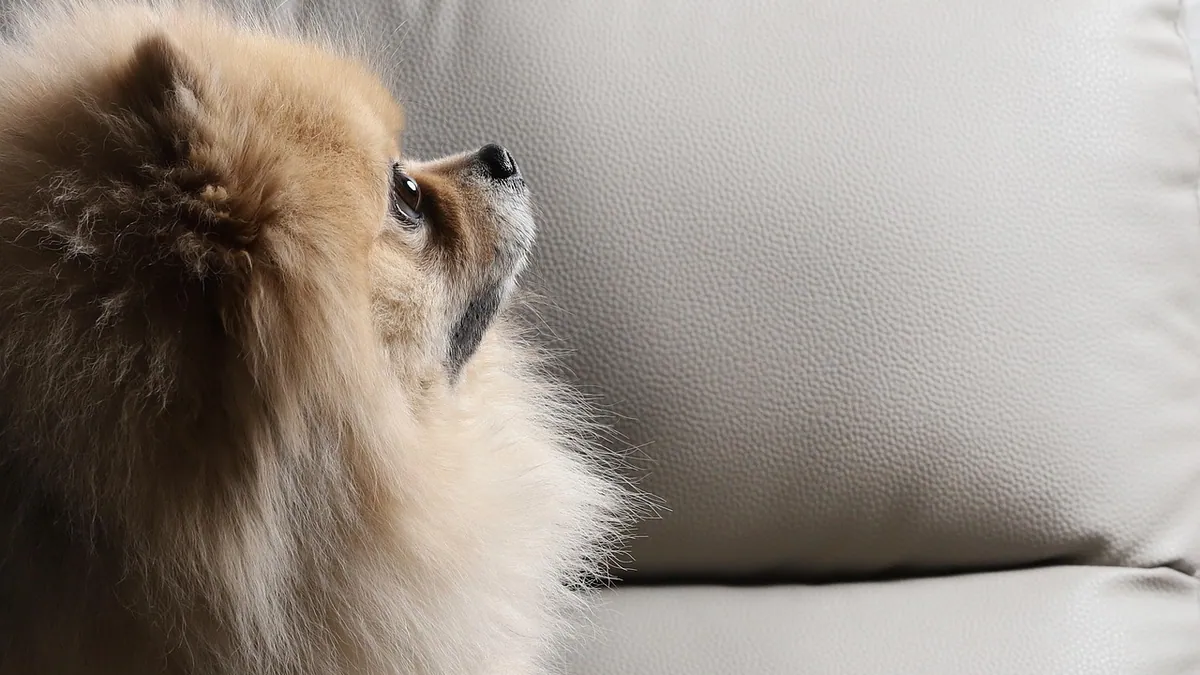
Do dogs judge us? In the everyday sense of passing moral judgment, no. Dogs do not sit in silent disapproval weighing your life choices against a standard of right and wrong. What they actually do is read your face, voice, posture, and attention with remarkable skill, and they respond to what those cues predict about their world [1]. This article is educational and is not a substitute for veterinary diagnosis or treatment.
Quick Answer
- Dogs are highly social animals that interpret human gestures, facial expressions, and body postures very well [1].
- What looks like judgment is usually your dog responding to your tone, tension, or divided attention, not forming an opinion about your character.
- Dogs show individual differences in how much they watch and learn from people, and breed alone does not predict this reliably [2][3].
- Puppies as young as 60 days can already discriminate between locations linked to good and bad outcomes, which shows basic emotional learning starts early [4].
- If a dog's "judgy" behavior is new, intense, or paired with hiding, appetite loss, or irritability, have a veterinarian examine the dog before assuming it is a training problem.
What People Mean When They Ask "Do Dogs Judge Us?"
The internet version of this question usually involves a dog staring at its owner after a mistake. The dog looks disappointed. The owner feels convicted.
That stare is real. The interpretation is where things go wrong. Dogs are excellent observers of human behavior, and they are wired to pay attention to us in ways that few other animals are [1]. A hard stare can mean many things: anticipation, confusion, mild anxiety, or simply waiting for the next cue.
Are dogs judgemental in the human sense? No. Judgment requires a moral framework, and there is no evidence dogs hold one. Dogs evaluate situations in terms of safety, reward, familiarity, and social signals. That is a different process, even when the facial expression looks the same.
Why Dogs Seem to Judge You
Dogs Read Human Cues Constantly
Dogs interact with each other and with people through body postures, facial expressions, tail and ear positions, raised hackles, vocalizations, and scent [1]. They apply that same toolkit to you. When you sigh, slump, or speak in a flat tone, your dog notices.
This is normal social behavior, not criticism. Your dog is gathering information about what happens next.
Attention and Improvement Are Two Separate Skills
A 2026 study of 187 adult purebred dogs found two distinct behavioral dimensions behind dog-human interactions: how much a dog watched a human demonstrator, and how much the dog improved its performance after watching [2]. Some dogs watched closely but improved little. Others improved a lot with less watching.
This matters for owners. A dog that stares at you during training may be highly attentive but not yet translating that attention into action. That is not defiance. It is a different learning profile.
Relationship Quality Shapes Social Cognition
A 2024 study of French Bulldogs found that factors including dog-owner interaction, emotional closeness, and how quickly a dog reached a reward bowl influenced performance on a pointing task [5]. The bond between dog and owner is not sentimental fluff. It measurably affects how well a dog reads human communication.
If your dog seems to "ignore" you, the relationship and the training history may be part of the picture.
Breed Background Plays a Role, But a Modest One
Working breeds differ in how much they rely on human-given instructions, and a 2025 study of 149 dogs from cooperative and independent breeds found that both types relied on body awareness and social learning in a problem-solving task [3]. The differences between breed groups were narrow.
There is also as much behavioral variation between individual dogs within a breed as between breeds [6]. Your dog's personality matters more than the breed label on the adoption paperwork.
What Looks Like Judgment Is Often Conflict
A 2026 study compared human-socialized dogs and wolves in a tug-of-war over food while a bonded human protested loudly [7]. Dogs engaged less vigorously than wolves during the conflict but approached the task faster, which suggests the dogs were caught between participating in a trained task and responding to the human's distress.
That internal conflict can look like a dog "deciding" something about you. In reality, the dog is trying to sort out two competing signals from the same person.
Medical Causes to Rule Out First
Behavior changes that look like attitude problems can have physical roots. Pain, dental disease, vision loss, hearing loss, thyroid disease, and cognitive dysfunction in older dogs can all shift how a dog responds to people.
A dog that suddenly avoids you, stares blankly, growls when approached, or stops responding to cues it knew well deserves a veterinary exam. This is especially true if the change came on quickly or is getting worse week by week. For a closer look at what a shift in behavior can signal, see What Does It Mean When Your Dog's Behavior Changes.
Hiding is another behavior owners often misread as sulking. Sometimes it is. Sometimes it is pain or nausea. This article explains the difference: Dog Hiding: When to Worry About Your Dog's Behavior.
When "Judgy" Behavior Becomes a Problem
The behavior is a problem when it affects the dog's quality of life or the safety of the household. Watch for these patterns:
- The dog freezes, stiffens, or stares at family members during ordinary interactions.
- The dog avoids one specific person consistently.
- The dog guards food, toys, or resting spots.
- The dog growls, snaps, or shows teeth when approached.
- The dog stops eating, sleeping, or playing normally.
- The dog's response to known cues disappears.
Any of these deserves attention. A certified behavior professional or your veterinarian can help you sort out whether the issue is medical, environmental, or learned. If you are unsure whether what you are seeing counts as a behavior problem at all, this guide walks through the signs: How Do I Know If My Dog Has Behavior Problems.
What to Do: Step by Step
Step 1: Get a Veterinary Exam
Start here if the behavior is new, intense, or paired with any physical sign. Your veterinarian can check for pain, sensory changes, and other medical causes. Behavior that starts after a health event often improves when the health issue is treated.
Step 2: Change How You Communicate
Dogs rely on body postures, facial expressions, and vocalizations to read social situations [1]. That means your delivery matters as much as your words.
- Use a calm, even tone.
- Keep your posture relaxed and your hands visible.
- Give one cue at a time.
- Pause for two to three seconds before repeating a cue.
Step 3: Build Predictable Routines
Dogs thrive on consistency. Feed, walk, train, and rest at similar times each day. Predictability reduces the low-grade vigilance that can look like suspicion.
Step 4: Train With Clear, Fair Consequences
Reward the behavior you want within one to two seconds. Use high-value treats for new skills. Keep sessions short, around three to five minutes, and end on a success.
If your dog watches you closely but does not improve, that is a learning pattern, not a character flaw [2]. Break the task into smaller steps and reward each piece.
Step 5: Add Enrichment
Mental work tires a dog in a good way. Try food puzzles, scent games, chew items, and supervised digging or sniffing time. A dog with a full mental bucket has less bandwidth for anxious staring.
Step 6: Protect the Dog's Space
Give your dog a quiet bed or crate where no one bothers it. Teach children to leave the dog alone when it is resting or eating. Space reduces conflict and lowers the odds of a growl.
Step 7: Track What You See
Keep a simple log for two weeks. Note the time, the trigger, your dog's posture, and what happened next. Patterns often become obvious, and your veterinarian or trainer will use that information.
What Not to Do
Do Not Punish the Stare or the Avoidance
Punishment does not teach a dog what to do instead. It can suppress warning signals, which makes future problems harder to read and more dangerous. A dog that stops growling has not stopped feeling threatened.
Do Not Assume Your Dog Is Guilty
The "guilty look" is a well-documented misread. Dogs respond to your tone, posture, and the situation, not to a moral sense of wrongdoing. If you scold a dog that already looks subdued, you are confirming that something about you is scary, not teaching a lesson.
Do Not Rely on Breed Stereotypes
Breed differences in behavior are confined mainly to the specific traits each breed was developed for [6]. Beyond that, individual variation is huge. Assuming your dog is "just like the breed" can cause you to miss what is actually happening.
Do Not Skip Socialization
Early and frequent socialization with many different dogs and people improves a dog's ability to interact comfortably [1]. If your dog is past the puppy window, structured, positive exposure still helps, just more slowly.
Do Not Confuse Attention With Attitude
A dog that watches you constantly may be highly attentive, anxious, or simply well bonded. The 2026 social learning study showed that watching and improving are separate dimensions [2]. Treat them as separate training targets.
How Do Dogs Judge Us? A Better Way to Frame It
Dogs do not judge your morals. They do evaluate your behavior, because your behavior predicts their outcomes. When you are tense, your dog may become tense. When you are inconsistent, your dog may become uncertain. When you are calm and predictable, your dog usually settles.
A 2026 review of canine behavior questionnaires found that many tools mix observable behavior with inferred traits or emotions, and that characterizations of behavior are inconsistent across questionnaires [8]. That is a useful caution for owners too. Describe what your dog does, not what you think it feels. "He stares at me when I pick up the leash" is more useful than "he is judging my choices."
Puppies as young as 60 days can already discriminate between locations associated with positive and negative outcomes and respond to ambiguous locations at an intermediate rate [4]. That means emotional learning and expectation start very early. Your dog has been building a mental model of you since puppyhood.
If you want to understand how deep the dog-human bond runs, this piece is a good next read: Is Your Dog Human? Understanding Canine Behavior and Bonding.
Limitations and When to Contact a Veterinarian
No article can assess your individual dog. Behavior is shaped by genetics, health, history, environment, and the relationship you have built. A veterinarian who examines your dog in person is the only one who can rule out medical causes and recommend a plan.
Contact a veterinarian the same day if your dog:
- Growls, snaps, or bites a person or another animal
- Shows sudden aggression toward a family member
- Cannot be handled for basic care
- Has a seizure, collapses, or shows sudden disorientation
Go to an emergency clinic now if your dog:
- Has trouble breathing
- Has a swollen, painful abdomen
- Collapses or cannot stand
- Shows sudden severe pain or nonstop pacing with no relief
Schedule a routine visit soon if your dog:
- Stares at walls or into space for long periods
- Paces, whines, or pants at rest
- Has stopped responding to cues it knew well
- Shows new hiding, clinginess, or avoidance
- Has changes in appetite, sleep, or bathroom habits
For sudden or severe behavior changes, call your veterinarian before trying any training approach at home.
Frequently Asked Questions
Do dogs judge you when you do something wrong?
No, dogs do not hold moral standards, so they cannot judge right from wrong. They do react to your tone, posture, and the consequences that follow your actions. What looks like judgment is usually your dog reading the situation and predicting what happens next.
Are dogs judgemental about the people you bring home?
Dogs form opinions about individual people based on scent, body language, past experience, and how that person behaves toward them. A dog may be wary of someone new, but that is social evaluation, not moral criticism. Slow, supervised introductions help most dogs adjust.
How do dogs judge us differently from how they judge other dogs?
Dogs use the same signals with people that they use with other dogs, including body postures, facial expressions, tail and ear positions, and vocalizations [1]. The difference is that humans are usually less fluent in those signals, so miscommunication is common. Dogs often adapt by watching our hands, faces, and tone more closely.
Can my dog tell when I am upset?
Dogs are very good at reading human gestures and behavior, and they respond to changes in your voice, posture, and routine [1]. Whether they feel empathy the way humans do is not settled. What is clear is that they notice, and their behavior often shifts in response.
Does my dog's breed affect how much it watches me?
Breed background can influence how much a dog relies on human cues, but the effect is smaller than most owners expect. A 2025 study found that cooperative and independent breeds relied on social learning and body awareness in similar ways [3]. Individual personality and training history usually matter more than breed.
Is staring always a bad sign?
No. Staring can mean anticipation, attention, affection, or anxiety. The context matters, along with the rest of your dog's body language. If staring comes with a stiff body, hard eyes, or growling, treat it as a warning and get professional help.
Related Articles
- How Do I Know If My Dog Has Behavior Problems
- Is Your Dog Human? Understanding Canine Behavior and Bonding
- What Does It Mean When Your Dog's Behavior Changes
- The Smile Dog: Separating Myth from Reality in Canine Behavior
- Dog Hiding: When to Worry About Your Dog's Behavior
- Dog Behavior Problem
- Do Dogs Think? What Science Says About the Canine Mind
- Does My Dog Love Me? Real Signs of Bonding
- Does My Dog Like Me? Reading Your Dog's Real Signals
References
- Normal Social Behavior in Dogs - Dog Owners. Merck Veterinary Manual.
- Attention and improvement: social learning reveals two behavioural dimensions behind dog-human interactions. Evolutionary human sciences, 2026.
- Spatial Problem-Solving in Working Dogs: The Combined Effect of Body-Size Awareness, Social Learning and Functional Breed Selection. Animals : an open access journal from MDPI, 2025.
- Judgment Bias Responses in Domestic Dog Puppies at 60 Days of Age. Veterinary sciences, 2026.
- Dog-Owner Relationship and Its Association with Social Cognition in French Bulldogs. Animals : an open access journal from MDPI, 2024.
- Social Behavior of Dogs - Behavior. Merck Veterinary Manual.
- Deference or sociability? Insights from dogs' and wolves' human-directed behavior in a food-conflict task. Frontiers in psychology, 2026.
- A Systematic Review of the Characterization of Behavior in Canine Behavioral Questionnaires. Journal of applied animal welfare science : JAAWS, 2026.