Do Cats Know When You're Pregnant? Feline Senses Explained
By Dr. Zubair Khalid, DVM, MS, PhD ·
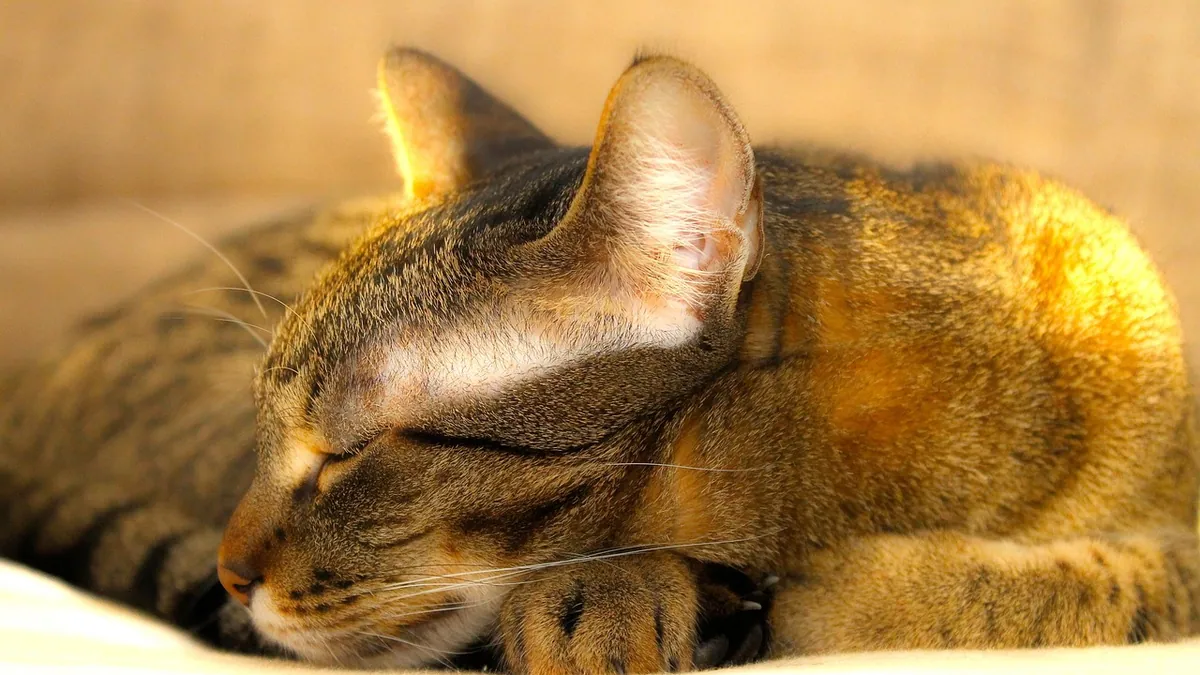
Cats cannot understand the concept of pregnancy, but many cats do notice that something about you has changed. Their sharp sense of smell and their attention to your daily habits mean a cat may pick up on pregnancy before you announce it. This article is educational and is not a substitute for veterinary diagnosis or treatment.
Quick Answer
- Cats rely heavily on scent to tell people apart, so shifts in your body odor and hormones may register with them [1].
- There is no fixed timeline for when a cat notices. Some owners report changes within weeks, others see nothing until the baby arrives.
- Common reactions include extra clinginess, following you room to room, or the opposite, such as more hiding and alone time.
- Kittens and adult cats both use smell to recognize their owners, so age does not block detection [1].
- The most useful prep step is gradual change: set up baby gear, shift routines, and keep your cat's feeding and play schedule steady well before your due date.
Do Cats Know When You're Pregnant? What Science Says
Cats live in a world of scent. A study that presented cats with the odor of their owner, an unknown person, and a blank control found that cats spent much longer sniffing the unfamiliar person's scent [1]. That tells us cats can tell individual humans apart by smell alone [1]. Pregnancy changes body odor through hormonal shifts, so a cat has a real sensory channel for noticing that you are different.
What cats cannot do is understand what pregnancy means. They do not know a baby is coming. They notice changes in you, in your scent, and in the household routine. That is the whole picture.
There is no published timeline that says cats detect pregnancy at a specific week. Veterinary research has not established when cats first notice. Any claim of an exact window is guesswork.
When Do Cats Know You're Pregnant?
Owners often ask when do cats know you're pregnant. The honest answer is that it varies and is not well established in veterinary research. Some cats react early, possibly to scent changes. Others show no clear difference until furniture moves, a nursery appears, or your lap becomes less available.
If your cat seems more attached during your first trimester, that may be coincidence as much as detection. Cats also respond to your stress level, your sleep pattern, and how much time you spend sitting still. A study of owner-cat interactions found that calm, passive contact raised oxytocin and lowered cortisol in cats, while forced interactions did the opposite [2]. If you are resting more and moving less, your cat may simply be enjoying the change.
How Do Cats Act When You're Pregnant?
Owners describe a wide range of behavior. Common patterns include:
- Following you from room to room
- Sitting on or near your belly more often
- Kneading or head-butting you more than usual
- Meowing more, especially at feeding times
- Hiding more or avoiding your lap
- Sudden pickiness about being picked up
None of these behaviors proves your cat knows you are pregnant. They are normal feline responses to change. Cats are creatures of habit, and pregnancy often shifts who feeds them, when they play, and where they sleep.
Kittens may show the same patterns. If you are wondering do kittens know you're pregnant, the answer is the same as for adult cats. Kittens use scent to recognize people [1], so they can notice a change in how you smell, but they have no concept of pregnancy.
Medical Causes to Rule Out
Sometimes a behavior change that looks pregnancy-related is actually a health problem. Rule these out before you assume your cat is reacting to you.
- Sudden hiding or aggression can signal pain, dental disease, or arthritis.
- Increased vocalizing can point to hyperthyroidism, especially in older cats.
- Clinginess plus weight loss or increased appetite deserves a veterinary exam.
- House soiling can stem from urinary tract disease, which is urgent in male cats.
- Overgrooming or hair loss can reflect stress, allergies, or skin parasites.
Pregnancy itself causes measurable physical changes in cats, including a lower rectal temperature in pregnant cats compared with cats in anoestrus [3]. That finding applies to pregnant cats, not to cats living with a pregnant person. Still, it shows how sensitive feline physiology is to hormonal states. If your cat's behavior shifts sharply and you cannot tie it to a routine change, book an exam.
When Cat Behavior Becomes a Problem
A behavior becomes a problem when it affects your cat's health or your household safety. Watch for these signs:
- Your cat stops eating or drinking for more than 24 hours.
- Your cat urinates or defecates outside the box after a clean bill of health.
- Your cat hisses, swats, or bites when you approach.
- Your cat hides all day and avoids all interaction.
- Your cat overgrooms to the point of bald patches or sores.
Stress matters for cats. The same study on owner-cat interactions found that forced handling raised cortisol in cats, while gentle, passive contact lowered it [2]. If your cat is stressed by your changing body or reduced mobility, that stress is real and worth addressing. It also matters for the transition once the baby arrives.
How to Prepare Your Cat for a New Baby
Start early. Aim to have most changes in place a month before your due date so your cat adjusts while life is still calm.
Shift routines gradually
Move feeding times, play sessions, and cuddle spots in small steps. If your cat sleeps on your bed, decide now whether that continues after the baby arrives. Make the change slowly, not the week you come home from the hospital.
Set up baby gear early
Assemble the crib, stroller, and swing weeks ahead. Let your cat sniff and explore while these items are neutral. Play recordings of baby sounds at low volume and pair them with treats.
Protect the litter box and food station
Keep your cat's resources in a quiet area the baby cannot reach. A baby gate or a closed room works well. Your cat needs a safe zone that stays off limits to crawling hands.
Practice handling changes
If you will carry the baby more, get your cat used to shorter lap sessions now. Use wand toys and puzzle feeders to deliver activity without your lap. This keeps your cat mentally engaged when your time is stretched.
Plan for the hospital stay
Decide who will feed, play with, and scoop the litter box while you are away. Keep that person's routine identical to yours. Cats notice small details, and consistency lowers stress.
Introduce the baby slowly
When you come home, let your cat smell a blanket from the hospital first. Keep greetings calm. Never force your cat to approach the baby. Reward any calm curiosity with treats.
If your cat is pregnant herself, the timeline and care needs are different. See How Long Are Cats Pregnant? Gestation, Care, and When to Call a Veterinarian for the details. If you are also tracking a dog's pregnancy, dog pregnancy symptoms covers what to watch for in dogs.
What Not to Do
Avoid these common mistakes.
- Do not punish your cat for clingy, vocal, or avoidant behavior. Punishment raises stress and can damage your bond.
- Do not assume your cat is "jealous" of the baby. Cats do not experience jealousy the way humans do.
- Do not lock your cat out of every room at once. Sudden loss of territory causes stress.
- Do not skip veterinary care because you assume the behavior is pregnancy-related.
- Do not rely on myths about cats smothering babies. There is no evidence cats target infants, though cats should never be left alone with a baby for other safety reasons.
- Do not use harsh deterrents such as spray bottles or loud noises.
When to Involve a Veterinarian or Behavior Professional
Call your veterinarian if your cat shows sudden behavior changes, stops eating, or develops litter box problems. Your veterinarian can rule out medical causes first. If health checks are normal, ask for a referral to a veterinary behaviorist or a certified cat behavior consultant. These professionals build plans for anxiety, aggression, and household transitions.
If you are worried about your cat's reproductive health, note that cats have a seasonal estrous cycle, and the timing and hormonal changes are well documented [4]. If your cat is unspayed and cycling, see How Often Do Cats Go Into Heat? Feline Estrous Cycle & Signs Guide.
Limitations and When to Contact a Veterinarian
No test can confirm that your cat "knows" you are pregnant. This is a behavioral observation, not a diagnosis. Individual cases need a veterinarian, and no article can replace an exam.
Contact your veterinarian the same day if your cat:
- Refuses food for 24 hours
- Strains to urinate or produces no urine
- Vomits repeatedly or has diarrhea for more than a day
- Shows sudden lameness or yowls when touched
Go to an emergency clinic now if your cat:
- Breathes with an open mouth or struggles to breathe
- Collapses or has a seizure
- Bleeds from the mouth, nose, or rectum
- Is a male cat straining to urinate with no output
Schedule a routine visit if your cat's behavior changed gradually, if you want help with stress or aggression, or if you are planning a pregnancy and want advice on litter box duties. Toxoplasmosis is a real concern for pregnant people, so ask your veterinarian and your obstetrician about safe litter box practices. If you are ever unsure whether your cat is in distress, call your veterinarian. For choking or poisoning emergencies, contact the ASPCA Animal Poison Control Center at (888) 426-4435 or the Pet Poison Helpline at (855) 764-7661.
Frequently Asked Questions
Can my cat sense pregnancy before I take a test?
Possibly, but there is no way to confirm it. Cats can distinguish human individuals by scent [1], so early hormonal odor changes could register. Most owners cannot separate true detection from normal routine shifts.
Do cats act differently around pregnant owners?
Some do, some do not. Reported changes include clinginess, more vocalizing, or increased hiding. These are normal responses to change in routine and scent, not proof of pregnancy awareness.
Should I change my cat's routine during pregnancy?
Yes, but slowly. Move feeding, play, and sleep arrangements in small steps well before your due date. Gradual change lowers stress and helps your cat adjust to life with a baby.
Is it safe to scoop the litter box while pregnant?
Ask your obstetrician and veterinarian for personal guidance. Toxoplasmosis risk is a known concern in pregnancy, so many providers recommend having someone else handle litter duty. If you must scoop, wear gloves and wash your hands afterward.
Will my cat be jealous of the baby?
Cats do not experience jealousy the way people do. They may show stress when attention and territory change. Gradual preparation, safe zones, and calm introductions reduce that stress.
Can I train my cat to behave around a newborn?
You can build calm habits, not obedience. Reward quiet behavior near baby gear, keep interactions supervised, and give your cat escape routes. A veterinary behaviorist can help if problems persist.
Related Articles
- How Long Are Cats Pregnant? Gestation, Care, and When to Call a Veterinarian
- How Often Do Cats Go Into Heat? Feline Estrous Cycle & Signs Guide
- Can Cats See in the Dark? Feline Vision Explained
- How To Know If Your Cats Choking
- dog pregnancy symptoms
- Why Does My Cat's Breath Smell?
- Do Cats Know When You're Sad? Feline Empathy Explained
- How to Tell If Your Cat Is Pregnant: Tests and Scans
- Cat Pregnancy Weeks: What to Expect Week by Week
- Toxoplasmosis in Cats: Risks During Pregnancy and Prevention
- Toxoplasmosis in Cats: Risks to Pregnancy and Prevention
References
- Behavioral responses of domestic cats to human odor. PloS one, 2025.
- EXPRESS: The hormonal effects of owner-cat interactions on pet cats of different potential attachment styles. Journal of feline medicine and surgery, 2026.
- The Effects of Pregnancy Status on Lacrimal Caruncle Temperature, Intraocular Pressure and Rectal Temperature in Cats: A Preliminary Study. Veterinary medicine and science, 2024.
- Reproduction of Domestic Cats in Laboratories, Catteries, and Feral Colonies: A Review. Topics in companion animal medicine, 2023.