Are Dogs Jealous? Signs of Jealousy and How to Help
By Dr. Zubair Khalid, DVM, MS, PhD ·
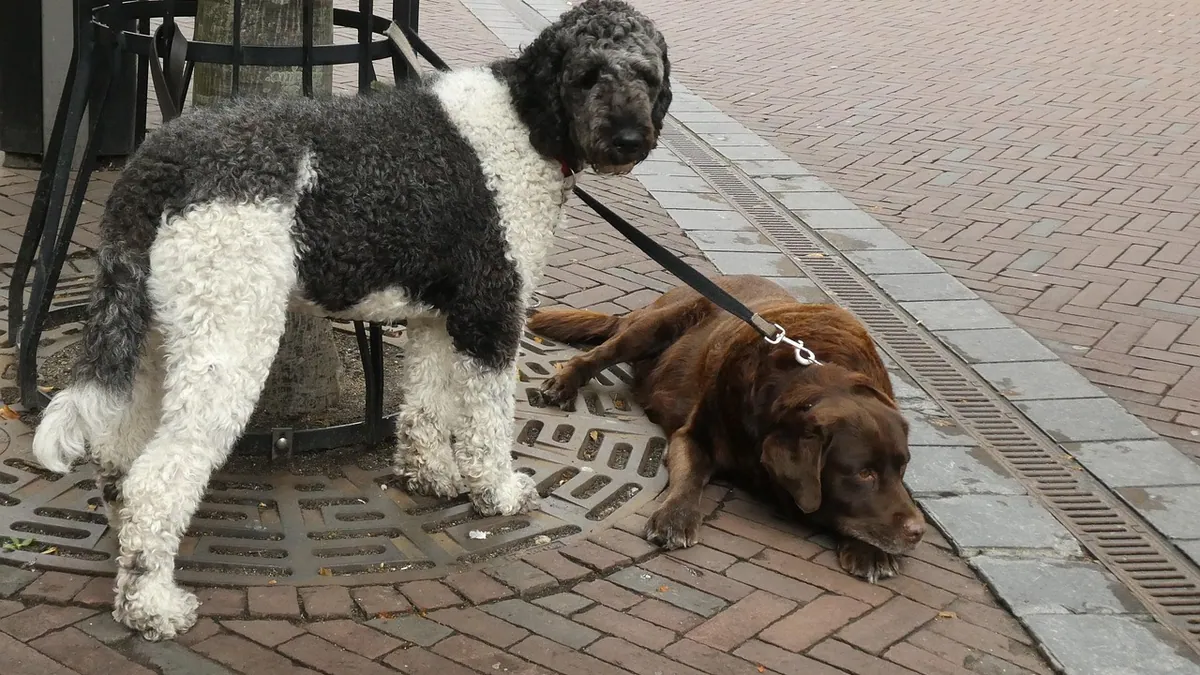
Are dogs jealous? The short answer is yes, at least in the sense that many dogs show jealous behavior when their owner gives attention to a rival. Researchers have found that dogs react more strongly when their owner interacts with another dog than when the owner ignores them or reads a magazine [1][2]. This article is educational and is not a substitute for veterinary diagnosis or treatment.
Quick Answer
- Dogs can show jealous behavior, and research supports this in controlled settings [1][2].
- Jealousy usually appears as attention-seeking, pushing between you and the other pet or person, whining, or barking.
- It is not the same as human jealousy with complex self-reflection, but the behavior is real and measurable [1].
- Most cases improve with management, training, and fair access to resources, not punishment.
- Sudden new jealousy-like behavior in an adult dog deserves a veterinary check to rule out pain or illness.
Why Dogs Show Jealousy-Like Behavior
The social nature of dogs
Dogs are a gregarious species with a flexible, highly adaptable social structure [3]. Unlike wolves, which form family groups, domestic dogs form loose associations with unrelated dogs and commonly bond with other dogs introduced as puppies or adults in a home [3]. That social flexibility helps explain why your dog cares who you pay attention to.
What the research actually shows
In one study, dogs watched their owner interact with either a fake dog or a fleece cylinder [1]. The dogs showed jealous behavior only when the owner interacted with the perceived social rival, and the behavior happened because of that interaction, not just because another dog was nearby [1]. The dogs even reacted when the interaction was out of sight, which suggests they can mentally represent the social exchange [1].
A later study found that dogs showed more owner-oriented behavior, interaction interruption, vocalization, and snapping when the owner attended to a rival dog compared to reading a magazine [2]. Dogs also snapped more at a robot than at a magazine, which suggests they adjust their response based on how social the rival seems [2].
Why this matters for owners
Your dog may not experience jealousy the way you do. Still, the behavior is consistent enough that owners and researchers recognize it [1][4]. Caregivers frequently report jealousy-like behaviors in dogs, even though behavioral studies have produced mixed results over the years [4].
Signs of Dog Jealousy
Watch for these behaviors, especially when they happen only during interactions with a rival:
- Pushing between you and another pet or person
- Pawing at you or nudging your hand
- Whining, barking, or vocalizing
- Trying to interrupt your interaction with the other animal [2]
- Snapping or air-snapping in intense cases [2]
- Refusing to leave your side when another pet gets attention
- Blocking the other pet from reaching you
Some of these overlap with anxiety. If your dog also paces, pants, or hides, read Dog Anxiety Signs: What Should Owners Watch For? for more detail.
Are Dogs Jealous of Each Other?
Yes, dogs often show jealousy-like behavior toward other dogs in the home. In one study, dogs reacted most strongly when their owner interacted with a rival dog, and they showed less reaction to a non-social object [2]. This suggests the behavior is tied to the social rival, not just to your divided attention.
Multi-dog homes can make this worse when resources are scarce or access is unpredictable. Resource-guarding behavior is common in companion dogs and can affect safety, welfare, and the human-canine bond [5]. Early experiences with resources during sensitive developmental periods can shape adult behavior around food, toys, and attention [5].
If tension between your dogs escalates to growling, lunging, or bites, see Dog Aggression Towards Other Dogs: How to Manage and When to Get Help.
Medical Causes to Rule Out First
Before you assume jealousy, rule out medical problems. Pain, dental disease, arthritis, thyroid issues, and vision or hearing loss can all make a dog clingier, grumpier, or more reactive.
Any sudden change in behavior in an adult dog deserves a veterinary exam. Your veterinarian can check for pain, illness, and medication side effects that might explain the change.
Stress behaviors in dogs are not simple, linear signals. A study using a social-stress test found that behaviors commonly used as stress markers did not rise and fall in a predictable way across episodes, and physiological measures varied by attachment style [6]. That means you cannot diagnose a medical or emotional problem from one behavior alone.
When Jealousy Becomes a Problem
Jealous behavior becomes a problem when it:
- Causes injury to a person or another pet
- Leads to resource guarding of food, toys, or people [5]
- Creates constant tension in a multi-pet home
- Disrupts your ability to care for another pet
- Escalates over weeks instead of settling
Early socialization and adoption timing also shape adult behavior. Puppies adopted at 1 or 2 months showed higher signs of fear, anxiety, and attention-seeking than those adopted later [7]. If your dog came home very young, they may need extra help learning to share attention calmly.
How to Help a Jealous Dog
Step 1: Get a veterinary check
Schedule an exam to rule out pain and illness. This is especially important if the behavior is new or worsening.
Step 2: Manage the environment
- Feed pets in separate rooms or crates.
- Give each pet its own bed, water bowl, and resting spot.
- Use baby gates or pens to create separate zones.
- Rotate toys so resources feel abundant.
Step 3: Teach calm behaviors
- Reward your dog for lying on a mat while you pet another animal.
- Practice short sessions, then build duration.
- Use treats and praise, never force.
- Teach a solid "go to your place" cue.
Step 4: Share attention fairly
Give each pet one-on-one time every day. When you pet one dog, toss a treat to the other. This changes the emotional picture from "rival takes my owner" to "rival predicts good things."
Step 5: Add enrichment
Boredom fuels attention-seeking. Puzzle feeders, sniff walks, chew toys, and training games give your dog an outlet. For more ideas, see Help With Dog Behavior Problems.
Step 6: Keep greetings calm
When you come home, greet all pets calmly and at the same time if possible. Avoid dramatic reunions with one pet while ignoring the other.
What Not to Do
- Do not punish growling or snapping. Punishment can suppress warning signs and lead to bites without warning.
- Do not scold your dog for pushing between you and another pet. Redirect instead.
- Do not assume your dog is trying to dominate you. A dominance hierarchy does not describe dogs' social relationships with each other or with people, and priority access to resources is not fixed or linear [3].
- Do not force two pets to share a bed, bowl, or toy before they are ready.
- Do not use aversive training methods. Breeder surveys show that aversive methods are used in some settings, but they carry welfare risks [5].
- Do not ignore the behavior and hope it fades. Early management works better.
Myths About Dog Jealousy
Myth: Dogs only want attention, so jealousy is fake. Research shows dogs react differently to a social rival than to a non-social object, which suggests the behavior is more than simple attention-seeking [2].
Myth: Jealousy means your dog is dominant. Dominance does not describe dog-human or dog-dog relationships in the way pop culture suggests [3].
Myth: You should let them sort it out. Unmanaged conflict risks injury. Intervene calmly and separate when needed.
Myth: A new pet will always fix loneliness. Sometimes a new pet increases tension. Introduce slowly and manage resources from day one.
When to Involve a Veterinarian or Behavior Professional
Call your veterinarian if:
- The behavior is new in an adult dog
- Your dog shows pain signs, appetite changes, or lethargy
- Jealous behavior includes snapping, biting, or guarding [5]
- You feel unsafe managing the situation
- Two dogs in the home have repeated conflicts
Ask for a referral to a veterinary behaviorist or certified applied animal behaviorist for severe or complex cases. These professionals can build a plan that fits your household.
Limitations and When to Contact a Veterinarian
This article gives general information. Individual cases need a veterinarian who can examine your dog and review the full history.
Contact your veterinarian the same day if your dog:
- Snaps at a person or another pet for the first time
- Guards food, toys, or a person and will not back away
- Shows sudden behavior change with vomiting, diarrhea, or limping
- Seems painful when touched
Go to an emergency clinic now if:
- A bite broke skin or caused bleeding
- Your dog cannot be safely separated from another pet
- Your dog shows severe distress, collapse, or trouble breathing
Schedule a routine visit if:
- Jealous behavior is mild but persistent
- You want help with a multi-pet introduction
- You need a training plan or medication evaluation
Frequently Asked Questions
Do dogs get jealous of their owners?
Yes, dogs can show jealous behavior when their owner interacts with a rival. Research shows this reaction happens specifically when the owner engages with a perceived social rival, not just when another animal is present [1].
Are dogs jealous of other dogs in the same home?
Yes, jealousy-like behavior between household dogs is common. It often centers on attention, food, toys, or resting spots, and resource guarding can make it worse [5].
Can jealousy in dogs be cured?
Jealous behavior usually improves with management, training, and fair access to resources. It may not disappear completely, but most dogs can learn to share attention calmly with consistent practice.
Should I punish my dog for jealous behavior?
No. Punishment can suppress warning signs and increase fear or aggression. Redirect your dog to a mat or toy and reward calm behavior instead.
Do dogs outgrow jealousy?
Some dogs become more relaxed with age and routine. Others need ongoing management, especially if they were adopted very young or had limited socialization [7]. A veterinarian or behavior professional can help you set realistic goals.
Related Articles
- Dog Anxiety Signs: What Should Owners Watch For?
- Help With Dog Behavior Problems
- Herding Dog Behavior Problems
- Dog Whining All the Time: What Is Your Dog Trying to Tell You?
- Dog Aggression Towards Other Dogs: How to Manage and When to Get Help
- Dog Hiding: When to Worry About Your Dog's Behavior
- Signs of Dog Depression and How to Help
- Do Dogs Know When You're Mad at Them?
- Does My Dog Love Me? Real Signs of Bonding
References
- Dogs Mentally Represent Jealousy-Inducing Social Interactions. Psychological science, 2021.
- Companion dogs show signs of jealous behaviour toward non-living agents. Scientific reports, 2025.
- Social Behavior of Dogs - Behavior. Merck Veterinary Manual.
- Pet dogs' Behavioural Reaction to Their Caregiver's Interactions with a Third Party: Join in or Interrupt?. Animals : an open access journal from MDPI, 2022.
- Resource management practices of Canadian and American domestic dog breeders and associations with puppy competitive behaviour: A cross-sectional study. Animal welfare (South Mimms, England), 2026.
- Rethinking dog stress behaviours: contextual and physiological insights from the attachment framework. The veterinary quarterly, 2026.
- The Puppies' Age at Adoption Time Influences the Behavioral Responses of Adult Dog. Veterinary sciences, 2025.