Does My Cat Miss Me? Signs of Attachment and Stress
By Dr. Zubair Khalid, DVM, MS, PhD ·
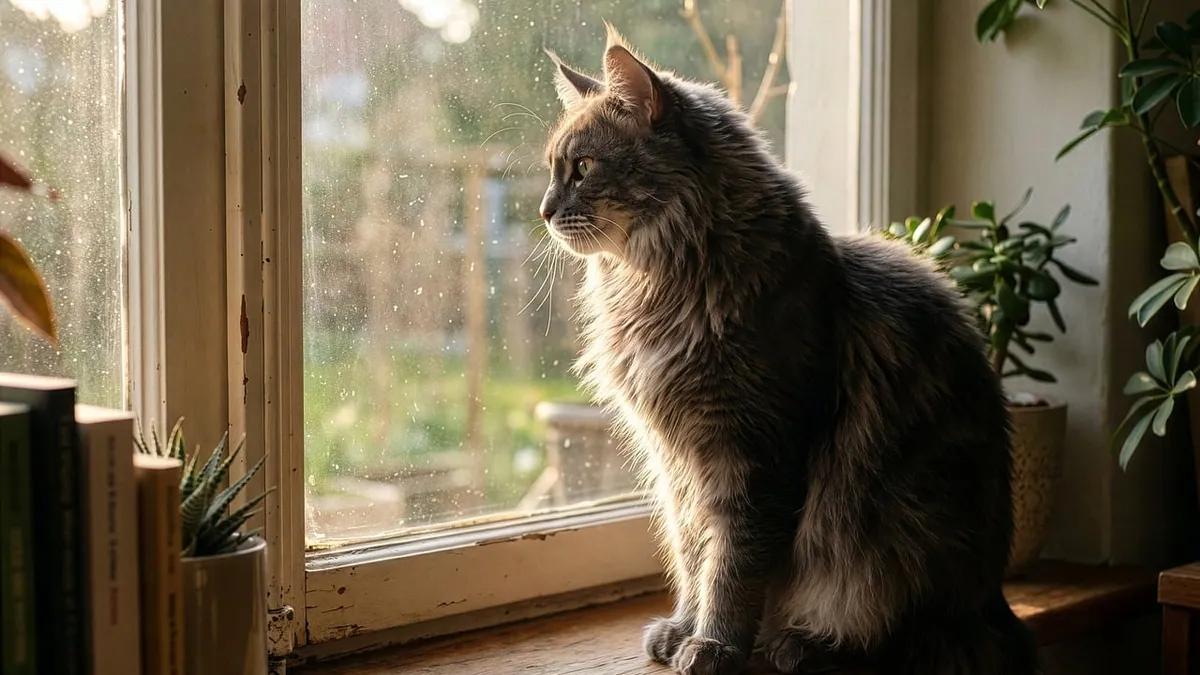
Does your cat miss you when you are away? Often, yes. Cats form real bonds with their owners, and many show it through greeting behavior, clinginess, or a changed routine when you return. But some cats act aloof, and that does not mean they did not notice you were gone. This article is educational and is not a substitute for veterinary diagnosis or treatment.
Quick Answer
- A cat that missed you may greet you at the door, follow you room to room, vocalize more, or want extra contact for a day or two.
- A cat that seems distant or hides after you return is often stressed, not indifferent. Give it space and let it come to you.
- Watch for changes that last more than a few days, such as not eating, hiding constantly, or over-grooming.
- Cats can also grieve or react when a companion cat is gone, and the behavior can look like missing you.
- If your cat stops eating, hides for long stretches, or seems painful, call your veterinarian.
Why Cats React When You Leave and Return
Cats are creatures of routine. They learn your schedule, your smell, and the sound of your car or footsteps. When that routine breaks, some cats notice right away.
Research on owner-cat interactions shows that the type of contact matters. In one study, passive interactions (just being near each other, gentle petting on the cat's terms) were linked to higher oxytocin and lower cortisol in cats, while forced or unwanted interactions showed the opposite pattern [1]. Oxytocin is often called a bonding hormone, and cortisol is a stress hormone. This helps explain why a cat may seek you out calmly after you return, or may act prickly if it feels overwhelmed.
Attachment style also plays a role. Cats classified as securely attached showed more positive hormonal responses to human interaction, while insecure cats showed more cortisol or a limited positive response [1]. In plain terms, some cats handle your absence and return more easily than others.
Normal reasons for changed behavior
- Greeting behavior. Many cats meet you at the door, rub against your legs, or chirp. This is a normal social greeting.
- Extra closeness for a day or two. Your cat may follow you, sit on your lap more, or sleep near you.
- Brief aloofness. Some cats need a few hours to settle before they want attention.
- Routine disruption. If you were gone at an unusual time, your cat's feeding and play schedule may have shifted.
Do cats get lonely?
Yes, cats can get lonely, though they show it in different ways. Some become clingy. Others become quiet or hide. Cats that live alone may be more dependent on their owner for social contact. Cats in multi-cat homes may lean on each other instead.
If you have more than one cat, you may wonder how to tell if my cat misses my other cat. Watch for changes in grooming, sleeping spots, and play. A cat that loses a companion may call out, search the house, or eat less. Cornell University College of Veterinary Medicine notes that the loss of a cat can leave a real void and that grief can affect daily life [2]. The same idea applies to the cats left behind.
Medical Causes to Rule Out First
Before you decide your cat is stressed or sad, rule out illness. Many medical problems look like behavior changes.
- Not eating or eating less. This is a red flag in cats. It can lead to serious liver problems.
- Hiding more than usual. Pain, nausea, and dental disease can all make a cat withdraw. See Why Is My Cat Hiding under bed? Hidden Illness & Severe Stress Signs.
- Vocalizing more. Increased meowing can signal pain, thyroid disease, or cognitive changes in older cats.
- Over-grooming or bald patches. This can be skin disease, parasites, allergies, or stress.
- Litter box changes. Straining, going outside the box, or urinating more can mean a urinary problem.
- Weight loss. Even a small drop matters in cats.
Chronic stress can also show up in the body. Researchers can measure cortisol, a stress hormone, in cat hair over time, and higher levels have been linked to behaviors such as isolation and excessive vocalization [3]. That does not mean every quiet cat is stressed, but it does mean behavior and stress are connected.
When Missing You Becomes a Problem
Missing you is normal. Separation distress becomes a problem when it interferes with your cat's health or daily life.
Signs that it has crossed into a problem:
- Your cat stops eating or eats much less while you are gone or after you return.
- Your cat hides for most of the day and avoids all contact.
- Your cat vocalizes constantly, especially at night.
- Your cat destroys doors, blinds, or furniture when left alone.
- Your cat urinates or defecates outside the litter box.
- Your cat over-grooms to the point of sores or bald spots.
- Your cat seems tense, pacing, or unable to settle for days.
These signs overlap with cat separation anxiety. For a deeper look, see Cat Separation Anxiety: Signs and How to Help.
How to Tell If My Cat Missed Me: Step-by-Step
You can read your cat's behavior and respond in ways that help.
1. Watch the first 10 minutes
Greeting behavior is the clearest signal. Does your cat come to you, rub on you, or chirp? Does it sniff you carefully? That is a good sign your cat noticed your absence.
2. Note the next 24 to 48 hours
Some cats need a day to settle. Track eating, litter box use, sleeping, and play. A cat that returns to normal within a day or two is usually fine.
3. Check for stress signs
Look for a tucked tail, flattened ears, dilated pupils, hiding, or a tense body. These are common cat stress signs. See Cat Stress Signs: How to Recognize and Reduce Stress in Your Cat.
4. Keep routines steady
Feed, play, and clean the litter box at the same times each day. Predictability lowers stress.
5. Let your cat choose contact
Offer a hand, a lap, or a quiet spot nearby. Do not pick up a cat that is pulling away. Passive, voluntary contact is linked to lower cortisol and higher oxytocin [1].
6. Add enrichment
Indoor cats do best with resources such as litter boxes, hiding places, vertical spaces, and predatory play [3]. A tired, entertained cat handles alone time better.
7. Practice short absences
Leave for 5 minutes, then 15, then an hour. Keep departures and returns calm. This builds confidence that you always come back.
8. Consider a companion
If your cat seems lonely, a well-matched second cat can help. But introductions take time and planning. A bad match can add stress.
What Not to Do
- Do not punish your cat. Punishment does not teach a cat to miss you less. It adds fear and can make hiding and stress worse.
- Do not force interaction. Forced contact raised cortisol in cats in one study [1]. Let your cat come to you.
- Do not assume aloofness means no bond. Some cats show attachment by staying in the same room, not by sitting on you.
- Do not ignore not eating. A cat that skips meals for more than 24 hours needs veterinary attention.
- Do not rely on myths. Cats are not solitary animals that do not care about people. They form attachments, and those attachments affect their stress hormones [1].
- Do not add a new pet to fix loneliness without a plan. A rushed introduction can create long-term tension.
When to Involve a Veterinarian or Behavior Professional
Call your veterinarian if behavior changes last more than a few days, if your cat stops eating, or if you see signs of pain. A physical exam and lab work can rule out medical causes.
Ask for a referral to a veterinary behaviorist or a certified behavior professional if:
- Your cat injures itself or your home when alone.
- House soiling continues after medical causes are ruled out.
- Your cat cannot settle even with routine and enrichment.
- You feel overwhelmed or unsafe managing the behavior.
A veterinarian can also assess chronic stress. Hair cortisol testing is one way researchers measure longer-term stress, and it has been used to compare stress levels across different living situations [4][3]. Your veterinarian will decide if any testing is useful for your cat.
Limitations and When to Contact a Veterinarian
No article can tell you what your individual cat is feeling. Cats hide illness well, and behavior changes are often the first clue. Your cat needs a veterinarian to sort out what is medical and what is behavioral.
Contact a veterinarian the same day if:
- Your cat has not eaten in 24 hours.
- Your cat is hiding and will not come out for food or the litter box.
- Your cat is vomiting, has diarrhea, or seems painful.
- Your cat is straining in the litter box or crying while urinating.
Go to an emergency clinic now if:
- Your cat is having trouble breathing, open-mouth breathing, or choking. See How To Know If Your Cats Choking.
- Your cat collapses, has a seizure, or cannot stand.
- Your cat is bleeding heavily or has a suspected broken bone.
- Your cat ate something toxic or swallowed an object.
Schedule a routine visit if:
- Behavior changes have lasted more than a few days.
- Your cat is over-grooming, pacing, or vocalizing at night.
- Your cat seems anxious most days. See Cat Anxiety Symptoms: What to Look For and When to See a Vet.
Frequently Asked Questions
Do cats actually miss their owners?
Yes, many cats notice and react to their owner's absence. They may greet you, follow you, or act stressed for a short time. Attachment style affects how strongly each cat responds [1].
Why is my cat ignoring me after I get home?
Some cats need time to settle and may avoid contact at first. This is often stress or overstimulation, not a lack of bond. Give your cat space and let it approach you.
How long does cat separation stress last?
Mild changes often fade within a day or two once routines return. If signs last more than a few days, or if your cat stops eating, call your veterinarian.
Can cats get depressed when another cat dies?
Yes, cats can show grief-like behavior after a companion dies. They may call out, search, eat less, or sleep more. Cornell notes that losing a cat leaves a real void and can affect daily life [2].
Should I get another cat so mine is not lonely?
Only if your cat enjoys other cats and you can do a slow, careful introduction. A companion can help some cats, but a poor match adds stress. Talk with your veterinarian or a behavior professional first.
Related Articles
- Cat Stress Signs: How to Recognize and Reduce Stress in Your Cat
- Cat Separation Anxiety: Signs and How to Help
- Why Is My Cat Hiding under bed? Hidden Illness & Severe Stress Signs
- Cat Anxiety Symptoms: What to Look For and When to See a Vet
- How To Know If Your Cats Choking
- Cat Not Eating? When to Worry and What to Do
- Do Cats Miss Their Owners? What Science Says
- How to Tell If Your Cat Loves You: Real Signs of Bonding
- Does My Dog Miss Me? Signs of Separation and Bonding
References
- EXPRESS: The hormonal effects of owner-cat interactions on pet cats of different potential attachment styles. Journal of feline medicine and surgery, 2026.
- Grieving the Loss of Your Cat. Cornell University College of Veterinary Medicine.
- Stress in Indoor and Outdoor Cats: Association between Hair Cortisol Levels, Housing Style, and Guardians' Perceptions of Behavior. Journal of applied animal welfare science : JAAWS, 2026.
- Assessing chronic stress in cats: measuring hair cortisol using an ELISA. Journal of veterinary diagnostic investigation : official publication of the American Association of Veterinary Laboratory Diagnosticians, Inc, 2025.