Do Cats Feel Love? The Science of Feline Emotions
By Dr. Zubair Khalid, DVM, MS, PhD ·
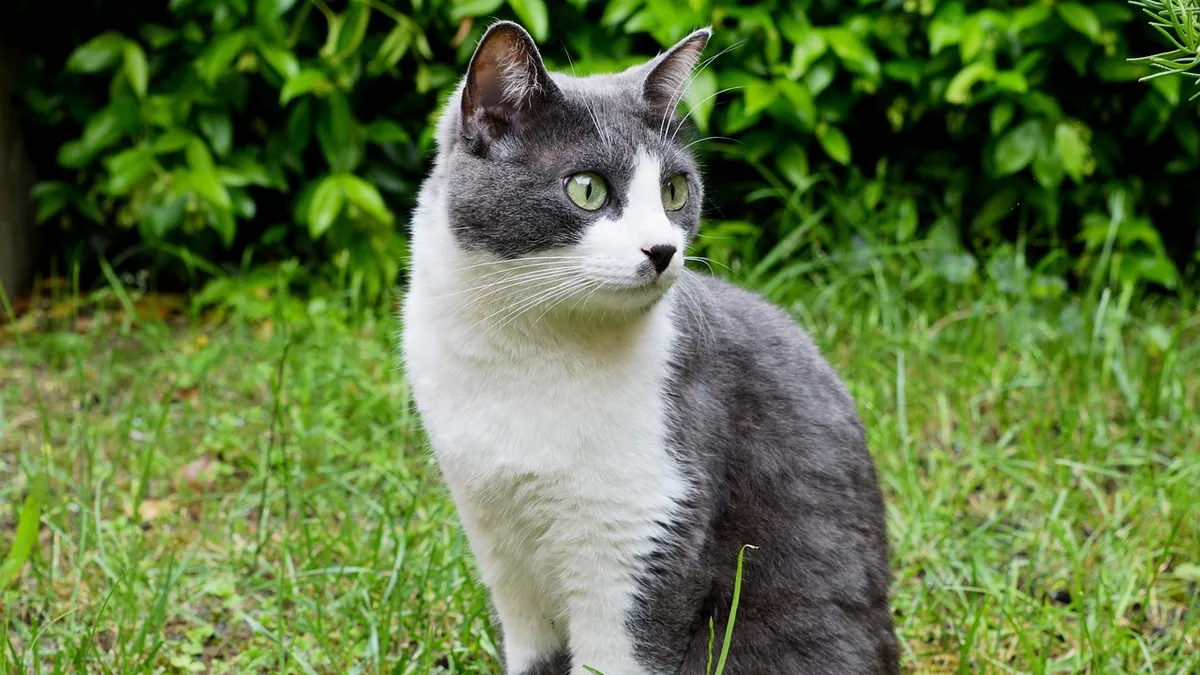
Do cats feel love? The short answer is yes, in their own feline way. Cats form real attachment bonds with the people who care for them, and they show it through behavior, body language, and even hormones. This article is educational and is not a substitute for veterinary diagnosis or treatment.
Quick Answer
- Cats form attachment styles with their owners that researchers classify as secure, insecure-anxious, or insecure-avoidant, similar to patterns seen in human relationships [1].
- Cats read emotional cues from other cats, and they respond to visual signals of emotion in ways that suggest they notice how others feel [2].
- Gentle, passive interaction with your cat raises oxytocin (a bonding hormone) and lowers cortisol (a stress hormone), while forced interaction does the opposite [1].
- Cats in familiar homes show more play, exploration, and contact with their caregiver after a brief separation than shelter cats do, which points to a real comfort bond [3].
- You can strengthen your bond with predictable routines, play, safe spaces, and letting your cat choose when to interact.
Do Cats Feel Emotions? What the Science Says
Yes, cats have feelings. Anyone who has lived with a cat has seen fear, contentment, frustration, and excitement. The scientific question is not whether cats experience anything at all, but how their emotional lives compare to ours and how we can read them accurately.
Cats are not small dogs, and they are not small humans. Their social system is built around the queen and her kittens. In stable outdoor groups, kittens often stay with their mother or her extended social group for the first 12 to 18 months of life, and multiple generations of related females may all help care for the young [4]. That is a real social world, with real bonds.
Cats also read emotion in each other. In one study, cats looked longer and more often at visual signals linked to negative emotion, which suggests they pick up on emotional cues from other cats [2]. If cats can read emotion in each other, it makes sense that they can read it in you too.
Are Cats Capable of Love? Attachment Is the Closer Question
Researchers often study attachment instead of love because attachment can be measured. Using a version of the Strange Situation Test adapted for cats, one study followed 82 cat-caregiver pairs from private homes and animal shelters through phases of presence, separation, and reunion [3]. Cats from private homes explored and played more, especially after reuniting with their caregiver [3]. Shelter cats showed less play, more passive behavior, and more purring after reunion [3]. Physical contact increased after separations for the cats in the study [3].
That pattern is what attachment looks like. Your cat uses you as a safe base. When you return, your cat relaxes and gets back to normal cat business.
Attachment style matters too. In a study of 20 pet cats, researchers classified cats as secure, insecure-anxious, or insecure-avoidant using the Secure Base Test, then measured salivary cortisol and oxytocin before and after four types of owner-cat interactions [1]. Secure cats had more positive hormonal responses to human interaction, while insecure cats showed rising cortisol or limited hormonal response [1]. In other words, the quality of the relationship shows up in the cat's body chemistry.
How Cats Show Affection
Cats show affection through small, consistent behaviors. Watch for these:
- Slow blinking and relaxed eyes
- Head bunting (pushing the top of the head against you)
- Kneading, especially on soft surfaces
- Following you from room to room
- Choosing to rest near you, even without touching
- Greeting you with a raised tail and a soft chirp
- Purring during calm contact
Purring is not a simple "happy" signal. It can also appear in stress or pain, which is why context matters. A cat who purrs while hiding under the bed is not the same as a cat who purrs while kneading your lap.
Some of the affection you feel may also come from how you see your cat. Caregivers ascribe complex emotions and thinking to their cats, and those attributions grow stronger with a stronger attachment [5]. That does not mean the bond is imaginary. It means the relationship runs both ways, and your feelings shape how you read your cat.
Why Your Cat Acts This Way: Normal Reasons First
Most affectionate cat behavior has normal, ordinary explanations.
Social learning starts young. Proper social development in kittens happens partly through adoption into a new home at about 8 to 14 weeks old and through kitten socialization classes, which help kittens build positive responses to a range of cats, people, and new experiences [6]. Kittens raised with other cats and given play sessions with wand toys tend to develop better social skills [6].
Your cat is wired for a social group. The basic feline social unit is the mother and her kittens, and related females may share kitten care [4]. Your home group is a substitute for that unit, and your cat treats you as part of it.
Interaction type changes the body. Passive interactions raised oxytocin and lowered cortisol in pet cats, while forced interactions did the opposite [1]. Your cat's affection often follows your willingness to let the cat set the pace.
Familiar places feel safer. Cats from private homes explored and played more after reuniting with their caregiver than shelter cats did [3]. Familiarity and predictability support relaxed, affectionate behavior.
Medical Causes to Rule Out
Sometimes a change in affection is a health problem, not a relationship problem.
A cat who suddenly avoids contact, hides, stops grooming, eats less, or vocalizes more may be in pain or ill. Cats are good at hiding discomfort, and purring can occur with pain or stress. Dental disease, arthritis, thyroid disease, kidney disease, and many other conditions can change behavior.
If your cat's affection level changes quickly, or if the change comes with any physical sign (weight loss, vomiting, diarrhea, limping, bad breath, straining to urinate, or changes in drinking), book a veterinary visit. Your veterinarian will examine your cat, ask about the timeline, and decide what testing is needed.
When Affection Becomes a Problem
Affection itself is rarely the problem. The problem is usually a mismatch between what you want and what your cat can comfortably give.
Signs that the bond needs work include:
- Your cat avoids you or hides when you enter the room
- Petting leads to biting, swatting, or a twitching tail
- Your cat over-grooms or pulls out hair
- Your cat vocalizes at night or paces
- Your cat sprays, marks, or eliminates outside the litter box
- Your cat clings constantly and panics when you leave
Some of these are medical. Some are behavioral. Many are both. A cat who was hand-reared without other cats may lack feline social skills and show hyperactive play, which can look like aggression or neediness [6].
How to Strengthen Your Bond With Your Cat
You do not need to earn a cat's love with grand gestures. You need consistency, choice, and a home that fits cat needs.
Let your cat choose the contact
Passive interaction raised oxytocin and lowered cortisol in pet cats, while forced interaction raised stress [1]. Sit near your cat, offer a hand, and wait. If your cat walks away, let that be the answer. Try again later.
Build a predictable routine
Feed, play, and clean the litter box at similar times each day. Predictability lowers stress. Cats from familiar homes showed more exploration and play after reunion with their caregiver, which suggests a familiar person and setting support relaxed behavior [3].
Play every day
Use wand-type toys to mimic hunting. Play sessions help kittens develop social skills and prevent behavior problems [6]. For adult cats, daily play burns energy, builds confidence, and creates positive shared time.
Set up the environment for a cat
Provide safe spaces, scratching outlets, play, and rest areas that meet your cat's behavioral needs [6]. Add vertical space, window perches, and quiet hiding spots. A cat with good outlets for normal behavior is a calmer, more affectionate cat.
Use reward-based training
Reinforcement-based training is a core part of good feline care [6]. Reward the behaviors you want with treats, praise, or play. Teach your cat that coming to you predicts good things.
Read the body language
A relaxed cat has soft eyes, forward ears, and a loose tail. A stressed cat has flattened ears, a twitching tail, dilated pupils, and a crouched posture. Respect the signals. If your cat looks tense, stop what you are doing.
Consider pheromone support in a multi-cat home
If tension between cats is part of the problem, pheromone products are one option some owners use. You can read more about how they work in Feline Feliway Pheromones: Science and Efficacy in Multi-Cat Stress Relief.
Understand what draws you to your cat
The bond you feel is real, and it shapes how you interpret your cat's behavior [5]. If you want to understand the science behind why cats seem so appealing, see Why Are Cats So Cute? The Science Behind Feline Adorableness. For a broader look at cat health and behavior, see Facts About Cats: Surprising Health and Behavior Insights.
What Not to Do
Do not punish your cat. Punishment damages trust and does not teach your cat what you want. It also raises stress, and stress hormones work against bonding [1]. Use reward-based training instead [6].
Do not force affection. Picking up a cat who is trying to leave, holding a cat who is tense, or cornering a cat for cuddles all count as forced interaction, which raised cortisol and lowered oxytocin in the cats studied [1].
Do not assume purring means happy. Purring can occur with pain or stress. Look at the whole cat.
Do not believe the myth that cats are solitary and cold. Cats have a social unit built around the mother and kittens, and related females may share care of the young [4]. Cats are social animals with flexible social needs.
Do not assume a cat who hides is just "independent." Hiding can be fear, pain, or illness. Get it checked.
Do not compare your cat to a dog. Dog and cat ownership differ in how human-animal interaction relates to stress. In one large study, human-animal interaction had a strong inverse link with perceived stress for dog owners but only a minimal link for cat owners [7]. That does not mean cats do not bond. It means the bond shows up differently.
When to Get Professional Help
Talk to your veterinarian if your cat's behavior changes, if you see signs of pain or illness, or if you feel the bond is strained. Your veterinarian can rule out medical causes and refer you to a certified behavior professional if needed.
Veterinarians and their staff work with breeders, pet stores, and shelters to help newly adopted cats get off to a good start, including advice on socialization, normal feline behaviors, communication, and reinforcement-based training [6]. That same support is available to you after adoption.
Limitations and When to Contact a Veterinarian
Cat emotion research is still growing. We can measure attachment, hormones, and behavior, but we cannot ask a cat how it feels. Some questions about feline love are not well established in veterinary research, and individual cases need a veterinarian who can examine your cat in person.
Contact your veterinarian the same day if your cat:
- Stops eating or drinking
- Hides and will not come out
- Vomits repeatedly or has diarrhea
- Limps or cries when touched
- Breathes with an open mouth or breathes fast at rest
Go to an emergency clinic now if your cat:
- Strains to urinate with no urine produced, especially a male cat
- Collapses, has a seizure, or cannot stand
- Has trouble breathing
- Bleeds heavily or has a suspected broken bone
- Ate something toxic or unknown
Call your veterinarian for a routine visit if your cat:
- Slowly becomes less social over weeks
- Over-grooms or develops bald patches
- Starts eliminating outside the litter box
- Shows new aggression toward people or other pets
- Seems restless, vocal, or off at night
Frequently Asked Questions
Do cats feel emotions like humans do?
Cats experience emotions, but their emotional range and expression differ from ours. Research shows cats respond to emotional cues from other cats, including visual signals tied to negative emotion [2]. Caregivers also attribute complex emotions to their cats, and that attribution grows with attachment strength [5].
Are cats loving, or do they just want food?
Cats can be genuinely affectionate, not just food motivated. In a study of owner-cat interactions, passive contact raised oxytocin and lowered cortisol in pet cats, which is a physiological sign of bonding [1]. Cats from private homes also showed more play and exploration after reuniting with their caregiver [3].
Why does my cat follow me everywhere?
Following you is a common sign of attachment. Cats use familiar people as a safe base, and cats in familiar homes explored and played more when their caregiver was present after a separation [3]. If the following is new and comes with vocalizing or restlessness, have your veterinarian check for pain or illness.
Can I make my cat love me more?
You can strengthen your bond, but you cannot force love. Let your cat choose contact, keep routines predictable, play daily with wand toys, and use reward-based training [6]. Passive interaction supports bonding hormones, while forced interaction raises stress hormones [1].
Do cats get attached to one person?
Cats can form stronger bonds with one person, and attachment style plays a role. Cats classified as secure showed more positive hormonal responses to human interaction than insecure cats did [1]. Attachment strength also shapes how much emotion and thinking caregivers attribute to their cats [5].
Related Articles
- Why Are Cats So Cute? The Science Behind Feline Adorableness
- Feline Feliway Pheromones: Science and Efficacy in Multi-Cat Stress Relief
- How Often Do Cats Go Into Heat? Feline Estrous Cycle & Signs Guide
- Cute Cats: Understanding the Health Behind the Adorableness
- Facts About Cats: Surprising Health and Behavior Insights
- Litter Box Aversion in Cats: Resolving Substrate, Location and Multi-Cat Stress
- Do Cats Love Their Owners? The Science of Feline Bonding
- How to Tell If Your Cat Loves You: Real Signs of Bonding
- Do Cats Know When You're Sad? Feline Empathy Explained
References
- EXPRESS: The hormonal effects of owner-cat interactions on pet cats of different potential attachment styles. Journal of feline medicine and surgery, 2026.
- Purr-ceiving feelings: domestic cats respond to intraspecific cues of emotion. PeerJ, 2026.
- Impact of Living Environment on Attachment Behaviour in Domestic Cats from Private Homes and Shelters. Animals : an open access journal from MDPI, 2025.
- Normal Social Behavior in Cats - Cat Owners. Merck Veterinary Manual.
- Attachment as the Catalyst for the Attribution of Complex Cognition and Emotion to Companion Cats. Animals : an open access journal from MDPI, 2024.
- Social Behavior of Cats - Behavior. Merck Veterinary Manual.
- Comparative mediation analysis of dog and cat ownership and perceived stress. PloS one, 2026.