Why Does My Cat Wink at Me? What a Slow Blink Means
By Dr. Zubair Khalid, DVM, MS, PhD ·
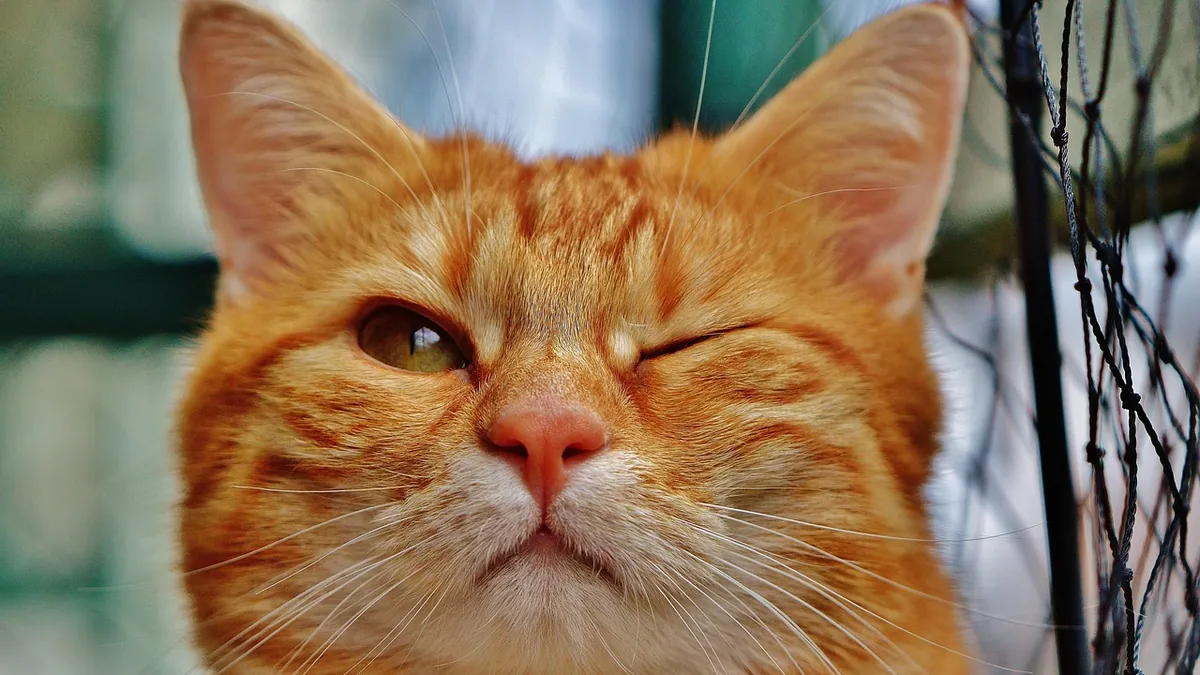
If your kitten winks at you with a slow, soft eye closure, she is likely telling you she feels safe and relaxed. This half-blink and slow eye-narrowing pattern is called the slow blink sequence, and it appears to work as friendly communication between cats and people [1]. A wink that looks forced, happens on one side only, or comes with squinting, redness, or discharge is a different story and may point to an eye problem.
This article is educational and is not a substitute for veterinary diagnosis or treatment.
Quick Answer
- A slow blink (both eyes narrowing or closing softly, often repeated) is usually a friendly, relaxed signal, not a medical sign [1].
- Cats that respond to human slow blinks with more and longer eye closures tend to get adopted faster from shelters, which suggests the behavior reads as positive to people too [2].
- A one-sided wink, a held-shut eye, or squinting with redness, tearing, or discharge is more likely to be eye pain or irritation than affection.
- You can try slow blinking back at your cat, then watch whether she blinks in return or approaches you [1].
- Any eye that stays closed, looks cloudy, or has colored discharge needs a veterinary exam, often the same day.
Why Does My Kitten Wink at Me? The Friendly Slow Blink
What a slow blink actually looks like
A true slow blink is a sequence, not a single quick wink. Your kitten may do a few half-blinks, then let her eyelids narrow or close for a longer moment before opening them again [1]. The motion is smooth and unhurried. Her ears stay relaxed, her whiskers stay loose, and her body is usually soft instead of tense.
This is different from the fast, reflexive blink you see when a cat has something in her eye. It is also different from a squint, where the eye stays partly closed because it hurts.
Why cats do it
Cats are not especially social by nature compared with dogs, but domestication seems to have shaped some social skills that help them live with people [2]. The slow blink is one of those skills. In one experiment, cats blinked and narrowed their eyes more often when their owners slow blinked at them compared with times when there was no interaction [1]. In a second experiment, cats were more likely to walk over to a person who had just slow blinked at them than to a person who kept a neutral face [1].
That pattern suggests the slow blink carries a positive message. It may be a way for a cat to say she is not a threat and does not feel threatened. When your kitten blinks at you from across the room, she may be checking in and inviting a calm exchange.
Why it helps with bonding and adoption
Shelter cats that responded to human slow blinks with more frequent and longer eye closures were rehomed faster [2]. Cats that slow blink more around people also tend to show less anxiety around humans. So this small facial movement may do real work. It can lower tension and help a cat connect with a new person.
Cats also use facial signals with each other, including during friendly interactions, not only during conflict [3]. Some of these signals appear to be used flexibly depending on the situation [4]. The slow blink fits that picture. It is a quiet signal that can be offered, returned, or ignored depending on how safe the cat feels.
The difference between a wink and a squint
Owners often use "wink" and "squint" to mean the same thing, but they are not the same.
A slow blink is usually:
- Symmetrical, both eyes move together
- Smooth and relaxed
- Brief, then the eyes open fully again
- Not accompanied by redness, swelling, or discharge
A squint or one-sided wink is often:
- One eye only, or one eye more closed than the other
- Held partly or fully shut for long stretches
- Paired with tearing, redness, cloudiness, or pawing at the face
- Worse in bright light
If your cat keeps winking with one eye, treat that as a possible eye problem until a veterinarian says otherwise.
Medical Causes of Winking and Squinting in Cats
Many eye conditions cause a cat to hold one or both eyes partly closed. The squint is a sign of discomfort, not affection. Common causes include:
- Corneal injury or ulcer, such as a scratch from another cat or a foreign object
- Conjunctivitis (inflammation of the pink tissue around the eye), which often comes with redness and discharge
- Viral or bacterial infections, including upper respiratory infections that affect the eyes
- Entropion, where an eyelid rolls inward and lashes rub the eye
- Dry eye, when the eye does not make enough tears
- Foreign material, such as a grass seed or dust, trapped under the eyelid
- Glaucoma or uveitis, which are painful conditions inside the eye
- Cataracts or other changes that make the eye look cloudy
Some of these problems get worse quickly. A corneal ulcer, for example, can deepen within a day or two. A cat that suddenly squints, paws at her eye, or keeps one eye shut should be seen promptly.
Eye issues can also travel with other signs. If your cat is shaking her head and bothering her ears at the same time, that may point to a separate problem worth checking. See Why Is My Cat Shaking Her Head And Ears. If she is also breathing fast or panting, that is a different kind of red flag. See Cat Panting or Breathing Fast: What It Means.
When Winking Becomes a Problem
A slow blink is not a problem. It is a normal, healthy behavior. It becomes a concern when the eye movement changes in these ways:
- The wink is one-sided or always the same eye
- The eye stays closed or partly closed for hours
- The eye looks red, cloudy, or swollen
- There is discharge that is yellow, green, or thick
- Your cat rubs or paws at the eye
- Your cat avoids light or keeps her head turned away
- She stops eating, hides, or seems less active
Behavior changes can also overlap. A cat in discomfort may hide, cry at night, or act irritable. If your cat is suddenly hiding and acting unlike herself, see Why Is My Cat Suddenly Hiding and Acting Weird?. If she has become aggressive when touched near the face, see Cat Sudden Aggression: What Could It Mean?.
What to Do Step by Step
Try the slow blink back
Sit a few feet from your kitten, relax your face, and blink slowly at her. Close your eyes gently for a second or two, then open them. Repeat a few times, then look slightly away. Watch for a return blink, a soft eye narrowing, or her walking toward you. These are signs she is engaging with you [1].
Do not stare hard at her while you do this. A fixed stare is a conflict signal in cats and can make them uneasy [5]. Soft eyes and slow blinks are the opposite of a stare.
Check the eye at home
Before you assume the wink is friendly, look closely in good light. Compare both eyes. Note whether one is more closed, whether the white of the eye is red, and whether there is any discharge or cloudiness. Do not touch the eyeball. If you see anything abnormal, call your veterinarian.
Keep the environment calm
Cats feel safer with predictable routines, quiet resting spots, and control over their space. Give your kitten places to perch and hide. Keep food, water, and litter boxes away from loud appliances and busy doorways. In homes with more than one cat, watch for staring, chasing, and hissing, which are common conflict signs and can raise tension [5]. More cats in a home tends to mean more of these conflict behaviors [5].
Use play and enrichment
Short play sessions with a wand toy let your kitten practice hunting and burn energy. Rotate a few toys so they stay interesting. Puzzle feeders and food-dispensing toys give her something to do when you are away. A tired, busy kitten is often a calmer kitten.
Build trust slowly
Let your kitten approach you. Offer a hand for her to sniff instead of reaching over her head. Keep petting sessions short at first, and stop before she pulls away. Pair your presence with treats and quiet talk. Slow blinks can be part of this routine, but they work best when the rest of your body language is relaxed too.
What Not to Do
- Do not punish a wink or squint. Punishment does not teach a cat what you want and can make her more anxious.
- Do not assume every wink is affection. A one-sided or held-shut eye needs a medical check.
- Do not stare at your cat to "test" her. A hard stare can read as a threat [5].
- Do not use human eye drops or leftover medications. Some are harmful to cats, and the dose and product must match the diagnosis.
- Do not wait out a red, cloudy, or discharging eye. Eye damage can progress fast.
- Do not assume a slow blink means your cat is fine everywhere else. Watch her appetite, energy, and litter box habits too.
When to Involve a Veterinarian or Behavior Professional
Call your veterinarian if your cat has any eye sign that does not clear within a few hours, or sooner if it is getting worse. A veterinarian can examine the eye with special stains and lights, check tear production, and look for ulcers or foreign material. Treatment depends on the cause. If medication is needed, your veterinarian will calculate the dose from your cat's weight and health, so never guess at a dose on your own.
If the eyes are normal but your cat shows ongoing fear, hiding, or aggression, ask your veterinarian for a referral to a certified behavior professional. Behavior problems often have both medical and environmental pieces, and a full exam helps sort out which is which.
Limitations and When to Contact a Veterinarian
This article cannot tell you what is causing your cat's eye sign. Only an exam can do that, and individual cases need a veterinarian.
Contact a veterinarian the same day if:
- One eye is held shut or partly shut
- The eye is red, cloudy, or swollen
- There is yellow or green discharge
- Your cat is pawing at her face or rubbing her eye
- She is squinting in bright light or avoiding it
Go to an emergency clinic now if:
- The eye looks like it is bulging or the shape has changed
- There is bleeding from the eye
- Your cat is in obvious pain, crying, or cannot be handled
- She suddenly cannot see, bumps into things, or seems disoriented
- She is breathing fast or struggling to breathe along with the eye problem
Schedule a routine visit if:
- The wink comes and goes over days with no redness or discharge
- You are not sure whether the behavior is a slow blink or a squint
- Your cat has other behavior changes, such as hiding or irritability
Frequently Asked Questions
Is it normal for my kitten to wink at me?
Yes, a slow, soft wink is normal and usually friendly. Kittens use slow blinks as a calm social signal, and many will return the gesture when you blink slowly at them [1]. A hard, one-sided, or held-shut wink is not normal and should be checked.
Can I teach my cat to blink back?
Many cats will blink back if you blink slowly first. In one experiment, cats narrowed their eyes more often when their owners slow blinked at them, and they were more likely to approach a person who had just slow blinked [1]. Keep your face relaxed and avoid staring.
Does a slow blink mean my cat loves me?
It is fair to read a slow blink as a sign of trust and comfort, though cats do not show affection the way people do. Cats that slow blink more around humans tend to show less anxiety around them. Think of it as your cat saying she feels safe with you.
Why does my cat wink with only one eye?
A one-sided wink is more likely to be an eye problem than a social signal. Causes include scratches, infections, foreign material, and other painful conditions. Have a veterinarian examine the eye, especially if it stays closed or looks red or cloudy.
Should I blink back at a cat that is squinting?
No. If your cat is squinting because of pain, blinking back will not help and may delay treatment. Look for redness, discharge, or a held-shut eye, and call your veterinarian if you see any of these signs.
Related Articles
- Why Is My Cat Shaking Her Head And Ears
- Cat Panting or Breathing Fast: What It Means
- Why Is My Cat Crying at Night?
- Cat Sudden Aggression: What Could It Mean?
- Why Is My Cat Suddenly Hiding and Acting Weird?
- Why Is My Cat Suddenly Afraid of Me?
- Why Does My Cat Stare at Me? What It Means
- Why Is My Kitten Just Staring? What Staring Means
- Why Does My Cat Yawn When She Sees Me? Explained
References
- The role of cat eye narrowing movements in cat-human communication. Scientific reports, 2020.
- Slow Blink Eye Closure in Shelter Cats is Related to Quicker Adoption. Animals : an open access journal from MDPI, 2020.
- Feline faces: Unraveling the social function of domestic cat facial signals. Behavioural processes, 2023.
- Evaluating indicators of intentionality, flexibility, and goal-association in domestic cat (Felis silvestris catus) facial signals. Behavioural processes, 2025.
- Conflict and affiliative behavior frequency between cats in multi-cat households: a survey-based study. Journal of feline medicine and surgery, 2020.