Cat Social Behavior: How Cats Communicate and Live Together
By Dr. Zubair Khalid, DVM, MS, PhD ·
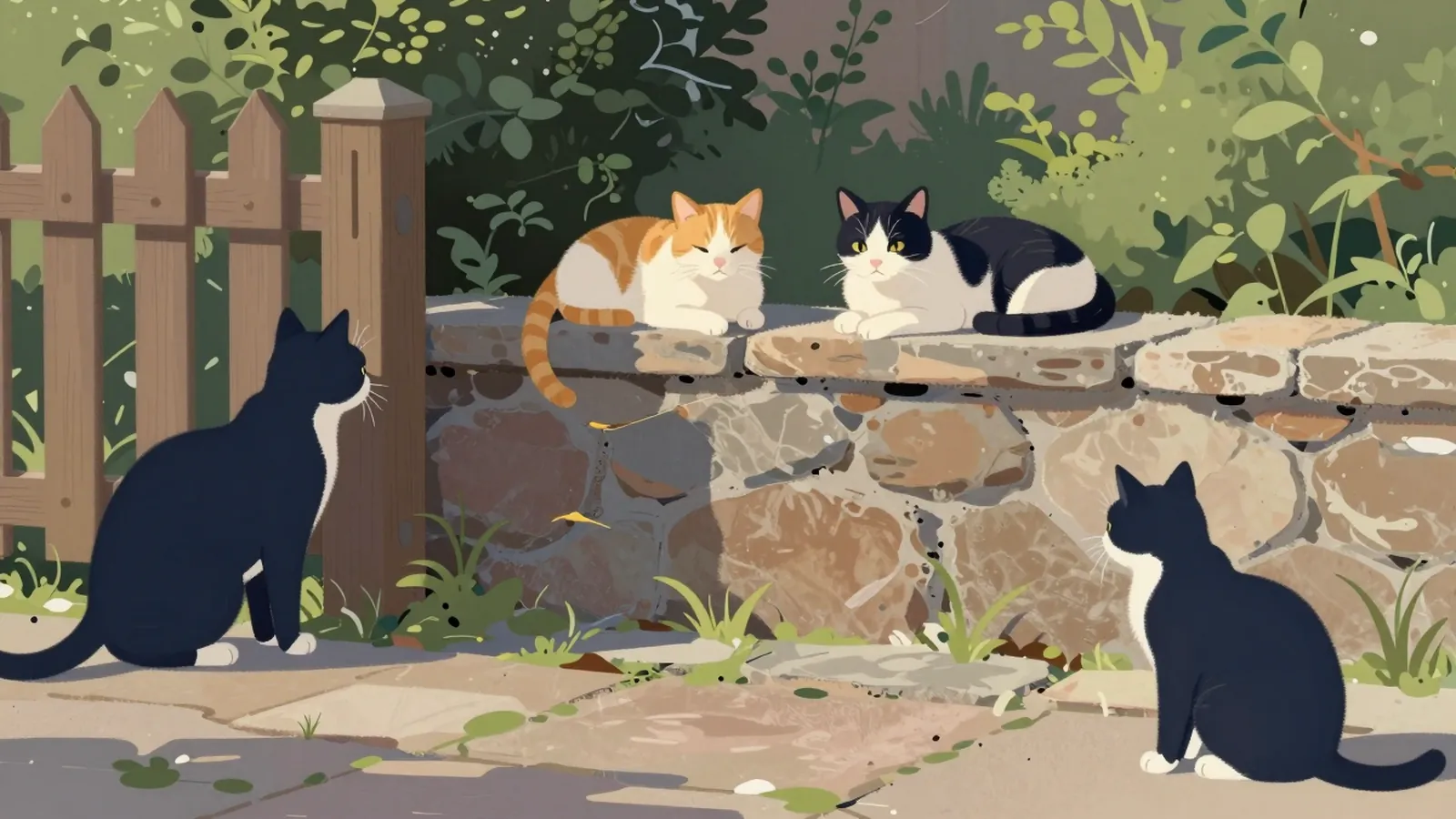
Cats are a social species with a flexible group structure: they can survive alone when food is too scattered to support a group, but they form colonies with recognizable individuals when food resources are sufficient (Social organization in the cat: A modern understanding). They communicate through scent marks, rubbing, grooming, nose touching, tail and ear posture, slow blinks, and vocalizations, and they use distance, hissing, swatting, scratching, and biting to manage conflict (Social Behavior of Cats; Cat behavior).
In a home with several cats, those signals shape who rests near whom, who shares food and litter areas, and where tension appears (Social organization in the cat: A modern understanding). Observing proximity, scent marking, and body posture gives a clearer view of a group's social pattern than a single interaction does (Social Behavior of Cats; Social organization in the cat: A modern understanding).
Key Points
- Feral cats typically live in colonies built around queens and their litters, with a few males; a tom's territory can overlap several colonies, and group density depends partly on food availability and distribution (Social Behavior of Cats).
- Cats regulate social contact through distancing, affiliative displays such as rubbing, grooming, and nose touching, and antagonistic acts such as hissing, swatting, scratching, and biting.
- Cats with better relationships spend more time closer together, but cats in general still spend most of their time away from other individuals.
- Within a colony, cats form friendly relationships with some cats and fail to form strong bonds with others, so alliances and antipathies affect access to resources and the frequency of friendly and aggressive behavior (Social organization in the cat: A modern understanding).
- Cats rely strongly on body language; tail position, ear position, head position, and back posture give clues to mood, and a slow blink can signal trust or a positive emotional response (Cat behavior).
- Most people who keep cats have two or more cats, and conflict can arise over food, resting sites, and litterboxes when social relationships and resource access are poorly managed.
At a Glance
| Feature | Summary |
|---|---|
| Social style | Flexible; solitary hunting with optional group living (Social organization in the cat: A modern understanding) |
| Group core | Related females and offspring often form stable clusters |
| Communication | Scent, posture, gaze, touch, and vocal signals (Social Behavior of Cats) |
| Bonding | Allorubbing, allogrooming, close rest, tail-up greetings (The Mechanics of Social Interactions Between Cats and Their ...) |
| Conflict | Stares, blocking, chasing, swats, hisses, and sprays |
| Health link | Ongoing social tension is linked to changes in eating and elimination behavior |
Cats are flexible social animals whose groups form around reliable food and whose relationships range from distant tolerance to close affiliation (Social organization in the cat: A modern understanding). Reading scent, posture, and vocal signals helps owners anticipate tension in a multi-cat home before it becomes injury or house soiling (Social Behavior of Cats).
What Cat Social Behavior Means
Cat social behavior is the set of actions a cat uses to approach, avoid, tolerate, and coordinate with others of its kind. The same visual and acoustic signals serve its dealings with people, which is why an owner can read a cat's mood from posture, ear position, and tail carriage (Social Behavior of Cats). Behavior varies among individuals, colonies, and breeds, so two cats in the same house may run very different social programs (Cat behavior).
A Flexible Set of Rules
The domestic cat can survive alone, yet it forms structured groups whenever food resources support them (Social organization in the cat: A modern understanding). That combination, a solitary hunter that will live in a colony, explains much of the variation owners see. Feral groups consist mainly of queens and their litters along with a few males, and group density tracks the availability and distribution of food (Social Behavior of Cats).
Familiarity and Resources Decide the Outcome
Two cats sharing a hallway may be close affiliates or near strangers that time their movements to avoid contact. Familiarity, food, resting spots, and litter locations set the tone, and when those are arranged badly the result is aggression and conflict over resources (Social organization in the cat: A modern understanding). Cats with better relationships spend more time closer together than cats with poor ones, and most cats still spend the bulk of the day away from other individuals (Social Behavior of Cats).
Relationships Sit on a Spectrum
Within a group, cats form friendly relationships with certain individuals while failing to form them with others, which produces alliances and antipathies that affect access to resources (Social organization in the cat: A modern understanding). Four rough categories help owners read a household.
| Relationship | What it looks like | Typical trigger |
|---|---|---|
| Close affiliate | Tail-up greetings, allorubbing, grooming, sleeping in contact (Social organization in the cat: A modern understanding) | Familiar cats with no resource competition |
| Tolerant | Shared room, no contact, calm passing at a distance (Social Behavior of Cats) | Adequate space and separate resources |
| Avoidant | One cat leaves when the other enters, blocked doorways, hiding | Crowded space, few escape routes |
| Antagonistic | Stares, hisses, swats, chasing, spraying | Competition, unfamiliar odor, illness |
Early Experience Sets the Range
Social skill starts in the nest. Kittens practice give-and-take with the mother and littermates, and gentle contact with people during that window shapes later friendliness toward humans (The Mechanics of Social Interactions Between Cats and Their ...). Cats socialized as kittens show a friendliness that in turn affects how strongly people attach to them.
Why the Definition Matters
Expecting a cat to behave like a pack animal or like a strict loner leads to mistakes in both directions. The working model is a flexible creature that keeps a personal distance, invests in a small number of familiar partners, and uses signals to prevent conflict before it starts (Social organization in the cat: A modern understanding).
The Cat's Social System: Solitary Hunter, Flexible Group Member
Cats hunt alone and can live in groups. Both halves of that sentence matter, because the hunting ancestry sets the baseline and the food supply decides when a group appears (Social organization in the cat: A modern understanding).
The Ancestral Template
Most cats are solitary hunters, and predation on rodents and other small animals is likely the reason coexistence with humans works so well (Social Behavior of Cats). Kittens usually learn to hunt the same type of prey their mother hunts. Nothing in that hunting style requires company, so a cat on open ground with scattered prey does fine without a group (Social organization in the cat: A modern understanding).
Who Is in the Group
Feral colonies consist mainly of queens and their litters, along with a few males (Social Behavior of Cats). Related females and their offspring often form the stable core of the group (Social organization in the cat: A modern understanding). Male ties are looser and vary with mating opportunities and resource availability. A tom's territory is larger and can encompass the queen's colony and several other colonies.
Where Colonies Form
Groups appear where food is concentrated and reliable enough to support them (Social organization in the cat: A modern understanding). When food is so widely distributed that it cannot support a group, the cat lives solitarily. Group density depends partly on the availability and distribution of food (Social Behavior of Cats). A barn with a steady rodent supply and a fed colony is a classic case; a suburban street with scattered handouts is not.
| Condition | Food pattern | Social outcome |
|---|---|---|
| Scattered, unpredictable food | Widely distributed (Social organization in the cat: A modern understanding) | Solitary living, avoidance on meeting |
| Concentrated, reliable food | Clustered and dependable | Colony with internal structure |
| Group with poor resource layout | Adequate food, crowded resting and elimination sites | Conflict, blocked access, tension |
Home Range, Overlap, and Time-Sharing
Home ranges overlap, and cats use scent and timing to reduce conflict (Social organization in the cat: A modern understanding). Crepuscular habits help: cats are most active around dawn and dusk, and they spend about 40 percent of the day asleep, 22 percent resting, and 15 percent grooming (Social Behavior of Cats). Shared ground becomes a schedule, with one cat using a corridor while another sleeps.
Individual Distance
Even inside a tolerant group, each cat keeps a personal distance from the others (Social organization in the cat: A modern understanding). Cats with better relationships spend more time closer together, while cats with poor relationships stay apart (Social Behavior of Cats). Distance is the tool cats use most, and restoring escape routes and separated resources is the first step when a household turns tense.
How Cats Communicate with Scent
Scent is the long-range channel of cat society. Olfactory cues carry information about the security of the natural environment and of the social environment, and cats deposit and read those cues constantly (Social Behavior of Cats).
The Scent Toolkit
Cats have scent glands across the body and deposit scent by rubbing, scratching, and urine marking (Social Behavior of Cats). Each route leaves a different kind of message.
| Route | Deposit site | Message carried |
|---|---|---|
| Facial and body rubbing | Doorframes, furniture corners, cat trees, people | Identity and familiarity (Social Behavior of Cats) |
| Scratching | Posts, tree trunks, vertical surfaces | Visual and scent mark of presence |
| Urine spray | Vertical surfaces, edges of the range | Boundary and status information |
| Urine and feces in soil | Litter or outdoor substrate | Elimination site preference, possibly a visual mark |
Flehmen: Reading the Chemical Detail
When a scent needs closer analysis, the cat performs the flehmen response, also called the gape or lip curl. It lifts the head, opens the mouth slightly, pushes the tongue to the front of the palate, and retracts the upper lip to waft the odor into the vomeronasal organ (Social Behavior of Cats). The expression looks strange to owners and is entirely normal.
Allorubbing and the Communal Odor
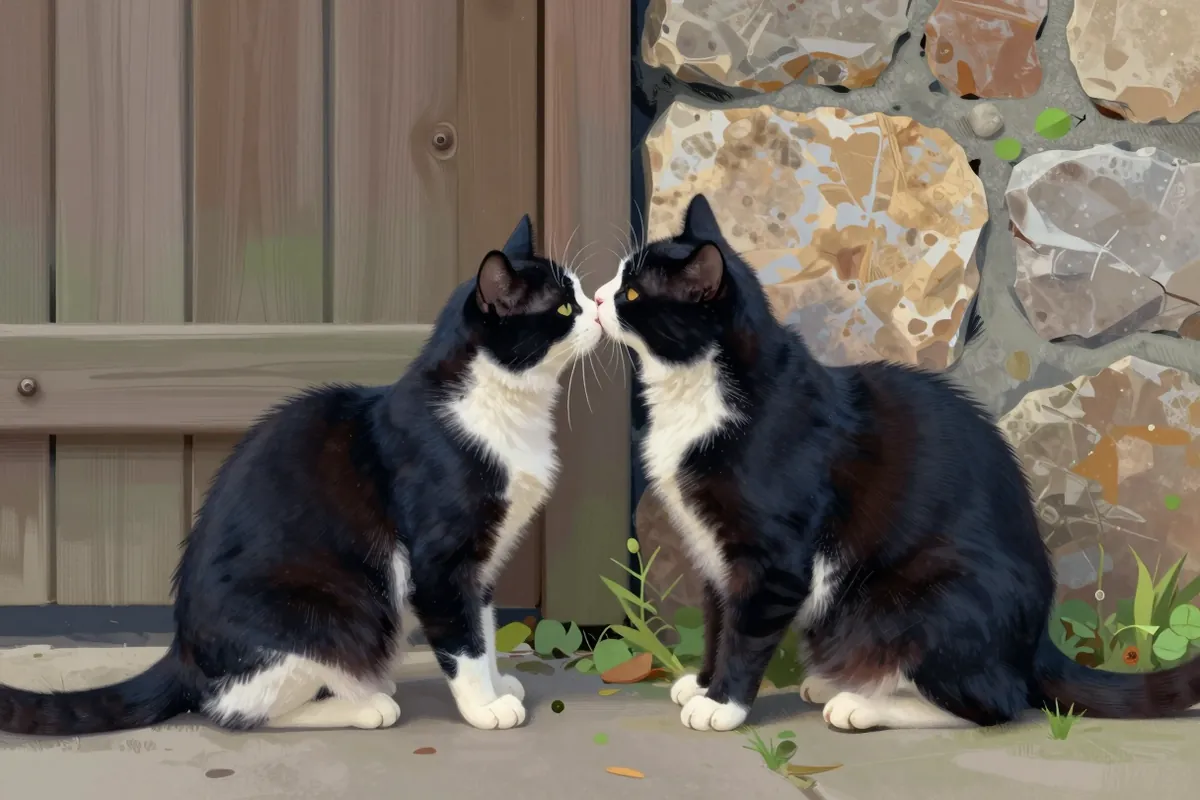
Friendly cats rub against each other, groom each other, touch noses, and greet with raised tails (Social Behavior of Cats). Rubbing moves scent from one coat to another, which blends individual odors into a shared group signature (The Mechanics of Social Interactions Between Cats and Their ...). Scent marks also persist over distance and time, so a cat can read who passed a mark and roughly how recently.
Marking, Boundaries, and Status
Spraying and scratching are not random vandalism. They place a signal at a height and location other cats will meet, and they mark boundaries and status within a range (Social Behavior of Cats). Scratching leaves a visual mark as well, and many cats dig before and after elimination, possibly to add a visual mark or to bury waste.
What This Means in a Multi-Cat Home
- Leave shared scent intact where possible. Scrubbing every surface removes the group odor cats use to recognize one another (The Mechanics of Social Interactions Between Cats and Their ...).
- Keep scratching posts and resting spots near the places cats already mark, so the deposit sites stay useful.
- Introduce a new cat through gradual scent exchange, since an unfamiliar odor can disrupt established recognition.
- Offer more than one elimination site. Cats can develop preferences for particular substrates, and many dig before and after eliminating (Social Behavior of Cats).
- Watch for a sudden rise in spraying or scratching. A change in marking often follows a change in the social arrangement.
Body Language and Visual Signals
Cats rely strongly on body language to communicate (Cat behavior). Visual signals can shift in seconds, and a single posture can carry more than one meaning. The useful approach is to read the whole cat: tail, ears, eyes, posture, movement, and the social setting (The Mechanics of Social Interactions Between Cats and Their ...).
Tail Position and Movement
Tail height and shape signal confidence, fear, or aggression (Social Behavior of Cats). A tail carried high with a relaxed curve often appears during a friendly approach or greeting. A tail held low or tucked can appear when a cat feels uncertain or wants distance. A rapidly moving tail or a puffed tail can appear with arousal, conflict, or defensive display. Tail movement alone does not give a full diagnosis; compare it with the face and the distance between cats (The Mechanics of Social Interactions Between Cats and Their ...).
Ears, Eyes, and Facial Tension
Flattened ears and dilated pupils suggest defensive arousal (Social Behavior of Cats). Ears rotated to the sides or angled back are sometimes called airplane ears, and they can appear with fear, pain, or the sense that danger is near (Cat behavior). Pupil size also changes with light, so a dark room can make pupils look large without social meaning. A direct stare can be a threat in a tense encounter. A slow blink may reduce tension and can invite a friendly approach. A relaxed face with normal pupils and forward ears supports a different reading than the same stare with flattened ears.
Posture, Piloerection, and Approach
Crouching, rolling, and piloerection appear in defensive encounters (Social Behavior of Cats). Piloerection makes the cat look larger; an arched back and sideways stance can be part of a defensive display. Rolling onto the back can be play, rest, or defense, so the surrounding signals matter. Approach angle and speed shape how cats read signals (The Mechanics of Social Interactions Between Cats and Their ...). A fast, straight approach can create pressure, while a slower approach with pauses and an oblique angle can be easier to read as nonthreatening.
| Signal | Common social reading | What to check |
|---|---|---|
| Tail high, relaxed curve | Confidence, friendly greeting (Social Behavior of Cats) | Ears forward, loose body |
| Tail tucked or low | Fear, withdrawal | Escape routes, hiding spots |
| Flattened ears, dilated pupils | Defensive arousal | Light level, distance, recent conflict |
| Direct stare | Possible threat in tense setting (Cat behavior) | Body tension, blocking, pursuit |
| Slow blink | Tension reduction, friendly intent | Whether the other cat approaches |
| Crouch, piloerection, arched back | Defensive display | Space, exits, noise, unfamiliar odor |
Context matters more than any single posture (The Mechanics of Social Interactions Between Cats and Their ...). A tail-up cat at a doorway may be greeting a familiar companion, while the same tail in a crowded feeding area may precede a block or chase. Record short videos at feeding, greeting, and resting times. Sudden changes in body language, especially with hiding or avoidance, merit a veterinary check when pain or illness is possible.
Vocal Communication: Meows, Hisses, and Purrs
Vocal signals work alongside scent and body language. Kittens vocalize early in development, and cats continue to use sound in social encounters (Cat behavior). The same sound can serve different purposes in different settings, so the listener needs the audience, the location, and the visible behavior.
Meows Directed to People
Meows often direct human attention and care (Cat behavior). Cats use meows in cat-human interactions, and owners learn individual patterns: a short meow at a closed door, a longer meow near a food area, or a quiet meow during greeting. The sound is only part of the message. A meow paired with a relaxed tail and forward ears reads differently from a meow paired with pacing, flattened ears, or hiding.
Hisses, Growls, and Spits
Hisses, growls, and spits signal defense and warning (Social Behavior of Cats). They are distance-increasing sounds: the cat seeks space or wants an encounter to stop. A hiss can begin suddenly when a cat is startled or cornered. A growl can build from a warning into a defensive encounter. Spitting often appears with a sharp retreat or a swat. These sounds should not be punished. Give the cat an exit and remove the trigger when possible.
Purring
Purring can appear in friendly and stressful situations (Cat behavior). A cat may purr while resting in contact with a familiar companion, and may also purr during a veterinary visit, illness, or fear. Purring alone does not prove comfort. Pair it with posture, appetite, movement, and willingness to interact. A cat that purrs while hiding or refusing food needs a closer look.
Yowls and Caterwauls
Yowls and caterwauls feature in conflict or mating (Social Behavior of Cats). These loud, drawn-out sounds carry across distance. In a household, a yowl can appear during a tense encounter at a doorway, a fight over a resting spot, or a night-time social dispute. A new, repeated yowl in an older cat deserves veterinary attention because pain, sensory change, or illness can alter vocal behavior.
Audience and Context
Vocal signals vary with audience and social context (Cat behavior). A cat may be quiet when alone and vocal near people or familiar cats. The same cat may use a soft chirp-like sound at a greeting and a sharp hiss at a barrier. Record the sound, the time, and the social partner. That record is more useful than a label such as noisy or quiet.
| Sound | Common context | Practical reading |
|---|---|---|
| Meow | Human-directed attention or care (Cat behavior) | Check door, food area, and body language |
| Hiss | Defense and warning (Social Behavior of Cats) | Give space, find the trigger |
| Growl | Warning and defense | Stop approach, separate cats if needed |
| Spit | Sudden defensive warning | Remove the threat, allow retreat |
| Purr | Friendly or stressful situations | Judge with posture and health signs |
| Yowl or caterwaul | Conflict or mating | Check for fighting, barriers, and night disturbance |
Affiliative Behavior: How Cats Bond
Cats can form affiliative, or friendly, relationships with certain other cats (Social organization in the cat: A modern understanding). Within a group, cats groom, rub, greet, and sleep curled up next to or partly on one another. These behaviors are selective. A colony can contain alliances and antipathies, and not every pair forms a strong bond. Affiliative behavior is therefore best read as a relationship pattern, not a fixed personality trait.
Allorubbing and Group Scent
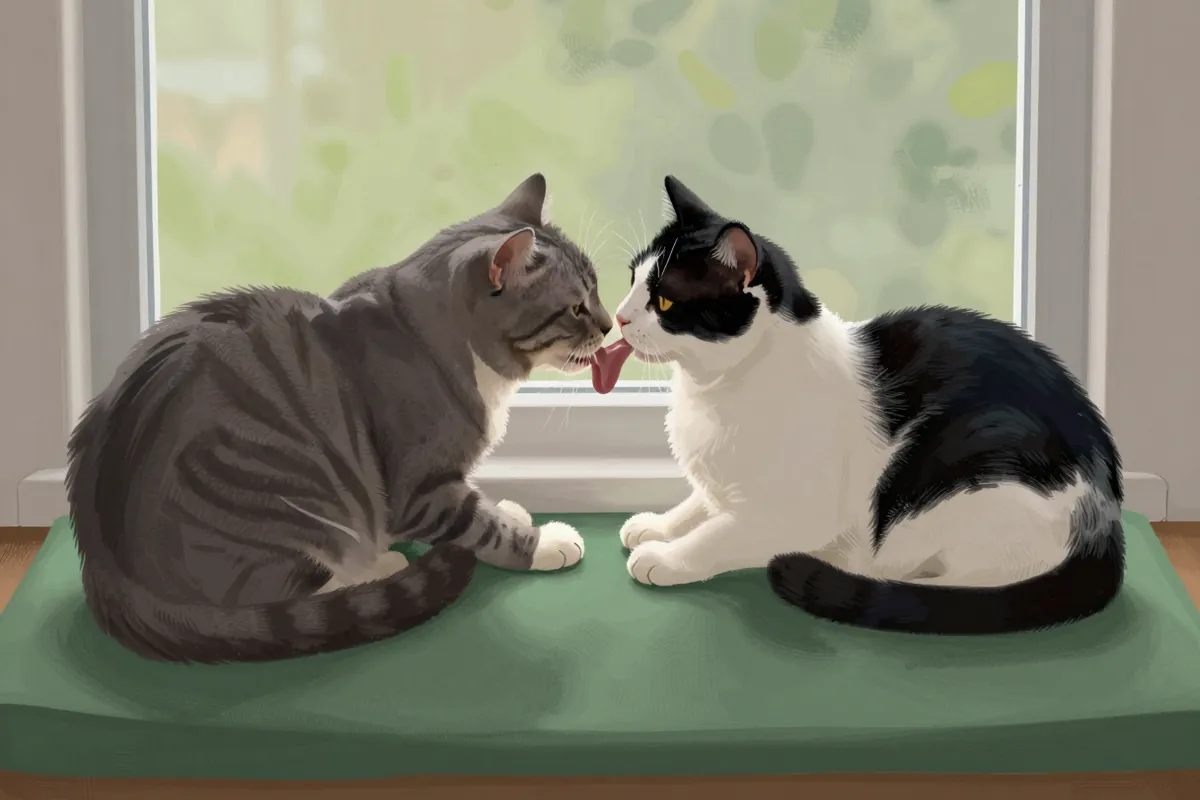
Allorubbing transfers scent and confirms familiar social identity (The Mechanics of Social Interactions Between Cats and Their ...). One cat approaches another, leans in, and rubs the head, cheek, or flank against the other cat. The exchange creates a shared odor profile that helps the pair recognize each other as familiar. Allorubbing often follows a nose touch or a tail-up greeting. A cat may rub a familiar cat, a person, or a door frame in the same sequence.
Allogrooming
Allogrooming reinforces bonds and can lower social tension (The Mechanics of Social Interactions Between Cats and Their ...). One cat licks the head, neck, or shoulders of another. The recipient may sit still, lean in, or close its eyes. Grooming can also be one-sided or tense. Watch the recipient: a cat that freezes, pulls away, or turns its head may not welcome the contact. Brief grooming after a conflict can help restore calm, but it does not erase a resource problem.
Sleeping in Contact and Greeting
Sleeping in contact and greeting suggest close affiliation (The Mechanics of Social Interactions Between Cats and Their ...). Two cats that rest against each other, drape a tail over a companion, or share a warm spot are showing tolerance and familiarity. Tail-up greetings invite friendly approach and follow. A cat may raise its tail, approach, touch noses, rub, then walk with the other cat. The follow is part of the greeting, and a companion may join the movement.
Play and Mutual Chasing
Play and mutual chasing are common among young companions (Cat behavior). Play includes pauses, role reversals, soft mouthing, and loose body movement. A chase that alternates direction and includes rest breaks reads differently from a chase with hiding, yowling, flattened ears, and one cat pinned. Mutual play can build familiarity, but it needs space and an easy exit.
Bond Evidence and Limits
Bonded cats may seek each other after separation (Social Behavior of Cats). A cat may wait at a door, call, or search a familiar resting area when a companion is absent. Some pairs also show distress after separation, while other cats remain calm. A worked example: cat A approaches with a high tail, cat B touches noses and rubs back, both groom briefly, then rest on the same chair. That sequence supports affiliation. If cat A blocks the doorway, stares at cat B, and chases it from the food area, the pattern is social tension, not bonding.
| Behavior | Likely function | What to observe |
|---|---|---|
| Allorubbing | Shared scent, familiar identity (The Mechanics of Social Interactions Between Cats and Their ...) | Mutual lean, relaxed face |
| Allogrooming | Bond maintenance, tension reduction | Recipient stays or leaves |
| Sleeping in contact | Close affiliation | Loose bodies, easy sharing |
| Tail-up greeting | Friendly approach and follow | Tail high, ears forward |
| Mutual chase | Play among young companions (Cat behavior) | Pauses, role reversal, no hiding |
| Seeking after separation | Bond evidence (Social Behavior of Cats) | Calling, searching, reduced appetite |
Territory, Resources, and Household Tension
Cats defend valued resting spots, food, and litter areas (Social Behavior of Cats). In a multi-cat home, competition can be quiet: one cat waits at a distance, eats quickly, or leaves a warm bed when another approaches. Separate resources reduce competition. The goal is choice, not forced sharing.
Resource Value and Defense
A favored chair, a sunny window, a food bowl, and a litter area can all become defended places. A cat may sit at a doorway and block entry, stare at another cat, or chase it from a resource (The Mechanics of Social Interactions Between Cats and Their ...). Defense can also appear as spraying, marking, or guarding. Most cats prefer separate elimination locations (Social Behavior of Cats). Place litter areas away from food and water, and avoid a single narrow route to a litter area.
Space, Escape Routes, and Visual Barriers
Overlapping ranges need escape routes and visual barriers (The Mechanics of Social Interactions Between Cats and Their ...). Cats in the same home do not need constant contact. Provide routes around furniture, high perches, and rooms that allow a cat to pass without confrontation. Visual barriers can be curtains, boxes, shelves, or partially closed doors. Blocked access can trigger staring, blocking, and chasing. A cat that cannot move past another cat without a stare or pursuit is under social pressure.
Scent Disruption
New odors or furniture can disrupt familiar group scent (The Mechanics of Social Interactions Between Cats and Their ...). A new couch, a strong cleaner, a visiting animal, or a changed laundry routine can alter the shared odor profile. Reintroduce familiar scent by brushing both cats with separate soft cloths, then placing the cloths near resting areas. Do not force contact. Allow cats to investigate at their own pace.
Signs of Social Stress
Hiding, spraying, and overgrooming can signal social stress (Social Behavior of Cats). Other signs include a cat that eats away from the group, avoids a litter area, or stays on a high shelf for long periods. A tense pair may show staring, blocking, and chasing (The Mechanics of Social Interactions Between Cats and Their ...). Keep a simple log with time, location, and the cats involved. That log helps separate social tension from pain, dental disease, urinary problems, and other medical causes.
| Tension sign | Possible social cause | Practical response |
|---|---|---|
| One cat guards food | Competition at a shared bowl (Social Behavior of Cats) | Separate feeding stations in different areas |
| Staring at doorways | Blocked access, poor escape route (The Mechanics of Social Interactions Between Cats and Their ...) | Open routes, add visual barriers |
| Avoiding litter area | Guarding or crowding | Separate elimination locations |
| Spraying or overgrooming | Social stress | Veterinary check, reduce crowding |
| Hiding after a new item | Disrupted group scent | Scent exchange, gradual introduction |
| Chasing from a resting spot | Defended resource | Multiple resting spots at different heights |
A worked example: two cats eat from bowls placed side by side in a kitchen. Cat A eats quickly and then stands over Cat B's bowl. Cat B eats little at each meal and waits until Cat A leaves. Separate the bowls into different rooms, keep the doors open, and feed at the same time. Add several water and resting locations. If hiding, spraying, overgrooming, or weight loss continues, contact a veterinarian. Sudden social stress can have a medical trigger, and chronic tension needs a planned behavioral review.
Social Behavior Across Life Stages
Cat social behavior changes with age, experience, and health. A kitten's lessons, an adolescent's experiments, and an older cat's retreats all follow a pattern that owners can read and anticipate.
Kittenhood: The Learning Window
Kittens learn bite inhibition and the meaning of social cues from littermates (Cat behavior). Rough play that ends when a sibling squeals teaches how much pressure a bite can carry; a raised paw or a flattened ear becomes a predictable warning. Early contact shapes comfort with cats and people. Kittens handled gently and exposed to a range of people, sounds, and friendly adult cats during their first months tend to stay relaxed around humans and unfamiliar cats. A kitten raised in isolation often carries that caution into adulthood.
Adolescence: Testing Boundaries
Adolescents test boundaries through play and mock conflict (Cat behavior). Chases, ambushes, wrestling, and pouncing look dramatic, but play carries loose, bouncy movement and stays quiet. Mock conflict lets a young cat practice signaling intent and reading the response of another cat. This is the age when households report escalated chasing at doorways, stalking of older cats, and nighttime activity. Most of it settles as the cat matures, given enough outlets and enough space.
Adulthood: Routine, Scent, and Space
Adult relationships stabilize around routine, scent, and space (Social organization in the cat: A modern understanding). In a settled group, cats recognize each other, share resting areas, and greet, rub, and groom familiar companions. The structure is uneven. Some pairs sleep in contact; others keep distance and never groom. Changes in social rank are common after illness or moves (Social Behavior of Cats). A cat that returns from the clinic smelling unfamiliar, or that is weaker after an illness, may lose access to the best sleeping spot or the food bowl without any visible fight. Rank is renegotiated through low-level signals: a stare held a second too long, a blocked doorway, a tail flick.
| Life stage | Main social task | What owners may notice |
|---|---|---|
| Kitten | Learning cues and bite limits (Cat behavior) | Rough play, quick recovery, following adults |
| Adolescent | Testing rank through play and mock conflict | Chasing, ambushing, nighttime activity |
| Adult | Settling into routine, scent, and space (Social organization in the cat: A modern understanding) | Stable pairs, grooming, preferred spots |
| Senior | Adjusting to pain, sensory loss, or confusion (Social Behavior of Cats) | Withdrawal, hiding, night calling |
Older Cats: Withdrawal Has Causes
Older cats may withdraw because of pain or confusion (Social Behavior of Cats). Arthritis makes jumping and the jostle at the food bowl painful, so a senior cat stops competing and eats less. Cognitive changes can bring disorientation, night vocalization, and loss of house training. Hiding from resident cats is often the first visible sign that a senior cat is being displaced. The behavior looks social, but the driver is often medical.
Reading a cat against its life stage keeps small changes from being dismissed as personality. A confident adult that starts avoiding the group is telling the household something has shifted.
Common Misconceptions About Cat Social Behavior
Cat social behavior attracts more folklore than most veterinary topics. The myths below are common in households, clinics, and online forums, and each one leads to a different mistake in daily care.
| Myth | More accurate reading |
|---|---|
| Cats are always solitary | Groups form where food supports them (Social organization in the cat: A modern understanding) |
| A tail up always means happy | Meaning depends on the whole posture (Social Behavior of Cats) |
| Purring always means contentment | Distress can also produce purring (Cat behavior) |
| Hissing shows dominance | Hissing usually signals fear |
| Cats cannot learn social skills | Early experience shapes them |
| Another cat always fixes loneliness | Conflict over resources may rise |
Myths About Solitude and Bonding
Myth: cats are always solitary. Many form flexible groups (Social organization in the cat: A modern understanding). Feral cats live in colonies with internal structure where food resources are sufficient, and members recognize each other, groom, rub, and sleep curled together. Solitary survival happens when food is too scattered to support a group; it reflects conditions, not an unchangeable temperament.
Myth: cats cannot learn social skills. Early experience matters (Cat behavior). Communication and sociability vary widely among individual cats, colonies, and breeds. Kittens learn bite inhibition and social cues from littermates, and comfort with cats and people depends partly on early contact.
Myth: another cat always helps loneliness. Conflict may rise (Social Behavior of Cats). A companion can suit a sociable, under-stimulated cat, but adding one to a household with tight space and few resources invites competition over food, resting sites, and litter boxes.
Myths About Signals
Myth: a tail up always means happy. Context matters (Social Behavior of Cats). Cats regulate interaction through distancing, friendly displays, and antagonistic behaviors, and the meaning of a raised tail depends on ear position, body tension, and whether the other cat approaches or retreats.
Myth: purring always means contentment. Purring can occur in distress as well (Cat behavior). The sound is not a single message, so it should be read together with posture, appetite, and hiding.
Myth: hissing shows dominance. Hissing usually signals fear (Social Behavior of Cats). A hissing cat is asking for distance, and pushing closer usually escalates the response.
Why the Distinctions Matter
Misreading these signals has practical costs. Punishing a hiss suppresses the warning without removing the fear, and a cat that stops warning may bite without preamble. Treating a withdrawn cat as aloof delays a veterinary visit for pain. Assuming that cats need no social contact leads to under-stimulation in a young cat and stress in a group with too few resources. Reading behavior in context, and checking medical causes first, keeps interpretation honest.
When to Contact a Veterinarian
Behavior change is often the earliest sign of medical disease in cats. The list below covers situations that warrant a call to the clinic, with the reasoning behind each.
Sudden Aggression or Fear
Sudden aggression or fear after pain or illness needs veterinary assessment (Social Behavior of Cats). A cat that swats when lifted, avoids touch on the flank, or turns on a familiar companion may be guarding a painful area. Cats normally regulate interaction through distancing, friendly displays, and antagonistic behaviors, so a break in that pattern points to something new.
Persistent Spraying, Hiding, or Overgrooming
Persistent spraying, hiding, or overgrooming despite home changes deserves examination (Social Behavior of Cats). Urine marking rises with territory pressure, but it also accompanies urinary tract disease. Overgrooming can reflect itch, pain, or stress. A cat that hides after previously seeking company is showing a change, not a preference.
Fighting Wounds, Abscesses, and Repeated Injuries
Fighting wounds, abscesses, or repeated injuries need examination (Social Behavior of Cats). Cat bites push bacteria deep under the skin, and an abscess may stay hidden until it ruptures. Repeated injuries also show that the social grouping is failing.
Eating, Drinking, and Litter Box Changes
Eating, drinking, or litter box changes that appear with social tension warrant a visit (Social Behavior of Cats). Cats prefer several small meals a day, and most prefer separate elimination locations. When one cat guards the bowl or the box, intake and output change, and the resulting weight loss or urine changes need medical review.
Older Cats: Withdrawal, Confusion, and Night Vocalization
Withdrawal, confusion, or night vocalization in older cats should be reported (Social Behavior of Cats). Pain, fading senses, and cognitive decline all produce these signs, and all are treatable or manageable.
Before Pheromone or Medication Trials
Ask the clinic before pheromone or behavior medication trials (Social Behavior of Cats). Some products interact with other drugs, and several medical conditions mimic anxiety.
| Sign | Suggested timing |
|---|---|
| Sudden aggression, fear, or a bite | Same day |
| Wound, abscess, or limp after a fight | Same day |
| Repeated injuries between household cats | Within a few days |
| Spraying, hiding, overgrooming | Scheduled visit |
| Weight loss, drinking, or litter box change | Within a few days |
| Senior withdrawal or night calling | Scheduled visit |
Bring a short diary of when the behavior happens, which cats are present, and what changed in the home. Timing and context help the veterinarian separate a medical problem from a social one.
Related Guides
- Cats Enrichment Ideas That Match Natural Behavior: Practical enrichment ideas to reduce tension and match natural behavior
- What Do Cat Zoomies Mean? Behavior Explained: Explains sudden playful energy bursts and their normal behavior context
- Why Does My Cat Quiver? Tail Quivering and Body Shakes: Covers tail quivering and body shakes that may signal arousal
- How Cats Grieve After Another Cat Dies: Explains grief after a companion cat dies in social groups
- Why Is My Cat Suddenly Aggressive Towards Other Cats?: Helps owners interpret sudden aggression in multi-cat households
- When Do Cats Calm Down? Age and Behavior Changes: Reviews age-related calming and behavior changes in household cats
- How Do Cats Mate? Feline Mating Behavior Explained: Details feline mating behavior and related social interactions
- Why Is My Cat bringing live prey inside? Normal Hunting vs Obsessive Behavior: Explains normal hunting versus obsessive prey-bringing behavior
Frequently Asked Questions
What is normal cat social behavior?
Normal social behavior in cats is flexible and shaped by resources. Where food is concentrated, cats form colonies made up mainly of queens and their litters, plus a few males, and each cat manages closeness through distancing, friendly displays such as rubbing, grooming and nose touching, and antagonistic signals such as hissing and swatting (Social Behavior of Cats). Within a colony, cats build friendly relationships with some individuals and not others, so alliances and antipathies affect access to food, resting sites and litterboxes (Social organization in the cat: A modern understanding). Even well-socialized cats spend most of their time away from other cats.
Are cats solitary or social animals?
Both descriptions fit, depending on circumstances. Most cats hunt alone, and a cat can survive in a solitary state when food is spread too thinly to support a group (Social Behavior of Cats; Social organization in the cat: A modern understanding). When food resources are sufficient, free-living cats form social groups with internal structure, in which members recognize each other and engage in a range of social behaviors (Social organization in the cat: A modern understanding). In feral conditions those groups consist mainly of related queens and their litters with a few males, while a tom holds a larger territory that may cover several colonies (Social Behavior of Cats).
How do cats show affection to each other?
Affection between cats shows up mostly in contact and grooming. Cats with friendly relationships groom each other, rub against each other, greet one another, and sleep curled up next to or partly on top of each other (Social organization in the cat: A modern understanding). Nose touching and grooming are classed as affiliative displays, the behaviors that hold a group together (Social Behavior of Cats). A slow, long blink directed at a familiar cat can also signal trust (Cat behavior). Cats with better relationships spend more time closer together, while pairs with poor relationships keep their distance.
Why do cats rub against other cats?
Rubbing transfers scent. Cats have several scent glands across the body and deposit scent by rubbing, scratching and urine marking (Social Behavior of Cats). Rubbing another cat is therefore both a social signal and a chemical one, and face rubbing is a recognized part of the feline communication repertoire (Cat behavior). Rubbing is classed among affiliative displays, alongside grooming and nose touching, and it serves to maintain friendly relationships within a group. Because scent carries information about the social environment, these deposits leave a readable record in shared space.
What does a tail-up greeting mean in cats?
The tail is one of the clearest channels of feline body language, and how a cat holds it gives a good sense of that cat's current temperament (Cat behavior). A tail held high as one cat approaches another is the posture most often seen in these greetings. Greetings between cats sit on the affiliative side of the behavioral repertoire, together with rubbing, grooming and nose touching (Social Behavior of Cats; Social organization in the cat: A modern understanding). Friendly greetings may also include a slow, languid blink when the cats trust each other. Ears rotated sideways or flattened back suggest fear or discomfort instead.
Why do cats hiss at each other?
Hissing is an antagonistic signal used to increase distance. Cats regulate social contact through both affiliative displays and antagonistic behaviors, a group that includes hissing, swatting, scratching and biting (Social Behavior of Cats). Hissing usually appears when a cat feels threatened or frightened; the ears pin to the side or back, and the further back they sit the more frightened the cat is (Cat behavior). If the warning is ignored, conflict can escalate to fighting with scratches and deep bite wounds. Shortages of food, resting places or litterboxes raise the odds of this conflict at home (Social organization in the cat: A modern understanding).
References and Further Reading
- Social organization in the cat: A modern understanding, pmc.ncbi.nlm.nih.gov
- Social Behavior of Cats, merckvetmanual.com
- Cat behavior, en.wikipedia.org
- The Mechanics of Social Interactions Between Cats and Their ..., pmc.ncbi.nlm.nih.gov
This article is educational and is not a substitute for veterinary diagnosis or treatment. Consult a veterinarian about your animal.