House Cat Behavior: Normal vs Problem Signals
By Dr. Zubair Khalid, DVM, MS, PhD ·
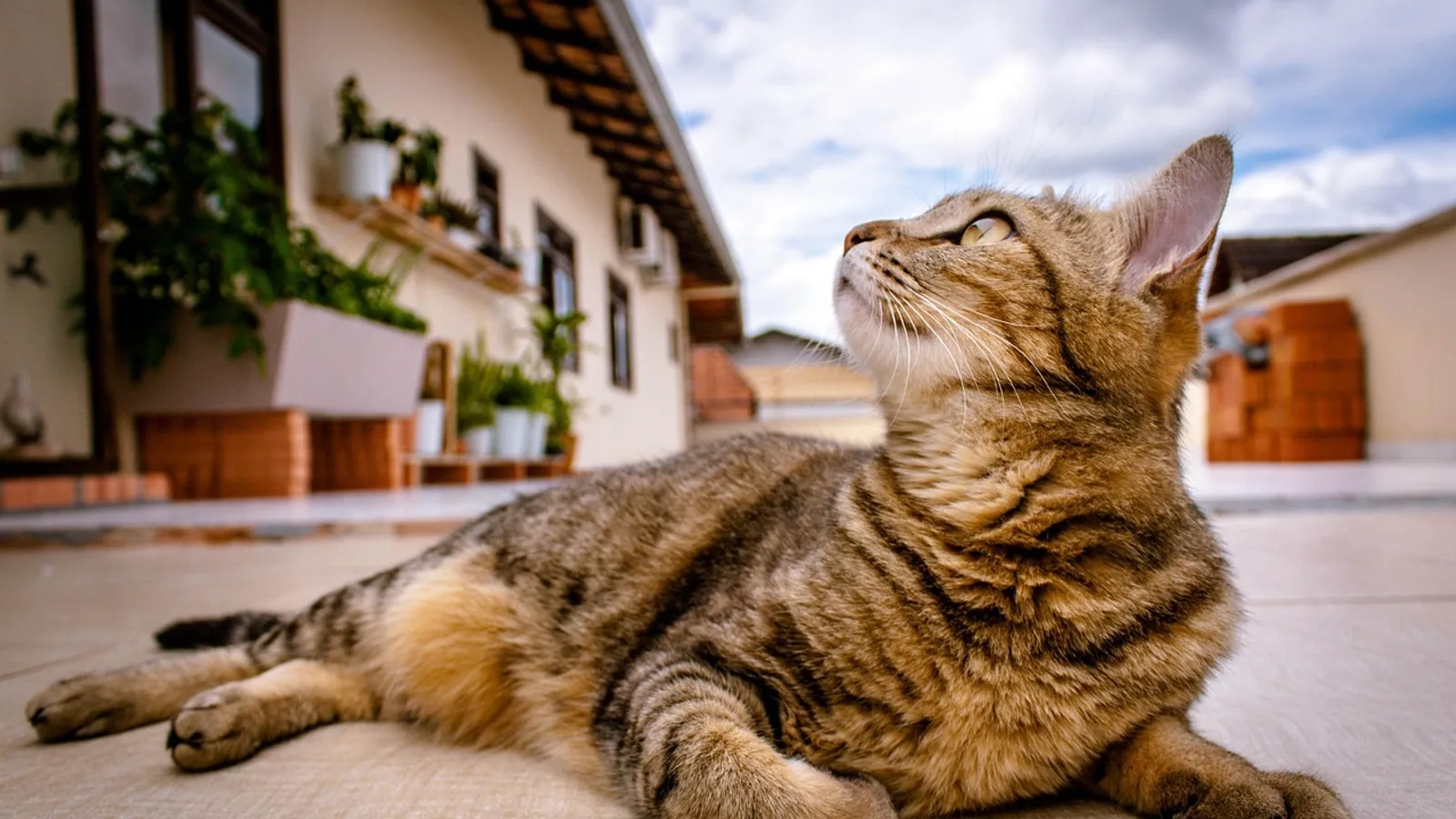
Most feline behaviors that alarm owners are normal cat behavior performed at the wrong time, in the wrong place, or at the wrong intensity. The genuine red flags are sudden changes in an established pattern, especially aggression, elimination outside the box, overgrooming, hiding, appetite loss, and new vocalization, because each of these can signal pain or physical disease before it signals a behavioral diagnosis.
This article separates normal feline behavior from problem signals, explains why medical rule-outs come first, and gives you a practical table for deciding when to act.
This article is educational and is not a substitute for veterinary diagnosis or treatment.
Why Normal Cat Behavior Looks Like a Problem
Cats are not small dogs and they are not small humans. Their emotional systems differ from ours and from other domestic species, which makes their behavior easy to misread [1]. A cat who hides under the bed is not being spiteful. A cat who urinates on a duvet is not expressing resentment. A cat who bites during petting is not being dominant.
Domestic cats are capable of both solitary and social lives, and socialization toward humans shapes how they solve problems and how quickly they approach something unfamiliar [2]. That flexibility is exactly why behavior problems are so common in indoor homes. The cat is doing something normal for a cat. The environment is what makes it a problem for the owner.
Fear, anxiety, and stress are among the most prevalent behavioral problems in cats [1]. When you see a behavior change, the first question is not "how do I stop this" but "what changed, and is this cat uncomfortable or unwell."
Medical Rule-Outs Come First
A change in behavior is often one of the early signs of physical disease, and disease can also aggravate an existing behavioral response [3]. Before any behavioral plan makes sense, your veterinarian needs to determine whether the cause is medical, behavioral, or both [3].
Four categories of disease deserve specific attention because they present as behavior problems so often.
Pain and Mobility Disease
Feline degenerative joint disease, often called feline arthritis, is one of the most prevalent chronic health conditions in companion cats and produces chronic mobility-related pain [4]. Cats with chronic mobility problems need long-term at-home management and regular veterinary monitoring, and many caregivers do not bring their cat in routinely [4]. Pain in the lumbosacral region can cause discomfort, changes in physical activity, behavioral disturbances, and defecation problems [5]. A cat who stops jumping, starts missing the litter box, or becomes irritable when picked up may be hurting rather than misbehaving.
Hyperthyroidism and Chronic Kidney Disease
These two conditions are classic mimics of behavioral change in middle-aged and older cats. Increased vocalization, restlessness, and appetite change are the kinds of signs that owners attribute to personality. They are also the kinds of signs that warrant bloodwork and a urinalysis. Your veterinarian will decide which tests are appropriate for your cat's age and history.
Dental Disease
Oral pain changes eating behavior, grooming behavior, and temperament. A cat with a painful mouth may drop food, chew on one side, salivate, resist having the head touched, or become reactive during handling. Dental disease is a medical rule-out, not a training problem.
Feline Lower Urinary Tract Disease
Urinary house soiling, called periuria, is a common but serious behavior problem in cats [6]. It is also one of the most common presentations of urinary tract disease. Inappropriate elimination is likely the most reported feline behavioral problem worldwide, and the initial determination of causation is essential [3]. A cat who urinates outside the box, strains, visits the box repeatedly, or vocalizes while urinating needs a veterinary evaluation before any behavioral intervention.
Normal Feline Behaviors and Their Range
Scratching
Scratching is a natural feline behavior. It becomes undesirable from a human perspective when it is directed at household items [7]. A study of 1,211 cats found that factors such as play duration, playfulness, and nocturnal activity contributed to higher levels of undesirable scratching, and that the location of scratching posts mattered significantly [7]. Scratching is also one of the behaviors that improves with pheromone support in multi-cat households, alongside problem urination and inter-cat conflict [8].
Normal range: scratching daily, stretching while scratching, scratching after waking, scratching near preferred resting and social areas.
Kneading
Kneading is a normal, self-directed behavior with roots in kittenhood. It is not a sign of dominance and it is not a medical problem. Some cats knead soft surfaces, some knead people, and some purr or drool while doing it.
Normal range: kneading during rest, during affection, or before settling.
Nocturnal and Crepuscular Activity
Cats are naturally most active around dawn and dusk. Nocturnal activity is a normal pattern and it is one of the factors associated with increased scratching behavior in the home [7]. A cat who is active at 4 a.m. is behaving like a cat. A cat who is suddenly pacing and vocalizing at night at age 14 is a different situation.
Normal range: bursts of activity in the early morning and evening, play-seeking at those times, sleeping through much of the day.
Grooming
Self-grooming is normal and usually occupies a predictable portion of the day. Grooming is also a displacement behavior, meaning cats groom more when they are mildly stressed.
Normal range: routine grooming after meals, after using the litter box, and after interactions. Coat remains full with no bald patches.
Play and Play Biting
Play is normal and play duration is linked to scratching levels in the home [7]. Play biting during interactive play is normal when it is controlled and directed at toys. It becomes a problem when it is directed at hands and legs with intensity, which is often described as misplaced play or predatory behavior [9].
Normal range: stalking, pouncing, and biting toys. Biting hands during play that stops when play stops.
Social Behavior in Multi-Cat Homes
Cats can live socially, but they are not obligate social animals in the way dogs are. Multi-cat household status is a significant risk factor for both marking and latrine behavior problems [6]. Inter-cat conflict is one of the four problem behaviors that responded to pheromone collar support in a 28-day study of 624 cats [8].
Normal range: sleeping apart, sharing resources without blocking, occasional hissing that resolves quickly, allogrooming between compatible cats.
Red Flags: When Behavior Signals a Problem
Sudden Aggression
Aggression is a common welfare and public health concern in cats, and the evidence indicates it is influenced by a complex interaction between genetic predisposition and environmental factors, including early-life experiences, owner management, and the environment [10]. Aggression toward people increased over a decade of behavior caseloads in one retrospective study of 736 cats [11].
Owner-directed aggression is common in multi-human and multi-cat indoor households, and handling-induced aggression is nearly universal, with grooming as the most common trigger [12]. Aggression at the veterinary clinic is also positively associated with behavior problems at home, including stranger-directed aggression, owner-directed aggression, resistance to restraint, familiar cat aggression, dog-directed aggression, house soiling, and scratching on inappropriate surfaces [13].
Red flag: any new aggression, aggression that draws blood, aggression that escalates, aggression directed at a specific person or cat, or aggression that appears without an obvious trigger.
Inappropriate Elimination
Feline house soiling is the most common behavioral problem for which owners seek veterinary help [14]. The reasons divide into inappropriate toileting and urine marking, and the two require different approaches [14]. Urine marking may be triggered by anxiety-evoking situations or arousing events, while inappropriate toileting is mainly related to factors around the litter box [14].
Age, multi-cat household status, outside access, and defecation outside the box have all been identified as significant potential risk factors [6]. Marking cats in one study were older than cats with latrine behavior problems [6].
Red flag: any new elimination outside the box, especially urine on vertical surfaces, bedding, or items belonging to one person.
Overgrooming
Overgrooming is grooming that crosses from maintenance into damage. It often presents as bald patches on the belly, flanks, or inner legs, or as a coat that looks barbered.
Red flag: visible bald patches, skin lesions, grooming that interrupts eating or sleeping, or grooming directed at one spot repeatedly.
Hiding
Hiding is normal when a cat is adjusting to a new home or when strangers visit. Hiding becomes a red flag when it is new, when it lasts more than a day or two, when the cat stops coming out for meals, or when it appears alongside other changes.
Red flag: a social cat who suddenly hides, a cat who hides and stops eating, or hiding that coincides with a change in the household.
Appetite Change
Appetite change is one of the most reliable early indicators that something physical is happening. It can move in either direction. A cat who stops eating or a cat who suddenly eats everything in sight both need evaluation.
Red flag: any appetite change lasting more than 24 hours, especially with weight loss, vomiting, or diarrhea.
New Vocalization
Vocalization is normal in many contexts. It becomes a red flag when it is new, when it is excessive, when it happens at night in an older cat, or when it accompanies pacing, restlessness, or disorientation.
Red flag: new night vocalization in a senior cat, yowling that wakes the household, or vocalizing paired with any other change.
Table: Common House Cat Behaviors, Normal Range, Red Flags, and Action
| Behavior | Normal range | Red flag | Action |
|---|---|---|---|
| Scratching | Daily scratching on posts and surfaces, often after waking | Sudden increase, scratching at doors or windows, scratching paired with aggression | Add and reposition scratching posts, increase play, discuss with your veterinarian if it escalates [7] |
| Kneading | During rest, affection, or settling | Kneading that becomes compulsive or injures the skin | Note the pattern and mention it at the next visit |
| Nocturnal activity | Dawn and dusk activity bursts, play-seeking | New night pacing, yowling, or disorientation in a senior cat | Book a veterinary visit for bloodwork and examination |
| Grooming | Routine grooming, full coat | Bald patches, skin lesions, grooming that displaces eating | Veterinary evaluation for skin and systemic disease |
| Play biting | Biting toys during interactive play | Biting hands and legs with intensity, daily episodes | Redirect to toys, increase structured play, seek behavioral help [9] |
| Elimination | Consistent litter box use | Urine or feces outside the box, urine on vertical surfaces | Veterinary evaluation first, then behavioral assessment [14][3] |
| Hiding | Brief hiding during change or with visitors | New hiding, hiding with appetite loss, social cat who withdraws | Veterinary visit within 24 to 48 hours |
| Appetite | Consistent intake, normal body condition | Any appetite change over 24 hours, weight loss | Same-day or next-day veterinary visit |
| Vocalization | Meows for food, attention, and greetings | New night yowling, excessive vocalizing, vocalizing with pacing | Veterinary visit for examination and lab work |
| Aggression | Occasional hissing that resolves | Any new aggression, aggression that draws blood | Veterinary visit and behavioral consultation [10][13] |
The Main Drivers of Problem Behavior in Indoor Cats
Litter Box Aversion
Litter box management is the first target in feline house soiling. Treatment should initially focus on the cat's well-being, and improving litter box management is central to curtailing the problem [14]. The main approaches involve avoiding exposure to triggering stimuli, re-establishing regular litter box use, and behavioral modification [14].
Practical implications: box number, box size, litter type, litter depth, cleaning frequency, box location, and whether the cat can use the box without being blocked or ambushed by another cat. Each of these is a variable you can change.
Resource Guarding and Multi-Cat Stress
Multi-cat household status increases the risk of both marking and latrine behavior [6]. In a study of 624 cats with problem urination, scratching, fear, or inter-cat conflict, a pheromone-impregnated collar produced significantly better improvement than a control collar for problem urination, scratching, and inter-cat conflict [8]. That does not mean pheromones solve the underlying problem. It means the social environment is a real contributor and worth addressing.
Resources include food, water, litter boxes, resting spots, high perches, and access to the owner. In a multi-cat home, the question is whether every cat can reach every resource without passing another cat or being stared at.
Stress and Anxiety
Fear, anxiety, and stress are among the most prevalent behavioral problems in cats [1]. Stress activates both the sympathetic adrenomedullary system for short-term responses and the hypothalamic pituitary adrenal axis for long-term responses [3]. That is the biology behind why a stressed cat develops physical and behavioral signs at the same time.
A cat-friendly environment and appropriate handling reduce stress, and international recommendations exist for creating that environment and for pharmacological management when needed [1]. Synthetic feline facial pheromone has been studied for reducing stress during clinical examination [15].
What Does Not Work
Punishment does not fix feline behavior problems. It increases fear and anxiety, which are already among the most prevalent behavioral issues in cats [1]. It also damages the relationship that makes handling and veterinary care possible.
Anthropomorphism does not help either. Cats do not urinate on a bed out of revenge and they do not hide out of guilt. Behavior has a function, and the function is usually related to comfort, safety, or resources.
A Practical Decision Path
The flowchart below shows the sequence most veterinarians follow when an owner reports a behavior change.
flowchart TD
    A[Owner notices behavior change] --> B{Is the cat eating and drinking normally}
    B -->|No| C[Veterinary visit within 24 hours]
    B -->|Yes| D{Is there pain or mobility change}
    D -->|Yes| C
    D -->|No| E{Is the change elimination or aggression}
    E -->|Yes| C
    E -->|No| F{Is the change new or escalating}
    F -->|Yes| C
    F -->|No| G[Track for 3 to 5 days]
    G --> H{Does it resolve}
    H -->|Yes| I[Continue monitoring]
    H -->|No| C
    C --> J[Medical workup first]
    J --> K[Behavioral plan if workup is normal]
What Still Is Not Fully Understood
Feline aggression has genetic and environmental contributors, and the evidence base remains heterogeneous in study design and behavioral assessment methods [10]. That means we can identify risk factors without being able to predict any individual cat's outcome.
Behavior problems in cats also shift over time. In one retrospective review of 736 cases, aggression toward people increased and spraying decreased across a decade, and certain diagnoses clustered together within the same cat [11]. Breed and age distributions varied by diagnosis, with Siamese cats evaluated more often for aggression and ingestive behavior problems, Persian cats more often for elimination outside the litter box, and domestic shorthairs evaluated less often overall [11]. These are population patterns, not predictions about your cat.
The relationship between socialization and problem-solving ability is also an active area of research. More socialized cats were more likely to solve a food-acquisition puzzle, solve it faster, and approach a novel apparatus sooner, and younger adult cats outperformed older adults [2]. How that translates into household behavior is still being worked out.
Limitations and When to Contact a Veterinarian
Individual cats need individual evaluation. Contact a veterinarian promptly if any of the following apply.
- Your cat stops eating or drinking for more than 24 hours.
- Your cat shows signs of urinary blockage, including straining without producing urine, crying while urinating, or repeated trips to the box with little output. This is an emergency.
- Your cat has a sudden change in behavior, especially new aggression, new hiding, or new vocalization.
- Your cat eliminates outside the litter box for the first time, or does so repeatedly.
- Your cat shows bald patches, skin lesions, or overgrooming.
- Your cat is a senior and develops night vocalization, pacing, or disorientation.
- Your cat shows pain signs, including reluctance to jump, stiffness, or reaction to handling.
- Your cat's aggression has drawn blood or is escalating.
Your veterinarian will decide which examinations and tests are appropriate. Medical rule-outs come first because a change in behavior is often one of the early signs of physical disease [3].
Frequently Asked Questions
Is it normal for my cat to be active at night?
Yes, cats are naturally most active around dawn and dusk, and nocturnal activity is a normal pattern [7]. New night pacing, yowling, or disorientation in a senior cat is different and needs a veterinary visit.
How do I know if my cat's scratching is a problem?
Scratching is normal. It becomes a problem when it is directed at household items, and factors such as play duration, playfulness, and scratching post location influence how much it happens [7].
Why is my cat urinating outside the litter box?
Urinary house soiling is the most common behavioral problem for which owners seek help, and it divides into inappropriate toileting and urine marking [14]. A veterinary evaluation comes first because urinary tract disease is a common cause.
Can stress cause behavior problems in my cat?
Yes. Fear, anxiety, and stress are among the most prevalent behavioral problems in cats [1]. Stress also activates both short-term and long-term hormonal responses that affect the body [3].
Is my cat's aggression genetic?
Aggression is influenced by a complex interaction between genetic predisposition and environmental factors, including early-life experiences, owner management, and the environment [10]. No single gene or single factor explains it.
Does a multi-cat home make behavior problems more likely?
Multi-cat household status is a significant risk factor for both marking and latrine behavior problems [6]. Inter-cat conflict is also one of the problem behaviors that improved with pheromone support in a controlled study [8].
Should I punish my cat for a behavior problem?
No. Punishment increases fear and anxiety, which are already among the most prevalent behavioral problems in cats [1]. It also makes handling and veterinary care harder.
When should I see a veterinarian instead of a behaviorist?
See a veterinarian first. A change in behavior is often one of the early signs of physical disease, and the initial determination of whether the cause is medical, behavioral, or both is essential [3].
Related Articles
- Dog Behavior Problems Pooping In House
- Puppy Behavior Problems
- Dog Behavior Problem
- Dog Whining: When It Signals a Medical Problem
- Cat Hiding: When to Worry and When It's Normal Cat Behavior
- Dog Cat Behavior Problems
- Parasteatoda tepidariorum: Common House Spider
- Cat Anal Gland Issues: Signs and Treatment
- Norwich Terrier: Breed Traits and Health Problems
Sources
- Tools for the Approach of Fear, Anxiety, and Stress in the Domestic Feline: An Update.
- Effects of Socialization on Problem Solving in Domestic Cats.
- Cat Inappropriate Elimination and its Interaction with Physical Disease.
- Incorporating video telehealth for improving at-home management of chronic health conditions in cats: a focus on chronic mobility problems.
- Reference values for dynamic radiographic measurements of lumbosacral junction width in cats.
- Common Risk Factors for Urinary House Soiling (Periuria) in Cats and Its Differentiation: The Sensitivity and Specificity of Common Diagnostic Signs.
- Evaluating undesired scratching in domestic cats: a multifactorial approach to understand risk factors.
- Efficacy of a pheromone-impregnated collar in controlling feline problem behaviors, and an assessment of adverse events associated with collar use.
- Human-directed aggression and pica in a 1-year-old cat, which worsened following international relocation.
- Genetic and Environmental Causes of Aggression in the Domestic Cat.
- Signalment factors, comorbidity, and trends in behavior diagnoses in cats: 736 cases (1991-2001).
- Owner-Directed Feline Aggression in Thailand: Characteristics, Associated Factors, and a Clinical Comparison of Treatments.
- Correlation between aggression at the veterinary clinic and problem behaviors at home for cats in the USA.
- [[Causes, diagnosis, and animal behavioural therapy of feline house soiling].](https://pubmed.ncbi.nlm.nih.gov/25632847/)
- Effects of a synthetic feline facial pheromone analogue (F3, Feliway(®)) on stress and cardiovascular parameters during clinical examination in cats: a prospective crossover study.