Do Cats Meow at Each Other? Feline Communication Facts
By Dr. Zubair Khalid, DVM, MS, PhD ·
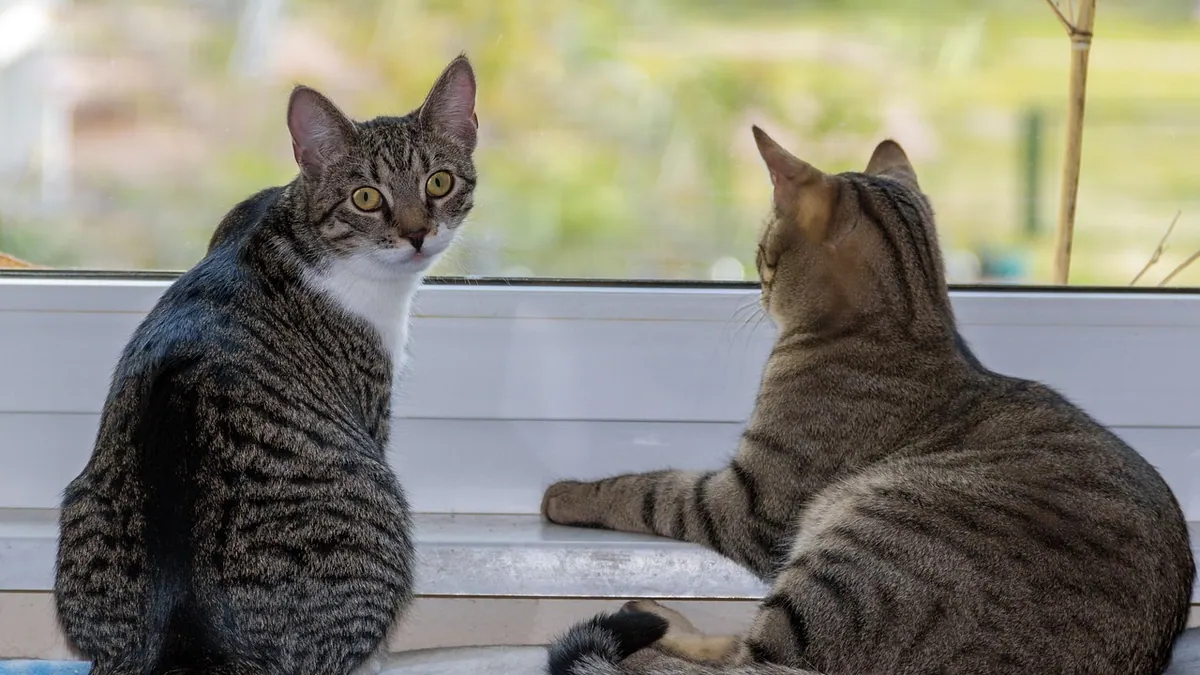
Do cats meow to each other? Usually, no. Meowing is mostly a kitten-to-mother sound that cats keep using to communicate with people, and adult cats rarely meow at one another in normal social contact. When a cat does meow at another cat, it is often a sign of stress, frustration, or a specific demand, and it deserves a closer look.
This article is educational and is not a substitute for veterinary diagnosis or treatment.
Quick Answer
- Adult cats direct most meows at humans, not at other cats. Meowing is a care-soliciting sound that kittens use with their mothers and that pet cats carry into life with people.
- Kittens do meow at each other and at their mother, especially during nursing, play, and separation. This is normal early communication.
- Adult cats living together rely more on scent marking, body posture, tail position, ear position, and hissing, growling, or yowling than on meows [1][2].
- A cat who suddenly meows at another cat may be anxious, in pain, or reacting to a change in the home. Sudden increases in vocalization are linked to higher stress markers in cats [3].
- Punishing a cat for meowing does not teach a better behavior. It adds stress and can make the meowing worse.
Do Cats Meow to Each Other? What the Behavior Means
Meowing is a flexible sound, and cats use it in different ways depending on who is listening.
Kittens meow at their mother and littermates
The basic feline social unit is the mother cat and her kittens [2]. Kittens meow to get attention, to be fed, and to stay close. Weaning happens between 5 and 8 weeks, though some kittens keep suckling much later, and that behavior is tied more to social contact than to nutrition [2]. During this early stage, meowing is a normal part of how kittens communicate with each other and with their mother.
Kittens have a sensitive window for socialization. During this period they are most open to getting used to cats, people, other animals, and the sights, sounds, and smells around them [1]. Kittens handled daily by people in their first month tend to develop faster, act more outgoing, and show fewer aggression problems, while kittens kept away from people in that first month tend to avoid people later [1]. Early experience shapes how a cat communicates for life.
Adult cats mostly meow at people
Once kittens grow up, meowing fades as a cat-to-cat signal. Adult cats in stable groups use scent, scratching, rubbing, and body language to manage their relationships [1]. They also use sounds like hissing, growling, yowling, and chirping, but the classic "meow" is aimed at humans in most homes.
This is why your cat may meow at you for food, a door to open, or attention, then sit silently near another cat. The meow is a request directed at a caregiver. You are the one who responds.
When adult cats do meow at each other
It happens, but it usually means something is off. A cat may meow at another cat during a tense standoff, when resources are scarce, or when one cat wants space and the other will not back off. In multi-cat homes, repeated meowing at another cat often points to social friction, not friendly conversation.
Play between cats can also include chirps, trills, and short meows. Play is easiest to read when both cats take turns. If one cat chases another who does not want to be chased, that interaction should not be considered playful [4]. Watch the whole exchange, not just the sound.
Meowing and emotion
Cats do pick up on each other's emotional signals. In one study, cats looked longer and more often at negatively valenced visual cues from other cats [5]. That tells us cats notice each other's emotional states, even if they do not chat about them with meows. A cat who meows at another cat may be reacting to that cat's mood, posture, or recent behavior.
Cat Meowing at Other Cats: Normal Reasons First
Before you assume a problem, rule out ordinary causes.
Hunger and feeding routines
Cats prefer to eat many small meals, roughly 13 across the day [1]. A cat who is hungry may meow at whoever is nearby, including another cat, especially if meals are spaced far apart. Feeding preferences also form early. Kittens learn to prefer the texture and taste of foods they ate when young, so a cat raised on one food may resist changes as an adult [1][2].
Boredom and lack of stimulation
Indoor cats depend on you for enrichment. Homes with litter boxes, hiding places, vertical spaces, and predatory play opportunities support lower stress [3]. A cat without enough to do may meow more, at you and at other cats.
Social tension in a multi-cat home
Cats are flexible socially, but they are not natural pack animals. Group size often depends on how much food is available [2]. In a home, that translates to resources: food bowls, water, litter boxes, resting spots, and escape routes. When these are limited or poorly placed, cats may meow, block, stare, or guard.
Hormones and intact cats
Urine marking, roaming, and fighting with other cats can be influenced by androgens, and neutering may prevent or resolve these problems [1]. If an intact cat in your home is vocalizing at other cats, talk with your veterinarian about neutering.
Changes in the household
A new cat, a move, a new baby, or a changed schedule can trigger more vocalizing. Shelter cats show more passive behavior and more purring after reuniting with a caregiver, while cats in private homes show more exploration and play [6]. Environment matters, and a stressed cat may become louder.
Medical Causes to Rule Out
Sudden or increased meowing is not always behavioral. Cats hide illness well, and vocalization can be an early clue.
- Pain or discomfort. Dental disease, arthritis, and abdominal pain can all make a cat vocalize more.
- Hyperthyroidism. This common condition in older cats often causes increased vocalization, especially at night.
- High blood pressure and vision or hearing loss. These can make a cat feel vulnerable and meow more, particularly in a multi-cat home.
- Cognitive dysfunction. Older cats with declining brain function may meow at walls, at other cats, or at nothing obvious.
- Stress. Cats showing isolation and excessive vocalization had higher cortisol levels in one study [3]. Vocalizing can be a sign that a cat's stress load is rising.
Your veterinarian can examine your cat, run bloodwork, and check blood pressure. Many of these conditions are treatable, and treating them often quiets the meowing.
When Meowing at Other Cats Becomes a Problem
Meowing itself is not the problem. The problem is what it signals.
Signs the social situation is strained
- One cat hides, eats less, or avoids shared spaces.
- Staring, blocking doorways, or guarding litter boxes.
- Hissing, growling, swatting, or chasing that does not take turns.
- One cat meows repeatedly when another cat is near, then relaxes when that cat leaves.
- Resource guarding around food, water, or resting spots.
If the tension is escalating, see our guide on why a cat may suddenly become aggressive toward other cats.
Signs the meowing is about you
If your cat meows at another cat mainly when you are present, the meow may be aimed at you. Cats learn what works. If meowing at the other cat brings you over with attention or food, the behavior gets reinforced. For more on this pattern, read cat excessive meowing and what it may mean.
Signs it is a welfare issue
Chronic stress affects health. Cats with more vocalization and isolation had higher hair cortisol levels [3]. If your cat seems constantly on edge, that is a welfare concern, not a personality quirk.
What to Do: Step by Step
Step 1: Get a veterinary exam
Start with your veterinarian, especially if the meowing is new, worse at night, or paired with weight loss, appetite changes, or confusion. Your veterinarian calculates any medication dose from your cat's weight and health, so do not use doses from the internet.
Step 2: Add resources
The general rule is one litter box per cat plus one, placed in separate locations with clear exits. For placement and cleaning details, see can multiple cats use the same litter box. Spread food and water stations so no cat has to pass another to eat. Add vertical space, hiding spots, and separate resting areas [3].
Step 3: Enrich the environment
Indoor cats do well with litter boxes, hiding places, vertical spaces, and predatory play [3]. Schedule two or more play sessions a day with wand toys. Feed part of the daily food from puzzle feeders or scatter it for foraging. Cats prefer multiple small meals, so splitting meals into several servings fits their natural pattern [1].
Step 4: Manage introductions carefully
If a new cat is the trigger, slow introductions matter. Rushing them creates tension that can last for months. Our step-by-step guides are how to introduce a new cat to your cats and how to introduce a new cat to a cat.
Step 5: Change how you respond
If your cat meows at another cat to get your attention, avoid rewarding the meow. Wait for a pause, then give attention. Feed on a schedule instead of in response to meowing. Keep greetings calm and low-key.
Step 6: Use scent to your advantage
Cats are strongly influenced by scent and mark with urine, feces, scratching, and rubbing glands on the cheeks and body [1]. Keep scratching posts near social areas. Wipe new objects with a cloth rubbed on your cats, and keep the home smelling familiar. Do not clean away all scent marks at once, since that can trigger more marking.
Step 7: Track what you see
Write down when the meowing happens, which cats are involved, and what happened right before. Patterns show up fast. Bring your notes to your veterinarian.
What Not to Do
- Do not punish. Yelling, spraying water, or startling a cat adds stress and can increase vocalizing and hiding [3].
- Do not assume it is "just talking." Adult cats rarely meow at each other for fun. Look for a cause.
- Do not separate cats forever without a plan. Isolation can raise stress. Work with a professional on a reintroduction plan.
- Do not free-feed one bowl for many cats. Shared bowls create competition and guarding.
- Do not skip the veterinary visit. Pain and thyroid disease are common and treatable.
- Do not rely on pheromone products alone. They can help, but they do not replace resources, enrichment, and veterinary care.
When to Call a Veterinarian or Behavior Professional
Call your veterinarian if the meowing is new, getting worse, or paired with weight change, appetite change, vomiting, diarrhea, or confusion. Call a certified behavior professional if cats in the home are fighting, hiding, or avoiding each other despite your changes. If you are unsure whether the behavior is medical or social, start with your veterinarian. They can rule out disease and refer you to a behavior specialist.
Limitations and When to Contact a Veterinarian
This article covers general patterns. Every cat is an individual, and your cat's case needs a veterinarian who can examine them, ask about the home, and run tests.
Contact your veterinarian the same day if your cat:
- Meows constantly and cannot settle, even with food, play, and quiet.
- Stops eating or drinking.
- Vomits, has diarrhea, or strains to urinate.
- Seems painful, restless, or confused.
- Is an older cat with sudden night vocalizing.
Go to an emergency clinic now if your cat:
- Struggles to breathe or has a blue or pale gum color.
- Cannot urinate or cries out while trying.
- Collapses, has a seizure, or cannot stand.
- Has heavy bleeding or a suspected toxin exposure.
For routine concerns, book a visit within a few days. Bring a log of when the meowing happens, which cats are involved, and any changes in the home. If you have multiple cats and tension is rising, ask about a behavior referral at the same visit.
Frequently Asked Questions
Do cats meow at other cats to communicate?
Adult cats rarely meow at each other as a routine form of communication. They rely more on scent, posture, and sounds like hissing and growling. When an adult cat meows at another cat, it usually points to stress, a demand, or a medical issue.
Do kittens meow at each other?
Yes, kittens meow at their mother and littermates during nursing, play, and when they feel lost or cold. This is normal early communication. As kittens mature, meowing shifts toward humans and becomes less common between cats.
Why does my cat meow at my other cat at night?
Night meowing often relates to hunger, boredom, or a medical issue such as hyperthyroidism or high blood pressure in older cats. Cats naturally prefer several small meals across the day, so a long overnight gap can trigger vocalizing. If the pattern is new, see your veterinarian.
Does neutering stop a cat from meowing at other cats?
Neutering can reduce or resolve urine marking, roaming, and fighting between cats, which are influenced by androgens. It may lower tension-related vocalizing as a result. It does not fix every social problem, so pair it with good resources and enrichment.
Can stress make a cat meow more at other cats?
Yes. Cats showing isolation and excessive vocalization had higher cortisol levels in one study, which suggests a link between stress and vocalizing. More hiding spots, separate resources, and predictable routines can lower that stress. If your cat seems constantly tense, ask your veterinarian about a behavior plan.
Related Articles
- Cat Excessive Meowing: What Is Your Cat Trying to Say?
- Why Is My Cat Suddenly Aggressive Towards Other Cats?
- Can Multiple Cats Use The Same Litter Box
- How Do You Introduce A New Cat To Your Cats
- How To Introduce New Cat To Cat
- How To Know If Your Cats Choking
- How Do Cats Communicate With Each Other? Feline Signals
- Will My Cat Get Along With Another Cat? How to Tell
- Why Do Cats Chase Each Other Around the House?
References
- Social Behavior of Cats - Behavior. Merck Veterinary Manual.
- Normal Social Behavior in Cats - Cat Owners. Merck Veterinary Manual.
- Stress in Indoor and Outdoor Cats: Association between Hair Cortisol Levels, Housing Style, and Guardians' Perceptions of Behavior. Journal of applied animal welfare science : JAAWS, 2026.
- Are These Cats Playing? A Closer Look at Social Play in Cats and Proposal for a Psychobiological Approach and Standard Terminology. Frontiers in veterinary science, 2021.
- Purr-ceiving feelings: domestic cats respond to intraspecific cues of emotion. PeerJ, 2026.
- Impact of Living Environment on Attachment Behaviour in Domestic Cats from Private Homes and Shelters. Animals : an open access journal from MDPI, 2025.